Tag: psychology

  • Are You Smiling Under Your Face Mask?

    Are You Smiling Under Your Face Mask?

    Adaptation of Tokyo Japan during daytime photo – Free Person Image on Unsplash

    Well, I can’t tell and neither can the children growing up in the covid-19 pandemic struggling to develop their social and emotional intelligence.

    At the beginning of 2020, The Year of the Pandemic, the novel coronavirus was announced. A series of lockdowns and safety protocols were put in place. Schools were closed down, businesses went under, and the eerie shadow of death dawned over the entire globe. 

    Just as a brief overview, the covid-19 disease is caused by a new coronavirus that had yet to be seen in humans until the beginning of 2020. Typically, those afflicted with the disease experience dry coughs, fevers, etc. and in older individuals or those with underlying conditions may have more severe reactions. There are also many individuals considered to be asymptomatic, meaning they do not exhibit any symptoms and most of the time do not even realize they were ever infected. With that being said, roughly 1 in 6 people who do get infected become seriously ill and may have difficulty breathing which could potentially result in death (WHO Team, 2020).

    In addition to the explicit and devastating outcomes that have affected everyone, covid-19 is also causing implicit effects that may be going unnoticed. Some of these effects may not even be seen until later on, once this pandemic has passed. One example of this is the negative psychological impacts that it may be having on children. Kids growing up in this age of isolation and death could be experiencing serious psychological tolls. They are at the prime age of development as they are learning languages, gaining a sense of self, and being introduced to independence (Pelz, n.d.)

    It is possible that children’s emotional-facial recognition could not be developing properly, they are experiencing great amounts of stress, and they are missing out on key milestones in their lives. This could all lead to great psychological disparities in the future that many may not be anticipating.

    Break in Routine

    With the break in routine that many children experienced at the beginning of covid comes many unknown consequences. Activities like waking up, getting ready, going to school, lunchtime, playtime, cleanup, group circles, etc. are all part of a child’s routine and losing this structure could have psychological side effects (The Importance of Schedules and Routines, 2020).

    For one, suddenly being ripped away from this routine (or having never even been introduced to a routine) leads children feeling they have no control of their environment. This also comes with inevitable confusion as many were not able to grasp the entirety of the situation the world was facing (CDC, 2020).

    These children have lost a sense of security and safety. For many families, household incomes were lost along with many jobs. This leads to an inconsistency for children in their access to healthy food, safe transportation, or even shelter (CDC, 2020). In addition, this had a great toll on the parents themselves as they experienced great economic and social stresses. This can be confusing and have adverse impacts on the children as those are the individuals that they look up to and rely on for guidance.

    For many children, there was also a great break in their continuity of care and learning. Whether they were taken out of preschool or daycare, or were taken out of an elementary level education system, they were suddenly taken away from their daily routines and friends and became socially isolated. This led to increased stress for both parents and children once again (Araújo et al., 2020). This social isolation also leads to lack of communication with other children which can be a key factor in the psychological development of children. Building positive interactions with peers play a role in facilitating feelings of belonging and confidence as well as the ability to exercise control over the outside environment as previously mentioned (Kington et al., 2013).

    FACE-ing Many Problems

    Although most children have not lost complete interaction with the outside world due to this pandemic, those that do get the chance to go out are met with emotionless faces covered in cloth. Due to the mandates requiring face masks, it is possible that children are not properly developing their facial-emotional recognition.

    This psychology term refers to how people generally “infer the emotional states of other people, such as joy, sadness, and anger, using facial expressions,” (Ko, 2018). The reason the development of such a key psychological component could be obstructed within children specifically is because this is a process that develops early in life. It emerges around 7 months of life but its improvement and maturation continues developing until around the age of 14 in line with the frontal cortical maturation (Malsert et al., 2020).

    More specifically, the recognition of these emotions can vary and do not all develop at once. Happiness seems to be the first to develop with children at ages of 5 and 6 are able to accurately evaluate it at the same level as adults. Then comes fear with adult levels emerging at age 7, anger 2 years after, and disgust 4 year after. Additionally, children below the age of 9 were not able to accurately identify neutral facial expressions as they would typically label them as happy or sad (Durand et al., 2007).

    Furthermore, the ability for an infant to develop facial processing or focusing on another’s face is being obstructed by face masks. Newborns have been proven to prefer looking at faces and have a natural ability to recognize faces. They are able to recognize familiar faces and depend on their parents for survival and must be able to recognize them. In order for this process to develop properly, they must be able to visualize facial expressions accurately. This allows them to feel safe since they have a great dependence on visual cues and facial expressions to regulate their responses (Green et al., 2020).

    Missing Life Events

    With all of this also comes the inevitability of missing major milestones in their young childhood. Important events such as birthday parties, family gatherings, holidays, vacations, etc. are all crucial parts of one’s life that this pandemic has halted for many. Spending quality time with family and having celebrations as some of the few positive breaks in routine that children can benefit from.

    In addition, for many children it may also have been the moment of intimate exposure to death. With the virus, individuals around the world lost those close to them and children were shocked into the reality of life and death. For some, this could have even been to the extreme of losing both of their parents or losing siblings which can take a great toll.

    Even as the end of this pandemic draws near, we will still be feeling its effects down the line and potentially be reminded of it for several years afterwards.


    References

    Araújo, L. A., Veloso, C. F., Souza, M. D., Azevedo, J. M., & Tarro, G. (2020). The potential impact of the COVID-19 pandemic on child growth and development: A systematic review. Jornal De Pediatria. doi:10.1016/j.jped.2020.08.008

    CRC. (2020, August 20). Young children’s WELLBEING during COVID-19: Parental Resources |CDC. Retrieved from https://www.cdc.gov/coronavirus/2019-ncov/daily-life-coping/parental-resource-kit/early-childhood.html

    Durand, K., Gallay, M., Seigneuric, A., Robichon, F., & Baudouin, J. (2007). The development of facial emotion recognition: The role of configural information. Journal of Experimental Child Psychology, 97(1), 14-27. doi:10.1016/j.jecp.2006.12.001

    Green, J., Staff, L., Bromley, P., Jones, L., & Petty, J. (2021). The implications of face masks for babies and families during the Covid-19 pandemic: A discussion paper. Journal of Neonatal Nursing, 27(1), 21-25. doi:10.1016/j.jnn.2020.10.005

    The importance of schedules and routines. (2020, July 13). Retrieved from https://eclkc.ohs.acf.hhs.gov/about-us/article/importance-schedules-routines

    Kington, A., Gates, P., & Sammons, P. (2013). Development of social relationships, interactions and behaviours in early education settings. Journal of Early Childhood Research, 11(3), 292-311. doi:10.1177/1476718×13492936

    Ko, B. (2018). A brief review of facial emotion recognition based on visual information. Sensors, 18(2), 401. doi:10.3390/s18020401

    Malsert, J., Palama, A., & Gentaz, E. (2020). Emotional facial PERCEPTION development in 7, 9 and 11 YEAR-OLD children: The emergence of a silent eye-tracked emotional other-race effect. PLOS ONE, 15(5). doi:10.1371/journal.pone.0233008

    Pelz, B. (n.d.). Periods of Development. Retrieved from https://courses.lumenlearning.com/suny-hccc-ss-152-1/chapter/periods-of-development/

    WHO Team. (2020, May 8). Coronavirus disease (COVID-19): Risks and safety for older people. Retrieved from https://www.who.int/news-room/q-a-detail/coronavirus-disease-covid-19-risks-and-safety-for-older-people


  • Painting With all the Colors of the Wind Part Two

    Painting With all the Colors of the Wind Part Two

    PART TWO: WHY DOES SYNESTHESIA HAPPEN?

    So, we know a bit about what synesthesia is. But what actually causes these remarkable perceptions?

    Well the truth is, as usual, that no one really knows for sure. There is strong evidence for a genetic component to synesthesia, as it tends to run in families. Despite this, however, it isn’t inherited directly- that is,  the type of synesthesia, in terms of what stimuli will produce what sensory responses, doesn’t seem to be inherited at all. If your mother had lexical-gustatory synesthesia, for example, you are statistically more likely to have some form of synesthesia, but there is no  preference towards synesthesia involving vision or taste. This, along with the fact that many people have more than one type of synesthesia, suggests that all forms of developmental synesthesia share some common cause and genetic predisposition (Ward). What this genetic component actually does is still contentiously debated though.

    Investigations into synesthesia have been going on for many years. In 1690, John Locke wrote about a blind man who described the color scarlet as “the sound of a trumpet”, and the first well-documented case of synesthesia dates all the way back to 1812, when an Austrian doctor named Georg Sachs included descriptions of his own synesthesia in his medical dissertation (Ward). When the scientist Cornaz reviewed Sach’s paper again in 1848, it generated a lot of interest in the phenomena, and many more cases of synesthesia were discovered and investigated. Cornaz, however, thought that the color-grapheme synesthesia Sachs experienced was related simply to his eyes. He suggested that it was a result of having more color receptors in the eye, and therefore being able to detect additional colors that others couldn’t see (Ward). This explanation has been widely rejected, but it did spark the first significant interest in synesthesia, and people began to suggest other possibilities, such as Lusanna’s 1873 proposal that the “cerebral organs” for music, language and color might be close to each other and might overlap or connect in people with synesthesia (Ward).

    Interest in synesthesia seems to have waned during the early 1900s, but it was definitely revitalized in the 1980s, after the neurologist Richard Cytowic published several case studies and a popular book, “The Man Who Tasted Shapes”, about synesthesia. Although his suggestion that synesthesia might be related to the limbic system has also been discredited, he played a huge role in bringing attention back to synesthesia and starting a new era of neuroscientific and psychological research into it.

    In terms of the current research into the neural mechanism for what is happening in the sensory systems of synesthetes, there seem to be two major competing schools of thought. One views synesthesia as a result of structural differences in the brain and nervous system, and the other claims that it is due to functional differences in use of the neural circuits we all have. To break down each of these hypotheses, we can look a bit more closely into the arguments of each:

    Team Structural Differences
    As the researcher Baron-Cohen sees it, synesthesia is best explained by a difference in the number of connections in the brain- more and unusually strong neural pathways could allow for a physical connection between areas of the brain that typically respond to different senses/stimuli. It has also been suggested, by Dr. Daphne Maurer, that everyone is born with these additional connections, but that they are typically lost are we grow. Under this proposal, synesthesia is therefore a result of changes in development that neglect to “prune” these connections (Carpenter).

    There is data to support the idea that the brains of people with synesthesia are physically different than those without it. Among the many imaging studies that have been done,  a study by Weiss and Fink 2009 found that the intraparietal sulcus had more gray matter in people with color-grapheme synesthesia, and that it is also activated when those participants were viewing graphemes. In addition, imaging data from Rouw and Scholte 2007 found that people with color-grapheme synesthesia had significantly increased white matter connectivity in brain regions they believe to be implicated with synesthesia.


    Team Functional Changes
    Some scientists think that synesthesia is better explained as the result of using the same brain architecture and connections, but in a different way. Proponents of this hypothesis focus on neural pathways common to everyone, but generally inhibited, or blocked, in one direction. Having that pathway be disinhibited would then allow people with synesthesia to distribute information between these neurons differently (Carpenter, Grossenbacher and Lovelace 2001).

    For synesthesia, the major pathways considered are those that function with our sensory systems. A simplified version of these networks goes something like this: Information is carried from receptor cells across the body to different regions of the brain, where it is processed, put into context with the activity of other neurons, and used to form a comprehensive picture of the situation. Then, once the input has been consolidated, and a conscious perception or decision about the course of action has been made, the brain can send feedback and further instructions to the appropriate areas in what are called feed-backward connections.

    The idea, then, is that in synesthesia, the inhibitory nature of some feed-backward connections of the sensory systems is deactivated or “disinhibited”, which means that information may be flowing down paths and/or in directions it normally couldn’t.  This would allow a stimulus to interact with the system differently, and potentially “mix” information from multiple sensory inputs or areas, causing synesthesia (Carpenter).

    Grossenbacher, a lead advocate for this approach to looking a synesthesia, claims that this explanation is supported by the fact that certain drugs, such as LSD, can produce temporary synesthetic experiences. “I don’t think that new connections are forming in the brains of those individuals for a few hours and then disappearing,” he says. “What’s much more sensible is that existing connections become used in a way that’s neurochemically altered for a few hours.” (Carpenter). What may actually be causing the disinhibition of these pathways, on a molecular level, isn’t known yet.


    As with all complex scientific concepts, there are no easy answers when it comes to synesthesia, and as always, there are many suggested explanations. The “Teams” above are definitely not divided into black-and-white, entirely separate categories, and many have suggested ideas that combine different aspects of each theory we’ve discussed, along with novel insights.

    The most interesting proposals I’ve found are briefly summarized below:

    According to scientists, synesthesia could be due to…

    • greater communication in the feed-backward paths (due to either disinhibition or unusual neural connections, both of which could be genetically regulated (Ramachandran).
    • Abnormal connections in the brain (possibly genetic) from resulting from:
      • the way that excess connections are pruned during development (Carpenter, Ramachandran, Ward).
      • the growth of more neural connections than is normal (Ramachandran, Ward).
      • Changed axon-guidance, or pathway formation, that the connections will follow (Ward).
      • Disruption of the formation of border regions in the brain (Ward).
        • Border regions are essentially blockers between adjacent regions, made by inhibition or simply a lack of connections between the areas.

    Whatever the true cause of synesthesia is, there is no debating the fact that it is absolutely remarkable. Synesthesia  has also had tremendous impact on culture over time as well, with many influential artists, musicians, and writers purported to have a form of synesthesia. If you want to read about the way that synesthesia has affected a few people who have it, as well as society at large, check out Part Three here: https://2026fat.chargedmag.org/2019/10/painting-with-all-the-colors-of-the-wind-part-three/

    References

    Carpenter, S. (2001, March). Everyday fantasia: The world of synesthesia. American    Psychological Association, 32(3).

    Grossenbacher, P. G., & Lovelace, C. T. (2001). Mechanisms of synesthesia: Cognitive and physiological constraints. Trends in Cognitive Sciences,5(1), 36-41. doi:10.1016/s1364-6613(00)01571-0

    Hubbard, E. M., & Ramachandran, V. (2005). Neurocognitive Mechanisms of Synesthesia. Neuron,48(3), 509-520. doi:10.1016/j.neuron.2005.10.012

    Ramachandran, V.S., Hubbard, E.M. and Butcher, P.A. (2004). Synesthesia, CrossActivation, and the Foundations of Neuroepistemology. In G. Calvert, C. Spence and B. E. Stein (eds), The Handbook of Multisensory Processes (pp. 867-83). Cambridge, Mass.: The MIT Press.

    Rouw, R., & Scholte, S. (2010). Increased structural connectivity in Grapheme-Color Synesthesia. Journal of Vision,7(9), 108-108. doi:10.1167/7.9.108

    Ward, J. (2013). Synesthesia. Annual Review of Psychology,64(1), 49-75. doi:10.1146/annurev-psych-113011-143840


  • Detect True Feelings

    Detect True Feelings

    After watching the drama series, ‘Lie to Me’, I got curious about facial micro-expressions. Facial micro-expressions are rapidly involuntary facial expressions which reveal disguised feelings. They can be significant for understanding humans’ deceitful behaviors.

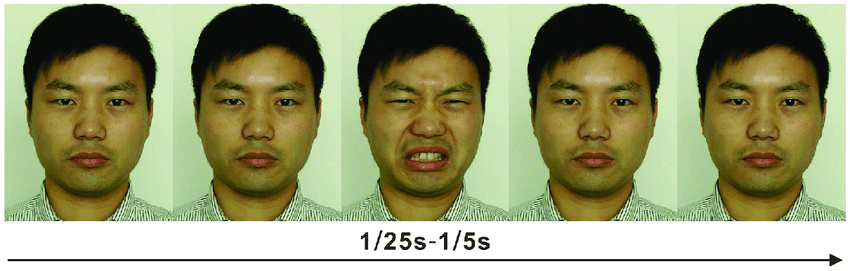
    Micro-expressions were first found by Haggard and Issacs in 1966. (Haggard, 1966) They examined the video taken of a patient, who lied to her doctor to conceal her plan to commit suicide. She pretended to be happy in the video but indeed, when cautiously checking frame by frame, they detected a concealed facial look of anguish within 1/12 second. Generally, these so-called micro-expressions happen rapidly (1/3 to 1/25 second) so that researchers need to examine the process extremely carefully. (Ekman, 2003)

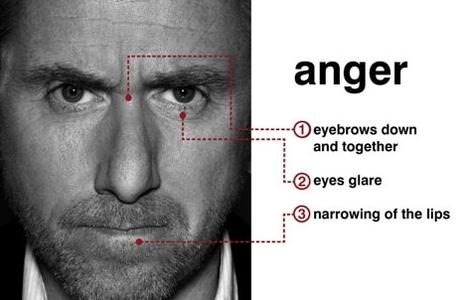
    In analyzing facial expressions, the main focus is basically to detect the six basic emotions and hence to provide facial expression unit being labeled. Different people have their own unique facial expression for each emotion. As a result, researchers have been asked to first give ordinary questions about testers’ daily life to get a baseline of different emotions (not limited to six basic emotions). (Pfister, 2011) For instance, in research done at the University of Oxford, they asked a participant about his attitude toward the murderer and he appeared to be angry since his eyebrows got down and together and his eyes glared.

    micro-expression of anger

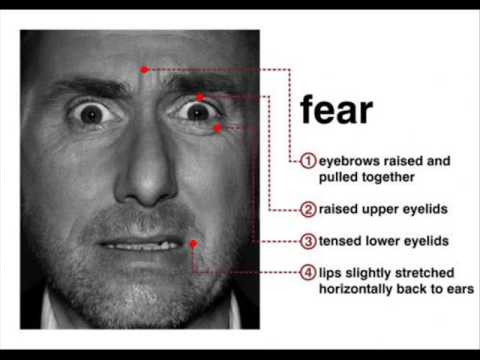
    Then changing to the question about cheating, he gave that similar facial expression as feedback. Researchers concluded that they can superficially assess that the participant never been engaged in cheating before since he should return a facial reaction of fear if he did so. (Li 2013)

    micro-expression of fear

    Compared with previously gathered micro-expression criteria, experts can better decide if the participant deceived or not.

    The field of micro-expressions is interesting in psychological research. Experts can get clues about whether someone has committed a crime. Moreover, police can quickly figure out whether the suspects deceive or not. Detecting true feelings can make life much easier.

    Pfister, T., Li, X., Zhao, G., & Pietikäinen, M. (2011, November). Recognising spontaneous facial micro-expressions. 2011 international conference on computer vision (pp. 1449-1456). IEEE.

    Haggard and K. Isaacs, “Micromomentary facial expressions as indicators of ego mechanisms in psychotherapy,” Methods of research in psychotherapy. New York: Appleton-Century-Crofts, pp. 154–165, 1966

    Ekman, P. (2003). Darwin, deception, and facial expression. Annals of the New York Academy of Sciences, 1000(1), 205-221.

    Li, X., Pfister, T., Huang, X., Zhao, G., & Pietikäinen, M. (2013, April). A spontaneous micro-expression database: Inducement, collection and baseline. In 2013 10th IEEE International Conference and Workshops on Automatic Face and Gesture Recognition (FG) (pp. 1-6). IEEE.

  • How The Science of Neuroplasticity Can Help You

    How The Science of Neuroplasticity Can Help You

    What is Neuroplasticity?

    Neuroplasticity seems like something a person would read about in a science-fiction novel. How can the brain, a seemingly unchanging mass of brain-goo, be constantly re-modelling and changing itself? As crazy as it seems, research has shown that throughout a person’s life, even as a person reaches adulthood, there are parts of the brain that remain “plastic” or moldable. For example, if a person loses their sight, the neurons associated with sight are re-wired to be used for other senses, such as touch or hearing. Although a child’s brain exhibits more neuroplasticity, the adult brain is still surprisingly flexible. This is specifically relevant to students, who use the brain’s natural ability to change for their own benefit.

    The Student Guide to Revamping Their Brain

    Feel less stressed, get better sleep, and feel more in control of your life!

    1.Meditation

    For most of neuroscience’s history, scientists believed that the brain was fixed or set. However, we now know that the brain changes itself in response to experiences, stimuli, thoughts, and the environment. Rather than being a static machine, the brain is constantly processing information and making new neural connections and letting old ones die. Evidence for this phenomena comes from the effect of meditation on the brain. Richard Davidson, a researcher from the University of Wisconsin, studied the effects of both short and long-term meditation practices. The researcher found that the meditator brain’s were different from the non-meditator brain’s. Not only did individuals who meditate feel less stressed, depressed, and more content, their actual brain showed differences too! On average, those who had a consistent mediation practice had more gray matter, which has been linked to mood control and decision making.

    2. Exercise

    If you need another reason to exercise, look so further! Exercise has been shown to not only increase spatial memory, but it promotes the generation and growth of neurons. People that exercise consistently have been shown to have a higher grey matter mass, especially grey matter associated with cognitive control. So, if you exercise, you might think and function better!

    3. Change Your Thoughts

    Although it’s surprising to think about, but the way we think can have an effect on our physical brain. When you think a thought, the brain forms a neural pathway. When you think that thought again, the neural pathway grows stronger. It is similar to the way a canyon is formed. Water flows through a canyon for years, making the path deeper and wider. Thought is powerful. When a person believes something, it has a physical manifestation in the brain. If a student believes that they can never be good at math, they will form a mental block. However, if they practice doing math, their brain will form a mini “map” for math and they will get better at it. The way we think can shape our worldview, what we do, and how we behave. It is good to be aware of that, even though a large part of our thoughts are not in our conscious awareness.

    Citations:

    Doidge, N. (2017). The brain that changes itself: Stories of personal triumph from the frontiers of brain science. Strawberry Hills, NSW: ReadHowYouWant.

    Lutz, A., Greischar, L. L., Rawlings, N. B., Ricard, M., & Davidson, R. J. (2004). Long-term meditators self-induce high-amplitude gamma synchrony during mental practice. Proceedings of the National Academy of Sciences, 101(46), 16369-16373. doi:10.1073/pnas.0407401101

    Begley, S. (2007, January 19). How Thinking Can Change the Brain. Retrieved from https://www.wsj.com/articles/SB116915058061980596


  • When to Start Panicking about Killer Robots

    When to Start Panicking about Killer Robots

    If you’ve seen one too many sci-fi movies (or five minutes of West World), you might think artificially intelligent humanoid robots can, and likely will, outsmart their creators.

    After all, over the past century, humanoid robotics technology has accelerated from barely-believable Disney animatronics, to emotive, joke-cracking, robotic citizens. It’s not a stretch to envision what’s next. However, although potentially unsettling, modern artificial intelligence technology shouldn’t have you perusing panic room catalogs just yet. Or should it?

    RobotHumanShadows

    High-Tech One-Hit Wonders

    It is true that robotic devices developed in the past few decades can perform some truly remarkable tasks, such as have interactive conversations, dance, or do parkour. But, all of these amazing machines fall into two categories: they can move well, or they can think well. None can do both – yet.

    For example, Boston Dynamics is a robotics company that has built several robots with eerily life-like movement capabilities. Take their creation Big Dog. When pushed, this robot almost looks like a scared deer recovering from a fall. These machines, such as their newer creation called Handle, have both reflexes and complicated controls that allow them to move in uncertain environments with extreme precision, carrying heavy weights and performing multiple tasks. However, they aren’t exactly stimulating conversation partners.

    On the other hand, there are robots that very convincingly interact with humans, such as the now-famous Sophia from Hanson Robotics. Sophia can converse with humans relatively seamlessly. She can learn from conversations over time, tell jokes, and even throw shade. But her movements are clunky and relatively non-existent.

    Robots are designed to specialize in one task – they can either walk or talk but cannot yet do both. As prominent roboticist and Oregon State computer science professor Thomas Diettrich, Ph.D., explained in an interview with Tech Insider, “No [artificial intelligence] system comes anywhere close to having this immense breadth of capabilities, particularly when it comes to combining vision, language, and physical manipulation” (Del Prado, 2016). What happens when there is a robot that excels in all of these tasks? At that point, it might be time to consider investing in some off-grid property.

    Walking the Walk so You Can Talk the Talk

    Why does movement matter when talking about artificial intelligence? As MIT neuroscientist Daniel Wolpert, Ph.D. puts it, mammals have brains so that we can move. Evolutionarily speaking, mammals developed the ability to perform complex movements like walking before we developed higher cognitive abilities, such as speech.

    Moving and interacting with your environment is the best way to learn, even for robots. Peter Norvig, Ph.D and director of research at Google agreed. “Reasoning [in artificial intelligence] will be improved as we develop systems that continuously sense and interact with the world, as opposed to learning systems that passively observe information that others have chosen,” Norvig explains (Del Prado, 2016).

    Take, for example, a baby learning to talk. Although you don’t remember it, you probably learned what a ball was by seeing a ball, grabbing it, maybe even putting it in your mouth a few dozen times, all while someone repeated the word “ball” over and over. You were eventually able to define what the word “ball” meant by recalling your interactions with that object. This is likely why early motor skills are predictive language development (Bedford et al., 2016). Observations like these have led cognitive neuroscientists to develop the theory of embodied cognition. This theory suggests that cognitive functions – understanding the emotions of others, developing likes and dislikes, and communicating with those around you, to name a few – are rooted in our physical experiences with the environment, and the sensations we feel from those experiences. Essentially, you know what awkwardness is because you accidentally called your first-grade teacher ‘mom’ once or accidentally said “Love you!” before hanging up the phone with your boss.

    An entire body of developmental and neural imaging evidence supports this theory, showing that we use our own sensory and motor experiences for complex cognitive processes such as understanding the actions of others (Grafton, 2009) and the meaning of words (Pulvermuller, 2005). Fortunately for us, or unfortunately if you are a roboticist, manmade machines do not yet possess this ability.

    Moving Towards Independent Thought

    For a robot to have true, rich artificial intelligence they have to be able to think and learn without supervision. At the moment, robots have a hard time generating their own opinions about the environment because they can’t fully – or perhaps more importantly, independently –  experience the environment. If you tell a robot to “push” or to “walk,” they typically understand what you mean because someone went into the code and defined what those words meant, not because the machine defined it for themselves by actually pushing or walking. Deb Roy, Ph.D and a professor at MIT working on robots that understand language through physical interaction, describes this as “the machine [getting] caught in circular chains of dictionary-like definitions.” (Roy, 2005). Their group has managed to create Ripley, a robot that can physically interact with objects to form its own opinions about the environment. However, these types of machines still have a long way to go before engaging in rich social interactions as well as complicated physical movements.

    So what’s holding us back from developing robots that can move, sense, and think? It seems that researchers investigating things like movement and sensations in humans and robots are largely separated from roboticists developing cognitive algorithms. Similar to Dr. Roy, Dr. Fancesca Odone and colleagues are working to develop the cognitive and physical skills of iCub, a robot that can independently learn to visually recognize objects and perform physical manipulations. Fanello et al. (2017) explain that  “In spite of the complementary challenges, cognitive robotics and computer vision mainly proceeded on independent tracks.” To enable robots to walk and talk, perhaps researchers across fields must first talk to each other.

    We’re Safe. For now.

    Until robots can form experience-based definitions of the things they interact with through their own movement, we are probably safe from the potential robot apocalypse. When robots develop the ability to learn from their own physical experience – experience they gain themselves by interacting with the environment through coordinated movement – that is when their thinking will become truly independent.

    Who knows, maybe if we show them our good side, robots will like humans and decide to live harmoniously with their creators. However, since Sophia recently learned to walk, and seems to have other plans, you might want to keep those panic room catalogs within arm’s reach.


    Works Cited

    Bedford, R., Pickles, A., & Lord, C. (2016). Early gross motor skills predict the subsequent development of language in children with autism spectrum disorder. Autism Research, 9(9), 993-1001.

    Del Prado, G. M. (2016, March 09). Experts explain the biggest obstacles to creating human-like robots. https://www.businessinsider.com/biggest-challenges-human-artificial-intelligence-2016-2

    Fanello, S. R., Ciliberto, C., Noceti, N., Metta, G., & Odone, F. (2017). Visual recognition for humanoid robots. Robotics and Autonomous Systems, 91, 151-168.

    Grafton, S. T. (2009). Embodied cognition and the simulation of action to understand others. Annals of the New York Academy of Sciences, 1156(1), 97-117.

    Pulvermüller, F. (2005). Brain mechanisms linking language and action. Nature Reviews Neuroscience, 6(7), 576.

    Roy, D. (2005). Semiotic schemas: A framework for grounding language in action and perception. Artificial Intelligence, 167(1-2), 170-205.

  • Ain’t No Sunshine When She’s Gone

    Ain’t No Sunshine When She’s Gone

    Frazer_Park_(Portland,_Oregon)Before I moved away from Florida I never realized how much I depended on good weather to motivate me.  I’d always believed that optimism and happiness came from within, but now I know this is only half true.  Moving to an area that gets less sunshine than from where you came from is a real downer.  Atlanta gets a relatively median amount of sunshine per year (compare Atlanta GA at ~217 days; Tampa FL at ~244 days; Seattle WA at ~164 days) but the pitiful winter here harbors few sunny days.  Gray skies can last for 3 days straight, the harsh cold wind is relentless, and February seems like the longest month of the year despite having the least amount of days.

    What bugs me most is that threatening clouds hover over the city for days but never DO ANYTHING.  At least in Florida when clouds come, they produce rain, thunder and lightning for an hour, then get the hell out and the ordeal is over.  But here, when the weather wants to be gloomy, it’s taking you down too.  It doesn’t help when my family, still in Florida, tells me they’ve taken the boat out every weekend since the beginning of February.

    It’s amazing how the weather can be a source of depression.  I’m sure you’ve heard of seasonal depression, which is technically called Seasonal Affective Disorder.  If you haven’t, it is a type of depression that occurs when bright light and sunshine is limited, most often during the winter months.  Sunshine is the obvious treatment for the disorder but just how effective is sunshine?  Especially when every dermatologist and health magazine advises you to block the sun?

    Studies have shown that the brain produces more of the natural antidepressant serotonin on sunny days than on darker days.  This is regardless of the season.  Not only are serotonin levels higher on bright days than on overcast ones, but the rate of serotonin production is directly related to the duration of bright sunlight.  No other atmospheric conditions are related to serotonin levels (article from WebMD Health News).

    When sunlight interacts with our skin, Vitamin D is produced through photochemical reactions.  Of course, prolonged UV exposure can be harmful for your skin, but some exposure is extremely beneficial.  (DO: Be active in sunlight when possible, with at least 25 SPF on.  DO NOT: Lay by the beach all day without lotion).  Vitamin D works together with calcium to build strong bones and maintain bone strength.   It also has a preventative effect for some cancers including colon, breast, ovarian and prostate.  A deficiency in Vitamin D is linked to these types of cancer as well as to depression, lowered immunity, osteoporosis, and arthritis.

    You might have been aware that sunshine was positive for you, but here are some fun facts that maybe you didn’t know:

    • According to Healthkicker, people tend to buy more lottery tickets on cloudy days because weather-induced bad moods deplete self control, making us vulnerable to temptation.  (Ladies, think Ben & Jerry’s ice cream pint intakes – were those ever on bright sunny days?)
    • People use more alcohol, coffee, tobacco and chocolate when there’s less sunshine because they feel the need to compensate artificially as means to elevating their mood.
    • Getting a daily dose of sunshine increases your number of white blood cells, which in turn enhances your immune system, stated by Natural Health Restored.
    • Sunshine encourages healthy circulation by also stimulating the production of red blood cells, which increases the amount of oxygen in your blood.
    • A study performed at the University of Michigan proved that sunshine is strongly correlated with daily stock returns.  Stocks traded on sunny days yielded nearly 25% more money than those traded during cloudy periods.  Psychologists attribute this to people’s tendency to view situations more optimistically when it’s sunny, and less likely to scrutinize an investment they might cast aside when feeling grumpy.

    March is only a few weeks away, which means warmer weather is coming.  Besides the fact that spring is my favorite season, I am SO excited to shed my layers of fuzzy clothes and to enjoy Atlanta’s parks again.  When the time comes, do yourself a favor and GET OUT of the library, frolic in the daylight like a fool high on Vitamin D and always wear some sunscreen!

    In the spirit of things: [soundcloud url=”http://api.soundcloud.com/tracks/44617965″ params=”” width=” 100%” height=”166″ iframe=”true” /]

    Photo by Maria Fiala courtesy of Creative Commons.

  • The Science behind ‘Frenemies’

    The Science behind ‘Frenemies’

    High school can be very painful for anyone who is the slightest bit different.  Thankfully, I’m 5 years removed from it but my little sister is a freshman so I get to sit back and observe this social phenomenon as an objective outsider.  When you’re in high school (specifically a teenage girl in high school), it seems that every social situation is a CRUCIAL moment in your life.  Not abiding by the invisible rules of pubescent social etiquette could result in getting shunned from the clique.  This, by the teenage spectrum of standard exaggeration, is death.  Girls strive to fit in and seek reassurance that they are ‘secured’ in their pack.  This essentially creates an army of mini tyrants disguised in pink twill.

    This brings me to introduce the concept of a ‘frenemy.’  A ‘frenemy’ is someone who you’re friends with by all appearances, but is actually someone who you would like to squirt ketchup on.  In the high school scenario, she might be characterized as the bully of the group or perhaps the arrogant leader of it.  Either way, you find yourself supporting her terrible behavior because you’re too afraid to speak out and risk losing your social standing.

    There’s a biological reason for this behavior.  According to Dr. Louann Brizendine, who wrote the fantastic book ‘The Female Brain,’ the main job of a girl brain is to keep social harmony.  The teen girl’s brain circuits are wired so that social rejection actually triggers a neural stress response (Brizendine 35).  When a relationship is threatened, the female’s feel-good brain chemicals drop (such as serotonin, dopamine and oxytocin) and the stress hormone cortisol takes over.  Now this has become a matter of life or death.  She’ll start feeling anxious and fearful of being rejected.  She’ll become cranky to family members.  She soon begins to crave that feeling of closeness again, for that great intimacy drug oxytocin.  She’ll eventually decide to stick to her clan of frenemies to keep that utterly important social harmony.

    This can also explain why girls go to the bathroom together.  Those girls hanging out in the bathroom are reinforcing their most important relationships- with other girls.  Many women find biological comfort in one another’s company and language is the glue that connects them together.  Talking and sharing secrets activates even more oxytocin release.  The oxytocin reinforces the desire to gossip and connecting then brings a sense of pleasure and well-being (Brizendine 37).

    Why exactly are girls built this way?  One plausible reason goes back to primitive basics.  Remember- our modern female brain still has the circuitry of our most successful foremothers.  Studies have shown that female mammals in a bonded social group are more likely to come to another’s aid in a threatening situation, such as if a male is overly aggressive to a female.  Members of a group can alert one another of conflict ahead of time, enabling them to move away from potential danger and to continue safely tending dependent children.  This pattern of behavior is called ‘tend and befriend,’ and it is particularly a female strategy (Brizendine 42).  Since teen girls are biologically reaching optimal fertility, their primitive brain begins to stress the importance of this strategy.  It’s saying, “Lose that bond with your peer, and both you and your offspring are toast.”  No wonder girls find it unbearably hard to cope with feelings of being left out.

    There’s even a biological reason for why some teen girls can become so evil to one another.  Hormonal surges can turn these girls mean but so can sexual competition.  This competition is much different in girls than in boys. When females are competing with other females, they often use subtle tools, such as spreading rumors, to undermine a frenemy.  That way she can cover her tracks.  Instead of using force, which is the male’s standard protocol, the female uses her best set skill-language- to get what she wants.  Such tactics lessen the risk of destroying the bond that the teen girl brain sees as essential to survival.

    The teenage girl brain is drowning in estrogen and other chemicals that make it pretty difficult to survive these years. It’s always drama, drama, drama. That’s not to say that teenage boys aren’t dealing with an insurgence of hormones- they are and they have their own set of embarrassing problems.  But research findings like these can reassure a gal that her feelings of mayhem are only temporary.  So if you are a teenage girl, remind yourself that you will mellow out.  Then remember to tell your frenemy that it is not her fault she’s acting like a jerk but that it is just her cortisol coming out to play.

    Brizendine, Louanne. The Female Brain.  New York: Broadway Books, 2006.


    Image: photostock / FreeDigitalPhotos.net