Tag: biology

  • Racing Rats’ Impact on Mental Health

    Racing Rats’ Impact on Mental Health

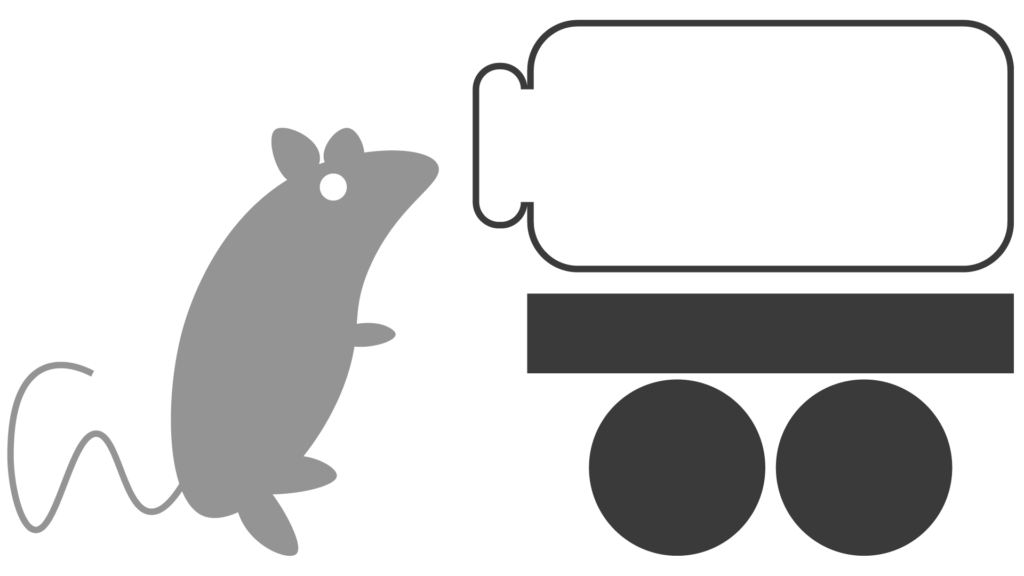
    A cartoon rat examines a rodent operated vehicle.Introduction

    The authors of “Enriched environment exposure accelerates rodent driving skills”, published in Behavioral Brain Research, conducted an experiment intended to study the impact of the environment on the efficacy of stress-releasing mental health treatments in lab rats. This study aimed to see how an enriched environment, both socially and intellectually, promotes stress relief while doing fun activities. The process for teaching the rats to drive the rodent operated vehicles (known as ROVs) also has implications for the importance of enrichment in how service dogs are trained.

    Study Summary

    There were two groups of rats that participated in this study. The control group of rats lived in a standard environment for laboratory rats, in standard laboratory cages, each with one other rat. The experimental group of rats lived in housing with an enriched environment. These rats got multiple rat friends, rat toys to keep them occupied, and multi-level housing.

    The study began with a “training period”, where rats in both groups were taught by operant conditioning how to drive the ROVs. While the authors of the study expected the rats living in standard housing to perform worse than the other rats, they were shocked at how much worse they performed. The authors noted that the control group rats failed to perform even “basic” tasks in driving the ROVs.

    After the training period (in which food rewards were used to encourage the rats to drive), both groups of rats continued to drive the ROVs even in the absence of rewards. However, rats living in enriched housing drove the ROVs without treats for a longer period of time than the rats living in standard housing. Throughout the study, the scientists measured the levels of hormones that were indicative of the rats’ ability to handle stress. Both groups showed an improved ability to handle stress as a result of ROV driving, but the enriched housing rats showed a significantly larger benefit than the standard housed rats.

    Conclusion

    This investigation shows that the environment of an animal has a significant impact on the effect of stress relieving interventions. The authors suspect that the enriched rats were more able to learn new behaviors (driving the ROVs) as a result of experiencing a wider variety of behaviors in their enriched home environments. The results of this study have interesting ramifications on the optimal conditions for other animals who will be undergoing rigorous training. Additionally, this study demonstrates how a good environment that has opportunities for social connection and mental challenges is beneficial in mental health treatment.

    References

    Crawford, L. E., Knouse, L. E., Kent, M., Vavra, D., Harding, O., LeServe, D., Fox, N., Hu, X., Li, P., Glory, C., & Lambert, K. G. (2020). Enriched environment exposure accelerates rodent driving skills. Behavioural Brain Research, 378, 112309. https://doi.org/10.1016/j.bbr.2019.112309

  • Where do Great Blue Herons catch their snacks?

    Where do Great Blue Herons catch their snacks?

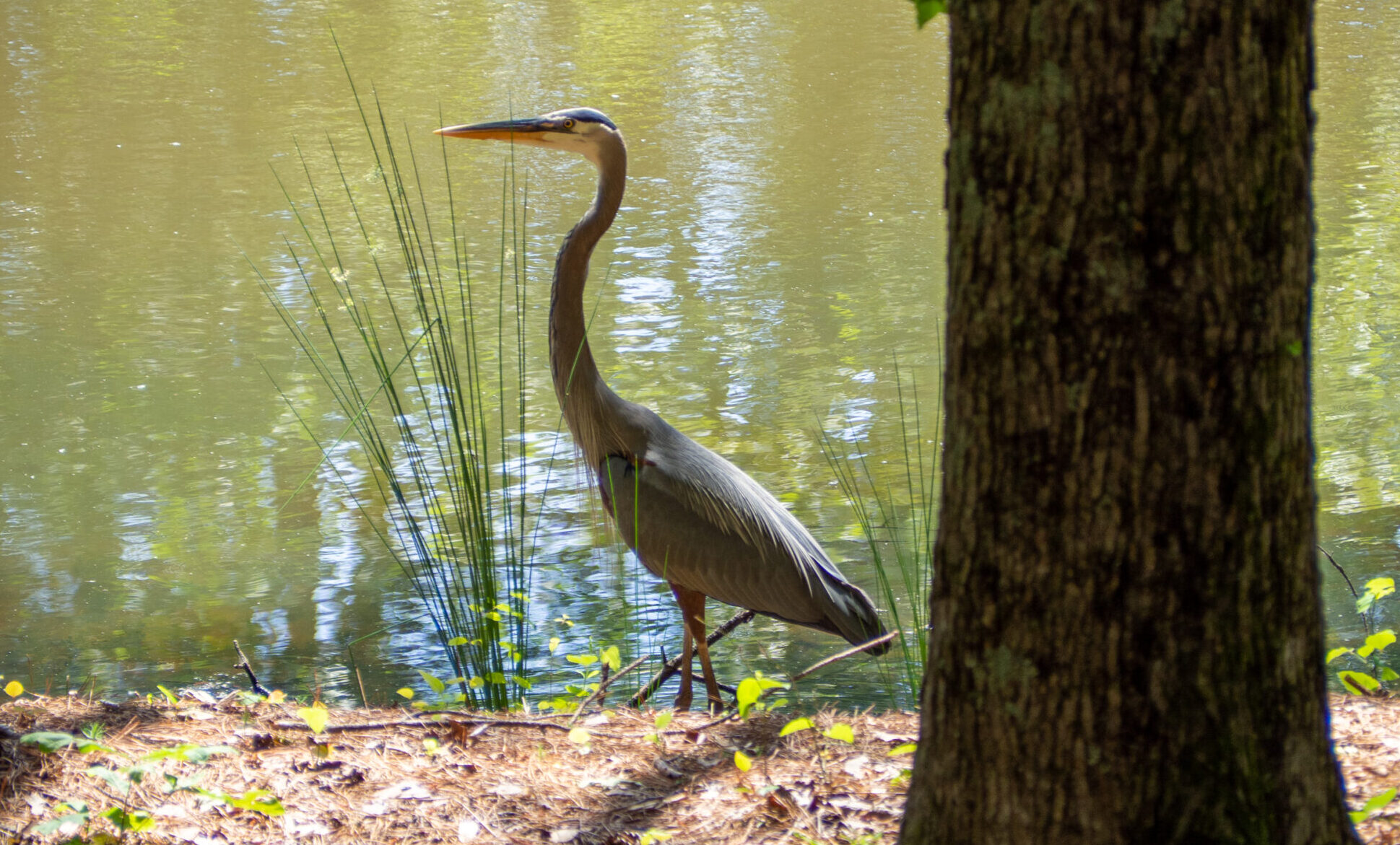
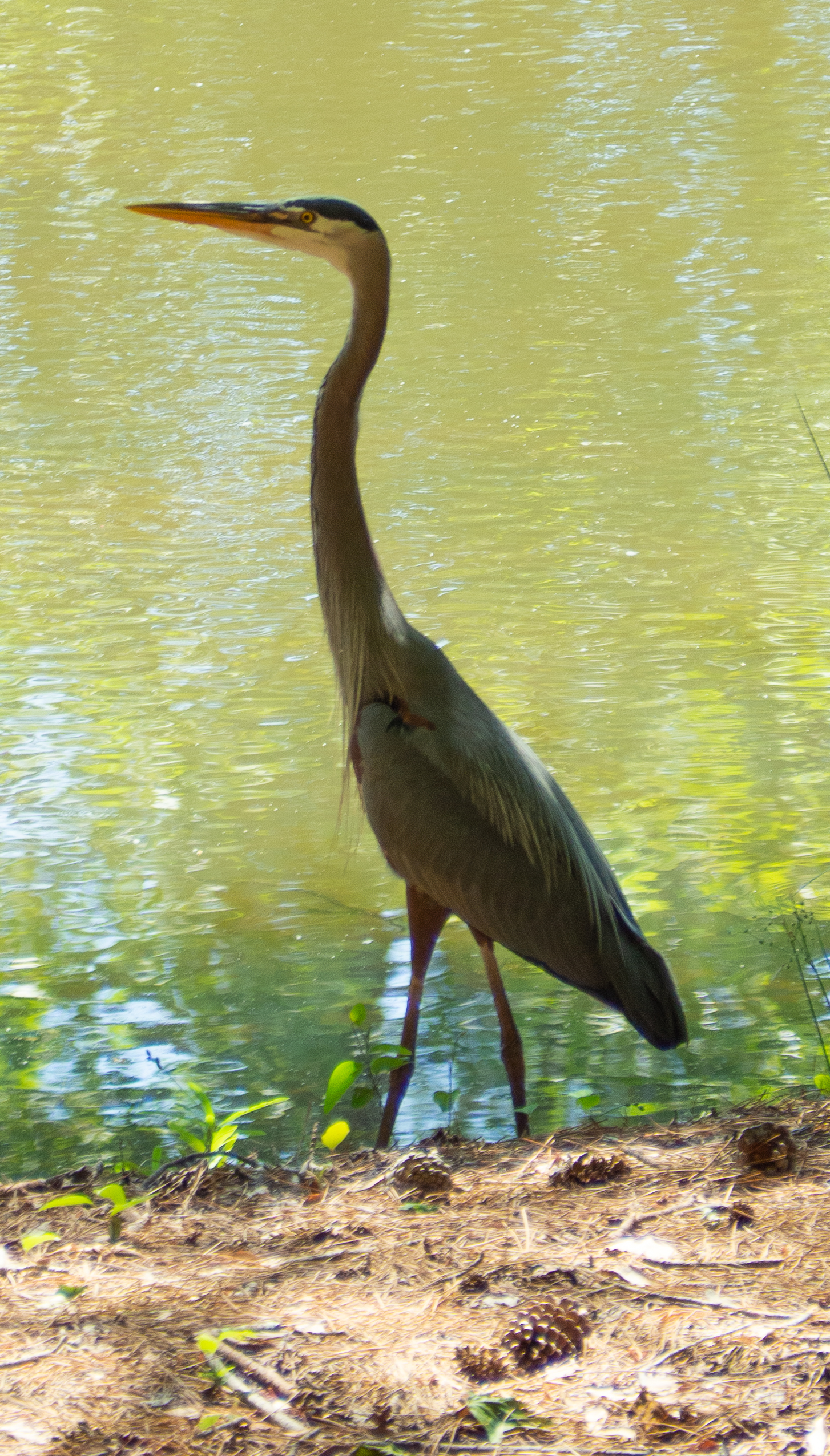
    A picture of a great blue heron. The heron is standing on the edge of a pond.

    Introduction

    Great blue herons are part of the Ardea genus, which is a genus of birds that includes the herons, egrets, and bitterns. These birds are typically pretty large in size, with lengths usually greater than 80–100 cm. You’re most likely to find members of this genus in wetlands and other partially aquatic habitats.

    Feeding Behavior

    Great blue herons are carnivores, and they eat a variety of aquatic, semi-aquatic, and terrestrial prey. Their diet consists of predominantly fish, but they will eat pretty much anything that they can catch in their beaks. Fish are supplemented by amphibians, reptiles, small ground mammals, and even other birds. Great blue herons catch smaller prey in the jaws at the back of their beak, although they prefer to stab larger prey with their beaks.

    There are 38 total feeding behaviors that have been recorded by members of the Ardea family. Each species in this genus uses multiple feeding methods — they’re creative hunters. Twelve of these strategies have been observed in great blue herons. The most commonly observed feeding behavior for the great blue heron is standing and waiting, where the heron simply stands still and waits for its prey to come to it. Herons also will move slowly, either through the water or through a field, in search of prey. More dramatically, the great blue heron will occasionally plunge-dive, diving down quickly and with force, to catch its prey. A particularly interesting feeding behavior of the great blue heron is to stick its bill in the water, and vibrate it. The underwater vibrations create ripples, attracting fish and other aquatic prey.

    Habitat

    Great blue herons prefer to live in wetlands, especially when nesting. Rather than nesting alone, great blue herons nest in colonies. Colony nesting is particularly common for birds that live in aquatic environments. Colonies can have over 500 nests (so easily over a thousand birds) all relatively close together. For large scale habitats and especially for colony nesting, great blue herons have preferences for certain types of habitats over others. The lacustrine wetlands is a particular favorite of Illinois great blue herons. Lacustrine wetlands are any wetland or deepwater area that has these three characteristics:

    1. Located in a valley/depression in the ground
    2. Lacking trees, shrubs, and other plant life that covers more than 30% of the area
    3. At least 20 acres in surface area

    Biologists believe that herons may prefer this biome for their habitats due to the easy access to their preferred prey of small bodied vertebrates. Additionally, large wetlands tend to be isolated from human activity, which great blue herons tend to avoid if possible.

    References

    Combs, B. P. (2021). Great Blue Heron Forages for Fish by Bill-Vibrating. Western North American Naturalist, 81(2), 280–284. https://doi.org/10.3398/064.081.0213

    Gibbs, J. P., & Kinkel, L. K. (1997). Determinants of the Size and Location of Great Blue Heron Colonies. Colonial Waterbirds, 20(1), 1–7. https://doi.org/10.2307/1521757

    Knight, E. C., Vennesland, R. G., & Winchester, N. N. (2016). Importance of Proximity to Foraging Areas for the Pacific Great Blue Heron (Ardea herodias fannini) Nesting in a Developed Landscape. Waterbirds, 39(2), 165–174. https://doi.org/10.1675/063.039.0207

  • Red-Shouldered Hawks

    Red-Shouldered Hawks

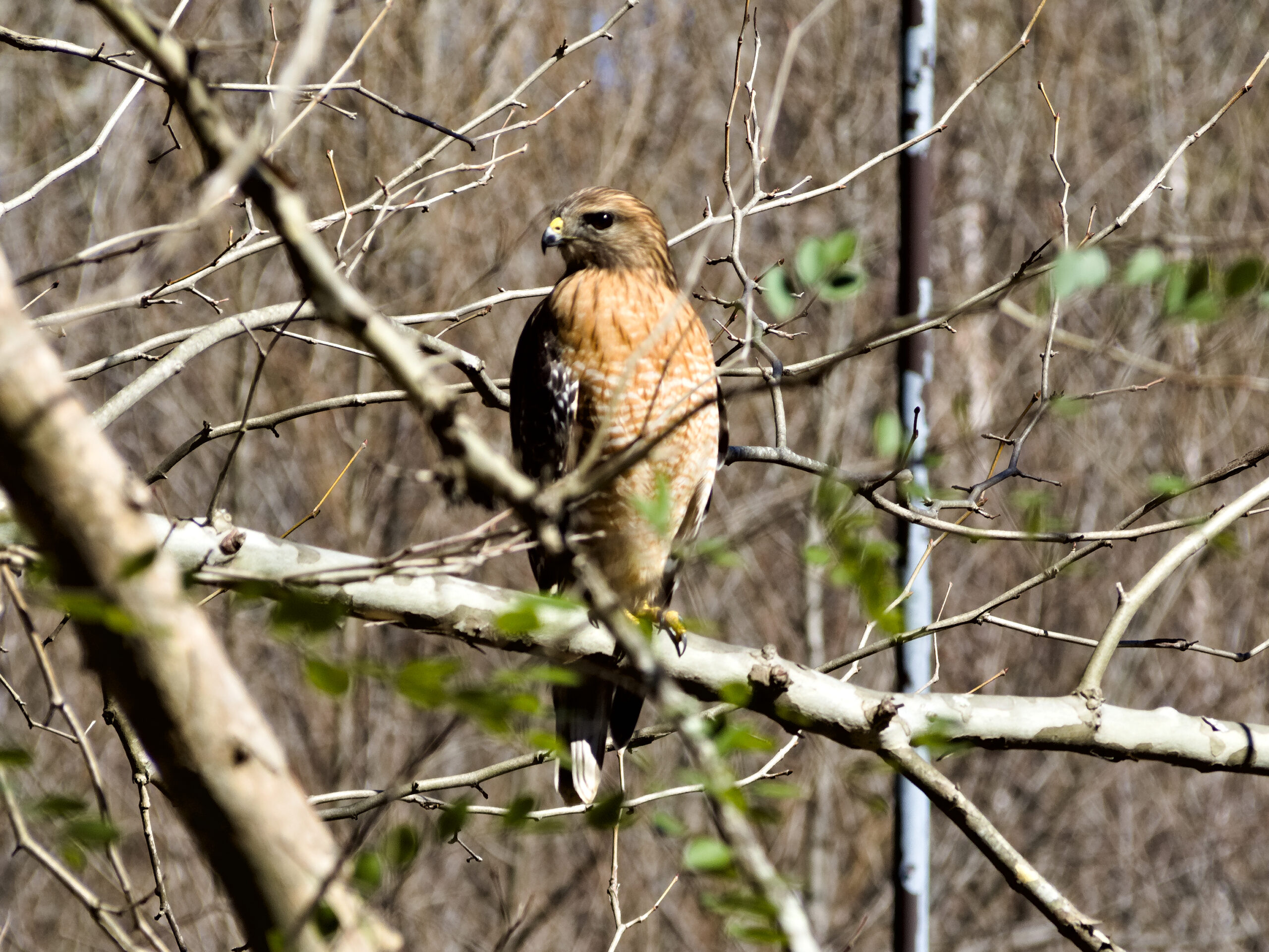
    A red-shouldered hawk, a mid-sized hawk with red-orange feathers on its shoulders and chest.

    Introduction

    The red-shouldered hawk (Buteo lineatus) is a raptor that is found in forests throughout North America. Year round, the red-shouldered hawk is found throughout much of the Eastern and Midwestern United states. During their breeding season, they can be found in both the northeastern and western United States as well as part of Atlantic Canada. They also have a non-breeding range in Mexico, where they are found for some parts of the year. Red-shouldered hawks can be identified by their medium size and reddish-brown feathers on their chests and shoulders. Hawks from the western part of their range tend to be a deeper red than those found in the eastern part. As for their wings, the feathers are banded black and brown from the underside, with black and red being predominant on the outside. Their tails are also banded, which is another identifying trait of the species.

    Sexual Dimorphism in Red-shouldered Hawks

    Red-shouldered hawks do show some sexual dimorphism in their appearance. Sexual dimorphism occurs when males and females of the same species show different traits on average, such as average size and weight. Mass is one of the traits that is sexually dimorphic for red-shouldered hawks. Females are larger than males, with the average male being only 85% of the mass of the average female. Researchers recently have tried to establish other ways of determining the sex of red-shouldered hawks morphologically. Determining sex by morphology is used by biologists to guess at the sex of an animal without needing to check for sure with DNA testing. Sex determination based on morphology is more convenient than determining sex based on molecular testing, and can be done by biologists in the field without access to DNA testing equipment. Other features of red-shouldered hawks that are sexually dimorphic are toepad length, length of secondary feathers, bill length, mass, and wing chord length. However, mass remains the most reliable way to morphologically determine the sex of a red-shouldered hawk.

    Diet and Habitat of the Red-shouldered Hawk

    The diet of the red-shouldered hawk is mostly made up of small mammals, lizards, snakes, and amphibians, and these hawks typically live in riparian forests. Riparian forests are forests that are on or near the bank of a river or stream. There is evidence that the composition of the red-shouldered hawk’s diet varies depending on where in their range they are living. One study split red shouldered-hawks into two groups. The first group was the northern hawks, which live above 38o N latitude. This is the latitude line passing just south of Charlottesville, VA, and through Lexington, KY. Interestingly, northern hawks preferred more mammalian prey and less amphibian prey. The opposite was true for southern hawks. Researchers noticed that diets were more mammalian in drier conditions, whereas hawks that lived in wetter conditions relied more on invertebrate and amphibian prey. It’s possible that hawks that live in drier areas will be less affected by wetland degradation than hawks in wetter areas.

    Nesting Preferences of the Red-shouldered Hawk

    Where red-shouldered hawks choose to nest is another area of interest for researchers. Typically, red-shouldered hawks prefer to nest in large tracts of mature forest, although they can also be found in more fragmented forested areas, such as those found in suburban areas. One study found that nests were more likely to be located near a lake or treeless wetland than not. Nests were also more likely to be near a trail or stream than not for both cases. Researchers believe that open trails might make good hunting grounds for the hawks, without trees and underbrush to hide prey. We can guess similarly about hawks’ proximity to lakes and treeless wetlands. The lack of trees gives hawks easier access to their prey, which they detect primarily via eyesight. Red-shouldered hawks’ positive association with wet areas is a well known feature – amphibians make an important component of the diet of the red-shouldered hawk, especially while nesting.

    References

    Cheryl R. Dykstra, Herman L. Mays Jr, Jeffrey L. Hays, Melinda M. Simon, & Ann R. Wegman. (2012). Sexing Adult and Nestling Red-Shouldered Hawks Using Morphometrics and Molecular Techniques1. Journal of Raptor Research, 46(4), 357–364. https://doi.org/10.3356/JRR-11-84.1

    Brad N. Strobel, & Clint W. Boal. (2010). Regional Variation in Diets of Breeding Red-Shouldered Hawks. The Wilson Journal of Ornithology, 122(1), 68–74. https://doi.org/10.1676/09-071.1

    Landenberger, James F, Roosa, Dean M, Stravers, Jon W, Ehresman, Bruce, & Patterson, Rich. (2013). The Raptors of Iowa. University of Iowa Press.

    James E. Woodford, Carol A. Eloranta, & Anthony Rinaldi. (2008). Nest Density, Productivity, and Habitat Selection of Red-Shouldered Hawks in a Contiguous Forest. Journal of Raptor Research, 42(2), 79–86. https://doi.org/10.3356/JRR-07-44.1

    Red-shouldered Hawk Overview, All About Birds, Cornell Lab of Ornithology. (2019). allaboutbirds.org. https://www.allaboutbirds.org/guide/Red-shouldered_Hawk/

  • The Undersea Bone Devourer

    The Undersea Bone Devourer

    Osedax, from the Latin os, oris (bone) and edāx, edācis (devourer), is a genus of undersea worms that consumes bone. A genus (which is more Latin, this time for a family group) is a group of species that are similar. More distantly, the genus Osedax belongs to the family Siboglinidae. Siboglinidae is a family (a level above in the biological categorization hierarchy from genus) composed of segmented worms, all of which have chitin bristles. Chitin is a natural substance that is found in all sorts of bugs, and it’s similar to the material that makes up your fingernails. Another prominent species in this family are the undersea tubal worms that live at the hydrothermal vents at the bottom of the ocean. It turns out there is a surprising amount of diversity of species of undersea bone eating worms. The worms range in size and in behavior. You can find members of the Osedax genus in all seven oceans, and in all sorts of depths (21 – 4000 m). Some of them are generalists, whereas others specialize in large bone deposits often found on the ocean floor. Whalefalls (you can read more about them here: https://2026fat.chargedmag.org/2012/06/whale-fall-2/) are one such source of large bone deposits on the ocean floor.

    Osedax worms were first discovered in 1994. Biologists were initially baffled at what exactly they were. The worms evaded classification until molecular DNA analysis showed that they were related to the tube worms that live in hydrothermal vents on the ocean floor. This breakthrough allowed biologists to finally place the Osedax genus into the Siboglinidae family. Later, fossils were discovered of Osedax worms inhabiting a large, dead reptile, dated to the early-Late Cretaceous period, about 100 million years ago. This led to several revelations about the history of Osedax worms. Firstly, there was now a historical precedent for being generalists, rather than whale specialists. Osedax worms were initially discovered and identified on whale falls, and there was some debate in the scientific community about whether or not they occupied other niches. Well, giant dead reptiles certainly weren’t whales, so this find cleared that up nicely. The fossil finding also illustrates something about the history of Osedax worms and the Siboglinidae family. This finding confirmed an earlier theory that the Siboglinidae family originated somewhere in the mid-Cretaceous period. It also means that the weird bone eating worms under the sea outlasted the dinosaurs, which is neat.

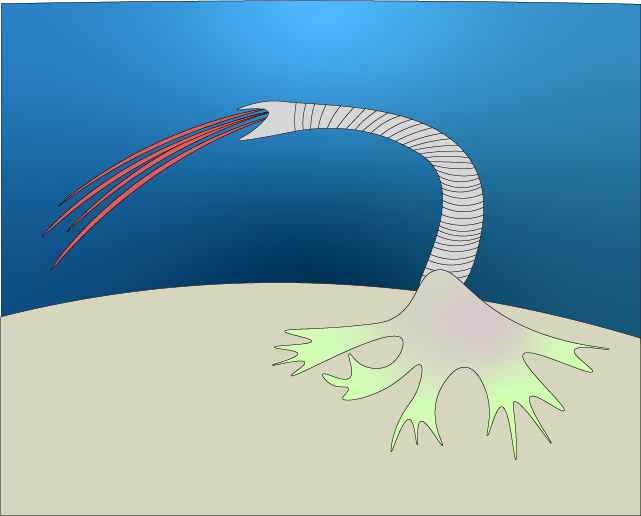
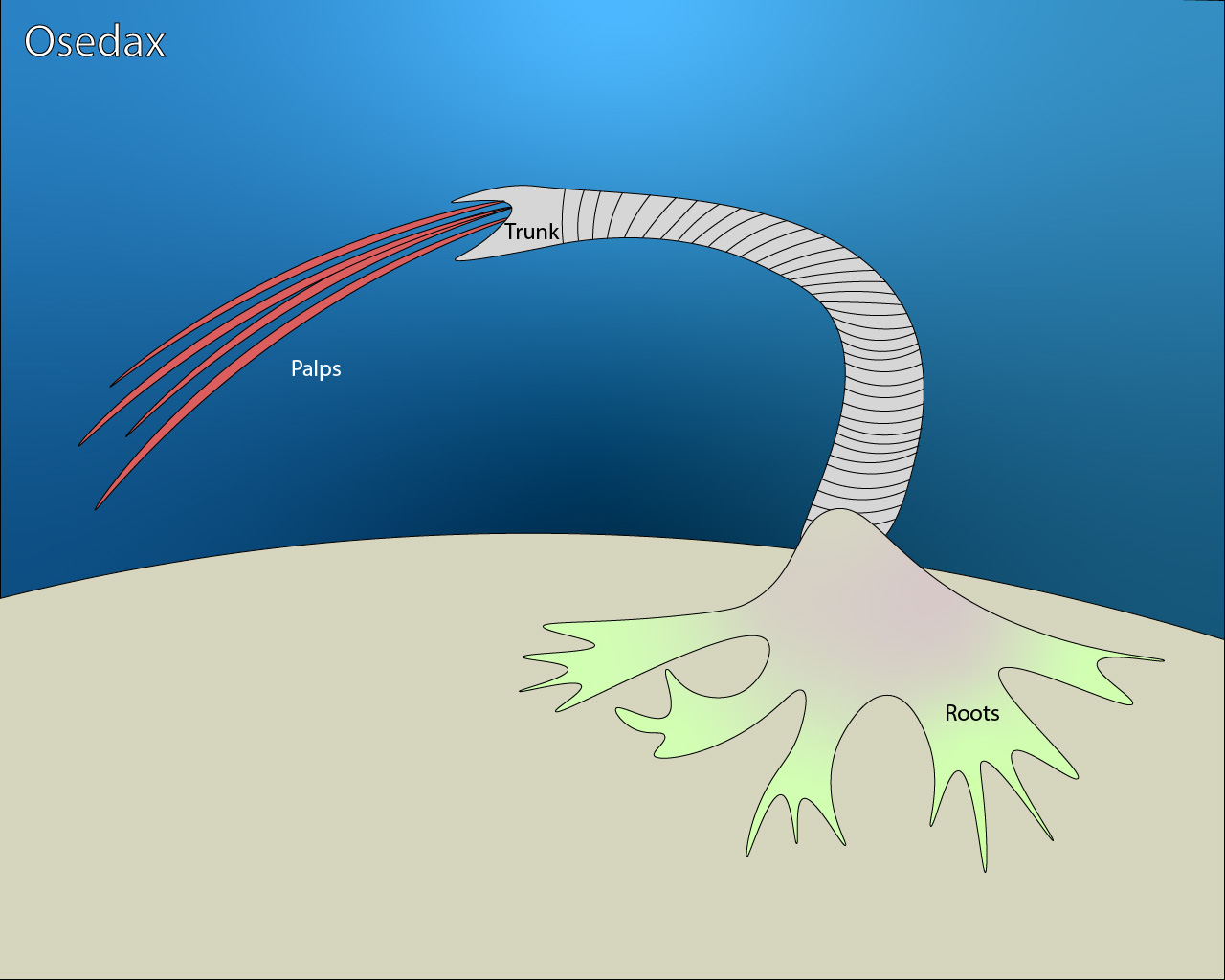
    A labeled illustration of an Osedax worm.
    A labeled illustration of an Osedax worm.

    Physically, Osedax worms are strange looking creatures. Red, string-looking bits float out from one side of the main worm body. On the other side, there are green, root-like structures sticking out back. These roots secrete acids to dissolve the bones where they lodge. Their middle is a white, segmented tube. It doesn’t get any more regular on the inside, either. Osedax worms don’t have a digestive system – they just host a wealth of bacteria inside of them to digest the bones they consume. Another strange thing about the inside of an Osedax worm is that the male worms live inside the females. As in, every picture of an Osedax worm you see will be of a female, as the males are teeny tiny and live inside of the females. Dwarf males, as this phenomenon is called, occurs when the males of a species are much smaller (and usually simpler anatomically) than the females. In species where dwarf males exist, the males typically reside somewhere inside or attached to the female members of the species. Osedax worms are at least as odd as you were expecting worms that ate bones to be, at very least.


    References

    • Smith, Craig R, Glover, Adrian G, Treude, Tina, Higgs, Nicholas D, & Amon, Diva J. (2015). Whale-Fall Ecosystems: Recent Insights into Ecology, Paleoecology, and Evolution. Annual Review of Marine Science, 7(1), 571-596.
    • Rouse, G. W. (2004). Osedax: Bone-Eating Marine Worms with Dwarf Males. Science (American Association for the Advancement of Science), 305(5684), 668-671.
    • Danise, S, & Higgs, N. D. (2015). Bone-eating Osedax worms lived on Mesozoic marine reptile deadfalls. Biology Letters (2005), 11(4), 20150072.
  • Makin’ Biscuits

    Makin’ Biscuits

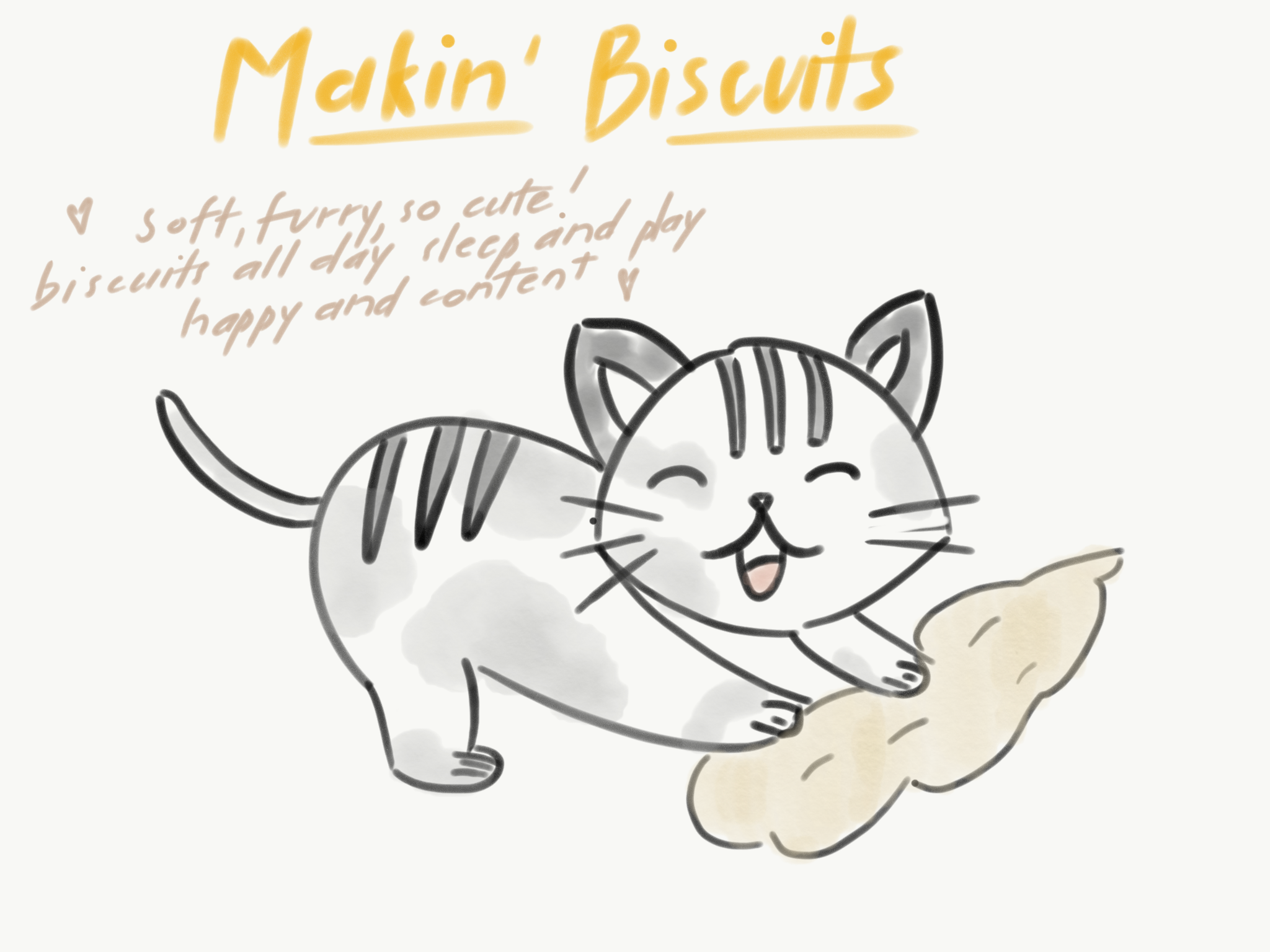
    Some cats are oftentimes seen engaging in a rhythmic motion of pushing their paws back and forth on a soft surface, which is referred to as “kneading.” This behavior is not universal across all cats and can be distinctive among cats (“Why Do Cats Knead?, n.d.). The exact reason behind this behavior is a mystery, but there are a few explanations to rationalize this behavior (Castro, 2013).

      1. Kittens knead their mother while nursing to stimulate milk flow. This behavior may be carried on into adulthood when cats are feeling happy, associating kneading with the comfort of its mother (Castro, 2013).
      2. Cats may be marking their territories with their scent (“Why Do Cats Knead?, n.d.).
      3. Female cats knead as a mating signal to males (“Why Do Cats Knead?, n.d.).
      4. Kneading is a form of stretching (“Why Do Cats Knead?, n.d.).

    Regardless of the reason why cats knead, we can all agree that they are super cute when they do so!


    References
    _______________________________________________________________________________________________________________

    Castro, J. (2013, October 18). Why Do Cats Knead? Retrieved from https://www.livescience.com/40548-why-do-cats-knead.html

    Why Do Cats Knead? (n.d.). Retrieved from https://www.petmd.com/cat/behavior/evr_ct_why_do_cats_knead

  • If I only had a…spine?

    If I only had a…spine?

    For as long as I can remember, I have been obsessed with how people move. Now, hear me out. Even simple movements are fascinating if you really think about it. Electrical signals from your brain and spinal cord communicating with hundreds of muscles, forcing them to work together in a perfectly balanced symphony of contractions. All to maneuver our unwieldy skeletons gracefully through space.

    Do me a favor and stand up.

    For most of us, this movement feels like one of the simplest things we can do.

    Now, look at your legs.

    There are over 50 muscles below your hips alone. Yet, all these muscles just contracted in expert harmony to use the precise amount of force needed to move your body against gravity, all while maintaining near perfect balance. Precisely how we can perform these seemingly simple yet crucial movements on a whim is an active and exciting area of research, leading us toward innovation in movement rehabilitation, robotics, and beyond. These are movements we don’t even notice, like activating our muscles to breathe, blink, maintain our balance, or even walk. If you did notice these movements, you likely wouldn’t be able to focus on much else, transforming a simple grasp into an impossible and difficult task.

    Luckily, you don’t need your brain to do any of these things.

    More than just a cord

    Many people think of the spinal cord as just that, a cord. The cords and cables we typically interact with are charged with a very important but relatively simple task: bringing electricity from point a to point b. While the spinal cord is very important for bringing electrical signals from your brain to your muscles and organs, it does so much more.

    Picture an orchestra with a smart but rather lazy conductor performing for an audience. The musicians are like the motor neurons in the spinal cord, connecting to and contracting the muscles when the neurons fire, allowing you to move. Complicated musical pieces require guidance by our lazy conductor, just like throwing a dart or grasping an object requires guidance by the brain [1]–[4].  The audience’s cheers allow the orchestra to adapt, just like you use sensations from your body to improve or guide movements [5], [6].

    Yet, just like our experienced musicians don’t need the conductor to play simple or repetitive musical pieces, you don’t need your brain to perform “classic” movements. “The spinal cord is able to achieve so many behaviors by itself, completely isolated from the brain,” explains Dr. Cope, spinal cord neurobiology researcher and Georgia Institute of Technology professor.  “You can completely isolate the spinal cord in a living animal from the brain and it can walk on a treadmill [7], [8]. It can change speeds as the treadmill changes speed. You put an obstacle in its way, it can learn to lift its leg over that obstacle,” all without our lazy conductor [9].

    It was discovered in the early 1900’s that your motor neurons are fully capable of running the show [10]. “What that tells you is that there is this rich circuitry that in fact the whole motor system relies upon,” Dr. Cope explained. All in all, it looks like the spinal cord has the classics all worked out for you. Feel free to tell your conductor they can take the day off.

    How to run around like a chicken with its head cut off

    Unsurprisingly, experienced musicians are able to play complicated, intricate music without their conductor. Surprisingly to many, however, your spinal cord is able perform complicated, intricate behaviors without any input from the brain. How exactly are these behaviors possible? It’s all in the organization.

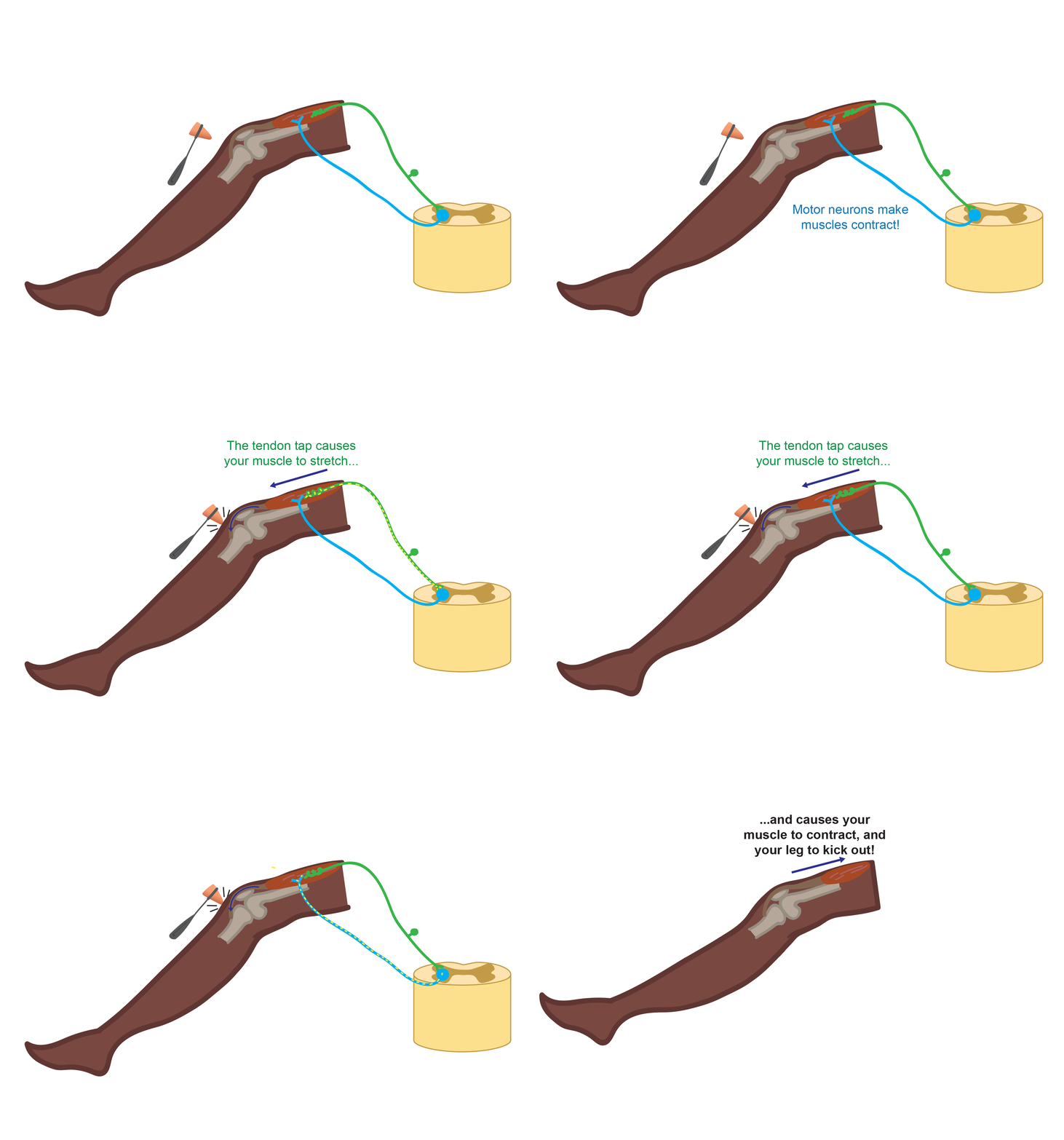
    If you’ve ever gotten a physical, you have probably experienced the odd sensation of your leg flying through the air without your consent. In the right spot, a simple tap on your knee by the doctor sends your foot on a trip automatically. We commonly refer to these types of movements as “reflexes,” in which no approval by the brain is required. This reflex pathway is relatively simple in organization; only two neurons are required, making this one of the fastest reflexes we have. One neuron senses the stretch of your muscle caused by the tap and immediately tells the second neuron to flex that same muscle. This flexion rapidly moves your leg before you can stop to think about it. This can happen in less than a few milliseconds [11]! You use your stretch reflex more often than your visits to the doctor, however. The stretch reflex helps you keep your balance without a second thought and is believed to be crucial for general sensory feedback and movement control.
     

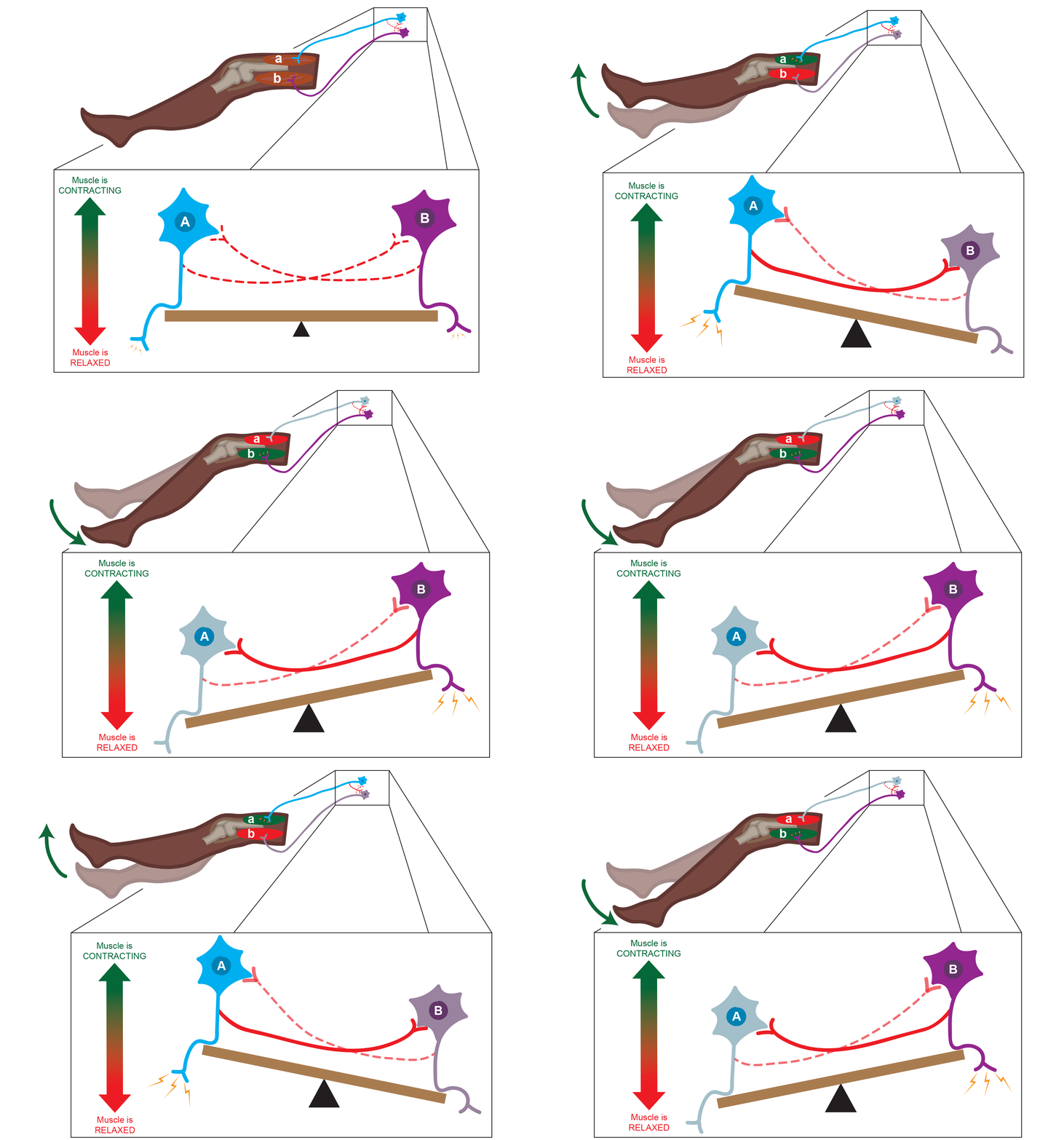
    What if we make things a little more complicated? Instead of just two neurons, let’s add in two sets of neurons in the spinal cord: set A controlling muscle a, and set B controlling muscle b. Much like a seesaw, these sets of neurons rhythmically alternate in activity. A neurons fire until they run out of juice, then B neurons take over and the cycle continues. With this small set of neurons, a pattern of alternating activity emerges. Together, A and B neurons form a central pattern generator. For humans, however, a 2-muscle central pattern generator isn’t very useful. Adding in more sets of neurons allows your spinal cord to rhythmically control more muscles in a more complicated pattern. With anything from breathing and scratching an itch to walking and running, the spinal cord is in charge.
     

    The patterns are there in your spinal cord, all you need to do is press start. “One of the things the brain does and can take full advantage of is to just send a ‘go’ signal to the spinal cord,” Dr. Cope explained. “[The brain] can say ‘Hey, all of the complicated things you do with timing and organizing … different muscles in different patterns, you do it. You’ve worked all that out. I don’t have to complicate my life with that.’” And while the brain can initiate and influence this pattern of alternating activity, it isn’t required. This pattern can just as easily be started by sensory input from your environment, or by sensory signals from throughout your body [9].

    At the end of the day, it seems like the spinal cord has it all figured out for us. But do we have the spinal cord all figured out? Not even close.

    The Mysterious Cord

    In the past year, the news has been abuzz with instances of paralyzed patients regaining the ability to walk [12]. Paralysis is typically caused by spinal cord damage. Up until recently it seems, spinal cord injuries often left patients with limbs that were difficult or impossible to move willingly, oftentimes without hope for improvement. So how are these patients taking these miraculous steps?

    A better question might be what happens to the spinal cord when it’s injured? We know some things about how it repairs itself, but we are far from the whole story. This means we are a far cry from fully repairing spinal cords ourselves. While these recent miraculous findings may make it seem like we have it all figured out, don’t let that fool you. “I think it’s exciting and I think it’s encouraging. I would say that we shouldn’t let our encouragement overshadow the fact that it’s nowhere close to what we want,” laments Dr. Cope.  “It’s going to require some basic neuroscience information about what the mechanisms are that are limiting recovery.”

    Researchers like Dr. Cope at Georgia Tech are working on a piece of this puzzle, studying to understand how the healthy and injured spinal cord contributes to and controls movement. Even with the great strides achieved recently by clinical studies [12], Dr. Cope explains that “We’re encouraged, but we have a long way to go.”

    References

    [1] D. P. Hanes and J. D. Schall, “Neural Control of Voluntary Movement Initiation,” Science (80-. )., vol. 274, no. 5286, pp. 427–430, 1996.

    [2] D. M. Wolpert and Z. Ghahramani, “Computational principles of movement neuroscience,” vol. 3, no. november, 2000.

    [3] D. A. Rosenbaum, K. M. Chapman, M. Weigelt, D. J. Weiss, and R. van der Wel, “Cognition, Action, and Object Manipulation,” Psychol. Bull., vol. 138, no. 5, pp. 924–946, 2013.

    [4] E. Freud, S. N. Macdonald, J. Chen, D. J. Quinlan, M. A. Goodale, and J. C. Culham, “Getting a grip on reality: Grasping movements directed to real objects and images rely on dissociable neural representations,” Cortex, vol. 98, pp. 34–48, 2018.

    [5] R. Shadmehr, M. A. Smith, and J. W. Krakauer, “Error Correction, Sensory Prediction, and Adaptation in Motor Control,” Annu. Rev. Neurosci., vol. 33, pp. 89–108, 2010.

    [6] D. M. Wolpert, Z. Ghahramani, and M. I. Jordan, “An internal model for sensorimotor integration,” Science (80-. )., vol. 269, no. 5232, pp. 1880–1882, 1995.

    [7] T. G. Brown, “The Intrinsic Factors in the Act o f Progression in the Mammal,” Proc. R. Soc. London. Ser. B, Contain. Pap. a Biol. character, vol. 84, no. 572, pp. 308–319, 1911.

    [8] S. Grillner and P. Zangger, “On the Central Generation of Locomotion in the Low Spinal Cat,” Exp. Brain Res., vol. 261, no. 34, pp. 241–261, 1979.

    [9] E. P. Zehr, “Neural Control of Rhythmic Human Movement : The Common Core Hypothesis,” Exerc. Sport. Sci. Rev., vol. 33, no. 1, pp. 54–60, 2005.

    [10] C. S. Sherrington, “Flexion‐reflex of the limb, crossed extension‐reflex, and reflex stepping and standing,” J. Physiol., vol. 40, no. 1–2, pp. 28–121, 1910.

    [11]  E. G. T. Liddell and C. S. Sherrington, “Reflexes in response to stretch (myotatic reflexes),” Proc. R. Soc. London. Ser. B, Contain. Pap. a Biol. Character, vol. 96, no. 675, pp. 212–242, 1924.

    [12] P. J. Grahn et al., “Enabling Task-Specific Volitional Motor Functions via Spinal Cord Neuromodulation in a Human With Paraplegia,” Mayo Clin. Proc., vol. 92, no. 4, pp. 544–554, 2017.

  • Strange Cat Things

    Strange Cat Things

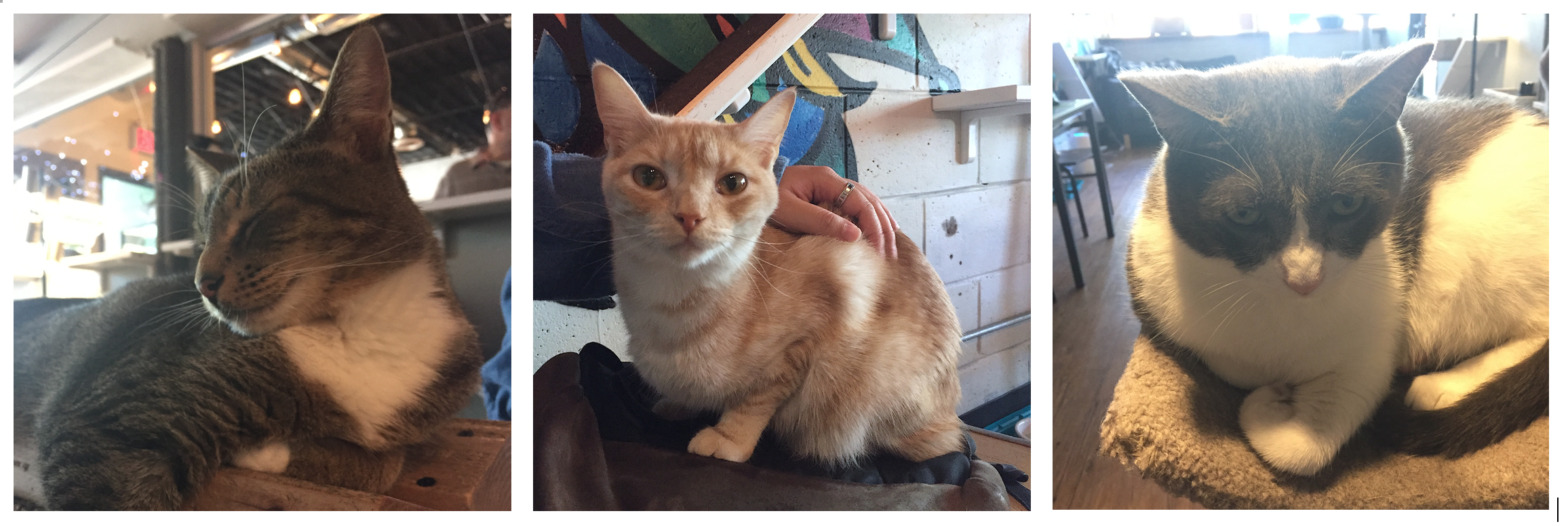
    Cats are one of the most popular choices as human friends, and I absolutely adore them! I hope to have a feline friend in the future and hopefully, you will too if you don’t have one already. Among all the cute actions that these creatures engage in daily, there are some anomalies that make their human friends ponder. These fun facts may answer a question or two you’ve had and enlighten you with the uniqueness and awesomeness of cats.

    The cats we have in our homes are really similar to wild cats!
    Compared to dogs, cats have been domesticated for only half as long and still engage in behaviors similar to wild, big cats such as lions and tigers. Their genes have not changed much from that of wildcats, except for one distinguishing factor: the coat patterns seen on the tabby cat (“Cats Domesticated Themselves, Ancient DNA Shows,” 2018).

    Cats cannot taste sweetness. 
    Like humans, cats are able to taste saltiness, bitterness, sourness, and umami! The genes Tas1r2 and Tas1r3 allow sweet tasting in mammals by encoding sweet sensing receptors. Cats have both of these genes, but their Tas1r2 gene, however, is a pseudogene, or nonfunctional copies of a functional gene (Li, Li, Wang, Bayley, Cao, Reed, Bachmanov, Huang, Legrand-Defretin, Beauchamp, and Brand, 2006).

    Why do cats kill unbelievable amounts of mice and birds?
    As natural-hunters, cats still carry unstoppable instincts that they’ve had thousands of years ago. Female cats are also found to engage in hunting more often to teach their young how to acquire food and feed (Palermo, 2013).

    Cats will bite in response to being overstimulated, not because they hate you!
    Overstimulation typically occurs in attention-seeking, friendly cats. When these felines are continuously being pet, it appears that there can be a buildup of stress for these animals leading to aggressive behaviors. Cats may give some warning signs before their impending aggression such as a continuous, whipping tail, flattened ears, and a tense body (“Overstimulation in Cats,” n.d.).

    Cats meow only to communicate with humans!
    Meows are usually found in kittens that need to communicate with their mother. However, communication between older cats consists of growling and hissing. Meowing is exclusively used by felines to tell their humans if they may be hungry, stressed, or needing attention (“Cats and Excessive Meowing,” n.d.).

    Cats sleep a lot, but why?
    Cats sleep up to 16 hours a day – that’s 67% of the day! This is because they need energy for hunting-like behaviors such as pouncing and chasing (Cespedes, n.d.).

    Cats are crepuscular, so their schedules are completely different from humans.
    They are most active at dawn and dusk, and often nap during the day while basking in the sun (Cespedes, n.d.). Though this is their natural schedule, cats may adjust their sleeping to fit their owner’s schedule.

    Why do cats bury their excretions?
    Burying waste is an instinct that cats have in order to mark their territory and avoid attention from predators (Melina, 2011). Their excretions have unique pheromones, making it possible for other cats to differentiate it from their own waste.

    _____________________________________________________________________________

    References

    Cats and Excessive Meowing. (n.d.). Retrieved from https://pets.webmd.com/cats/guide/cats-excessive-meowing#1

    Cats Domesticated Themselves, Ancient DNA Shows. (2018, April 24). Retrieved from https://news.nationalgeographic.com/2017/06/domesticated-cats-dna-genetics-pets-science/

    Cespedes, Y. (n.d.). Retrieved from https://www.petmd.com/cat/behavior/evr_ct_why_do_cats_sleep_so_much

    Li, X., Li, W., Wang, H., Bayley, D. L., Cao, J., Reed, D. R., Bachmanov, A. A., Huang, L., Legrand-Defretin, V., Beauchamp, G. K., … Brand, J. G. (2006). Cats lack a sweet taste receptor. The Journal of nutrition, 136(7 Suppl), 1932S-1934S.

    Melina, R. Why Do Cats Bury Their Poop? (2011, March 23). Retrieved from https://www.livescience.com/33147-why-do-cats-bury-their-poop.html

    Overstimulation in Cats. (n.d.). Retrieved from http://www.treehouseanimals.org/site/PageServer?pagename=caring_ccg_overstimulation

    Palermo, E. Why Do Cats Bring Home Dead Animals? (2013, March 29). Retrieved from https://www.livescience.com/34471-cats-dead-animals.html

    Surprising Things You Never Knew About Your Cat. (2015, December 03). Retrieved from https://news.nationalgeographic.com/2015/12/151203-cats-animals-science-communication-pets/