Last year I thought that I was 100% certain about what I wanted to do when I graduated. My initial plan was to graduate with my bachelor’s and then find a career in the battery industry. I thought “Oh, I don’t need a job that is super involved, doing something simple will make me happy and satisfied”.
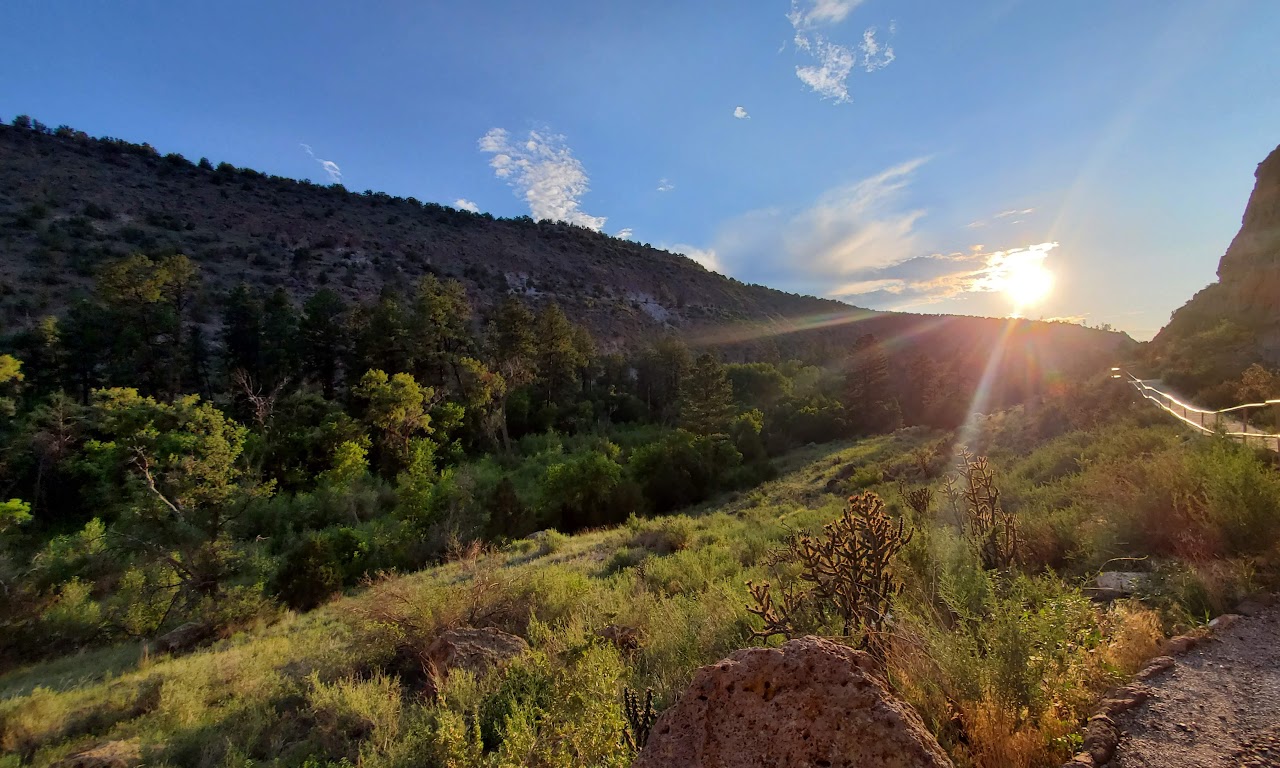
That changed after Summer 2021 when I took part in an internship at Los Alamos National Laboratory (LANL) in New Mexico. With the help of the Office of Energy Efficiency and Renewable Energy in the Department of Energy, I was connected to LANL to work in their Materials Synthesis group on a project to create metal complexes that can be used as a powerful source of liquid energy through hydrazine. To give a quick summary, Even though I wasn’t able to complete every part of the project over the summer, my time at LANL gave me confidence in myself as a scientist. I learned a ton of new skills and techniques and got feedback from the other interns and my mentors throughout the semester (big shoutout to my mentors Ben and Andrew, and my other friends in MPA-11, y’all rock <3). In addition to the new skills I learned, taking advantage of my time at a national lab allowed me to mess up and understand why things went wrong, go to research talks about topics I had no idea even existed, and ask questions about the field we work in to think about how we can improve.

Okay cool, great, awesome, why am I raving so much about working in a national lab? Couldn’t I just write a whole article about it? Yes, I could, and hopefully, that’ll come soon! It’s important to me because this internship gave me a new perspective on the different career options that are possible in energy storage, and it became the building block to why I decided to apply for graduate school. I realized that I wanted a career that would allow me to do more in-depth research on energy storage systems. The field is interesting to me because energy generation research, though researched and well understood, doesn’t have a variety of fully commercialized energy storage systems. This makes it harder to use these systems when their demand is the highest. Energy storage research also involves the collaboration of engineers, scientists, and policymakers to promote the research and development of these systems. There is high potential in most of these systems, in my opinion, to become commercialized and integrated into the energy grid. Specifically, I want to do research on batteries and fuel cells because the chemistries of how they work are interesting to me, where changing the material of one part of a battery is a tradeoff on their overall energy efficiency and safety, among many other factors.
When I thought about all the cool things I could do and take part in (and maybe even lead (; ), I got even more excited to dive into the industry right after I get my degree. Then, as I started talking to group scientists and researchers (as well as a few disappointing searches through the LinkedIn job portal), I learned that those dreams I had in mind for my career could not be easily done with a bachelor’s degree. And then I thought, “Welp, what am I going to do now?”
As someone who often talks about being ready to graduate, the realization that pursuing graduate school would very likely be my next option made me a little complacent and frustrated at first. “I thought I would be done by now, and I gotta do MORE WORK?!” was one of the many thoughts that went through my mind. But as I thought about it more, I realized that there were more reasons why I wanted and needed to go to grad school. For the areas of energy storage research that I’m interested in, I need more experience working with different characterization and spectroscopy techniques to understand what’s happening on the nanoscale to better understand why they are happening and what can be done to improve them.
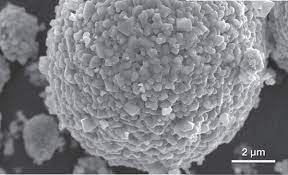
Additionally, there are many new projects in energy storage that up-and-coming scientists want to get to work on, and of course, I want to be a part of the next generation of energy storage research. The biggest roadblock that is keeping me from easily joining these with only a Bachelor’s is that in order to be the ideal employee in the energy storage industry, I need to work on more projects that will build my understanding of different systems. I hope that by achieving these goals, I’ll be prepared to work with batteries, fuel cells, supercapacitors, and whatever technology will be waiting for me.
Okay, so now that y’all know why I applied to grad school, next up is how. It may or may not be surprising, but preparing my applications and doing them was definitely the hardest and most involved part of the process. I want to start with a few disclaimers before I go over the things I did while completing my applications. First, this journey and how it “ends” are still up in the air, as I haven’t gotten any decisions yet. How all that goes will hopefully be updated later on during the spring semester. Second, my process doesn’t reflect how everyone should do it. Keeping to a timeline is difficult, and changes are bound to happen. Don’t stress if when you decide to apply for grad school you submit things close to the deadlines and you aren’t done weeks early. Lastly, you can take all these tips how you want, if you have any opinions, let me know what you think! I’d love to discuss more things that I may have missed.
And with that out of the way, let’s get started!
Step 1: Deciding where you want to go.
There’s no better step than the first step! This is where you think about what you want to focus on for the next two or more years. If you want to do energy research, then find universities that work with that, and if you wanna work on biochemistry, then find schools that fit in that area. If you have a more specific area of research you want to focus on, once you find a school that has the coursework and facilities you want, you should search for professors who have projects in that area. In my case, I want to research batteries or fuel cells, so I looked for professors who have similar projects. I tried to have at least four professors that I could see myself working with.
Of course, along with the research and coursework available at the universities you’re interested in, there are other factors that may be important to look into:
- Fellowships: I could write a lot about fellowships and why they’re so good to apply to. For one, there are a number of opportunities to apply for that will support you whether you’re pursuing a Master’s or Ph.D. (or even both), especially as a minority in STEM. Some examples include the NSF Graduate Research Fellowship Program, the GEM Consortium, Sloan, Hertz, and many more. These fellowships usually help balance the cost of tuition, as well as provide stipends, networking opportunities, and even opportunities for internships.
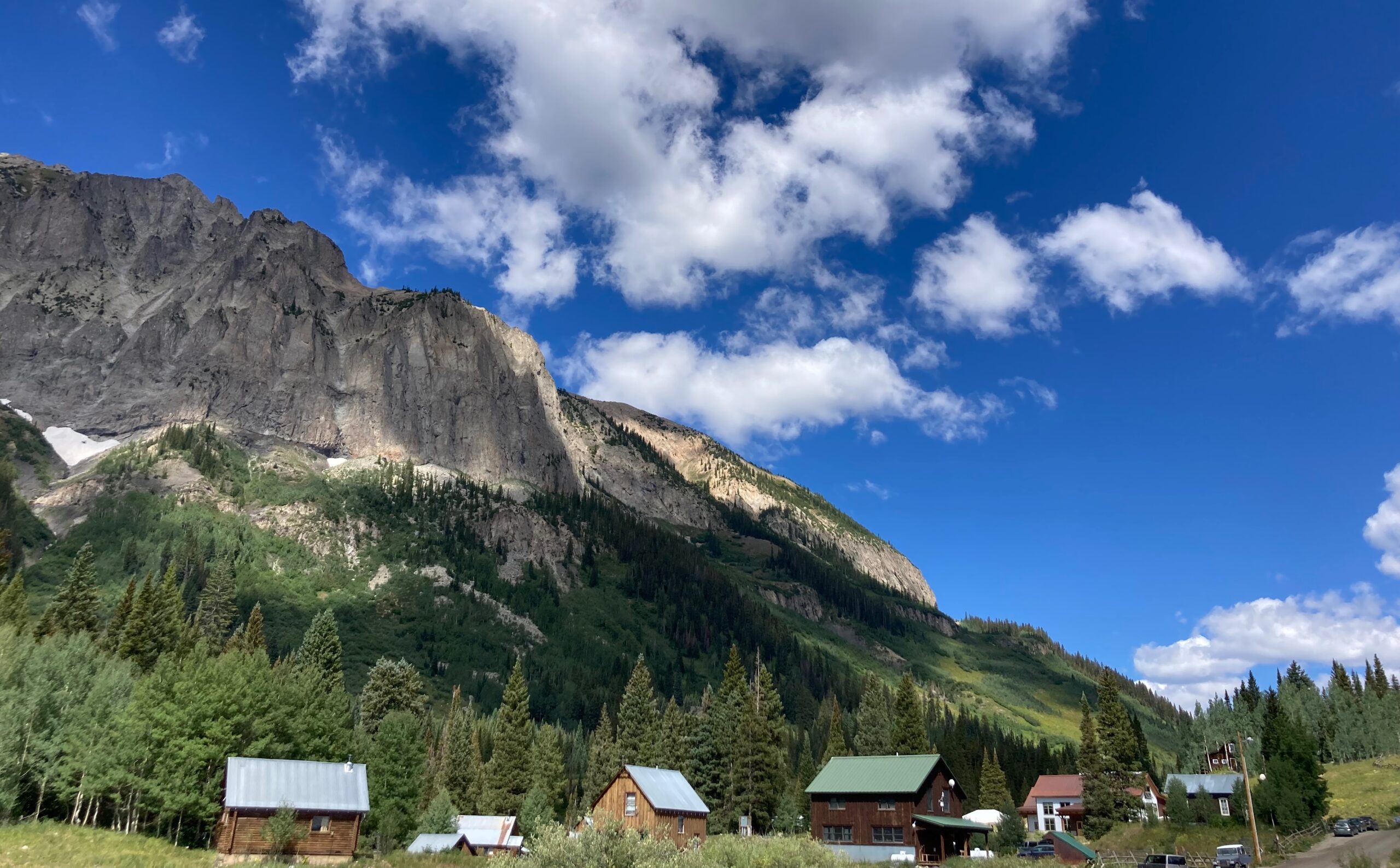
- Weather: It may or may not be self-explanatory, but wherever you decide to go, make sure you know how the weather is throughout the year. If you can’t survive in the Southern heat, then Texas or Georgia may not be the best spot to be in. If you love the mountains, then Colorado or New Mexico could be the place for you.
- School Demographics: The biggest factor to me when looking at where to apply was the statistics about my class. What I look at is the percentage of students that identify as Black or African American. I also looked into the work that the schools have done to provide spaces and student organizations for their different identities. I applied to Georgia Tech (my current university) because I know that the black community there is strong and I applied to the University of California San Diego because they have a number of initiatives to support black students and the school provides fellowship opportunities for minority students.
- City Life: Whether you’re social or you’re an introvert, it’s good to live in a city where you can have some extra fun. No matter how dedicated you are to your work, we deserve to treat ourselves to some fun! Most colleges and universities are in a place that has some good food spots and cool attractions.
- Testing Requirements: Because of COVID, we’re starting to see a new look at the graduate school application process. This year, the GRE test at most schools is either optional or not required. If a program requires the GRE, then I recommend taking some thought and maybe asking your advisors if it’s worth it. I can’t say much on this because none of the programs I applied to required it.
Step 2: Organize, organize, organize!
There are a lot of different things to organize before starting your applications that will you in the long run. First off, get your recommenders in mind ASAP. I always think it’s best to have 4 people you can reach out to because even though many schools will only ask for 2-3, it’s good to have multiple people who can be ready to write a recommendation for you in case someone else is no longer able to. You should have recommenders that can speak to your future goals and how you think you’ll be able to achieve them, your ability to do research well, and if you will be successful in and out of the classroom. For my applications, I asked my academic advisor, my research advisor that I worked with for two semesters, my internship supervisor, and my professor that I’ve worked with for a few years.
It’s also good to have information for them that will help them while they write about you. With some help and advice that I got from my advisor, I made a spreadsheet that shows the information about the schools that I’m applying to, the deadlines, plus additional info like the submission process and links to learn more about specific programs. Another document I made to help my advisor was a “motivations document”. I used this to make it clear to my recommenders my short and long-term goals, why I want to pursue a Master’s to reach those goals, and what draws me to certain schools and their research labs.
Lastly, for myself, I kept a larger document that has the application information for each school and fellowship. This helps to keep me organized on any deadlines when I should send out recommendations, what I should think about when writing my statements, and supplemental questions.
Step 3: WRITING TIME!
So this is the part that will take a lot of time, but the details aren’t too extensive. It really is just sitting down and thinking hard about how you’re going to talk about who you are, what you’ve done, and how you’re going to be an incredible and successful scientist that any university would love to have. It’s very important to talk about why you want to pursue a graduate degree, any relevant research experiences, what about the school is attractive to you, who you would like to work with. Some additional points that may be good to address are your background (race, ethnicity, financial, etc.), any low grades, and coursework (this is best if your undergrad institution has limited STEM courses or if the field you’re going into is very specific). There are many videos and websites that talk about what makes a good personal statement.
- Statement of Purpose
- YouTube Playlist of Grad School Prep Videos (There are a ton about NSF-GRFP, but they are very helpful for writing general statements as well!)
After you finish your first drafts of your statements, don’t be afraid to send it over to people you know for review. Whether it’s from your friends, your teachers, or your siblings, every little comment given will help make your statement even better. Others will likely notice more minor (or even major) things that could be edited, and once they’re finished I highly recommend reading it out loud to make sure it makes sense to you.
Step 4: Submit and Wait
When everything looks right, you don’t see anything else wrong with your statement, and you feel confident and happy with your statement, go ahead and hit submit! After the application, most schools will ask for an application fee, but depending on the school and your situation, you can apply for a fee waiver that covers it! In my case, because of the GEM Consortium Fellowship and some diversity and inclusion events I attended, I was able to get fee waivers for 4 of the 5 universities I applied to.
The waiting game can be hard to deal with if you’re a little impatient like me and want to know the decisions ASAP, but it provides time and space to reflect and prepare for anything that might come next. Some programs, if they’re exclusively coursework with no research, may ask to interview you, but most will contact you once they reach a decision. If you get that acceptance, amazing, you just have to decide where to go, who to work with, all the fun details. If you don’t get the results you’re hoping for, that’s fine too!! By this point, you will have put in such hard work and dedication towards these applications, and no matter the result, I can be 100% sure that you will have learned something about yourself.
So to finish things out, I want to give some more perspective on how the process was on my mental health. Overall, the process of applying made me so much more confident in myself. Looking back at my experiences made me realize just how much I’ve done and how incredible it really is. At first, I felt like it would be difficult to talk about myself well and how I would be a great fit, but I learned how to hype myself up while also proudly noting what I was lacking and ready to learn in grad school.
I also won’t lie when I say doing grad apps while in one of the heavier semesters in my academic career was STRESSFUL. Working to balance my classes and clubs led to some weeks being quite draining. Many of my other friends who were applying to grad school in this cycle also agreed that there were definitely weeks where our mood was “Yaay, we have a free week to spruce up my application!”, and others where the mood was “Wow, I’m tired from all these classes and meetings, I just wanna take a 37-hour nap.” No matter how we felt though, we stayed strong and pushed through to the end, because we knew that once we finished all of our applications, we were now one step closer to the future that we see ourselves in.
Hope you enjoyed this article! It’s a lot of information as I wanted to give an honest and helpful look at what I did and what might help others out that might be a bit scared and unsure about applying for grad school. It was terrifying to me when I started, but it’s only thanks to the help of my brother, who’s a grad student now, my friends applying with me, and all the advisors and recommenders, that I felt confident I had done something that I’m proud to share with the world. I can’t wait to see what will happen next, and I’ll keep y’all posted on how things go!
References
Sponsored by Thermo Fisher Scientific. (2020, January 28). Determining battery structure and composition using SEM. AZoM.com. Retrieved March 5, 2022, from https://www.azom.com/article.aspx?ArticleID=15475