Category: today i learned (til)

health, fitness, medicine, environment, ecology, how to learn tricky topics in science and math, new discoveries, news, current events

  • Vertigo: Living like you’re on a perpetual rollercoaster

    Vertigo: Living like you’re on a perpetual rollercoaster

    From ages 6-10, my uncle took my cousin and I to Navy Pier every summer. It’s July, school is out, the sun is shining, and not one multiplication table in sight! Fatty fair foods to our left and Lake Michigan to our right, the only thing missing was the adventure! Navy Pier doesn’t have many rides but there are a few that I was definitely excited for as a child. The only problem is, I can’t ride rollercoasters. And no, I am not afraid of heights. I still tried though it made my stomach hurt, but it got too much at one point and I stopped riding rollercoasters that day, and for the rest of my life. 

    This would not be a problem if it wasn’t affecting my daily life. In addition to not being able to enjoy 98% of the rides at Disney World, I have severe motion sickness. Motion sickness is a common condition so, I was not surprised that I have it.

    But my motion sickness doesn’t only affect me as a passenger. When I drive over large bumps or up steep hills, I flinch because of the stomach pain. Not only is this dangerous, but an Atlanta speed bump is nothing compared to a rollercoaster(at least it’s not supposed to be)!

    So why can’t I ride rollercoasters? Why do I need to brace for impact driving up to my parents’ house? My mom gave me my first answer because she has a similar issue: Vertigo. Vertigo, though described as the sensation of spinning that leads to dizziness, is actually a symptom of several diseases/conditions such as: chronic migraines, benign paroxysmal positional vertigo(BPPV), persistent postural-perceptual dizziness(PPPD), or Meinere’s disease.  It’s also described as “disequilibrium”, which is just the feeling of being unbalanced constantly.
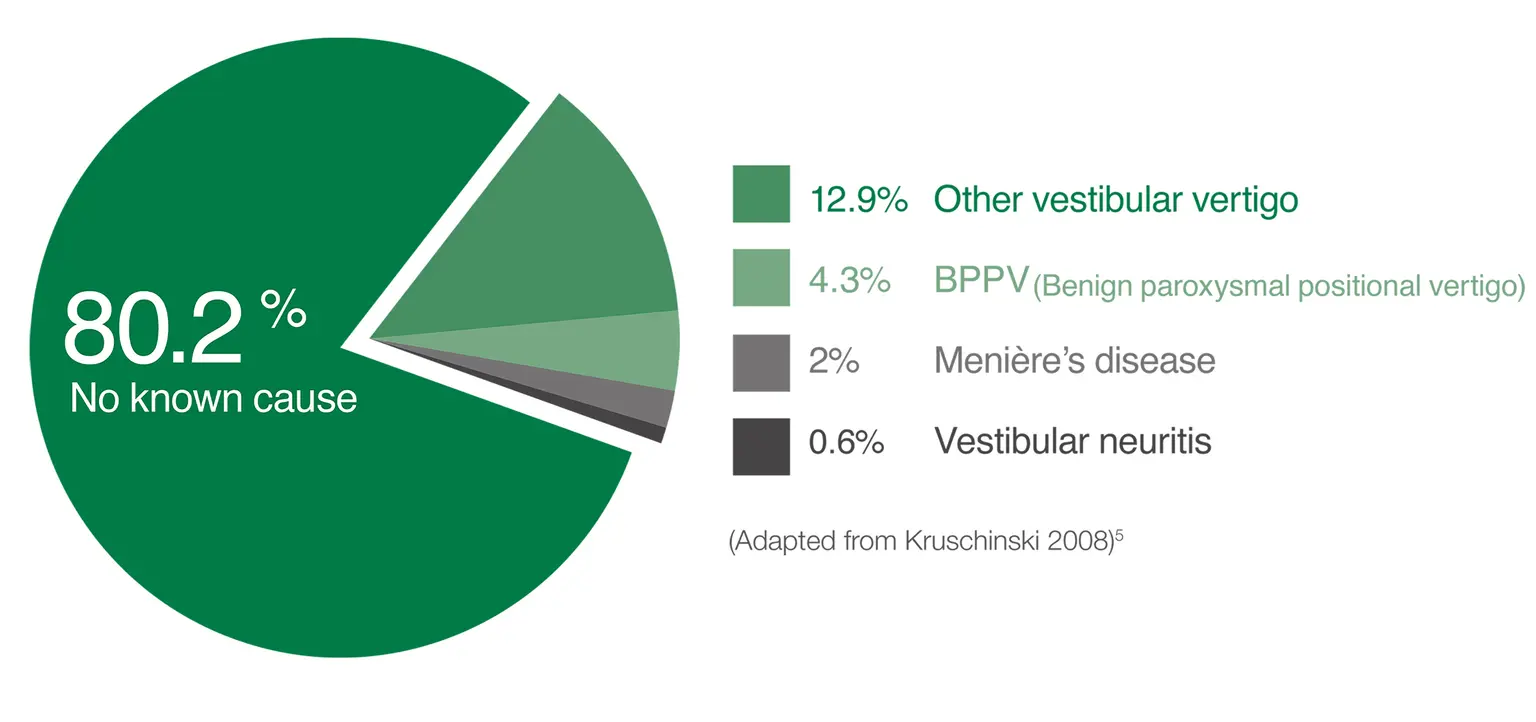
    Figure 2. Percentage of people who suffer with some variant of vertigo

    Here’s the science:

    The stomach drop that many people feel when riding coasters is because your internal organs lag behind when you fall(Berg, 2024). This slight disconnect makes you feel like you’re weightless! Your internal organs don’t move as fast as the rest of your body so that sends a signal to your brain fooling you into thinking gravity no longer exists.

    For people with Vertigo, this feeling is exhilarating. For me, it causes extreme nausea and pain. My stomach churns and my head starts aching, and then after 30 seconds it’s over. It turns out Vertigo is an inner ear problem. The inner ear is located in the vestibular system, which is a maze of canals filled with fluids and tiny crystals called otoconia.

    According to University of California San Francisco, otoconia are “composed of calcium carbonate, and help the utricle sense head tilt and acceleration by acting as a weight that will slide relative to the hair cells with head position changes”.  They can be easily displaced by external factors such as age or trauma, but it can also be a genetic mutation. 

    When the otoconia ends up in the wrong palace such as the semicircular canals, your brain thinks that there is movement of fluid throughout the inner ear when there really is not. This miscommunication of signals is what causes serious nausea, dizziness and even severe pain. Essentially, your inner ear tells your brain that you’re moving at a rapid pace but your eyes are also telling your brain that you’re not moving at all. Because the brain is receiving different signals, the rest of the body suffers the consequences. 

    For me, it depends on the activity. Yes, I can ride the kiddie rides at Six flags. No, I cannot ride “Goliath”. I am not afraid of heights or planes. But when a plane lands, I often brace myself because the speed at which we land does cause a lot of pain. I also do not get sea sick, which is interesting because many people with motion sickness also have sea sickness.

    Solutions:

    1. Motion sickness glasses. 
      1. Though they may look funny, many people have said these glasses help with car rides. The liquid inside the glasses helps balance the signal your inner ear and your eyes are sending to the brain.
      2. Antihistamines 
        1. Antihistamines can often be used to suppress the vestibular system’s hyperactivity when moving.
          1. Medicine such as Mezclizine, commonly known as Dramamine is the most popular form of medicine to help reduce motion sickness. Cinnarizine is also an antihistamine that is used for travel sickness.
      3. Surgery
        1. For people with Meniere’s disease, surgery may be required to correct the inner ear’s dysfunction.
      4. Sit in the passenger seat!
        1. Because the front wheels of responsible for the direction of the car, turns may feel less harsh. If you sit in the back, you’re farther away from the turning wheels so motion sickness is more likely. Drivers are even less likely to feel motion sickness.

    My solutions:

    1. I take iron supplements to help with dizziness/anemia, so that motion sickness doesn’t make me pass out.
    2. I don’t ride rollercoasters.

    References

    https://www.ama-assn.org/public-health/prevention-wellness/what-doctors-wish-patients-knew-about-vertigohttps://ohns.ucsf.edu/balance-falls/BPPV

    https://www.nhsinform.scot/illnesses-and-conditions/ears-nose-and-throat/vertigo/https://

    www.rd.com/article/motion-sickness-glasses/

    https://www.meandve.org.uk/information-and-support/treatment-and-management/surgery

    https://www.canva.com/design/DAG3Yocer34/Lielrs9QrT29fb-6T_CN2Q/edit?utm_content=DAG3Yocer34&utm_campaign=designshare&utm_medium=link2&utm_source=sharebutton

    https://www.google.com/url?sa=i&url=https%3A%2F%2Fwww.heel.com%2Ftherapeutic-areas%2Fvertigo%2Fvertigo&psig=AOvVaw3VWlit1xLmX4e-YTrBrPfh&ust=1762563486136000&source=images&cd=vfe&opi=89978449&ved=0CBYQjRxqFwoTCLCOsOTq3pADFQAAAAAdAAAAABAE

    https://www.warrantywise.co.uk/blog/advice/travel-advice/10-ways-to-deal-with-car-sickness/#:~:text=Sit%20in%20the%20front%20seat,further%20from%20the%20turning%20wheels.


     

  • The Pot That Keeps on Giving: Perpetual Stew

    The Pot That Keeps on Giving: Perpetual Stew

    Image adapted from “Perpetual stew laughing” taken by Annie Rauwerda is CC BY-SA 4.0.

    Would you eat stew from a pot that’s been cooking for over 45 years?For most people, the concept of eating food that has existed for such a long time sounds concerning to say the least. Surely, no one has kept a pot of stew for years.

    Well, it is a very real thing, and it is called perpetual stew! The idea is to keep a pot of stew simmering over a certain temperature at all times to prevent harmful microorganisms from growing. In theory, it is safe, and there are even restaurants around the world serving it to customers. So, would you try perpetual stew?

    Perpetual Stew: What is it?

    Perpetual stew can be known as forever soup or hunter’s stew. Essentially, it is a pot of stew that is constantly kept cooking over heat. Over time, people can take from the stew, eat it, and replenish it with water and more ingredients (Murashima, 2025). In this case, “time” could range anywhere from a number of days to even years. 

    In modern days, the concept has gained a good deal of traction all over the internet after some influencers have tried their hand at making the stew themselves. One blog writes about how Rauwerda, an influencer online, created her own perpetual stew over the course of 2 months, inviting friends, family, and even strangers to add to the stew (Martinko, 2024). The idea certainly draws a lot of attention, but how safe is this practice in reality?

    Is it Safe to Eat?

    Naturally, there is a cause for concern when consuming something that has been left “out” for such a long period of time. Most people would be concerned about the food spoiling if it was left out for a few days, not to mention a couple years.

    Food spoilage is generally caused by a large number of different microorganisms like protists, fungi, and bacteria (Rawat, 2015). Although they are not visible to the human eye, microorganisms are generally found everywhere. Under the right conditions, these kinds of organisms can reproduce rather rapidly and cause harm to the human body. For instance, one research article describes how spore-forming bacteria can grow in heat-treated foods and survive at temperatures up to 55°C (Rawat, 2015). This means that despite being heated, foods like stews can still harbor harmful bacteria. Hypothetically, though, the stew may be safe to eat if it is constantly kept at around 60°C, a temperature above the threshold that those bacteria can survive (Murashima, 2025). If the stew ever dips below that temperature, though, it may be best to discard that pot and start over. After all, bacteria can appear and multiply within just a few hours.

    Not as Strange as it Sounds

    Perpetual stew isn’t something that you can just make at home either! In some parts of the world, the stew is actually sold in restaurants. One family-owned establishment in Bangkok, Thailand called Wattana Panich serves a beef noodle broth that has been cooking for over 45 years (Sullivan, 2019). The family keeps the broth cooking all day, selling it to customers from around the world. However, the practice is not as simple as keeping the pot boiling at all hours of the day. Nattapong Kaweeantawong, the owner of the restaurant, describes how the family only takes a small part of the original soup every night and keeps it over a constant simmer. The rest of the soup is then removed from the pot so that it can be cleaned, and the small bit of soup that was put aside is then used to make a new soup the next day (Sullivan, 2019). Thus, the restaurant has not kept the entire pot of soup for 45 years, but rather a small part of the old soup is kept as the “starter” for the new soup each day. 

    Although from a microbiological perspective it may not be the exact same, the concept of keeping a portion of old foods as a starter to make new ones isn’t foreign at all. Sourdough bread is made with a starter that includes a multitude of microorganisms that cause fermentation, including Lactobacillus (Corsetti & Settanni, 2007). Kombucha is fermented tea, which includes the use of bacteria and yeast. Vietnamese yogurt is made with a starter as well, where the cook will always keep a portion of the previous batch of yogurt to make a new one. 

    Therefore, perpetual stew may not be as scary as it sounds! Perhaps it is simply a cultural thing or a matter of opening your mind, but it isn’t just a pot of boiling rotten food. It may not be the best idea to try making the stew at home, since there are many ways for the stew to go wrong without the proper knowledge. However, it could be a dish worth trying when travelling abroad!

    Would you ever consider trying a stew that’s been brewing for years?


    References:

    Corsetti, A. and Settanni, L. (2007), Lactobacilli in sourdough fermentation, Food Research International, Volume 40, Issue 5, Pages 539-558, ISSN 0963-9969, https://doi.org/10.1016/j.foodres.2006.11.001. 

    Martinko, K (2024). Meet Perpetual Stew: The Medieval Soup That Became a Social Media Sensation. AllRecipes. https://www.allrecipes.com/what-is-perpetual-stew 

    Murashima, C. (2025). Want to try perpetual stew? Some tips for avoiding foodborne illness. NPR. https://www.npr.org/2025/06/11/nx-s1-5422245/perpetual-stew-safety-tips 

    Rawat, S. (2015). Food Spoilage: Microorganisms and their prevention. Asian journal of plant science and Research, 5(4), 47-56.

    Sullivan, M. (2019). Soup’s On! And On! Thai Beef Noodle Brew Has Been Simmering For 45 Years. NPR. https://www.npr.org/sections/thesalt/2019/11/03/772030934/soups-on-and-on-thai-beef-noodle-brew-has-been-simmering-for-45-years 

  • BC.(I): A Neurotechnological Timeline of Innervating Interfaces

    BC.(I): A Neurotechnological Timeline of Innervating Interfaces

    References

    Hebb, D. O. (1949). The organization of behavior: A neuropsychological theory. New York: Wiley.

    Hochberg, L. R., Serruya, M. D., Friehs, G. M., Mukand, J. A., Saleh, M., Caplan, A. H., Branner, A., Chen, D., Penn, R. D., & Donoghue, J. P. (2006). Neuronal ensemble control of prosthetic devices by a human with tetraplegia. Nature, 442(7099), 164-171. https://doi.org/10.1038/nature04970

    Mullin, E. (2024, May 22). Neuralink’s first user is ‘constantly multitasking’ with his brain implant. WIRED. https://www.wired.com/story/neuralink-first-patient-interview-noland-arbaugh-elon-musk/

    University of Washington. (n.d.). WaNPRC neuroscientist featured for pioneering work on brain-computer interface. Washington National Primate Research Center. Retrieved from https://wanprc.uw.edu/pi-feature-pioneering-work-bci/

    Wilkes, T. (2018, May 16). Prof. Normann describes the Utah Electrode Array. Department of Biomedical Engineering, University of Utah. Retrieved from https://www.bme.utah.edu/2018/05/16/prof-normann-describes-the-utah-electrode-array

  • Neural Links: The Road to Real-Life Telepathy

    Neural Links: The Road to Real-Life Telepathy


    Pssst… you… yes you… Can you hear me? 

    You hear someone speak to you, but nobody is around. What if that was your reality? Being able to communicate with someone without the need for texts, calls, words, or even movement seems like a hard idea to grasp outside of a superhero’s world, but scientists are taking steps towards this “superpower”. Characters like Professor X, Jean Grey, and even Aquaman have been some of the coolest because of their unique ability to communicate without words or movements. While we haven’t yet achieved that level of communication, researchers are creating amazing brain-to-brain connections that show us telapathy is not based too far off from real possibilities. Not created through superpowers, magic potions, or spells, but through STEM.

    Brain-to-Brain Connection

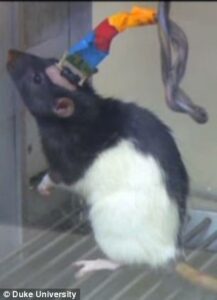
    When you strip back the glitz and the glam from telepathy, what is left is simply a transfer of information from one brain to another. Neuroscientist Miguel Nicolelis and his team explore this transference using a brain-to-brain interface (BBI), which is very similar to the brain-machine interface I wrote about in my telekinesis article here. This BBI uses the brain signal from a designated encoder and transfers it over to a decoder, which, using the encoder’s electrical signals, can receive information and solve tasks based on the encoder’s experiences and knowledge (Chappell, 2013). Apart from the ability to decode and transfer brain signals, the rats showed an ability to actively collaborate using this brain-to-brain connection. Researchers called it a demonstration of “…the first time that a direct channel for behavioral information exchange can be established between two animal’s brains without the use of the animal’s regular forms of communication” (Boston University, 2013). Thinking beyond rats, this type of communication could have bigger implications for collaboration between humans for complex tasks and problem-solving scenarios.

    Challenges

    As was the case with Telekinesis, one of the biggest hurdles when thinking of this technology is the complexity of the brain. As of now, brain-to-brain connections have only been possible in rats, though they are working to move towards monkeys. Researchers are still working to be able to transfer more complex patterns and even abstract thoughts/ideas (Boston University, 2013). Though the technique used to research this “telepathic” connection has been described as crude due to its limitations, it is still a big step towards telepathy between humans.

    Conclusion

    It is apparent that the type of telepathy we see in superhero movies is still a long way from happening, maybe it won’t happen, but this experiment proves that brain-to-brain communication is not just science fiction. With every experiment and new findings, researchers are getting closer to understanding what telepathy truly is and how information can be transferred between minds. I am excited to see how far STEM can take what we thought to be impossible to a near-future reality.

    And as Professor X once said, “The greatest power on Earth is the magnificent power we all of us possess… the power of the human brain!”


    References 

    Chappell, B. (2013, March 1). Researchers connect rats’ minds via internet. NPR. https://www.npr.org/sections/thetwo-way/2013/03/01/173257749/researchers-connect-rats-minds-via-internet

    Telepathic rats communicate via brain-to-brain connections, »  the nerve blog  | Blog Archive  | Boston University. (2013, March 8). © 2025 Boston University. https://sites.bu.edu/ombs/2013/03/08/telepathic-rats-communicate-via-brain-to-brain-connections/

  • Mind Over Matter: How Brain Implants Are Making Telekinesis Real

    Mind Over Matter: How Brain Implants Are Making Telekinesis Real

    Imagine a world where you can move objects and complete tasks simply by thinking about them. Sounds like a pretty relaxing and too-good-to-be-true idea, right? What if I told you that researchers are closer to this reality than you may think? In pop culture, characters like Raven from Teen Titans and Wanda from WandaVision may make telekinesis seem like an impossible out-of-this-world ability. Still, when translated into the real world and boiled down, telekinesis has nothing to do with supernatural powers and everything to do with our brain’s signals. 

    How is this possible?

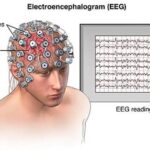
    Researchers are using brain-machine interfaces (BMIs) to simulate what we know as telekinesis. As the name suggests, these machines create a connection between brains and machines, translating the brain’s electrical signals into commands the machine can follow. This connection allows thoughts to control tangible items (Brain–Machine Interface Projects, n.d.). In medical dramas like Grey’s Anatomy, you might see a patient hooked up to a machine that has funny-looking lines. Well, that tool is an electroencephalography (EEG), and it is used to view brainwave activity using electrodes. In BMIs, this brainwave activity is translated into digital commands, which can be boiled down into 3 simple steps: signal detection, signal processing, and command execution.


    Real-World Applications

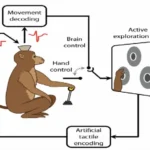
    There have already been some great advances in this technology and researchers are working to continue to push the bounds between ideas and reality. Miguel Nicolelis, a neuroscientist from Duke University, was one of the creators of a virtual arm used to further explore this mind-machine connection. As he explains it, “We trained these animals to use their own brain activity to control an avatar arm and hand that could explore objects, virtual objects that we created for them” (Npr, 2011). The connection between the monkey’s senses and this virtual arm was so strong that the monkeys assimilated the arm as their very own, and they could even feel the texture of objects solely using the virtual arm. 

    Nicolelis is hoping that this advancement can lead to even bigger uses, such as exoskeletons that would allow paralyzed individuals to use a BMI to walk and move again (Npr, 2011). A step in the right direction was seen when researchers used brain implants on paralyzed individuals to allow them to control tech devices without the need to lift a finger. Using just their thoughts, these individuals were able to perform tasks commonly performed on devices such as browsing the internet, streaming music, and even sending emails/texts to their loved ones (Sanders, 2018). Although this was not a physical feat of walking and moving again, the ability to communicate with their loved ones and with society in this way is an amazing step in the right direction.

    Challenges 

    Although researchers have been able to accomplish many things using BMIs, brainwave activity, and brain implants, there are still many challenges that come with trying to make telekinesis happen outside of a controlled environment. The brain is deeply complex, our thoughts, ideas, and intentions are often too specific for a machine to translate into commands. Many times, machines struggle to translate these complex thoughts and turn them into tangible actions. There is also the issue of mobility with these BMIs as researchers are currently trying to create wireless and more efficient versions. Another big differentiation between BMI technology and pop culture’s versions of telekinesis is the matter of levitation. As of now, no technology allows us to lift objects using solely our brains without the help of things like magnets and robotics. 

    Conclusion 

    There is still a long way to go before we can say that telekinesis is real and fully possible, but these advancements give hope that maybe one day we will be able to accomplish great feats using solely our minds and our ideas. I think it can be used for many good things, such as giving paralyzed individuals the ability to move again, and although it isn’t like Eleven from Stranger Things lifting a car, I find it just as interesting.


    References 

    Brain–Machine Interface Projects | IEEE Brain. (n.d.). https://brain.ieee.org/brain-topics/brain-machine-interface-projects/

    Npr. (2011, October 7). A virtual arm that talks with the brain. NPR. https://www.npr.org/2011/10/07/141156406/a-virtual-arm-that-talks-with-the-brain

    Sanders, L. (2018, August 8). Brain implants let paralyzed people use tablets to send texts and stream music. Science News. https://www.sciencenews.org/article/paralyzed-people-implants-brain-computer-interface-tablets

  • GNU Privacy Guard (GPG) and the Protection of Sensitive Genetic Data

    GNU Privacy Guard (GPG) and the Protection of Sensitive Genetic Data

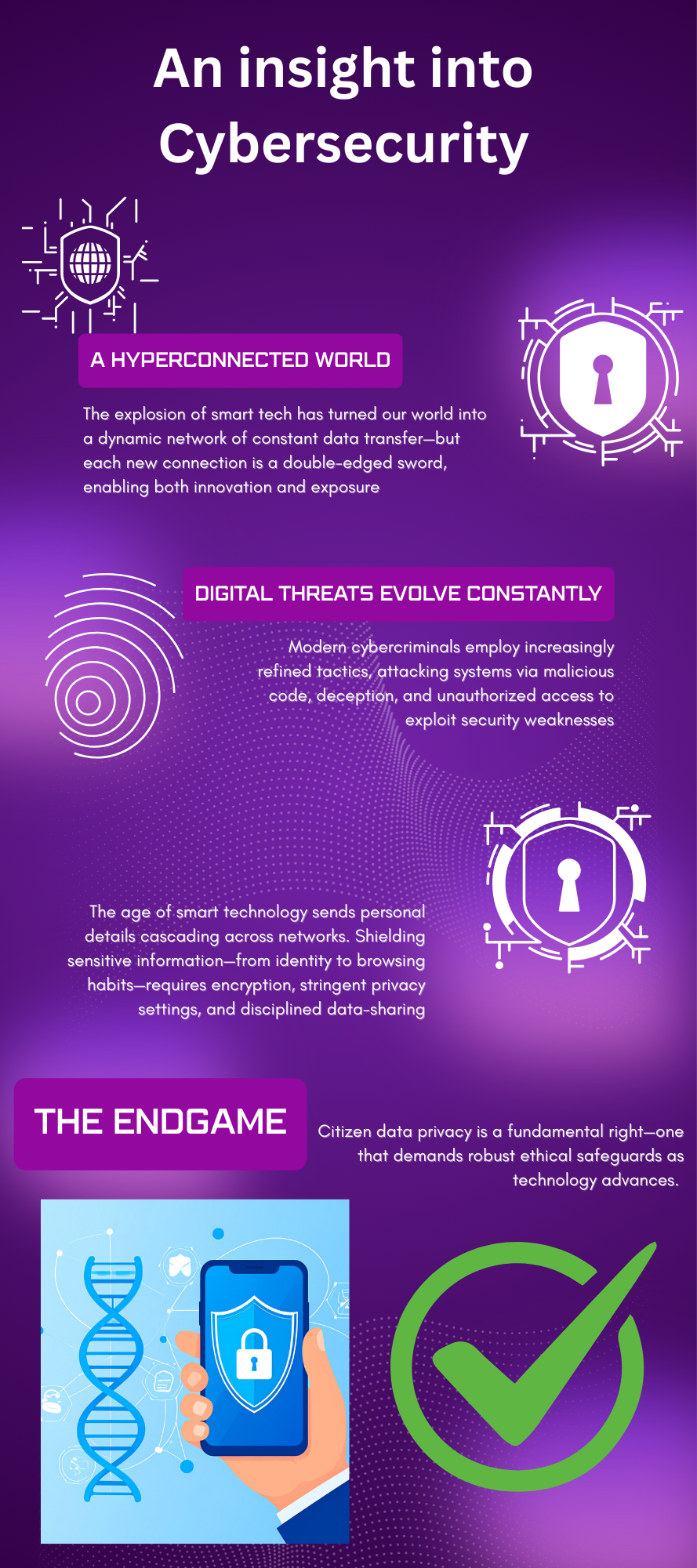
    In today’s data-driven world, few forms of personal information are as personal and revealing as genetic information. Genetic sequencing has become more widely available and used, from determining health predispositions to investigating ancestry. But this growing availability also poses significant risk. Once digital, genetic information is vulnerable to breaches, abuse, and unauthorized surveillance. In order to safeguard this critical data, robust cybersecurity measures are required—and one of the most effective solutions out there is GNU Privacy Guard (GPG). GPG is open-source, free encryption software that adheres to the OpenPGP standard, used to ensure secure data encryption and digital authentication. Its value as a vehicle for genetic data security protection has grown exponentially in recent times, particularly in the wake of widely publicized breaches against firms. Effective resources such as GPG do exist, however, and ethical considerations are still at the top of the agenda—spanning data ownership dilemmas to the dangers of genetic discrimination.

    How GNU Privacy Guard (GPG) Safeguards Genetic Data

    GPG employs public-key cryptography to allow users to securely encrypt, decrypt, and verify digital data. When genetic information is encrypted with the public key of the recipient, only their private key can unlock it—offering complete protection from misuse. GPG also utilizes digital signatures, which verify origin and integrity and ensure the genetic data remains undamaged and that it came from a reliable source. Such trust is paramount for organizations responsible for dealing with sensitive genetic information.

    How does GPG particularly serve genetic data well? It does end-to-end encryption, ensuring information is encrypted when it transits (such as between labs and providers) and when on storage. Second, as an open-source solution, GPG permits its codebase to be inspected by communities—leading to quicker vulnerability recognition and closure than that from closed-source counterparts. Third, GPG aids in compliance with rigorous privacy policies and protocols such as the Health Insurance Portability and Accountability Act (HIPAA), General Data Protection Regulation (GDPR), and NIST recommendations. No encryption technique is completely secure, however. Handling of private keys in a mishandled fashion, inadequate operation security, or system setting faults can cause confidentiality to be compromised. Encryption must be part of a comprehensive security plan not one huge blob. Perhaps the most significant ethical difficulty in the processing of genetic information is that no informed consent exists. Most consumers of genetic test services do not know that their information can be retained forever or used as research data.

    Infographic on Cybersecurity Created by Sajdah Muhammad

    Ethical Implications and Breaches

    23andMe and AncestryDNA, some of the most popular DNA testing service providers, have been accused of hiding consent provisions deep within terms and conditions. People must be made aware in a transparent manner how their data will be utilized, to whom it will be revealed, and what the long-term implications will be. In 2018, 23andMe struck a deal with pharmaceutical giant GlaxoSmithKline (GSK), which provided the pharma company access to millions of customers’ genetic maps in an effort to advance medicine discovery. Although these arrangements can benefit medicine, they amplify concerns over commodification of personal intimate data. Genetic information may provide one’s susceptibility to illness, mental illness, or even personality. This is dangerous and doesn’t allow proper consent for all customers.

    Examples of genetic data breaches 

    1. Veritas genetics — 2019

    In 2019, Veritas Genetics had a server was set up improperly that exposed customer data like sensitive test results. This could have been prevented with access controls and proper encryption.

    2. GEDmatch and criminal investigations

    GEDmatch is an internet-based service that compares autosomal DNA data from different testing companies. Law enforcement used the service to solve a case that had been pending for decades. But it created ethical and moral questions regarding whether genetic data should be exchanged recreationally or medically should be allowed to be used in criminal investigations. 

    Citizen’s information is a constitutional right to be protected. As technology evolves, many professionals have tried implementing/worked with the authorities to enforce the following strategies with an ethical perspective:

    1. Respecting ownership data rights

    2. Following GDPR, NIST, and HIPAA regulations

    3. Implementing rigorous procedures and incident response policies

    4. Implementing consent mechanisms

    Such initiatives can enable gap filling of the ethical cybersecurity issue. As genes are increasingly tested, ethical data stewardship will only become more necessary. Innovation v.s. privacy as well as ethics is not only a technological puzzle but also making sure to keep morals alive.

    ————

    References

    General Data Protection Regulation. (2024, April 22). General Data Protection RegulationGDPR. General Data Protection Regulation (GDPR). https://gdpr-info.eu/.

    GSK and 23andMe sign agreement to leverage genetic insights for the development of novel medicines. GSK. (2018, July 25). https://www.gsk.com/en-gb/media/press-releases/gsk-and-23andme-sign-agreement-to-leverage-genetic-insights-for-the-development-of-novel-medicines/

    Orr, J. (2023, August 29). Incident of the week: DNA-testing company Veritas Genetics discloses unauthorized access of Customer Data. Cyber Security Hub. https://www.cshub.com/attacks/articles/incident-of-the-week-dna-testing-company-veritas-genetics-discloses-unauthorized-access-of-customer-data

    Ross, R., & Pillitteri, V. (2024). Protecting controlled unclassified information in nonfederal systems and organizations. NIST Special Publication 800-171. https://doi.org/10.6028/nist.sp.800-171r3

    Ross, W. L. (2020). Security and Privacy Controls for Information Systems and organizations. NIST Special Publication. https://doi.org/10.6028/nist.sp.800-53r5

    Trujillo, M., Collings, P., Klosowski, T., Hussain, S., & Lynch, J. (n.d.). Genetic information privacy. Electronic Frontier Foundation. https://www.eff.org/issues/genetic-information-privacy#:~:text=In%202013%2C%20the%20HIPAA%20Omnibus,or%20long%2Dterm%20care%20insurance.

    Wickenheiser RA. Forensic genealogy, bioethics and the Golden State Killer case. Forensic Sci Int Synerg. 2019 Jul 12;1:114-125. doi: 10.1016/j.fsisyn.2019.07.003. PMID: 32411963; PMCID: PMC7219171.

    https://gnupg.org/

    Infographic Created by Sajdah Muhammad

  • Benefits of Composting: why you should start composting now!

    Benefits of Composting: why you should start composting now!

    There is less than 5% of residential food waste that is currently being composted around the world. To be exact, about 3.7% as of an April 2023 report. However, in contrast to the 1.3 billion tons of food wasted each year, this percentage doesn’t even scratch the surface. This food waste ends up in landfills, waiting to be decomposed to release methane, a potent greenhouse gas. So, what can we do in order to prevent this from happening?

    Composting is widely known for its beneficial effects for recycling organic waste materials to create valuable soil amendment. Scientifically, it is the transformation of raw organic materials into biologically stable, humic substances suitable for a variety of soils and planet uses (Leslie, 2000). But if it’s so good, why aren’t more people composting their food waste? This could be due to a variety of reasons from perceived inconvenience, odor, and limited infrastructure, but most importantly, less and less people know of its actual environmental benefits. In this article, we examine the importance of composting and the science behind it. 

    The process of composting involves the breakdown of a molecular structure into its elemental components–into simpler compounds or even atoms (Insam & de Bertoldi, 2007). There are two main phases in the process of composting: decomposition and stabilization. The final product is compost which is made up of carbon dioxide, water, minerals, and stabilized organic matter, which is essentially used as plant fertilizer to enrich the oils and support plant growth (Insam & de Bertoldi, 2007) Decomposition requires its very first step, the exothermic process, where it takes the waste and turns it into the form of heat simply by increasing the temperature in the mass (Insam & de Bertoldi, 2007). As temperature increases, thermophiles take over, continuing to the thermophilic phase. This stage becomes known as the active phase of composting, where degradable compounds and oxygen are consumed, pathogens and weed seeds are killed, and phytotoxins are eliminated (Leslie, 2000). Then we proceed to the two mesophilic phases. In these stages mesophilic organisms recolonize the whole waste pile and the curing phase begins (Leslie, 2000). Curing allows organic materials to continue to decompose, which are then converted to biologically stable humic substances. It is common practice in commercial composting to cure for 1 to 4 months, and for homeowner compost piles to cure for as long as 6 to 9 months (Leslie, 2000). Finally, the stabilization phase occurs after the temporary release of phytotoxins, where phytotoxicity is completely overcome and the final product is beneficial to plant growth (Insam & de Bertoldi, 2007).

    Now you know how composting works, so what should you compost? You should compost greens–think nitrogen-rich materials like vegetable scraps, coffee grounds, and fresh grass clippings. These green materials have a lower supply of carbon relative to nitrogen (C:N), which means it has a faster composting process (Insam & de Bertoldi, 2007). For non-food waste, brown materials that are carbon-rich like dried leaves, cardboard, and straw. And if you’re worried about creating odor or attracting pests, avoid composting meat, dairy, oily foods, or pet waste. Wastes like these are more nitrogen rich, so it lowers the C:N ratio to less than 20:1, causing nitrogen to be lost to the atmosphere leading to foul odor (Insam & de Bertoldi, 2007). Lastly, make sure to keep it moist to speed up the decomposition process. Low moisture content impedes the composting process because it leaves your compost pile more susceptible to spontaneous combustion due to temperature (Insam & de Bertoldi, 2007). With patience and consistent practice, you’ll transform waste into nutrient-rich compost for your garden!

    Sources Cited

    Leslie, R. C. (2000) Composting: Art and Science of Organic Waste Conversion to a Valuable Soil Resource. Laboratory Medicine, 31(5), 283-290. https://doi.org/10.1309/W286-LQF1-R2M2-1WNT.

    Insam, H., de Bertoldi, M. (2007) Chapter 3 Microbiology of the composting process. Waste Management Series, 25-48. https://doi.org/10.1016/S1478-7482(07)80006-6.