Author: Michelle Stanek

  • 5G for 5IQ Individuals

    5G for 5IQ Individuals

    You’re wandering through the forest – lost, worried, thirsty. Your phone is at 6%. You have AT&T, so of course you have no service. You’re a 21 year old raised in the suburbs of Chicago. You’ve barely seen a tree, let alone have any survival skills. 

    When all of a sudden, your phone buzzes with a YouTube notification. Your phone just connected to a 5G tower that was disguised as a tree. You call 911. You’re saved. Thank you so much 5G!! Yet, once you return to society, you don’t return the favor to 5G; you just continue to live clueless about what 5G is or how the thing that just saved your life works. This is, of course, an extremely relatable story. We’ve all been there. So I’m here to fulfill your life debt to 5G and explain how it works.

    5G is the latest technology for mobile communication networks that promises faster internet speeds, lower latency, and greater capacity to connect more devices simultaneously.

    To put it simply, you know how your phone connects to the internet using cellular data or Wi-Fi? 5G is the next and latest version of that connection, and it’s better than previous versions. It’s like upgrading from an old bike to a faster one.

    With 5G, you’ll be able to download movies, music, and other files much faster than you do now. In fact, you’ll be able to download a full-length HD movie in just a few seconds. That’s like getting your candy bar in less than a second at the checkout counter!

    5G is a type of cellular network where the service area is divided into geographic cells. All devices with the antenna that allow them to connect to 5G wireless access the radio waves generated from these towers.  The towers also have antennas to pick up on 5G signals sent back from the devices. These radio waves transmit and accept information.

    The technology behind 5G is also more efficient, which means that it won’t drain your phone’s battery as quickly as older networks. It’s like having a phone that lasts longer before you need to charge it.

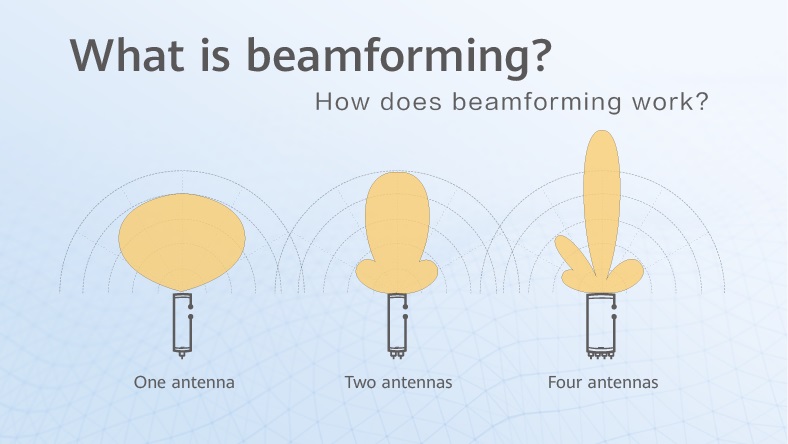
    There is also something known as “beamforming” used in 5G networks which is worth discussing in this overview. Beamforming is a way of processing signals for directional signal transmission/reception. As you can see, different antenna quantities can affect the efficiency and range of signal processing. Beamforming can be divided into two categories: digital and analog. Digital beamforming involves the transmission of data across multiple channels, while analog beamforming focuses on shaping the radio waves to be directed in a particular direction. 
    You now understand the very basics of 5G and have fulfilled your life debt. Congrats!

    —

    Hoffman, Chris (January 7, 2019). “What is 5G, and how fast will it be?“. How-To Geek website. How-To Geek LLC. Archived from the original on January 24, 2019. Retrieved January 23, 2019.

    Yibo, Wang. “What Is Beamforming?”. Info-Finder. Huawei Technologies Co., Ltd. Updated February, 4, 2022. Retrieved February 7, 2023.
  • Quantum Computing For Dummies

    Quantum Computing For Dummies

    If you’re even tangentially related to the tech world, you’ve probably heard an awful lot about Quantum Computing recently. But what exactly is it? Why is it useful? What is the point? And what does it mean for the future of computers for everyday people like you and me? 

    What is Quantum Computing?

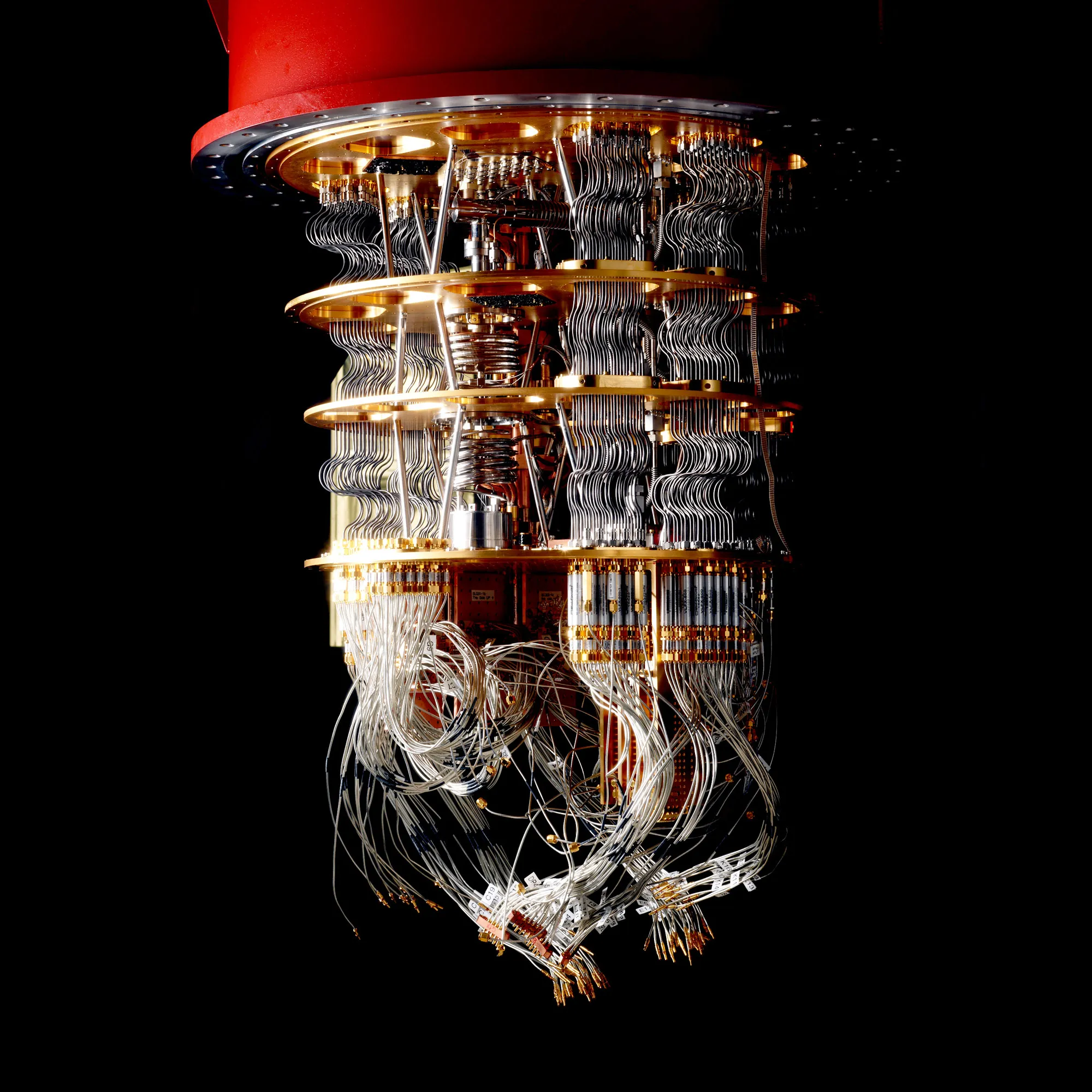
    The basic idea behind quantum computing is that rather than having binary 1’s and 0 build the computer, you have a range of values between 0 and 1, determined by the superposition and entanglement of subatomic particles in the computer. Now this may sound scary, but it’s actually quite similar to what’s going on in your normal computer. The 1’s and 0’s you always hear about making up binary are actually just electrons. Electrons either flow through transistors (producing a 1) or they don’t (0). Computers have always relied on sub-atomic particles, we’re just changing which ones we rely on with quantum computing. 

    Quantum computers were proposed in the 1980s by Richard Feynman and Yuri Manin. But it wasn’t until 1998 that Isaac Chuang at Massachusetts Institute of Technology (MIT) and Mark Kubinec of the University of California at Berkeley created the first quantum computer (2-qubit) that could be loaded with data and output a solution. These computers have been theorized for a long time, but only recently are starting to become viable tools.

    What does that mean for me?

    Now, before we continue, I want to be clear that in the next 10-20 years, consumers will not be using quantum computing in their homes. There are a lot of advantages we’ve found to using the range of values that quantum provides, but those advantages are not currently applicable to daily users checking emails or watching videos; what they are good for is searching databases. 

    What is Quantum Computing useful for, then?

    Binary-based computers are particularly bad at searching for values. In fact, most search algorithms are just special tricks to get around how bad computers are at finding values in a dataset. This is because binary values have to check each value they come across one at a time and “label” each one as not the object they’re looking for. What quantum computing allows is, rather than going one-by-one, searching all (or many of the) values at the same time. 

    In a similar vein, quantum computing is quite good at modeling possible outcomes of situations because rather than having to cycle through each scenario one at a time – like a binary computer – it can process many different models at once. These advancements will be massive for many areas of scientific study by exponentially decreasing the amount of time/resources computing models takes.

    Closing thoughts

    If you are an average consumer like me, these advancements won’t affect you directly for many years, but I estimate we will be seeing faster scientific breakthroughs in coming years as computing time continues to decrease.


    Sources and Extra Reading

    Chuang, Isaac L.; Gershenfeld, Neil; Kubinec, Markdoi (April 1998). “Experimental Implementation of Fast Quantum Searching”.

    Gibney, Elizabeth (23 October 2019). “Hello quantum world! Google publishes landmark quantum supremacy claim”.

    S. J. Pauka, K. Das, R. Kalra, A. Moini, Y. Yang, M. Trainer, A. Bousquet, C. Cantaloube, N. Dick, G. C. Gardner, M. J. (2021). “A cryogenic CMOS chip for generating control signals for multiple qubits”.

    Yanofsky, Noson S.; Mannucci, Mirco (2013). Quantum computing for computer scientists. Cambridge University Press. pp. 144–147, 158–169. ISBN 978-0-521-87996-5.

  • “Coded” Language

    “Coded” Language

    The use of acronyms and technical jargon in the world of software engineering is… out of control. API, IDE, entry-point, AGILE, SWE, Pandas, SGTM. These are just some of the terms thrown around at lunch with a software engineer. There is genuinely a second language used by computer scientists, but there is no Duolingo course available for “Annoying Nerd”.

    This manner of speaking obfuscates the point of what is being discussed behind layers of technicality that, for most casual discussions, is completely unnecessary. Not to mention the fact that this sort of “second language” is a major gatekeeping factor; if you cannot speak the language, you’re not going to be able to participate. And who is taught the language? Who is encouraged to become a computer programmer? I think if we examine the current biases in place in our society, we’ll see that this ocean of technical language further keeps out groups that aren’t encouraged to pursue this field in the first place. 

    Now obviously, when working in the role of Software Engineering, there are points where we must discuss the nitty gritty details of our implementations; that’s our job. My point here is not that all specialized language should be avoided or removed, but rather that we – as software engineers – have a communication issue. This issue has lasting consequences; it causes new computer scientists to feel more insecure, and that feeling can linger for years into their career. Nearly 60%[1] of computer scientists report experiencing imposter syndrome, with that number being far higher with computer scientists of minority demographics. 

    When I first joined computer science it seemed like there was so much information I couldn’t possibly conceive of, but the vast majority of the things I thought I couldn’t understand were in fact quite simple! I just didn’t yet know the jargon, which made the concepts sound significantly more complicated than they were. “Implementing a new entry point (available to users) utilizing a pre-existing API endpoint” is equivalent to the sentence “creating a button”. The first sentence is far more information dense; however, effective communication is not measured by how much information you can cram into one sentence. Not to mention the fact that if you don’t recognize one of the jargon words in that “information dense” sentence, it loses all meaning, while the second is universally understood.

     I don’t believe this is a malicious attempt by software engineers to feel or appear intellectually superior. To my knowledge, there’s no cabal intentionally pushing the over-use of complex language; I believe this is a byproduct of the fact that you must be incredibly precise with computers. One might believe, then, that it naturally follows that the language around computers should be incredibly precise, right? I’d argue no. Unlike computers, humans have the capability for abstract, generalized thought – let’s use it to make computer science more widely available and welcoming to new groups of people who want to learn the discipline. 

    I think computer science could do with a similar dichotomy of language to medicine. As an example, the medical world has the technical term “xerosis”, and the layman term ‘dry skin’. We need to get better at understanding what circumstances require what level of precision in speech. I think we’ll find if we lower the barrier to entry for computer science, the field will flourish with new ideas, perspectives, and ways of thinking that may just give us a future of new technology we cannot yet imagine.


    1.  Rosenstein, Adam, et al. “Identifying the Prevalence of the Impostor Phenomenon
      among Computer 
      Science Students: Proceedings of the 51st ACM Technical Symposium on Computer Science Education.” ACM Conferences, 11 Mar. 2020, https://dl.acm.org/doi/10.1145/3328778.3366815.