Author: Lela Ellerbe

  • Can diapers improve agricultural management?

    Can diapers improve agricultural management?

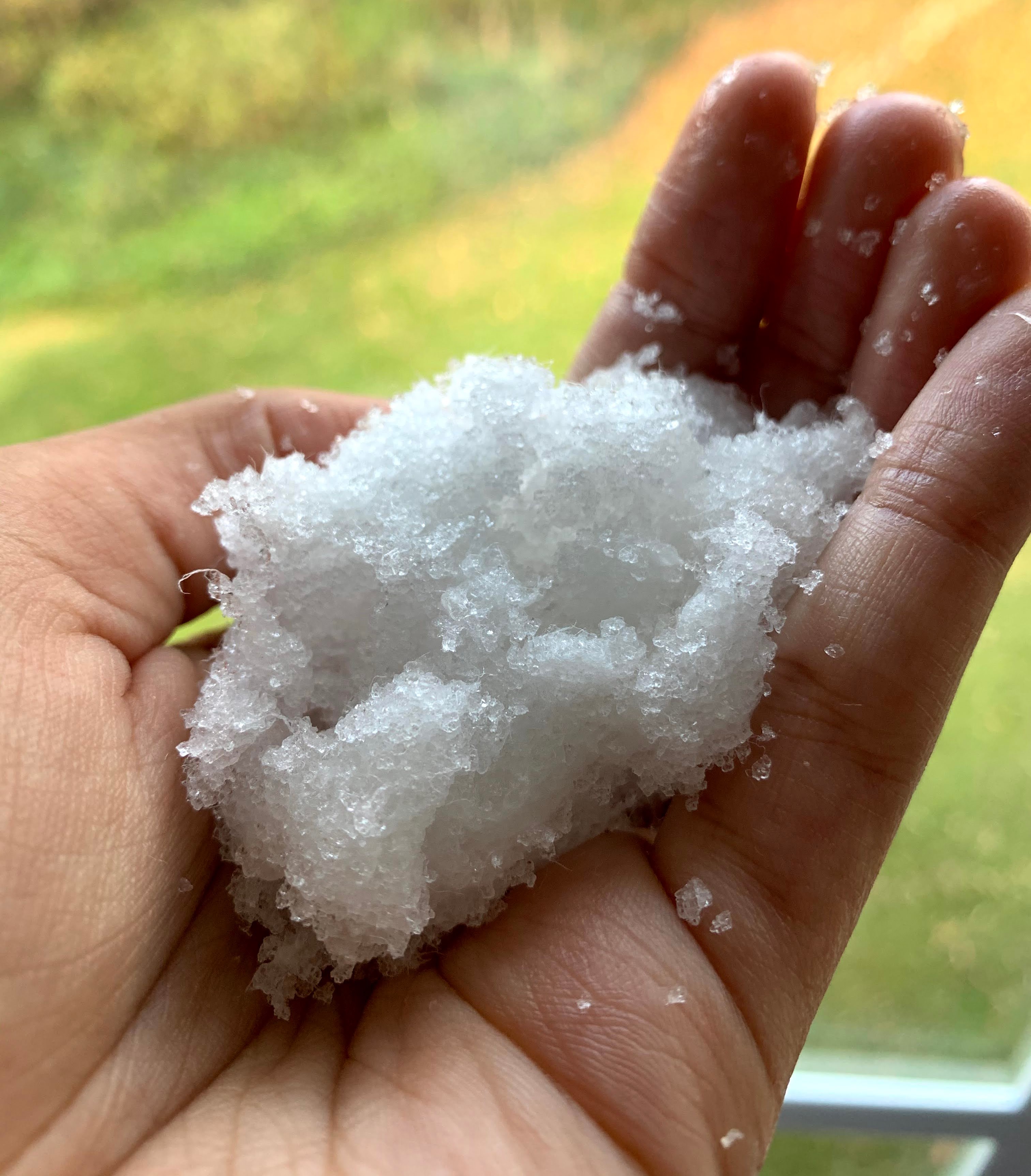
         Ever wondered how diapers can hold and absorb so much liquid?  The simple answer is hydrogels.  Disposable diapers have been on the rise in popularity in recent years because of their ease of use.  Unfortunately with the sudden increase in popularity of diapers,  waste management is a big issue all around the world.  Everyone is trying to find new and innovative ways to decrease the generation of waste.  Because of the short life span of disposable diapers, they end up in a waste field which causes very serious environmental impacts. Consequently, people are switching over to reusable diapers.  While this is, in fact, a positive, the much bigger issue is in developing countries where the majority of disposable diapers are being used.  In many of these developing countries, the used diapers are disposed of in either landfills or open dumpsites.  The mismanagement of solid waste can lead to an increase in greenhouse gas emissions and water pollution from the open dumpsites.  These hydrogels after being sanitized might have the possibility to be reused or repurposed for another product.   Current research focuses on the reuse of hydrogels for soil irrigation.  

         A hydrogel is a chemically or physically bonded polymer.  Chemically bonded hydrogels are permanent and chemically cross-linked together.  Physically bonded hydrogels are reversible and are held together by hydrogen bonding from its interactions with water.  The only difference between chemically and physically bonded hydrogel is that physically bonded hydrogels can be separated into individual components.   How much water a hydrogel can hold is the point of equilibrium swelling which is the most important characteristic.  When a hydrogel connects with water, the hydrophobic groups interact with the water molecules. The hydrophobic group tends to repel water, which leads to the swelling of the hydrogel.  As the hydrogel swells, it is absorbing the surrendering water until it reaches its equilibrium swelling point.  Every hydrogel has its own equilibrium swelling point.  Once it reaches this point it will not swell anymore and the additional water will fill in the spaces between the bonds. 

          Traditionally, agricultural methods are based on irrigation methods such as drip and spray and, flood irrigation.  This has some downfalls because not all the water is absorbed by the plants which can lead to runoff water.  In some countries, this poses a bigger threat because of the scarcity of water.  Sandy soils are impacted at a greater extent because they have low water carrying capacity which makes it hard for them to absorb water.  This leads to most of the water being unabsorbed and the plant roots lacking sufficient water and nutrients.  Since hydrogels are very absorptive,  they can be used to absorb some of the excess water so the water does not go to waste. 

         Hydrogels can be used to improve agricultural management.  Many studies are looking into if the hydrogels in diapers can be reused and repurposed after sanitation, but still, maintain the level of equilibrium swelling and have the ability to hold the water for a long period of time. Luckily, they were proven to have a larger equilibrium swelling capacity and a longer swell time.  These two factors can greatly improve water retention in soil and irrigation efficiency.  Because of the basic properties of a hydrogel, they are allowed to slowly release the water back into the soil, this allows improved water efficiency.  This is because the plant’s roots are not drowning in large amounts of water which makes it harder for them to retain all of it.  While the hydrogel is in the soil, it will wrap around the roots and will continue to give the roots the water supply it needs for photosynthesis.  There still is a long way to go on researching this idea, but maybe in the future, we will be able to reuse hydrogels and many other everyday items.  
    Citations 

    Agaba, H., Orikiriza, L., Obua, J., Kabasa, J., Worbes, M., & Hüttermann, A. (2011, November 17). Hydrogel amendment to sandy soil reduces irrigation frequency and improves the biomass of Agrostis stolonifera. Retrieved November 24, 2020, from https://www.scirp.org/journal/PaperInformation.aspx?PaperID=8549

    Al-Jabari, M., Ghyadah, R., & Alokely, R. (2019, March 20). Recovery of hydrogel from baby diaper wastes and its application for enhancing soil irrigation management. Retrieved November 23, 2020, from https://www.sciencedirect.com/science/article/pii/S0301479719303901

    Ferronato, N., Nova Pinedo, M., & Torretta, V. (2020, June 21). Assessment of Used Baby Diapers Composting in Bolivia. Retrieved November 24, 2020, from https://www.mdpi.com/2071-1050/12/12/5055

    Zekry, M., Abdallah, A., Salim, H., & Nassar, I. (2020, March 07). The Potential of super absorbent polymers from diaper wastes to enhance water retention properties of the soil. Retrieved November 24, 2020, from https://www.researchgate.net/publication/341756185_The_Potential_of_super_absorbent_polymers_from_diaper_wastes_to_enhance_water_retention_properties_of_the_soil
     

  • Milk’s environmental impact

    Milk’s environmental impact

         A big misconception is that milk is taken directly from a cow and put in a bottle.  But this is not entirely true as the process of turning raw milk into consumer milk is much more complicated than that. The process has an enormous environmental impact.  In recent years there has been a rise in popularity of plant-based milks because of its taste and health benefits, but are these new substitutes better for the environment?  The food sector has the highest consumption of water, and in fact, 86% of all the water in the world is used to grow food. The process of producing each type of milk generates their own water footprint.  A water footprint is an indicator of how much water both directly and indirectly is used by a customer or producer.  So you and I both have water footprints from eating food, driving our cars, taking showers, and many more things in our daily life.  The water footprint for milk is calculated by the total volume of freshwater that is, directly and indirectly, used to produce it.  The three main types of milk I am going to talk about will be cow milk, soy milk, and almond milk, and the water waste that is accumulated as part of the production process for these types of milk. 

         Growing up I always believed like many other people that milk came directly from a cow straight into the container.  But that is a huge misconception about the milk industry.  In reality, the milk needs to be processed multiple times before it can be packaged and shipped out.  Each year the milk industry generates 3.739 to 11.217 million m^3 of water waste. This amount of water is 1 to 3 times the volume of milk that is processed and packaged each year.  That means that for every 1L of cow milk 1,050L of water waste is generated.  Because of the lack of interest and knowledge in this topic from general people, many do not know the environmental impact that happens because of all the waste.  Some of this water waste accumulates during various systems of milk production in the factories, such as cleaning systems, cooling systems, and steam generators.  This cleaning system results in the clean water waste mixing with the cleaning solutions that are pumped through the unit.  This chemical mixture is still in the water when it is disposed of into the nearby river, land, and fields.  This chemical mixture is a highly odorous black sludge that can cause destructive environmental impacts.  

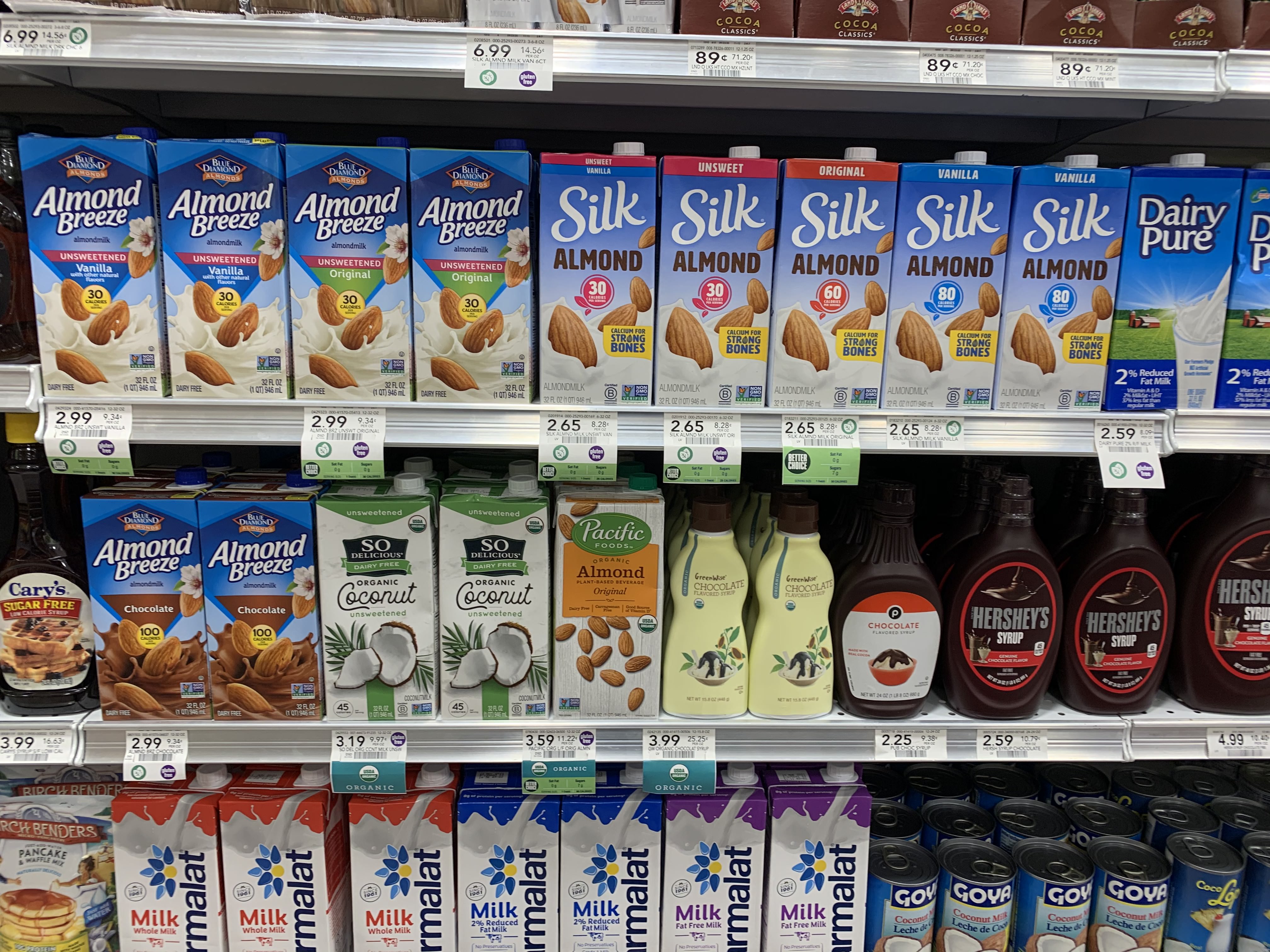
         Recently there has been a rise in the demand for milk alternatives that provide better health benefits.  Because of this, there has also been a rise in many misconceptions about the environmental impact of these alterations.  I know when I first learned about alternatives like soy milk and almond milk, I believed that while they had great health benefits they also had positive environmental benefits along with it.  While they do have the least water waste with the processing of the milk; other areas of the production process also accumulate water waste.  With all three milk substitutes, there is an increase in water waste from the crop production of these products.  For soy milk, every 1 L generates 297 L of water waste.  

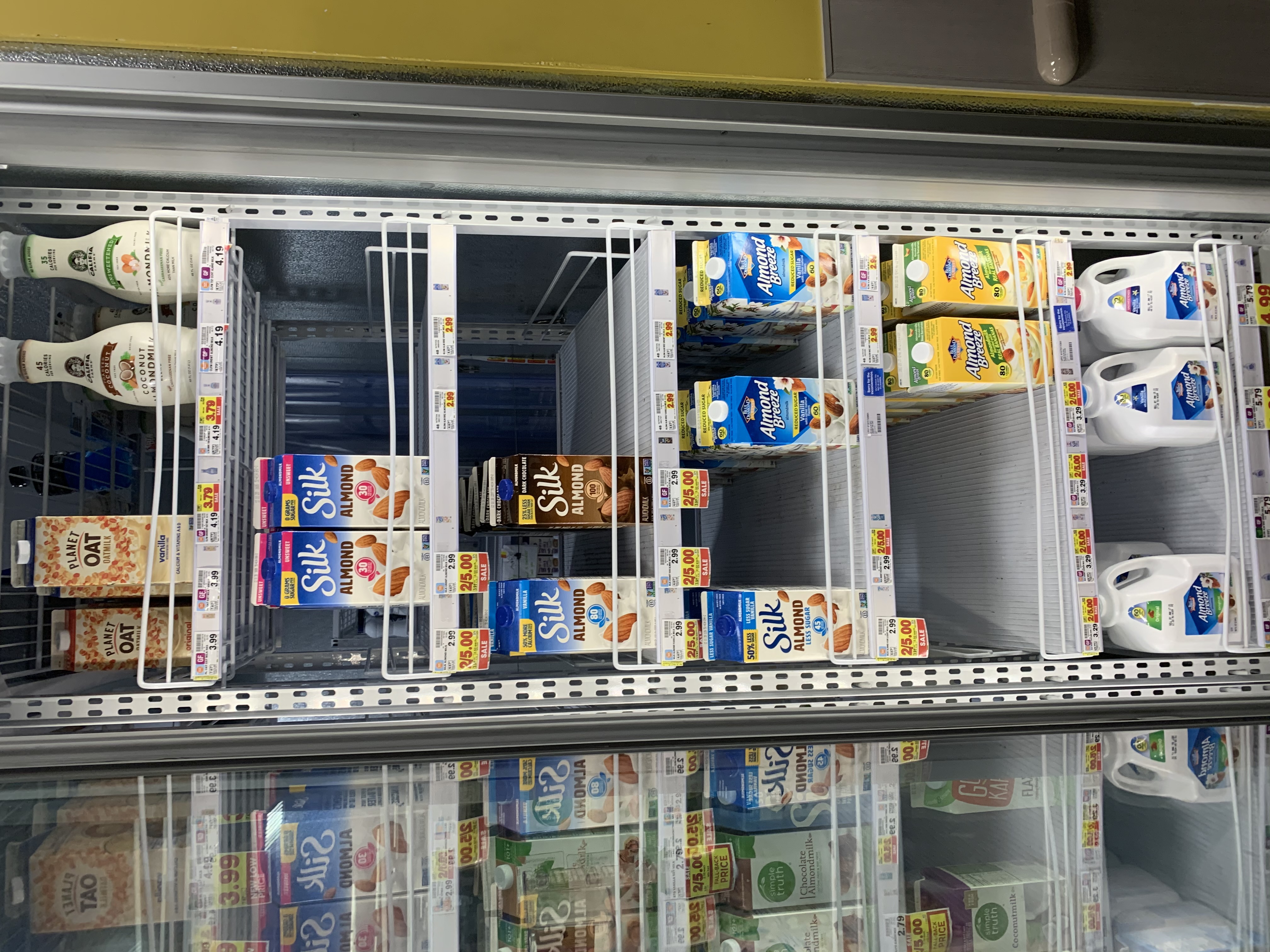
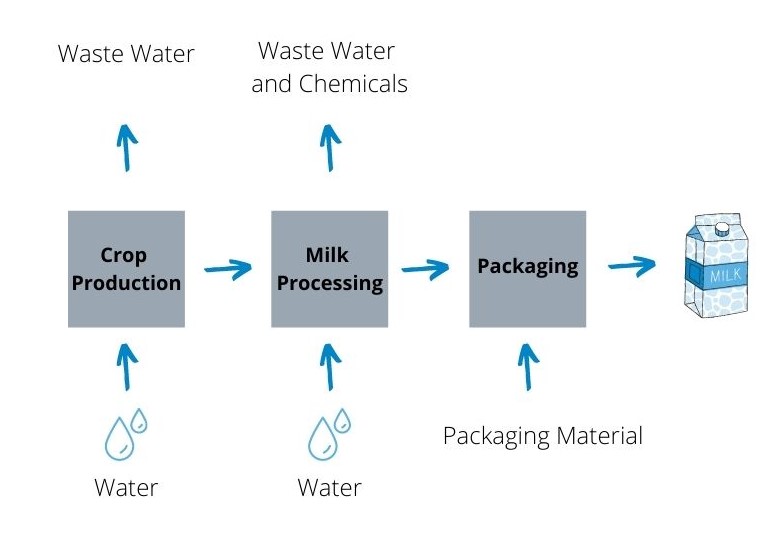
         Sadly out of the three milk options I looked at, there truly is no winner when it comes to lessening the environmental impact just based on picking a new milk substitute.  In the image, you can see the simplified engineering diagram for the production of milk.  In two of the stages for all types of milk, water is entering the system for crop production and the processing of milk.  While the amount of water that is used for each step is different depending on the milk, there still is an amount of wastewater that exists for each milk type.  But there are some ways production companies can adopt to decrease their water waste.  One way for almond milk would be to shift the sourcing and production of almonds to locations that have a more efficient irrigation system.  For cow milk, research might find a better way to streamline the process and to lessen the amount of chemicals introduced to water waste. 

    References: 

    Boguniewicz-Zablocka, J., Klosok-Bazan, I. & Naddeo, V. Water quality and resource management in the dairy industry. Environ Sci Pollut Res 26, 1208–1216 (2019). https://doi.org/10.1007/s11356-017-0608-8

    Courtney A. Grant and Andrea L. Hicks.Environmental Engineering Science.Nov 2018.1235-1247.http://doi.org/10.1089/ees.2018.0233

    Ercin, A., Aldaya, M., & Hoekstra, A. (2012, February 28). The water footprint of soy milk and soy burger and equivalent animal products. Retrieved October 08, 2020, from https://www.sciencedirect.com/science/article/abs/pii/S1470160X11004110?casa_token=e3EkrZ26r6IAAAAA%3Ad8BXC4T7XhPCDuL0uNN61qzA0XOht6XXqBIRrM1SH7_nN77SA7FbNk8jDSXLtqZUB29NnRasDXU

    Tikariha, A. , & Sahu, O. (2014). Study of Characteristics and Treatments of Dairy Industry Waste Water. Journal of Applied & Environmental Microbiology, 2(1), 16-22.

  • The mystery of the missing seed

    The mystery of the missing seed

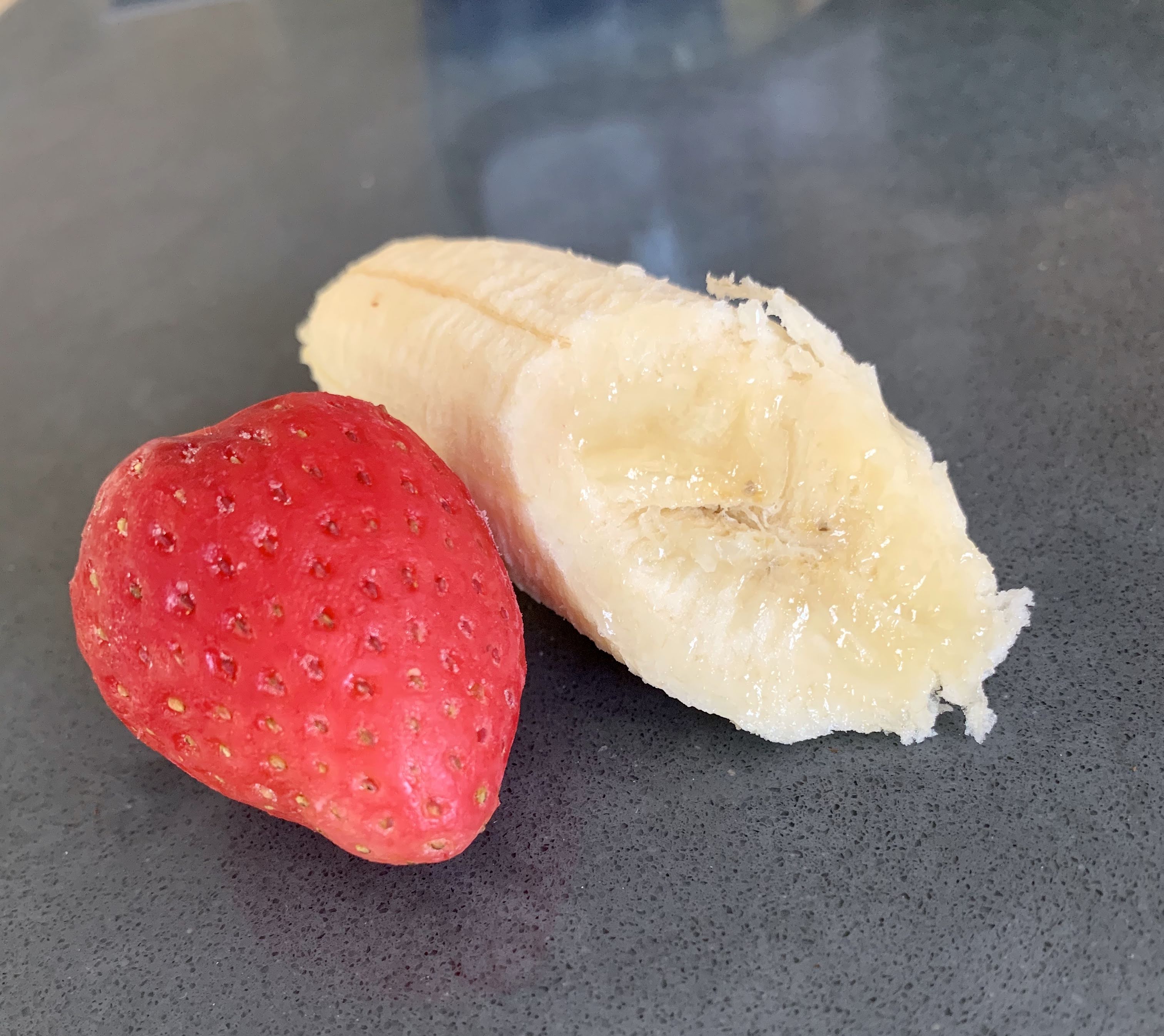
        One morning as I was chopping up the different fruit for my smoothie.  I wondered why the bananas did not have seeds but the blueberries and strawberries did.  I was wondering about that and this is what I found out that bananas originally did not look like the bananas that we see and eat today because they contained huge seeds throughout.  Bananas were originally cultivated from Southeast Asia and the western pacific. There were two wild species, Musa acuminata(AA) and Musa balbisiana(BB), native to that area that derived the bananas we know and love today. 

         The Musa acuminate(AA) and Musa balbisiana(BB) are considered diploids.  These bananas were not preferred because the large stony seeds made eating them unpleasant.  Diploid bananas had two copies of each gene-bearing chromosome. Since the diploid banana was unpleasant to eat, farmers started to breed bananas with fewer seeds to evolve them.  They used parthenocarpy and seed-sterility. Parthenocarpy is the capacity of fruits to grow and become full edible fruits without pollination. This means that the fruits would not require to have seeds inside to reproduce.  They slowly got rid of the seeds in the plant by doing a combination of inefficient fertilization, early abortion of the seed after fertilization, and sterile gametes. These processes allowed for future crops to have fewer and fewer seeds in them.  Because bananas don’t have seeds they have lost the ability to reproduce by seeds.      

         Another way humans evolved the banana fruit was by cross-breeding different types.  They would crossbreed Musa accuminata with Musa balbisiana. When the farmer selected the bananas to crossbreed they picked distant relatives so that when crossed they would have mismatched chromones which make it difficult to produce fertile ovule to pollinate.  With the crossbreeding the triploid banana was created. Triploid bananas were productive, larger, hardier, and drought-tolerant plants. This is why they were chosen over their diploid counterparts. Farmers still need diploid bananas for breeding since they are the sources of resistance genes to biotic factors.  Because of all the cross-breeding, most of the bananas grown today has very little gene variety. This means that if there was a worldwide pest outbreak, it would wipe out a majority of the bananas because of how common their genes are to one another. Because of this, the banana industry has adopted chemical treatments to control and prevent pest outbreaks.  Therefore the banana industry has adopted chemical treatments to control it. The new breed extended the range of the plant’s character and quality features. This led to the new breed of bananas being able to grow and breed in seasonally drier climate zones. This lead to the banana expanding into West Africa. Because of this migration when Europeans visitors came to West Africa they took the banana plant with them to the New World.  


    References

    Perrier, X., Bakry, F., Carreel, F., Jenny, C., Horry, J. P., Lebot, V., & Hippolyte, I. (2009). Combining biological approaches to shed light on the evolution of edible bananas. Ethnobotany Research and Applications, 7, 199-216. https://agritrop.cirad.fr/550538/1/document_550538.pdf 

    Simmonds, N. W. (1987). Classification and breeding of bananas. Banana and plantain breeding strategies, 69-73. file:///C:/Users/lelae/Downloads/PR021.pdf 

    Baker, H. G. (1972). Human influences on plant evolution. Economic Botany, 26(1), 32-43. https://www.jstor.org/stable/pdf/4253307.pdf 

    All About Bananas: Producers, Where They’re Grown & Why They Matter. (n.d.). Retrieved February 7, 2020, from https://www.bananalink.org.uk/all-about-bananas

    Creste, S., Neto, A. T., Vencovsky, R., Silva, S. D. O., & Figueira, A. (2004). Genetic diversity of Musa diploid and triploid accessions from the Brazilian banana breeding program estimated by microsatellite markers. Genetic Resources and Crop Evolution, 51(7), 723–733. Doi: 10.1023/b:gres.0000034578.37951.c4

    Castillo, C., & Fuller, D. Q. (2016). Bananas. The Oxford Handbook of the Archaeology of Diet. doi: 10.1093/oxfordhb/9780199694013.013.7