Author: Ivana Olivo

  • The Science of Baking Pt. 1

    The Science of Baking Pt. 1

    Introduction

    Have you ever wondered how exactly baking turns a soupy batter or a thick paste into a beautiful cake or cookie? Think no further, this article will soon explain what goes into the magic that is baking and some other cool facts.

    How does science play its part?

    Baking does a great job of showcasing just how prevalent science is to everyday activities. It combines chemistry, biology, and physics to create the decadent end product. The laws of physics apply to everything, but for baking, those laws are compounded with chemical reactions within ingredients and the processes of biology. The incorporation of many different edible chemicals like baking soda and baking powder to create a cake batter or dough causes reactions like tiny air bubbles forming that are trapped and cause rising. This is where biology also comes in with the culture of yeast as a leavening agent that provides carbon dioxide for bread to rise.

    Role of Ingredients in Bake

    Every single ingredient that goes into a baked good is there for a reason. Many people know from experience that forgetting to include even a single item on a baking recipe can end in total disaster. But what exactly is each basic baking ingredient doing?

    Sugar and Fat

    Many recipes will tell you to add the sugar and fat component, whether it be butter or ghee or oil, and there is a very specific reason for that. When sugar is added to butter, the sharp crystalline structure of the sugar slice the butter molecules and introduce air into the mixture. This is why creaming the sugar and butter before adding it to the other dry ingredients causes a lighter and fluffier outcome! Fat also adds that rich flavor by coating the gluten molecules so they do not combine as easily which also makes the product more tender.

    Creaming of butter and sugar

    Flour

    Flour is made up by grinding raw grains or wheats or nuts to form a powder. The protein in the flour, gluten, works to form a web that traps air bubbles and allows the pastry to set in place. Basically, flour makes up the entire structure of the baked good and without it, the pastry would collapse! While the baked good heats in the oven, the starch in the flour sets in order to add and support the structure of the dish.
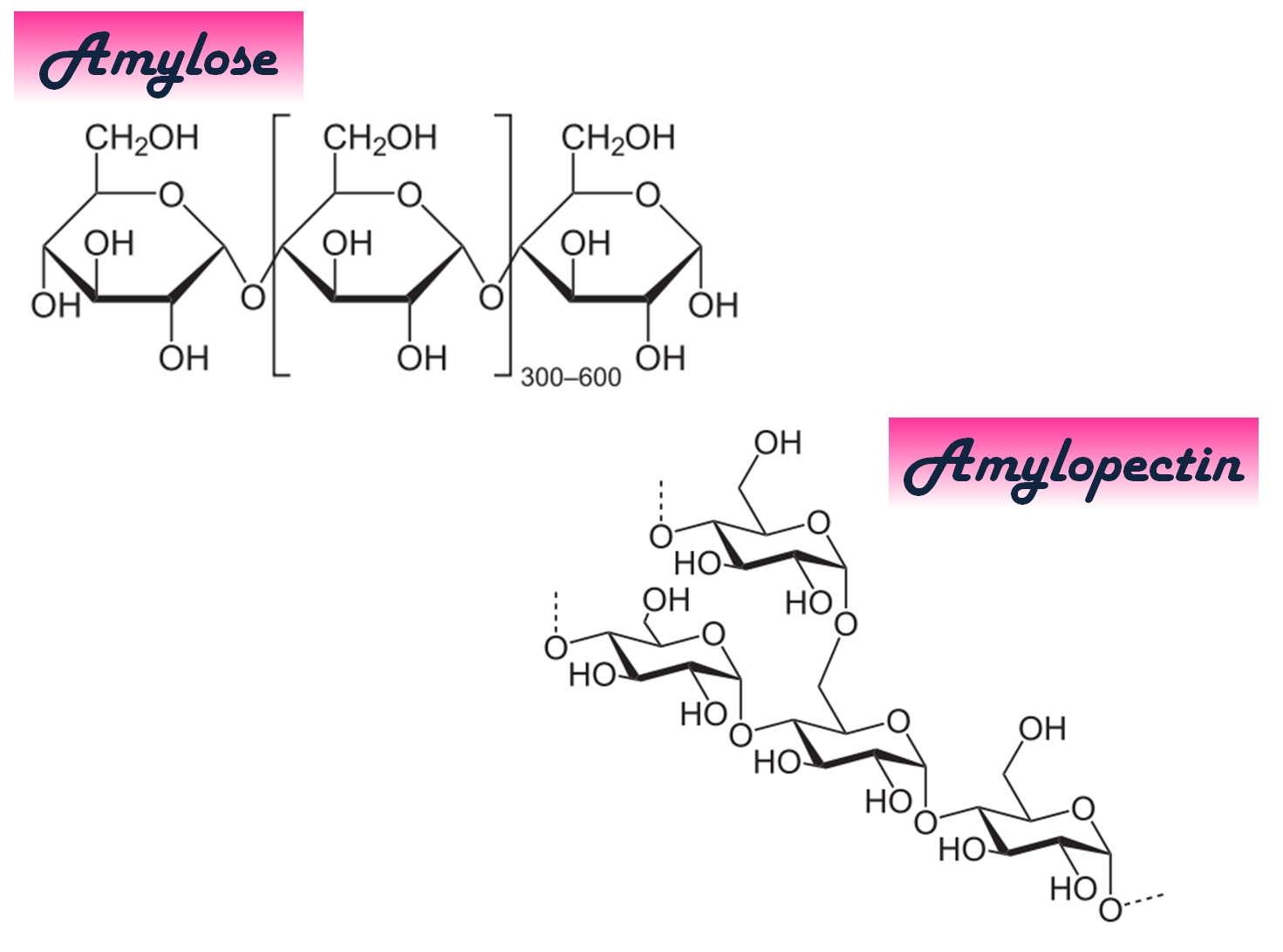
    Chemical structure of starches in flour

    Salt

    Salt has many functions in normal cooking, but it does in baking as well! It enhances and strengthens the flavors in other ingredients to form the perfect balance. Salt also allows the gluten provided by the flour to form better as well.

    Baking Soda

    Baking soda, has a very special role in baking as well. It’s scientific name is sodium bicarbonate, and it is a crystalline salt. For the sodium bicarbonate to work it’s leavening magic, it can either be combined with an acidic component like buttermilk to cause an acid-base reaction or can be left to perform with just thermal decomposition in the oven.
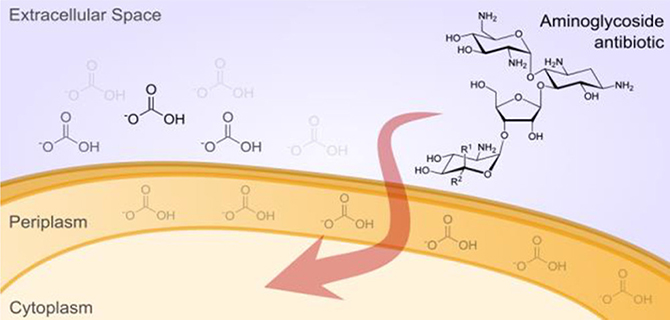
    This graphic shows the chemistry going on with baking soda

    More to come…

    As we can see, there is a lot of science that goes into perfecting a pastry. Without the chemistry, biology, and physics, it would be impossible to create any pastries or bread goodies. In the next article, we play with an at-home experiment of varying the type of fat used in one type of pastry and comparing the two different end products!

    Sources

    Babincáková, Mária. “Leavening Agents: The Chemistry of Baking Discovered with a Computer-Based Learning.” Journal of Chemical Education, vol. 97, no. 4, Apr. 2020, pp. 1190–1194. EBSCOhost, search.ebscohost.com/login.aspx?direct=true&AuthType=ip,shib&db=eric&AN=EJ1250850&site=eds-live&scope=site.

    Bodach, Vijaya. Baking a Cake. Perfection Learning, 2013. EBSCOhost, search.ebscohost.com/login.aspx?direct=true&AuthType=ip,shib&db=nlebk&AN=650384&site=eds-live&scope=site.

    Claire, Jillian, “The Chemistry of Baking” (2014). Senior Theses. 23. https://scholarcommons.sc.edu/senior_theses/23

  • CS4641 Project 3: Neural Networks Reflection

    CS4641 Project 3: Neural Networks Reflection

    Introduction

    If you have read my last article, you know that we have been here before. Although I talked about the process of completing and submitting Project 2, I wanted to write about Project 3 but focus on more of the content I learned from it.

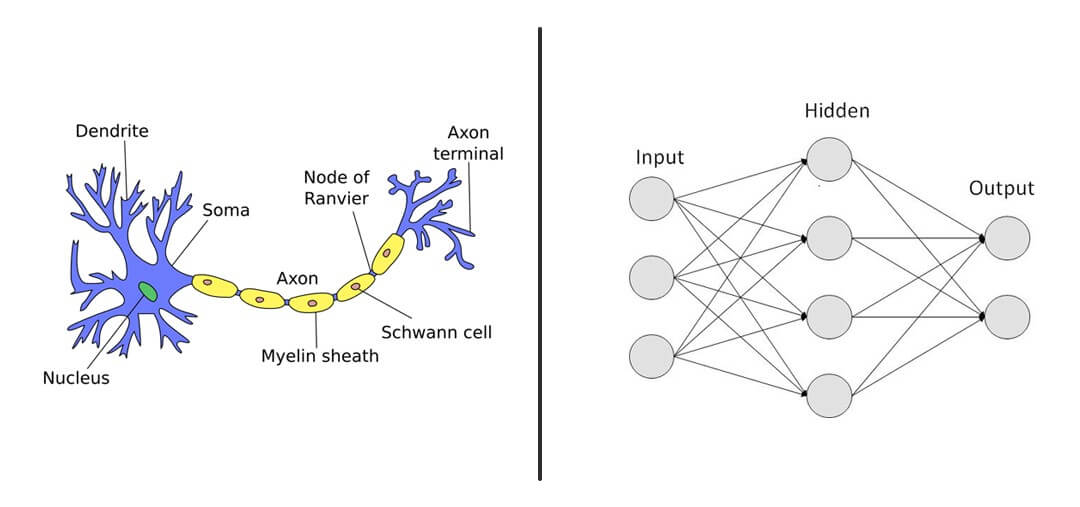
    Project 3 was completely different to Project 2- not only in terms of difficulty, but also what it meant it to me. In high school, I remember binging YouTube videos on neural networks for hours upon hours. I thought they were extremely interesting and powerful- but still had no idea how they really worked. Another reason that the algorithm caught my attention firstly was due to the relation the name has to the human brain, which has always fascinated me. Below is a picture that shows the relation between a brain’s neurons and a computer neural network.

    Neural networks and their allure were part of the reason that I wanted to study the Intelligence thread as CS major- so this particular project in Machine Learning was going to be important for unveiling the black box of how they work.

    What is a Neural Network?

    Neural networks seem extremely complicated, and they definitely can be. However, there are simple ways to think about them that makes the understanding much easier. Simply put, a neural network is a set of algorithms working together to show relationships in a dataset and try its best to mimic the behavior of human brains. They represent one of the most popular algorithms and can be programmed to do almost anything.

    This particular project was focused on one of the algorithms potential uses- text classification. Text classification is when a computer model is able to categorize words based on a certain trait they possess. For example, for this assignment, we were given the iMDB dataset of movie reviews that the computer model would take in and break down to analyze. The model is also fed training data and testing data- the training data is what the computer uses to learn how things are classified and the testing data is used to test the model’s accuracy. The computer model must be accurate on classifying movie reviews as either positive or negative on both sets of data. The coolest part of implementing a neural network like this is when it can accurately predict whether it is reading a nice review or bad review just like a human.

    Neural Bag of Words

    For the sake of length, I will only discuss one of the algorithms we implemented for Project 3, Neural Bag of Words. NBOW represents the situation in which a bag contains a bunch of words; think of someone reaching into a bag and fetching a word, but only paying attention to the amount of times a word appears and disregards grammar and word ordering from the word’s original sentence. This means that every single word in the bag is treated the same, it doesn’t matter what the word’s meaning or significance is.

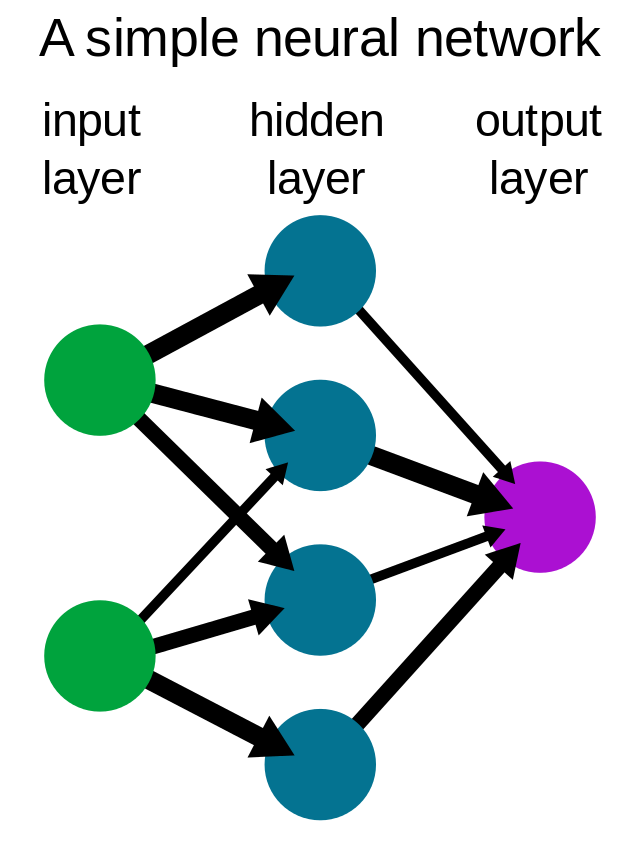
    The Neural Bag of Words model works like any other neural network- with an input and output layer, and a hidden layer in between.

    This algorithm works its magic by using an embedding layer, which helps convert words to vectors that can be used in the neural network. In our situation the input layer consists of the IMDB review dataset and the output we get is an accuracy of the computer’s prediction on the nature of the reviews.

    Conclusion

    Although I have only scratched the surface of what a neural network is made up of and does, the message of how strong it can be should be clear. Using neural networks, computer scientists can train any computer to predict anything at all using just an established dataset and training time! The possibilities of functions are endless!

  • Reflection on CS4641 Project

    Reflection on CS4641 Project

    Introduction

    When my professor assigned a new project in my CS 4641 class, Machine Learning, I felt panic begin to set in. All I could think of was my unpleasant experience from a couple weeks back. I had never coded for any machine learning project, so when I attempted the first coding project two days before it was due, it did not go smoothly. I had a meltdown because it was all so new and foreign to me and even the coding environment we had to use (Google Colab) was extremely confusing to me. In hindsight, I definitely should not have waited until the last minute to begin the massive project; I had let procrastination win. I had to find a way to turn the situation around, and quickly! 

    Now what?

    With less than two days left before the project deadline, there was no way I could finish the entire thing. Luckily for me, our class is allowed to utilize up to three late days on any assignment throughout the semester. I could finally take a breath and concentrate on the task at hand. Seeing that I had no clue whatsoever how to begin the project or even wrap my head around the concepts meant that I obviously needed to seek outside help. I went over to my professor’s website for the class and located the TA office hours guide on Piazza and signed up for every single office hour possible. In total, I was planning on going to seven different TA’s office hours during the rest of the week. 

    Struggling through the Process

    From there, I put my head down and worked until I could not stand the sight of my computer screen. I woke up early and went to bed late working continuously on the project. Thanks to the late days, I had time to go through the project step by step and write down every question I had. With these questions, I went to a bunch of office hours and learned from every single session with all the different TA’s. Through the non-stop work and meetings, I ultimately got my code to perform the desired outcome. That moment could have very well been the happiest I have felt this entire semester. The utter relief I had when it was all over was insurmountable. I had finally finished the monstrous project that I had put off for so long. 

    Conclusion

    Clearly, the biggest lessons learned here were that when a professor tells you not to start the homework late, listen to them and never be afraid to seek out help. I should never be embarrassed to ask any question I have because there are so many resources out there from GT to help.  Plus, once I eventually understood the machine learning project, it was super cool to see it work in action!