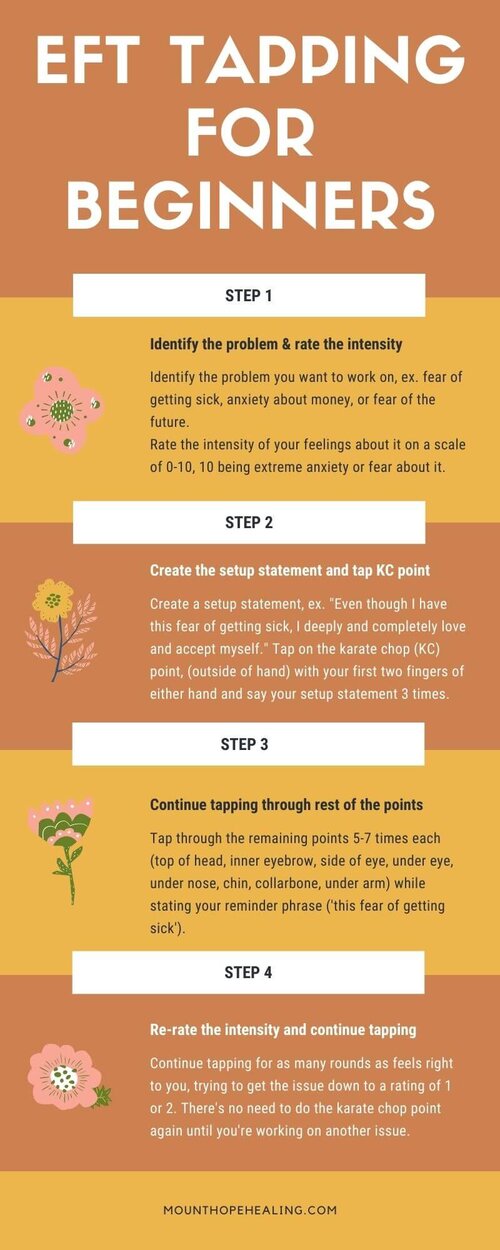
Are you looking for a new method to coping with stress, pain, and anxiety? Well, “stress tapping” is one of many ways that can be added to your techniques for maintaining your mental health and wellness. Stress “tapping” is also known as EFT (Emotional Freedom Techniques) and is a combination of ancient Chinese acupressure and modern psychology.
People who use stress tapping believe that it can create a balance in your energy system in your body and treat pain, whether physical or emotional. Although EFT tapping is still being researched, it has been used to treat people with anxiety and post-traumatic stress disorder (PTSD).
EFT is compared to acupuncture in how they both focus on using “meridian points” (or energy hot spots) around the body. Based on Chinese medicine, meridian points are areas of the body that energy flows through and any imbalance can influence disease or sickness. Unlike acupuncture that uses needles to apply pressure to these meridian points, EFT tapping uses simply your fingertips to apply pressure.
Although there are 12 major meridians that mirror each side of the body and correspond to an organ in your body, EFT focuses mainly on the following nine:
Ortner, N. (2021). The Tapping Solution: A Revolutionary System for Stress-Free Living by Nick Ortner (2-Apr-2013) Paperback. Hay House UK (2 April 2013).
As early as kindergarten, we are taught to measure things here in the U.S. using inches, feet, and centimeters. Later we are taught that volume is measured in cubic meters (m^3), and that time is measured in hours or minutes in a day.
Have you heard that there’s such thing as a measurement of “cow’s grass”? Or how about a “shake” of time? Discover some unusual measurements of length, area, volume, and time below!
LENGTH:
Siriometer
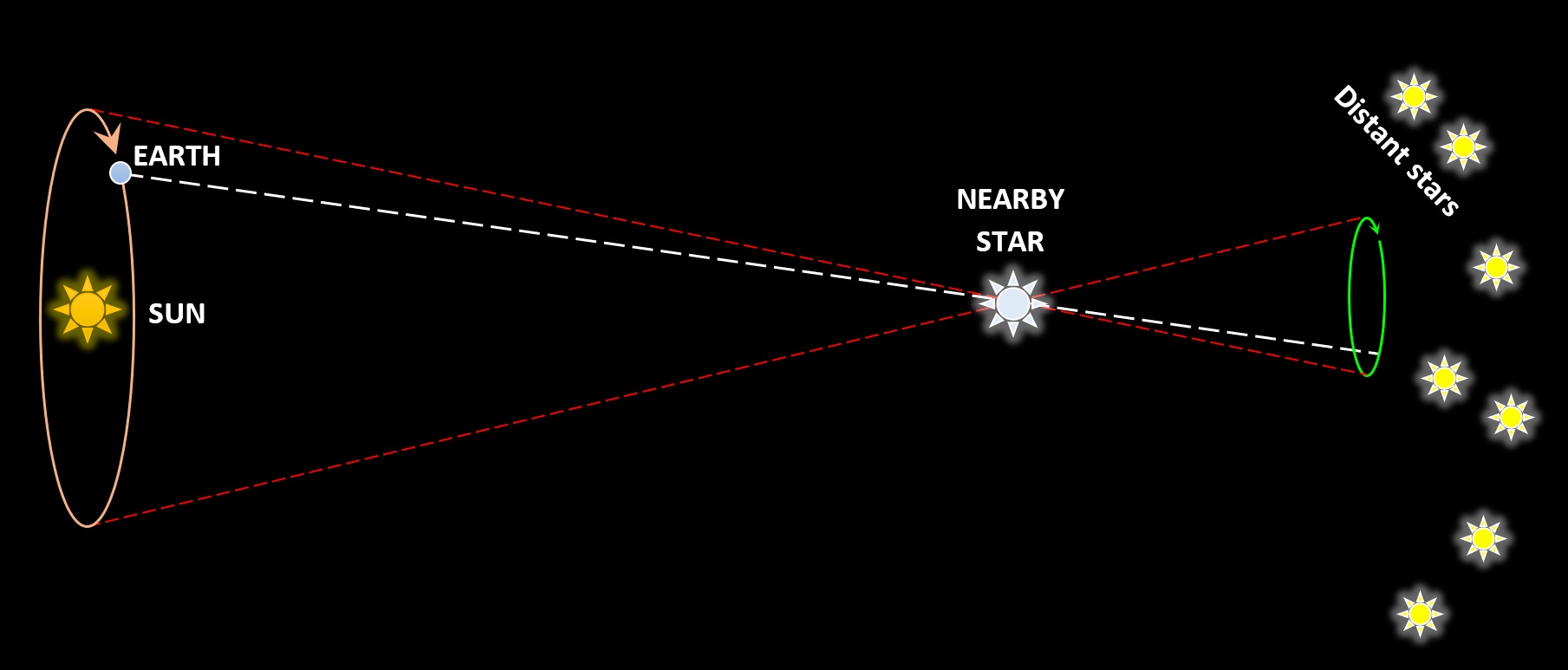
A diagram measuring the distance between earth and a nearby star.
The siriometer is a rarely used astronomical measurement. It is equivalent to 1 million astronomical units — which is equivalent to 1 million times the average distance between the Earth and the Sun. This distance measures to about 15.8 light years, or 4.8 parsecs, and is roughly twice the distance from Earth to the star Sirius.
Horse
A smiling horse.
Horses are used to measure distances in horse racing. A “horse” length is equivalent to 8 feet (or 2.4 meters). When measuring shorter distancing, they are measured in fractions of “horses”, and other common measurements are that of a full or fraction of a “head”, “neck”, or a “nose”.
AREA:
Cow’s grass
A lovely cow in a luscious, green field.
Before the 19th century in Ireland, a “cow’s grass” was a measurement used by farmers to specify the size of their fields. It was equivalent to the amount of land that contains enough grass for a cow to sustainably munch on.
Barn
A red barn.
No, not that kind of barn! One barn is equivalent to 10−28 square meters, which is roughly the size of the cross-sectional area of a uranium nucleus; definitely much smaller than a barn pictured above. The name “barn” for this measurement likely comes from early neutron-deflection experiments, when the uranium nucleus was described as being “big as a barn” and the phrase “hit a barn door” were used. Barn measurements are typically used for cross sections in particle and nuclear physics.
VOLUME:
Cord and rick
A cord of wood.
The cord is a unit of measurement used in the US and Canada for dry volume to measure things such as pulpwood and firewood. A cord is equivalent to such an amount of wood that when the arranged to be aligned, parallel, and touching and compact, has a volume of 128 cubic feet. Correspondingly, this yields a well-stacked woodpile that is 4 feet deep by 4 feet high by 8 feet wide. A “rick” is an even more unusual measurement for firewood, and it is stacked 16 inches deep by 4 feet high by 8 feet wide — which is typically 1/3 of a cord.
TIME:
Shake
A delicious-looking shake!
Wait, not that kind of shake! In term of measurements, the shake is used in astrophysics and nuclear engineering. It is defined as 10 nanoseconds. Call that a shake in time!
Jiffy
Mmmm, peanut butter..
Sorry, we are not talking about peanut butter in this case! The “jiffy” is used in computing, and is the duration of one tick of the system timer interrupt. This is usually equivalent to 0.01 seconds.
I hope you enjoyed learning about those abnormal units of measurement. There are plenty others that are used, such as dog years! Hmmm.. Which makes me wonder, is there such thing as cat years?
Psychology is one of the most relevant and interesting science fields that pertain to humans. Psychology is the science of mind and behavior, and it includes the study of conscious and unconscious phenomena, as well as our individual feelings and thoughts. Enjoy these entertaining comics that consist of a definition of the specific psychology concept being portrayed!
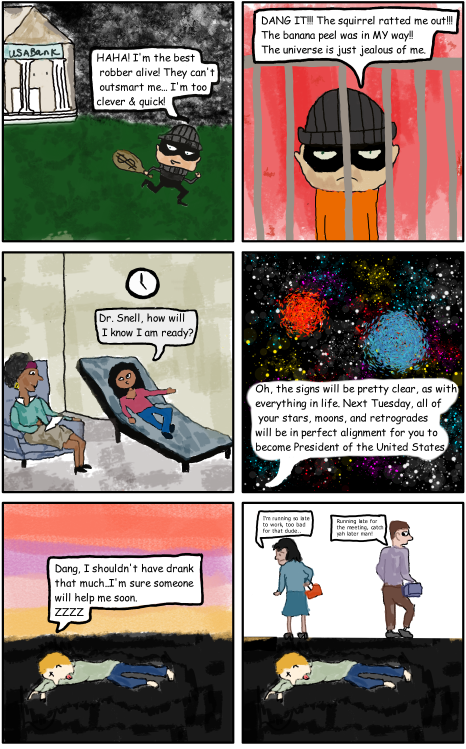
Self-serving Attributional Bias– The tendency to attribute failure and other unfortunate events to external circumstances (i.e.: bad weather) and to attribute success and fortunate events to oneself (i.e: “I’m so smart!”).
When it comes to self-serving attributional bias, the locus of control (LOC) comes into play. The concept of locus of control refers to a person’s belief system about the causes of events, and their attributions. The two categories of LOC are: internal and external.
If a person has an internal LOC, they’ll assign their success to their own hard work, talent, effort, or persistence. However, if they have an external LOC, they’ll credit any success to luck, their zodiac sign, or something external of themselves. Those who are more likely to display self-serving bias, especially when it comes to achievements, are people with an internal LOC.
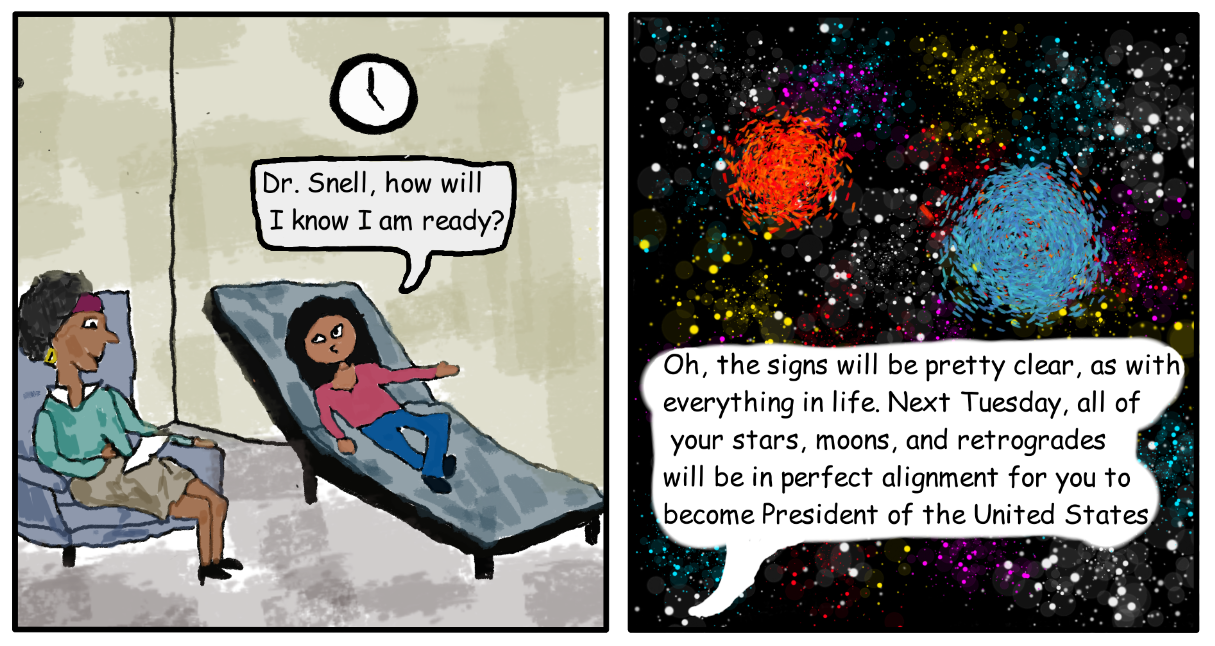
Illusory Correlation– The belief that two variables are correlated when in fact they are not
When it comes to illusory correlation, this is our tendency to use information that comes to mind quickly and easily when making decisions about the future. The availability heuristic is the pairings of two variables that come to mind easily and are seen as correlated. For example, gluten intolerance and ice cream are mentioned together often, so this might cause us to think they are correlated when they aren’t. The comic above makes light of how horoscopes can sometimes be attributed to the reasons or events that occur to people.
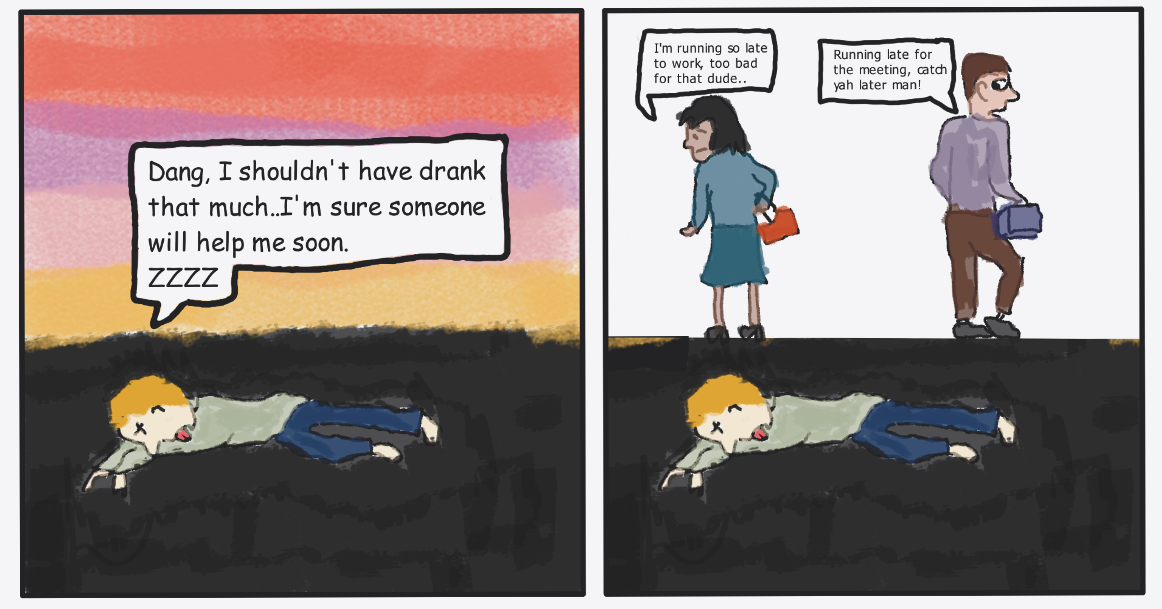
Good Samaritan Effect– Time (especially under pressure) is one external factor that prevents people from helping another person.
The Good Samaritan Effect in psychology shows us that time is an example of one external factor that prevents people from stepping in and helping another person. If you are under pressure to be somewhere or do something, you are less likely to help someone.
Source(s)
Gilovich, T., Keltner, D., Chen, S., & Nisbett, R. E. (2015). Social Psychology (5th ed.). WW Norton & Co.
Hear that music??? That, my friend, is the sound of classic vinyl…
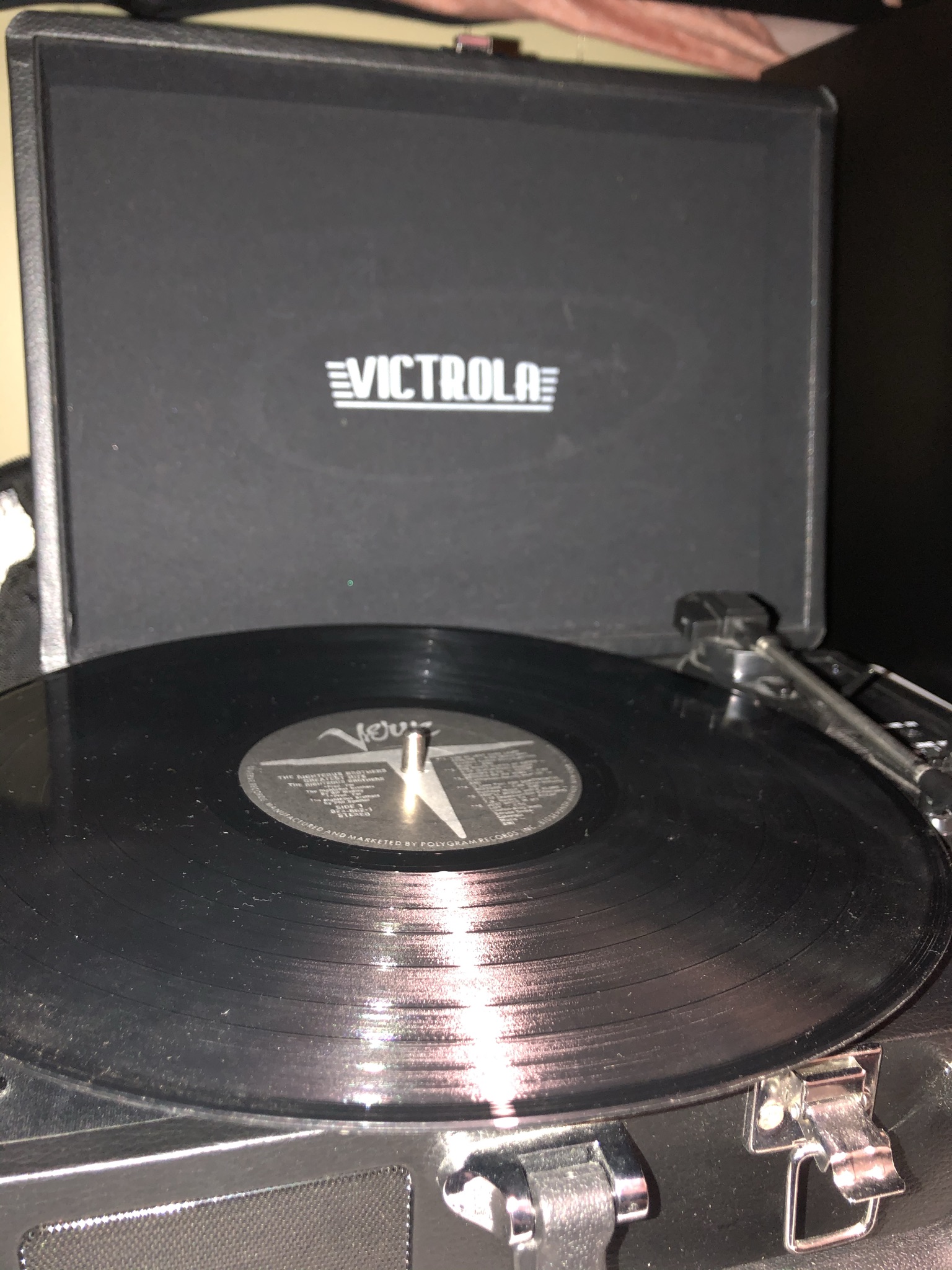
Meet Ernie. My vinyl player 🙂
You know that round spinning thingy that plays music that your grandparents and/or parents used growing up? Well, good news – it’s not extinct! When it comes to enjoying music, one of the best ways that I have discovered is by using vinyl (aka: the record player).
Compressed MP3 files and digital streaming services such as Spotify, Apple Music, Pandora, and YouTube have been the social norm for listening to music; however, vinyl sales have tremendously increased from under a million in 2007, to more than 8 million today in the U.S alone. According the British Phonographic Industry, vinyl sales hit a peak in the UK and the US in recent decades. Why? Because vinyl just is better!!
Let’s delve into the reasons why vinyl records are superior to digital MP3.
1) Simply put, vinyl sounds better than MP3:
Vinyl is the only playback format readily available to consumers that is fully analog and fully lossless. That means that with a quality record player, you get to enjoy a high-fidelity listening experience. High-fidelity equates to high-quality reproduction of sound, that has inaudible background noise and distortion – giving a sound extremely similar to the original. Who wouldn’t want to listen to music that sounds as authentic as the source intended it to be?
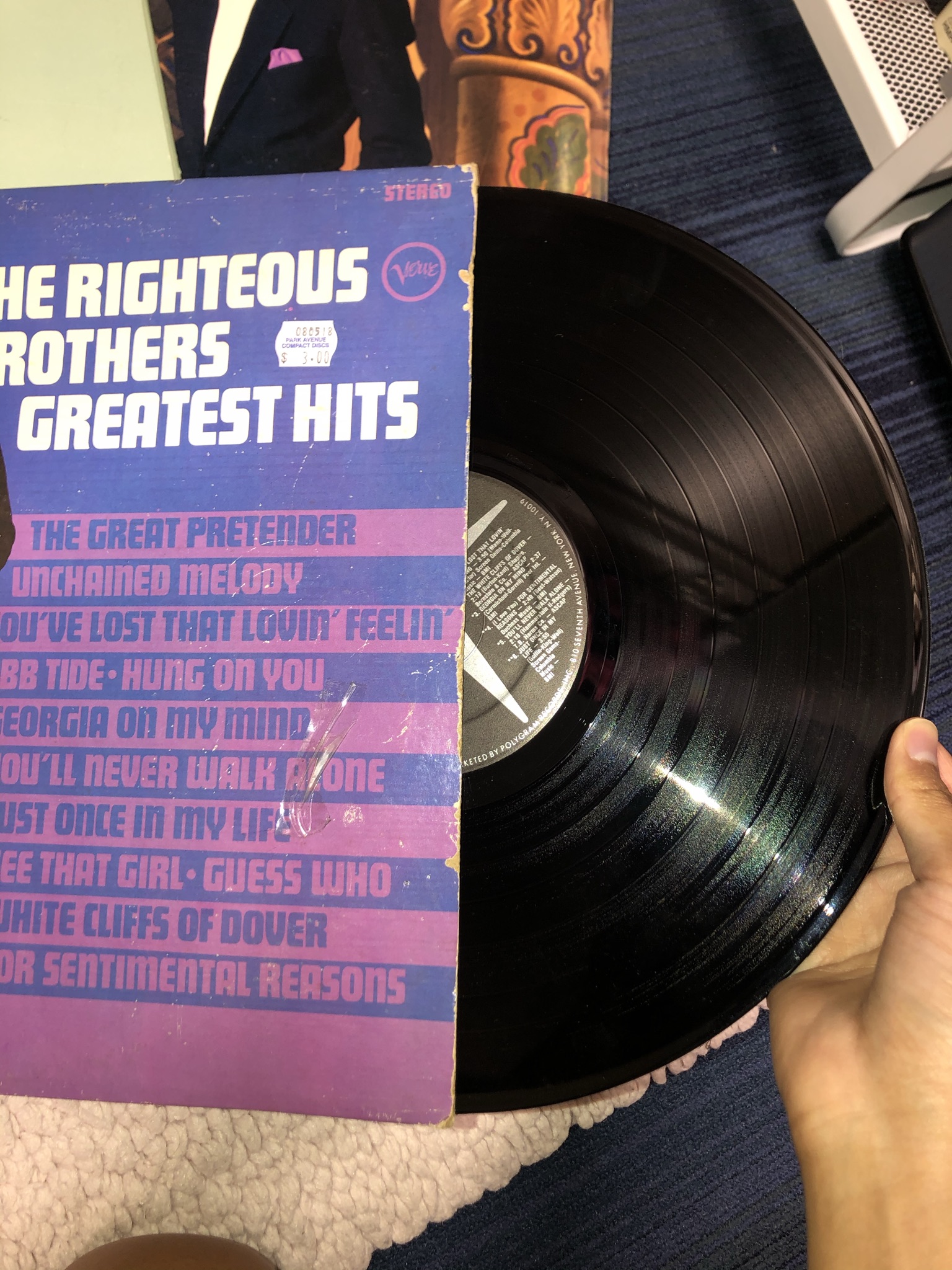
The quality is immaculate. The song you hear playing in this article is featured above. It is a vinyl by the Righteous Brothers, with a song clip entitled “The White Cliffs of Dover” (1965).
2) Listening to vinyl is a complete experience:
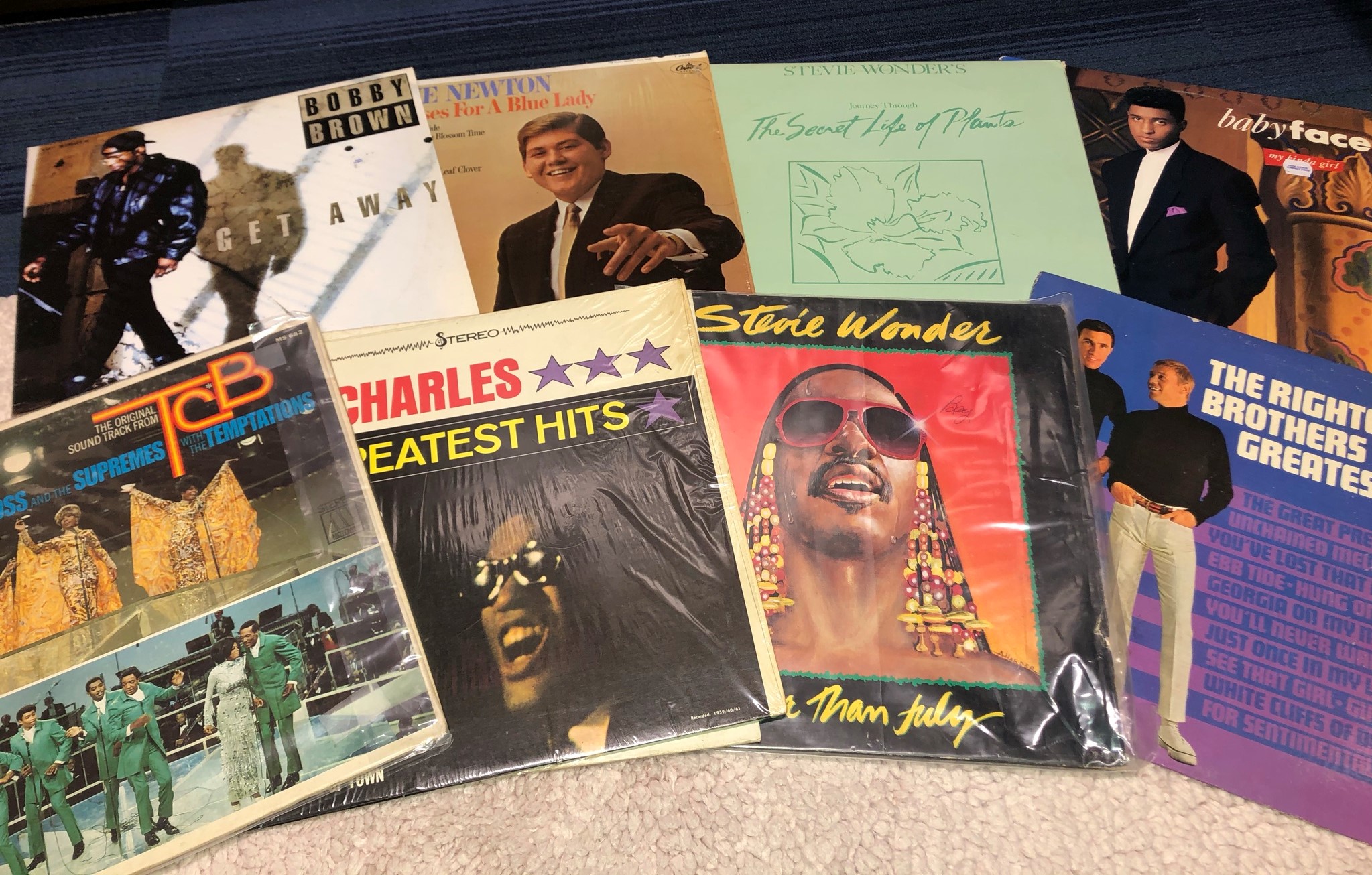
An expanding collection of my vinyls!
You know when you can feel the music when listening to your favorite songs? Well, with vinyl, you not only figuratively feel the music coursing through your mind and soul, but you can physically feel the music through the tangible form of the vinyl. There’s nothing like unraveling a vinyl wrapped in its cover. There’s nothing like being able to smell the music, just like the comforting smell of books in the library. With vinyl, you get to fully experience music with literally all of your senses.
3) Going to record stores is so fun!!
There’s nothing like the nostalgic and magical experience of entering a record store, whether it’s your first time, third time, or hundredth time! You can easily spend hours in the record store browsing, searching, and discovering music! You can mingle with other vintage audiophiles, and you can usually always get a special discount when buying vinyl in bulk! Furthermore, there is no monthly subscription to enjoy the music you want (Haha, take that Spotify and Apple Music)!
Unraveling a shiny vinyl!
Vinyl is an unbeatable classic that has remained relatively unchanged for the past 40 years! Since it’s creation in 1948, numerous developments and refinements within the vinyl industry have been made to perfect its technical and practical excellence. As George Plasketes, a professor of media studies and popular culture in the School of Communication and Journalism at Auburn University in Alabama, put it:
“Vinyl is not simply a recording format, but the artefact of an age; it is an experience that embraces emotion, passion and romance”.
Plasketes, George. “Romancing the Record: The Vinyl De‐Evolution and Subcultural Evolution.” Wiley Online Library, John Wiley & Sons, Ltd, 5 Mar. 2004, onlinelibrary.wiley.com/doi/abs/10.1111/j.0022-3840.1992.00109.x.
Are you currently laying in bed in the wee-hours of the morning and are wondering… what even is life?? Why on EARTH am I here? If aliens exist, then why haven’t we made contact with them yet?….. Or maybe extraterrestrial life has already attempted to make contact with humans, but our technology is not advanced enough to detect them…
Well, look no further in your search for some interesting and deep, philosophical questions. If you are scrolling through your phone in bed, these questions might help you fall asleep — but not because they are boring, rather, they will have your mind thinking deeply, to the point where your brain will be thinking so deeply that it will get tired, and thus, you might fall asleep from mental and intellectual exhaustion.
These four questions are all about the universe, and will surely make your head spin like a spiral galaxy. Some of the questions have been supported by research, others are too complicated or abstract to conduct studies on. Hopefully some day in the future, scientists will be able to answer some of these questions with complete assurance.
Depending on your belief of how the universe became, there are two most popular beliefs: the Big Bang, or that simply God created all of the universe and life. The Big Bang hypothesis states that about 13.8 billion years ago, all of the current and past matter in the universe came into existence at the same time. But, have you ever thought of what happened before the Big Bang? If nothing existed before the Big Bang, then how can something can just come from nothing? And how did that nothing become something?? According to Stephen Hawking,
“Asking what came before the Big Bang is meaningless, according to the no-boundary proposal, because there is no notion of time available to refer to. It would be like asking what lies south of the South Pole.”
He proposed that there’s no end, or beginning, at all.
Take a second and try to grasp that idea… Can’t grasp it? Me neither.
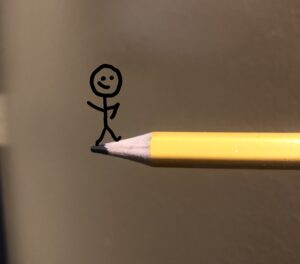
In relation to Hawking’s “no-boundary” principle, it is like looking at the tip of a pencil. Take the example picture of my pencil below:
“No-boundary” principle. Featuring my pencil
Just as the tip of the pencil has a diameter of zero at its top-most point and gradually widens as you move to the right — the universe smoothly expanded from a point of zero size. Very peculiar and mind-blowing, isn’t it?!?
2) ARE WE ALONE IN THE UNIVERSE?
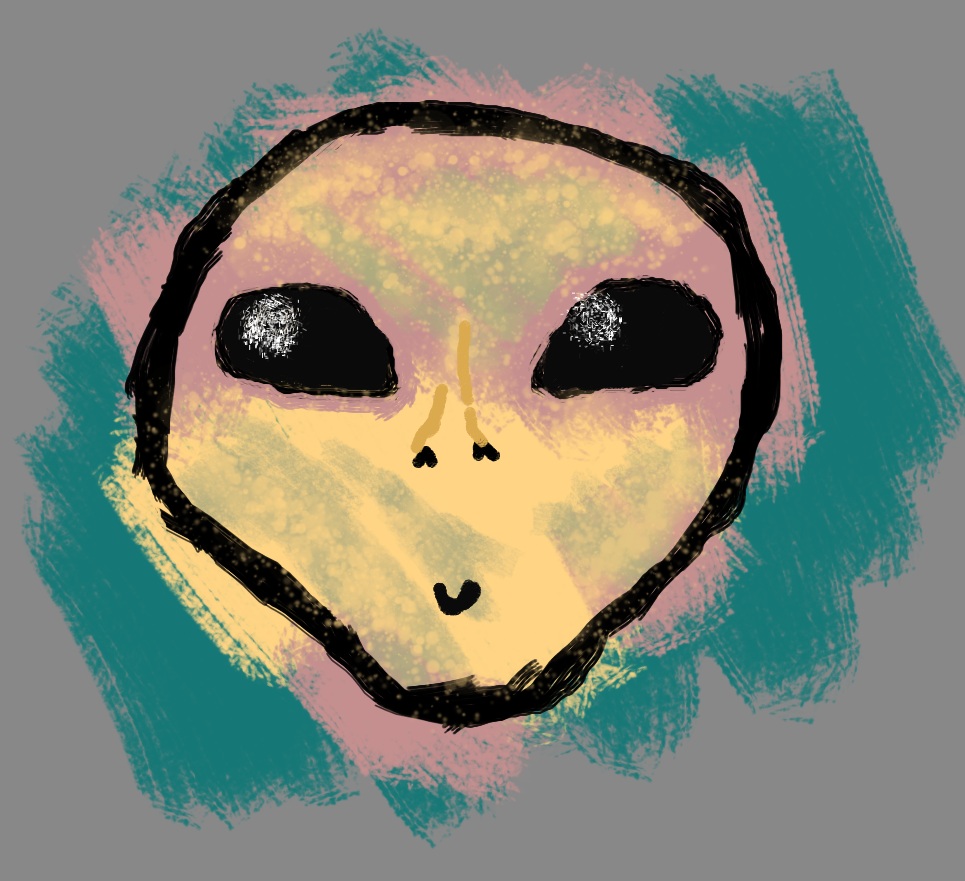
My creepy drawing of an alien.
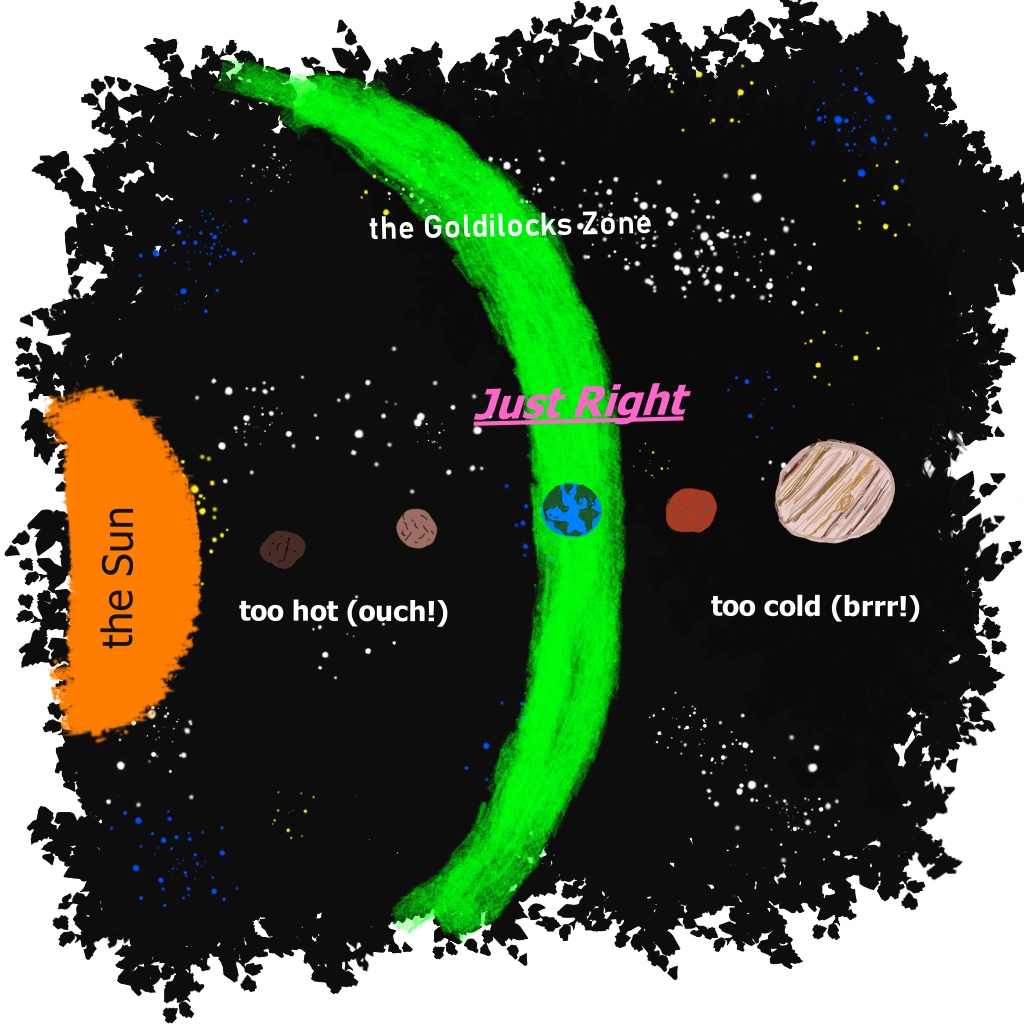
To many people, there is no way that extraterrestrial beings cannot exist, even if they cannot see them. To others, aliens are a fantasy that has never, currently does not, and will never exist (except for E.T.). Dr. Zank and his colleagues from the University of Alabama in Huntsville within the Department of Space Science are among some of the scientists looking for the factors that make conditions optimal for exoplanets to fall into the “Goldilocks Zone”. The Goldilocks zone is where the planets are not too cold, nor too hot — but juuust right to possibly foster life.
My representation of The Goldilocks Zone.
There are lots of stars, called G-type or G-class stars, that are similar to our Sun. They radiate more light toward the infrared spectrum and they look promising for hosting exoplanetary life. Our nearest neighbors, Alpha Centauri A and Alpha Centauri B, look promising.
The Fermi paradox offers an interesting perspective about the absence of evidence for extraterrestrial beings. Italian-American physicist Enrico Fermi created the Fermi paradox, which is the apparent contradiction between high estimates for the probability of extraterrestrial civilizations and the lack of evidence, thereof. However, various solutions to the Fermi paradox belong to different categories, such as the ones included below, regarding aliens:
They Are Here: Aliens visited Earth in the past and they left evidence, via Alien Artifacts/Hieroglyphics, UFO’s, and witnesses.
They Are Us: We– the humans– are the descendents of them ancient alien civilizations and we are the aliens.
They Exist, But Have Not Communicated With Us, Yet: Aliens do indeed exist, but they either have not had enough time to reach us, are signaling but we do not know how to interpret the signaling, they have no desire to communicate with us (because humans are dumb, duh), their technology is too advanced, or they are all dead because of various catastrophes (that humans will eventually face).
They Obviously Do Not Exist:Life is extremely rare, planets with the “perfect” conditions are rare, and humans are the superior race.
Pick and choose your fighter as you will. I am not going to tell you which one to believe, but I will say that they can all be true — because we have not found evidence (or a lack thereof) of each possible solution.
3) IS THERE INHERENT ORDER IN NATURE, OR IS IT ALL JUST RANDOMNESS AND CHANCE?
The recognition of randomness and apparent chance can be outwardly shown through things like galactic evolution (ie: the formation of the Universe), biological evolution (ie: development of early life), and geologic phenomena (ie: volcanos, mountains, rivers, etc). However, these phenomena can also be described via the perspective that there is inherent order in nature. For example, some Darwinistic-like theories suggest that through natural selection, life and everything that exists on the planet now is the result of deterministic principles.
However, both are important to describe nature. Nature is neither chaotic nor orderly; and neither random nor deterministic. In classical physics, things are observed as the same result every time given the same initial conditions. However, also in physics, the Big Bang theory suggests that the universe was created suddenly, by chance of the right conditions.
So what gives? → A paradox.
A paradox such that chaos is deterministic, created by precise rules that do not involve any elements of chance. With this paradox, the future is completely determined by the past, but through time, small uncertainties accumulate upon each other — thus, even if a particular behavior is predictable in the short term, it remains unpredictable in the long run.
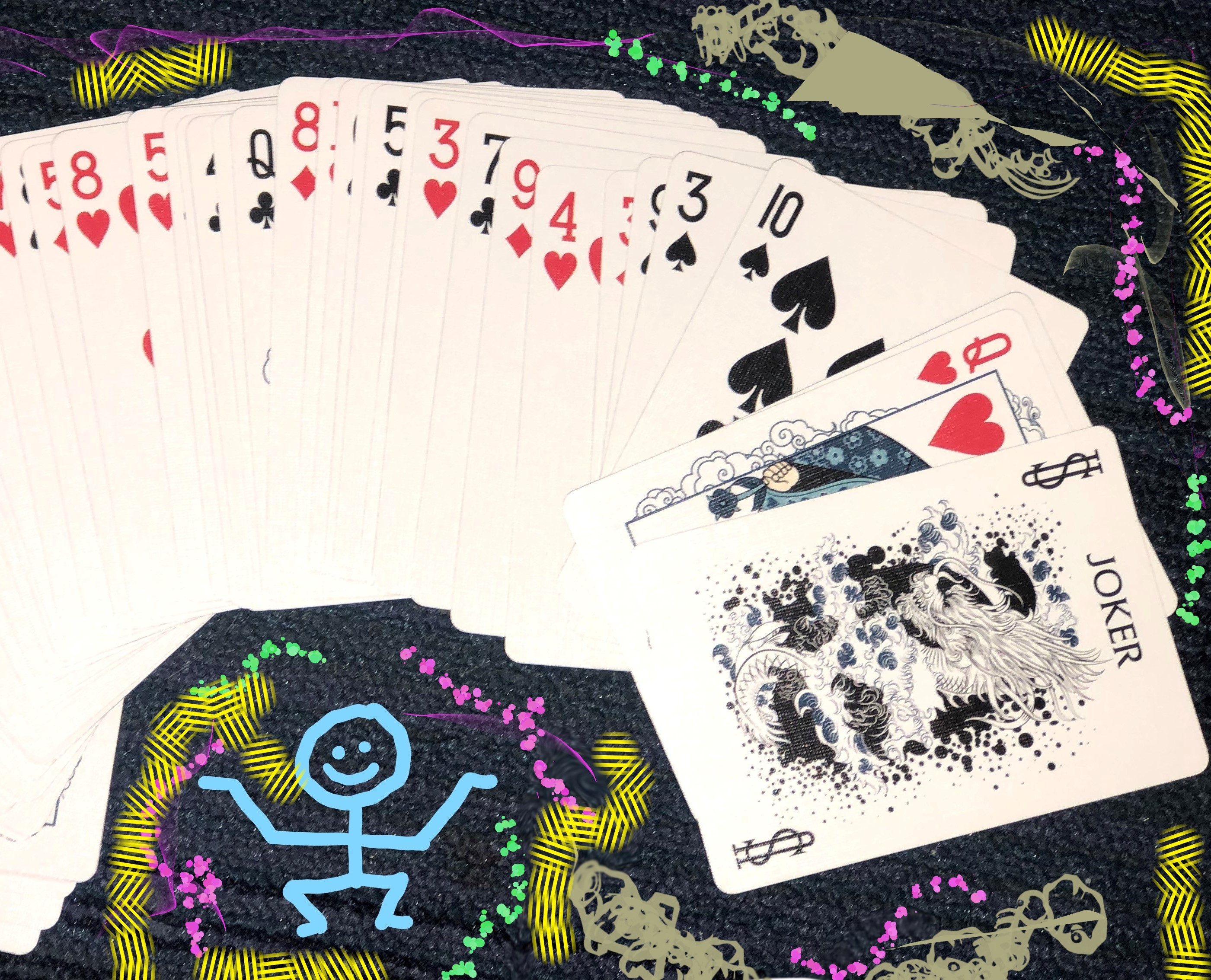
My deck of cards with (literal) chaos surrounding it.
“Essentially, there is order in chaos: underlying chaotic behavior there are elegant geometric forms that create randomness in the same way as a card dealer shuffles a deck of cards or a blender mixes cake batter.” — Chaos, Scientific American Journal
Opposites truly do attract, in this case. I would have never thought of how order and chaos could mesh together so … naturally.
4) DO WE LIVE IN A SIMULATION?
Are we sort of like puppets??
The idea that we could be virtual beings living in a computer simulation means that our simulated environment would create perceptions of reality on demand, rather than simulate all of reality all the time. This is similar to a video game where only parts of a scene are rendered to be visible to a player.
According to Neil deGrasse Tyson, “Maybe that’s why we can’t travel faster than the speed of light, because if we could, we’d be able to get to another galaxy… So the programmer put in that limit”. A new analysis by Nick Bostrom of the University of Oxford shows that ‘the odds that we are living in base reality—meaning an existence that is not simulated—are pretty much even’.
Bostrom’s simulation argument showed that at least one of the following scenarios must be true:
1. Humans almost always go extinct before reaching the simulation-savvy stage.
2. Even if humans make it to that stage, they are unlikely to be interested in simulating their own ancestral past.
3. The probability that we are living in a simulation is close to one.
If you think that perspective is interesting, take a look further. On November 12, 2019, professors at the Georgia Institute of Technology debated on the question: “Do we live in a simulation?”. There were lots of interesting answers, including the one below by professor Hans Klein in the School of Public Policy:
“It’s a simulated world that we live in to the extent that we live in this world that arrives to us through media the nature of the simulation is that institutions have interests and the interests of the media corporations and the interests of the entities that are being reported on by the media corporations. They’re all actively shaping the information flows that come to the public, it’s quite significant […] A lot of effort is made to influence how our knowledge of the world is mediated and it’s done in such a way so that we will so we end up living in if we live on critically we live in a world that’s a bit of a bit of a fantasy world and it’s a fantasy world that reflects off in the interests of media institutions and powerful societal interests.”
In a sense, Klein is saying that we, as humans, are creating our own simulating reality through the media and information we consume and the powerful interests of society that media corporations help perpetuate. With this perspective, maybe we are living in base reality after all…
ALAS,
As mysterious as the universe can be, hopefully one day humans will be able to answer these questions with impeccable certainty. Maybe the universe or some higher power does not want us to know the truth about our universe… Or maybe simply, humans just are not advanced enough yet to grasp the true notions of our reality, origin, or purpose. Hopefully you are asleep by now (if you wanted to be), but if not, may the Universe always be with you!
SOURCES:
Ananthaswamy, Anil. “Do We Live in a Simulation? Chances Are about 50–50 – Scientific American.” Scientific American, Scientific American, 13 Oct. 2020, https://scientificamerican.com/article/do-we-live-in-a-simulation-chances-are-about-50-50/.
Cvitanović, Predrag, et al., editors. Professor Debate on the Topic – Do We Live In a Simulation? Georgia Tech Library, 12 Nov. 2019, https://smartech.gatech.edu/handle/1853/62045. Accessed 3 Feb. 2021.
“If the Universe Is Teeming with Aliens … WHERE IS EVERYBODY?: Fifty … – Stephen Webb – Google Books.” Google Books, https://books.google.com/books?hl=en&lr=&id=Kp6g79LuKWEC&oi=fnd&pg=PA2&dq=do+aliens+exist&ots=aAMZyI0X6s&sig=0DONvBxxF8VTV6N37huhr3X5M5c#v=onepage&q=do aliens exist&f=false. Accessed 6 Mar. 2021.