Author: Christie Lin

  • Late night studying: effects of warm and cool LED lamps

    Late night studying: effects of warm and cool LED lamps

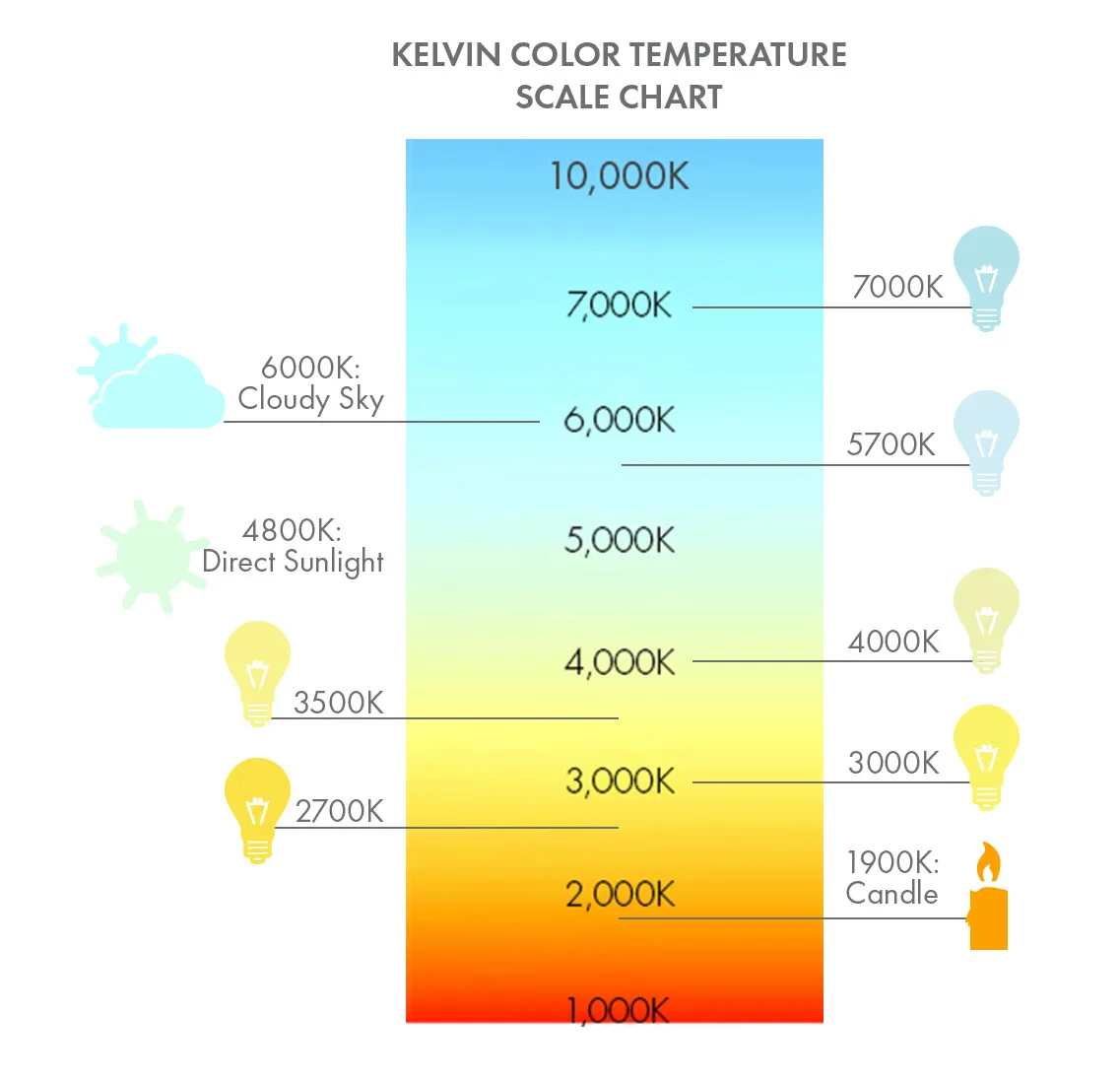
    Are you trying to pick out the right kind of fluorescent LED light for your room? One search for light bulbs on amazon shows results that range within 3000K or 6500K LED light. They look either warm or cool, so which one should you be purchasing? Sure, the decision can come down to personal preference, but you know you want to buy the right kind.

    Here’s a scenario to consider: you’re a newly admitted college student and you’ve moved into your new space with default warm light bulbs installed already. And after a few late night study sessions in your room, you’ve noticed that you’ve been getting drowsy super fast. So, when it comes down to what might truly benefit you, we can take a closer look at what each kind of light temperature offers.

    A study conducted to examine the effects of warm/cool white LED lamps and warm/cool color environments on mood and performance showed that perhaps inhabiting a study environment with a cooler light and a cool color environment help with study productivity (Shahidi et al., 2021). Additionally, another suggestion was to have a combination of the white color and warm light or the blue color with cool light can have a more favorable effect on visual comfort and mood (Shahidi et al., 2021). Some further discussion also revealed that cool lighting in white and blue colors stimulated less fatigue than warm light, and that warm light significantly reduced the amount of vigor than cool light. However, it is advised that increased exposure to cool fluorescent lighting can lead to increased rates of anger and depression (Shahidi et al., 2021). This is pretty typical with college students and late studying, since it can lead to eye strain and tiredness. Getting the right studying environment, like what fluorescent LED lamp you should place in your room, is the first step, but other factors like your attention and mental energy can also contribute to a successful late night study session.

    So, should you be installing warm or cool light LEDS in your room? Hopefully, this provides a better insight into what type of environment is ideal, but that would also depend on if you’re trying to be more or less productive.

    Citations

    Shahidi, R., Golmohammadi, R., Babamiri, M., Faradmal, J., & Aliabadi, M. (2021). Effect of warm/cool white lights on visual perception and mood in warm/cool color environments. EXCLI journal, 20, 1379–1393. https://doi.org/10.17179/excli2021-3974
  • The Magic of Shrinky Dinks and My ASF After Dark Experience

    My first semester at StemCOMM VIP offered both excitement and trepidation when I learned about the ASF After Dark event. Since high school, I hadn’t been involved in planning science-related activities, and I worried my knowledge in science related topics might be limited. However, through working with my sub-team during the planning phase, I discovered that science is everywhere around us, not something you have to constantly seek out.

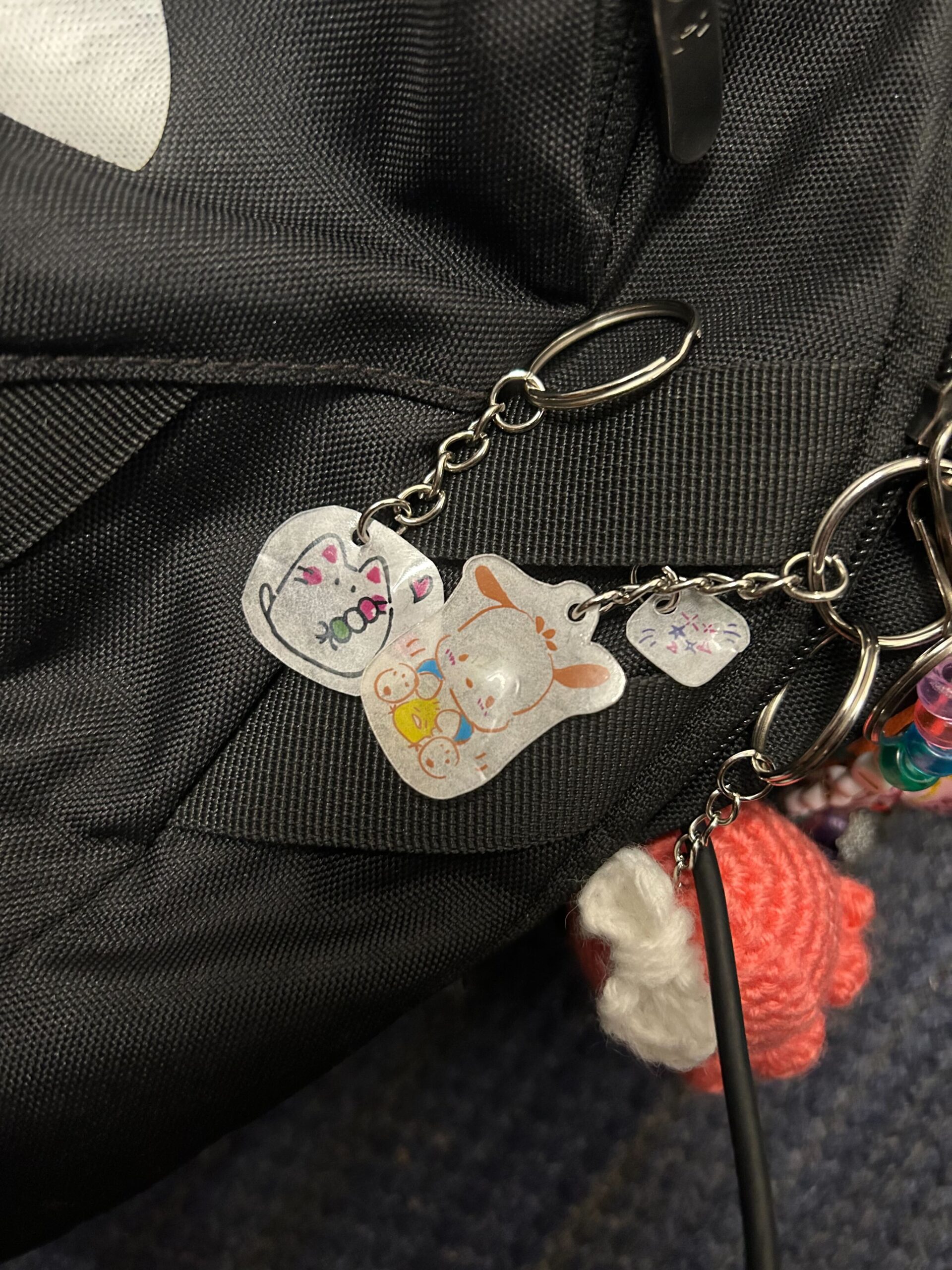
    Initially, my sub-team and I envisioned a “create your own planet” activity using Styrofoam spheres and planetary trivia. But we were worried that adults might not find this as engaging, so we pivoted to shrinky dinks. These are incredibly simple: secure a shrinky dink kit, draw on the flexible plastic sheets from the kit, shrink them with heat, and transform them into keychains, magnets, or pins!

    The reason we choose to do shrinky drinks was because of the unique process of how shrink dinks formed—almost like magic. This magic of shrinky dinks lie in the scientific process triggered by heat. These plastic sheets contain polystyrene, a material made of long, chain-like molecules called polymers. When heated, these polymers straighten out, allowing them to pack together more efficiently, shrinking the material to roughly one-third of its original size.

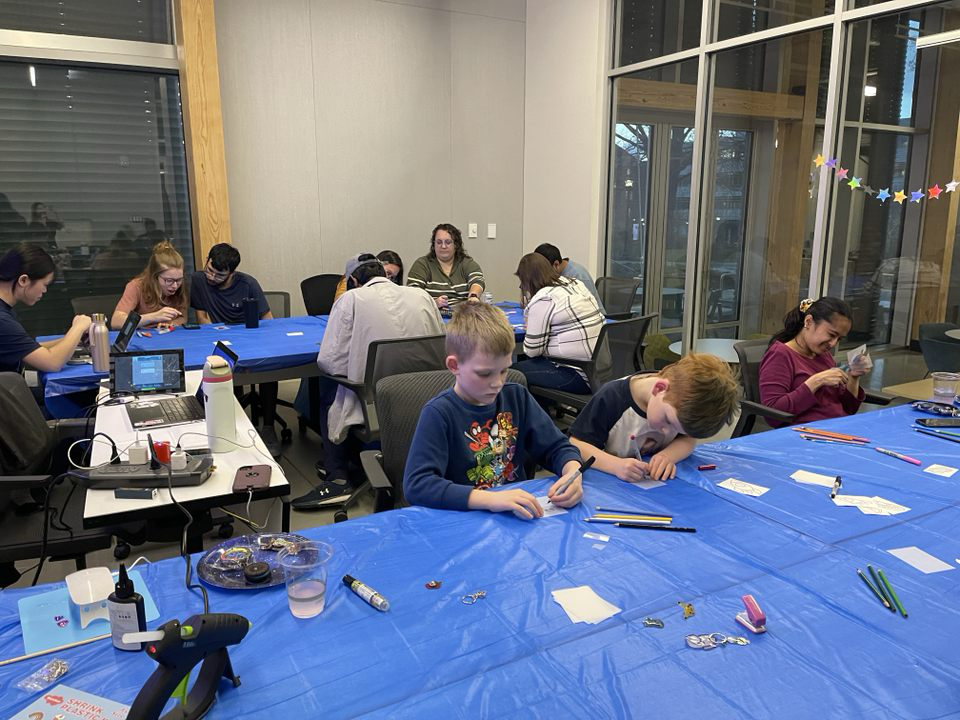
    At the event, I helped with guest reception, brief explanation of the science behind shrinky dinks, and distributing supplies. We provided stencils for tracing and a variety of charm options. The event itself was filled with excitement as guests delighted in the activities and the new experiences our shrinky dink provided. Witnessing countless faces light up as their shrinky dinks transform into their personalized charm was truly magical. Guests would kept going back and create new designs, even our own sub-team! The magic of shrinky dinks, it seems, never gets old!

    The turnout for the ASF event went so much better than I had expected. I had concerns about low attendance, but it was fantastic to see guests genuinely enjoying the experience and immersing themselves with all the science activities for the night. The guests that were in attendance were eager to learn what shrinky dinks were and I loved seeing their designs form into charms. My experience with ASF after dark was a truly a heartwarming reminder of how science brings the world around us to life.

    Sources:

    University, Carnegie Mellon. “Shrinky Dinks – Gelfand Center – Carnegie Mellon University.” Shrinky Dinks – Gelfand Center – Carnegie Mellon University, www.cmu.edu/gelfand/lgc-educational-media/polymers/molecular-rearrangement/shrinky-dinks.html#:~:text=When%20the%20film%20is%20heated,by%20rapid%20cooling%20during%20manufacture. Accessed 20 Apr. 2024.

    (View the source above to learn more about shrinky dinks!)