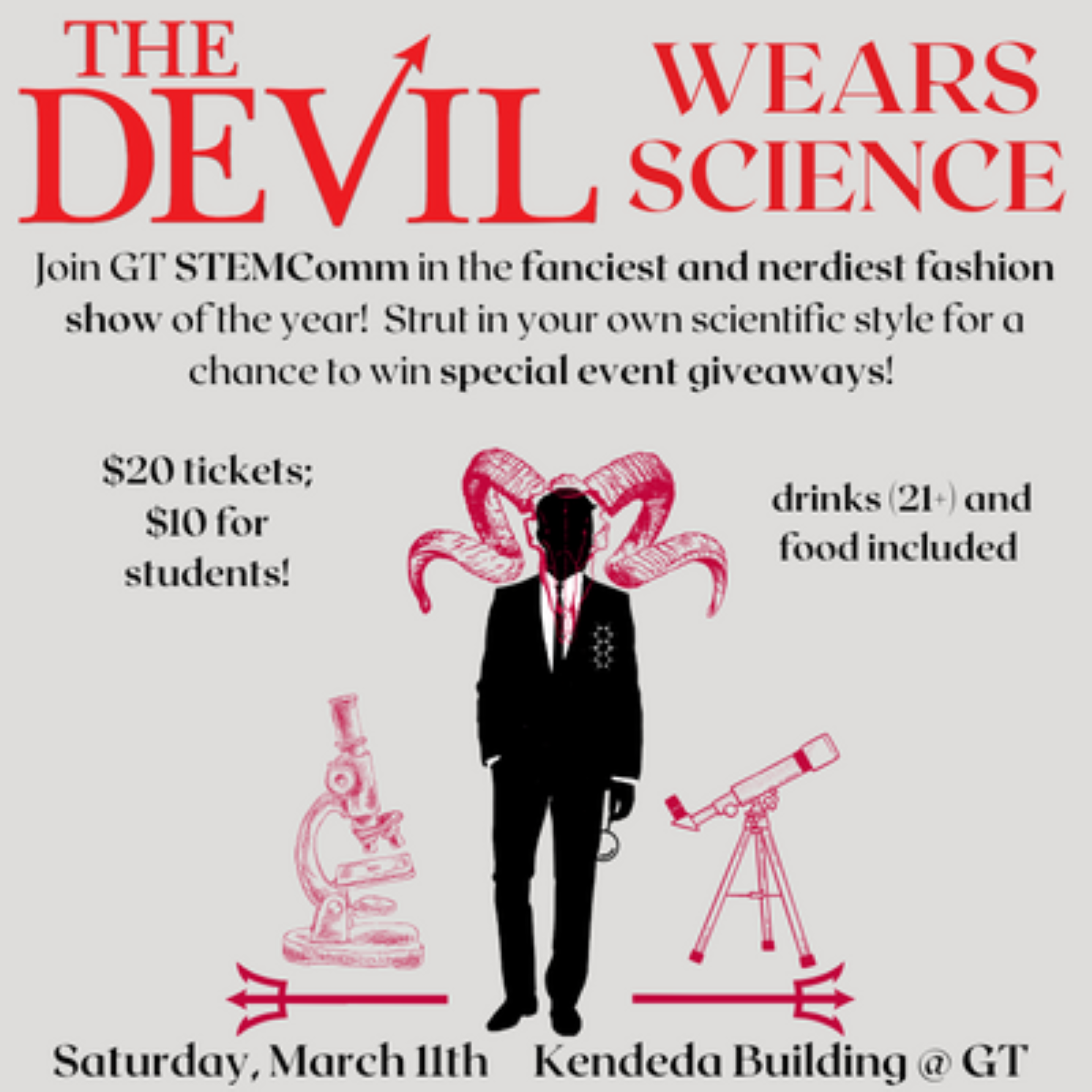
Working behind the scenes of an event can be an eye-opening experience, especially when it’s a science show with a unique twist. That’s exactly what happened when I had the opportunity to be a part of the Atlanta Science Festival’s The Devil Wears Science fashion science show in March. Since it was my first time working as part of both a science show and fashion show, I was especially eager to be part of such a unique and innovative event. This immersive experience allowed me to gain valuable insights into the inner workings of a successful show, and I was amazed at the amount of hard work, creativity, and attention to detail that goes into putting on such an event.
My group, Too Hot To Handle, focused on discussing and demonstrating the importance of heat stroke prevention through the use of protective clothing, specifically a beekeeping suit, during the event. My teammates were Claudia Ortega and Sachit Swaminathan and in the weeks leading up the show, we worked on reaching out to individuals in the beekeeping community to model and experts in the field of heat stroke prevention to present at the event, and also gathered information about the science behind our topic.
Prior to the event, I had very minimal knowledge about beekeeping suits, particularly as it relates to heat stroke prevention, so it was quite fascinating to do research and learn more about it. While there aren’t a large amount of scholarly resources on the topic, I tried to understand the different parts and materials of beekeeping suits and then did research on each fabric in relation to heat resistance. Moreover, as I delved into the topic, I realized how much thought and consideration goes into selecting the right materials and design elements for gear such as beekeeping suits, especially since the consequences of inadequate protection could be severe.
There were some challenges my team and I faced during the planning of the event, particularly in regards to contacting people to discuss the science behind heat resistant gear. Initially, we planned for experts to discuss wearable heat sensor devices and then relate that to the design of heat resistant fabric in beekeeping suits, but we faced some difficulties in finding available experts to participate. After further attempts to contact other experts in the field, we decided to present the science portion of the presentation ourselves and focused on gathering research on the topic.
In addition to my work behind the scenes, I also had the opportunity to challenge myself and grow in my presentation skills. As the day of the festival approached, I decided to join Sachit in presenting the science portion of the event, which was a significant step out of my comfort zone. I conducted more research to develop a scientifically accurate script, and we kept making edits between the slideshow and script to allow the content to align. I was slightly behind at times due to preparing for a conference I had to attend later that week, but I was determined to gather all the necessary information and be confident in my speaking parts.
On the day of the science fashion show, I was nervous as I arrived at the Kendeda building in my blazer clutching my freshly printed script. Since there was some time to spare before the show began, I decided to use the opportunity to practice rehearsing for the presentation with my other teammates. This not only helped me to feel more confident and prepared, but it also allowed us to fine-tune the script and the visuals of our presentation, ensuring that everything was in sync and aligned with the overall vision of the show. As the presentation drew near, we gathered with our new models and went over the directions for modeling the beekeeping suits. Despite the initial setback of our previous model not being able to attend, we worked together and found a solution, and as we worked out other technical issues that arose, my confidence grew, and I became more and more assured in my part of the event.
As our team took the stage and our presentation began, I couldn’t help but feel a sense of excitement mixed with a hint of nervousness. However, the more I spoke, the more my confidence grew and before I knew it, our part was over. The feeling of accomplishment and satisfaction was truly indescribable, and it was amazing to see all our hard work finally come to fruition.
But the night didn’t end there. As the other teams took the stage, the energy in the room continued to grow. I was captivated by the creativity and passion that each team brought to their presentations and it was incredible to see the range of scientific topics and the level of detail that went into each one.
Overall, I came away from this experience with a greater appreciation for the intersection of science and fashion, and the power of collaboration to bring together different perspectives and talents. It was an amazing opportunity to learn and grow and I look forward to participating in future events that combine my love of STEM and creativity.