Day: April 26, 2026

  • Procrastination Reflection

    Procrastination Reflection

    Have you ever questioned yourself why it felt so natural to delay things that need to be done? This happens to everyone at all ages. Children want to finish chores later. Adults want to put off cleaning the houses in the next few days instead. Most, if not all, people have done something similar. In particular, it’s the most obvious for students. For example, it’s me. Since Spring break, I have been completing tasks very near the end of the deadlines. Eventually, I ran out of time for the charged articles that I put off until the last week before finals. As I’m writing this article, I was very confident this is the consequence of “procrastination” (which I am not exactly happy about). Or perhaps it wasn’t just procrastination?


    What Exactly is Procrastination?

    According to educators Ramadhani and others, procrastination is defined as “the tendency to delay important tasks despite knowing the negative consequences” (Ramadhani et al., 2026). It is an occurrence where people delay doing what they want to do or what they have to do by a certain deadline, potentially leading to loss of productivity, poor performance, and increased stress (Rad et al., 2025). Psychology Today, the world’s largest mental health and behavioral science destination online, added to the definition that procrastinators may deliberately look for distractions and it tends to reflect a person’s struggles with self-control. These definitions explain what happened to me.


    What Leads to Procrastination?

    Students procrastinate for different reasons. Based on 27 studies, procrastination might be contributed by fear of failure, perfectionism, test anxiety, low motivation, and difficulties with emotional regulation (Ramadhani et al., 2026). In a different study in Iran, procrastination is a behavior observed in 80-95% of the 290 students (Rad et al., 2025). The study concluded that academic procrastination is correlated with academic self-efficacy and emotional regulation. Students who had better academic self-efficacy show less academic procrastination, and vice versa for those who had problems regulating their emotions. Other reasons include we do not enjoy doing the tasks, want to avoid making ourselves unhappy, or we fear that we won’t do them well (“Psychology Today”, n.d). In contrast, I found these hard to apply on myself. During my first year in college, I experienced all these feelings, yet I don’t think procrastination occurred to me until later semesters. This made me wonder whether submitting assignments just minutes or seconds before the deadline had given me the impression that I was doing things “right” under pressure.

    Others suggested that procrastinators believe they perform better under pressure. However, research shows otherwise; instead, procrastinators form “habit of last-minute work to experience the rush of euphoria at seemingly having overcome the odds.” (“Psychology Today”, n.d) This is true on a personal level as I convinced myself the same thing. 


    Why is It Not Just Procrastination?

    What happens when there are too many tasks at hand? We make a priority queue (CS joke). Clémence Prosen, a French educator and creative worker, believed it is not procrastinating when a person chose to prioritize certain tasks, rest, and finish all those delayed tasks later (2021). This is true for Georgia Tech students. I have heard how students taking too many classes weigh their coursework and prioritize some over the others. For example, if one project is worth 10% in a course and a homework assignment worth 5% in a different course due the same night, students prioritize the first one. However, if they need a better grade in the second class, the latter might be prioritized. This ends up with basically sacrificing those with low priority. Unless, they are perfectionists and want to keep both.  

    Historically, I used to work on my assignment over the breaks to have an easier time with deadlines. However, over the last Spring break, I made the decision to not work on my coursework, believing I will have enough time for them. I ended up catching up with deadlines as soon as we came back to school. Everything would have been fine if not for more tasks to come up unexpectedly outside of schoolwork. So, a cycle began. I have to catch up on delayed tasks in the queue. According to Psychology Today, “habitual procrastinators can experience reduced well-being in the form of insomnia or immune system and gastrointestinal disturbance.” Those late-night sleeps catch up and tire me out, causing my body to seek rest. Then, as I took my sweet time to rest (or eventually being distracted), the next tasks are due. It is worse when I try to perfect those works (draw it versus using a pre-existing image) and end up spending too much time on one assignment. This puts a strain on my body, leading to me needing even more time to rest. 


    Personal Reflection

    I figured the reason was due to my change in responsibilities in recent semesters. Procrastination with or without the priority queue wasn’t a problem before when my other responsibilities have a fixed schedule. Now, I cannot predict my schedule for next week. My rest time might have taken more time than needed as I got too comfortable with delaying work at a reasonable pace. Changes are needed to my time management and bad habits on account of these unexpected tasks.  Hopefully I can work this out over the summer and you will not see another procrastination reflection in the next few months. Finally, I have found a few strategies that might keep me going forward:

    1. Set soft deadlines a day before the real one (or even earlier for time-consuming projects)
    2. Use time-block for coursework periods with limited access to distracting sources
    3. Allow daily daily buffer time for unpredictable responsibilities outside of coursework


    References:

    Hassan, M. M. (n.d.). Time Management. Public Domain Pictures. Retrieved 2026, from https://www.publicdomainpictures.net/en/view-image.php?image=613653&picture=time-management.

    Prosen, C. (2021, February 3). Resting or procrastinating? that is the question. Clémence Prosen. https://www.clemenceprosen.com/post/resting-or-procrastinating?srsltid=AfmBOorvKggPmnD-5vCd8JBgnmNg09V8y7uZvyOMvY4vBrSrSOk3eoac

    Rad, H. F., Bordbar, S., Bahmaei, J., Vejdani, M., & Yusefi, A. R. (2025). Predicting academic procrastination of students based on academic self-efficacy and emotional regulation difficulties. Scientific Reports, 15(1). https://doi.org/10.1038/s41598-025-87664-7

    Ramadhani, E., Setiyosari, P., Indreswari, H., Setiyowati, A. J., & Putri, R. D. (2026). Academic procrastination: A systematic review of causal factors and interventions. Journal of Behavioral and Cognitive Therapy, 36(1), 100552. https://doi.org/10.1016/j.jbct.2025.100552

    Sussex Publishers. (n.d.). Procrastination. Psychology Today. https://www.psychologytoday.com/us/basics/procrastination
     

  • Your All In One Companion

    Your All In One Companion

    Regardless of time or location, entertainment has always thrived because people instinctively seek ways to take care of their mental well-being. Unlike robots, humans need to rest. It’s not just about physical relaxation, but also emotional recovery. Some people empty their minds through sports. Others escape into alternative reality in books, movies, or games. Some enjoy spending their time alone, while others seek kinship and companionship. However, what happens when other people (even family and friends) are the sources of their problems?

    For many, the answer is pets! Pets offer different types of comfort through companionship. But how did this relationship start?


    The First Pets

    According to National Geographic, domestication first started around 10,000-12,000 years ago in the Middle East; humans started to grow wild plants that are useful for food and clothing (‘National Geographic”, n.d). As the idea spread across Europe, Africa, and other continents, useful animals were chosen to be bred and domesticated. Dogs and horses helped in hunting and transportation. Sheep, goats, and cows provide high-valued products. Domestication makes life easier – and not so long later, survival is no longer the only goal.

    As civilization advanced, the relationship between humans and animals shifted. Aside from those still used in wars like horses and elephants, domesticated animals such as dogs moved from hunting tasks to guarding home. Cats, interestingly, might have chosen humans first. Around 7,500 years ago, cats moved into human villages because they liked the good source of rodents. Eventually, humans embraced the idea because they found cats less destructive than previous pest control animals such as weasels or stoats (Holz, 2021). In some cultures such as ancient Egypt, cats (and their relatives) were even associated with divinity, royalty, or nobility. In a way, it feels like cats domesticated humans, not the other way around. 


    Pets in Recent Decades

    With urbanization and advanced technology, humans no longer need animals for survival tasks. We have security technology instead of dogs, traps against rodents work as efficiently as cats, and mail delivery which works with more accuracy than messenger birds. Yet, why would pets still be found around the neighborhood and inside houses? Pets remain for their companionship and emotional support.

    In general, continuity plays a role. If someone’s great-grandparents, grandparents, and parents have been growing up with pets, they likely will too. The descendants of those pets likely become that person’s siblings. In a study done by Leora Lawton, a researcher from University of California, 97% of pet owners in the United States see their pets as family members (2025). Humans have lived with them for way too long to part ways. After thousands of years together, pets are now part of the family.


    Pets in 20th Century and Beyond

    Today, pets can fill in the absence of household members. They can substitute for the lack of a partner, children, siblings, or guardians as social companions and emotional support (Lawton, 2025). This is rather important as different types of households only get more diverse over time. Among pet owners, many of them are families with children where pets can comfort, protect, and teach them just like an older sibling or a guardian. However, when raising children has become an expensive luxury, pets are the affordable substitutions (but not exactly without parenthood duties!). In particular, households without children such as single adults or couples cannot have children treat pets as children or an understanding companion (Lawton, 2025). The boundary between human and pet is now blurry.

    As more humans view pets as family, the concern about their wellness has grown. Surprisingly, this idea has been going around for a while. Just like humans, there are clinics, shelters, and adoption centers for pets. There were an increasing number of spaces designated for pets, such as streets and dog parks (Lawton, 2025). Grocery stores and even restaurants now allow pets to be inside and offer healthy food options. Pet (usually cat) cafes are also gaining popularity. First store opened in Taiwan in 1998, then to Japan, other Asian countries and spread to the rest of the world (Lawton, 2025). They are cafes that provide interactions with pets, and for some, work as an adoption center. Pets’ health is being taken care of by those that love them, and their presence always has a place in society.


    Pets and Their Owners

    Research also suggests that pets improve physical and mental health. Martins and colleagues from Portugal researched how pets improve quality of life. Data from 49 of their studies conclude that pets influence their owners’ physical activity. In particular, owners show a higher frequency of physical activity than non-owners (Martins et al., 2023). Increasing physical activities are strongly linked with improving the owners’ mental wellness.

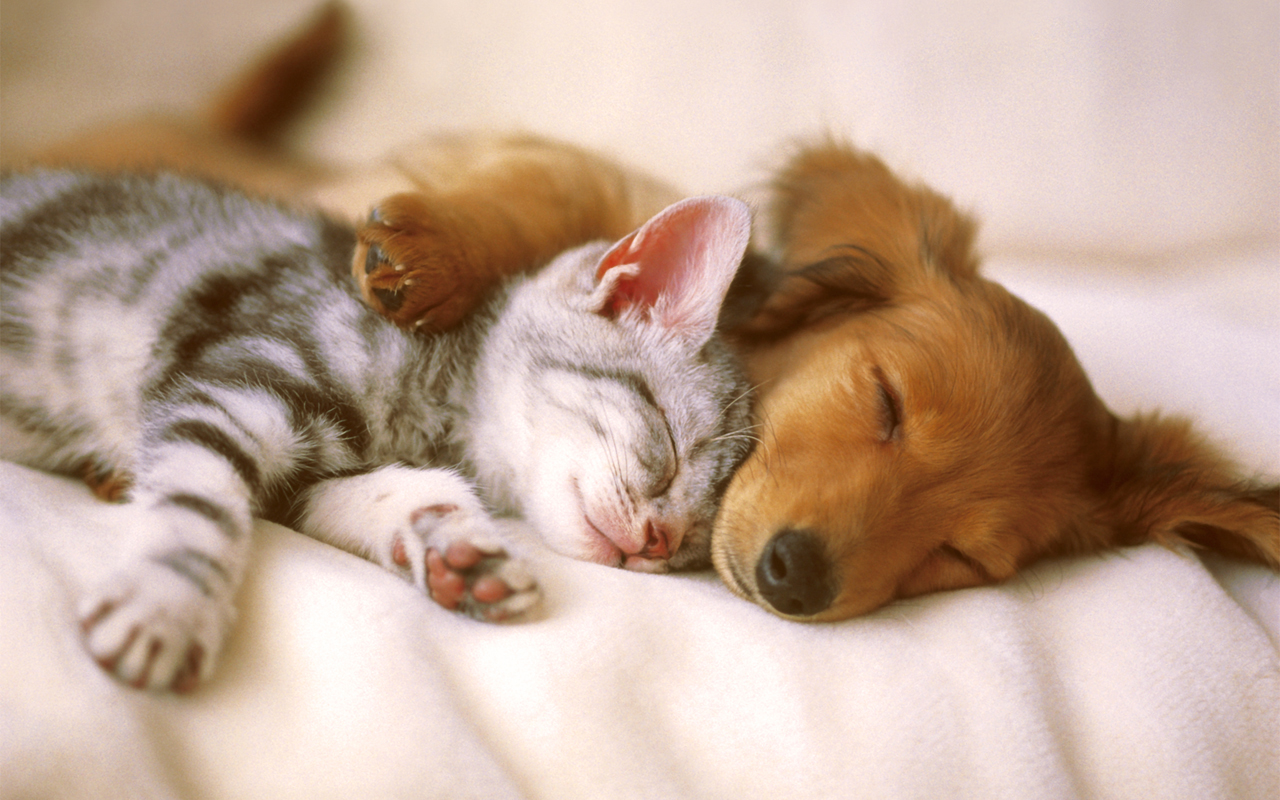
    Different pets have different lifestyles. Dogs are social animals, so they fit well in families with children or individuals who participate in regular activities. Most cats are independent and like to be indoors, leaving owners with flexible career choices (Lawton, 2025). Mixed-pet households (most common is cat and dog), usually happen when two households with pets become one family. These pets and their interaction bring enormous joy to other family members.

    Unfortunately, many people cannot own pets due to career, finance, housing, or not having energy to take care of another living being. Much like children, pets cannot take care of themselves and require a fitting environment. Pets have personalities and preferences too! For these people, they can cope by different means. Alternative choices are pet cafes, caring for stray animals, or even watching animal videos. Some studies suggest that pet videos and images may influence mental health via modulation of emotion processing (Zhu et al., 2026). In fact, there are many young people who were inspired by these contents to adopt pets. Fortunately, educational videos help introduce responsibilities of pet owners, reducing the risk of pet negligence and abandonment.


    Afterthought

    Every semester, Georgia Tech hosts a pet therapy event in collaboration with GT parents and their pups. That was a very considerate gesture to students with stressful academic life who cannot keep pets in dorms. These events highlight how pets are powerful contributors to mental wellness.

    Though dogs and cats are the most common companions, nowadays pets can be any legal animals – birds, reptiles (snake, lizards), fish, horse, or even spiders! The list went on and there’s always at least one that would surprise you. The bonding between the human and that animal can be formed not just based on their species, but rather their connection and understanding of one another. If you ever own a pet, or if a pet chooses you, which one do you imagine it would be?


    References:

    Holz, S. (2021, March 23). Animal House: Pets of the ancient world. Sarah Holz. https://sarahholz.com/2021/03/23/animal-house-pets-of-the-ancient-world/

    Lawton, L. E. (2025). All in the family: Pets and family structure. Populations, 1(2), 8. https://doi.org/10.3390/populations1020008

    Martins, C. F., Soares, J. P., Cortinhas, A., Silva, L., Cardoso, L., Pires, M. A., & Mota, M. P. (2023). Pet’s influence on humans’ daily physical activity and Mental Health: A meta-analysis. Frontiers in Public Health, 11. https://doi.org/10.3389/fpubh.2023.1196199

    National Geographic. (n.d.). Domestication origins. Education. https://education.nationalgeographic.org/resource/domestication-origins/

    YukiKoKo. (2010). Dog and Cat. Wikimedia Commons. Retrieved from https://commons.wikimedia.org/wiki/File:Dog_and_cat_(4985392932).jpg.

    Zhu, X., Shi, X., Liang, J., Sun, B., Lin, W., & Lin, J. (2026). The impact of pet videos on emotional face processing. European Journal of Investigation in Health, Psychology and Education, 16(2), 21. https://doi.org/10.3390/ejihpe16020021