Day: November 7, 2025

  • What’s Making That Smell? The Chemistry Behind Common Scents

    What’s Making That Smell? The Chemistry Behind Common Scents

    The Science of Smell

    Of the five senses, scientists understand the least about smell. We recognize scents when small airborne molecules stimulate receptors in the back of our nose, which then send signals to our brain. Humans have about 500 different types of receptors, each one specific to a different scent molecule (“How the nose decodes complex odors”, 2020).

    But what makes some molecules have scents? Well, the molecules must be able to travel through the air to the back of the nose, so they have to be volatile. Volatility is how easily the molecule evaporates at room temperature. The more a molecule evaporates into the air, the more likely it is that it reaches the receptors in the back of our nose. Even then, there must be a receptor for that specific molecule for it to be recognized (Gang, 2005).

    The whole process seems simple enough, but most scents are a combination of tens to hundreds of different scent molecules. The smell of chocolate and cocoa products, for example, is made of over 600 scent molecules (Counet et al., 2002). Scientists still don’t fully understand how more complicated scents work, (Gottfried & Wilson, 2011) but most have been found to be made of just a few major compounds, such as the southern magnolia flower. Its scent comes from a mixture of 14 different molecules, but two, beta-caryophyllene and beta-cedrene, are the main compounds (Garg & Kumar, 1999).
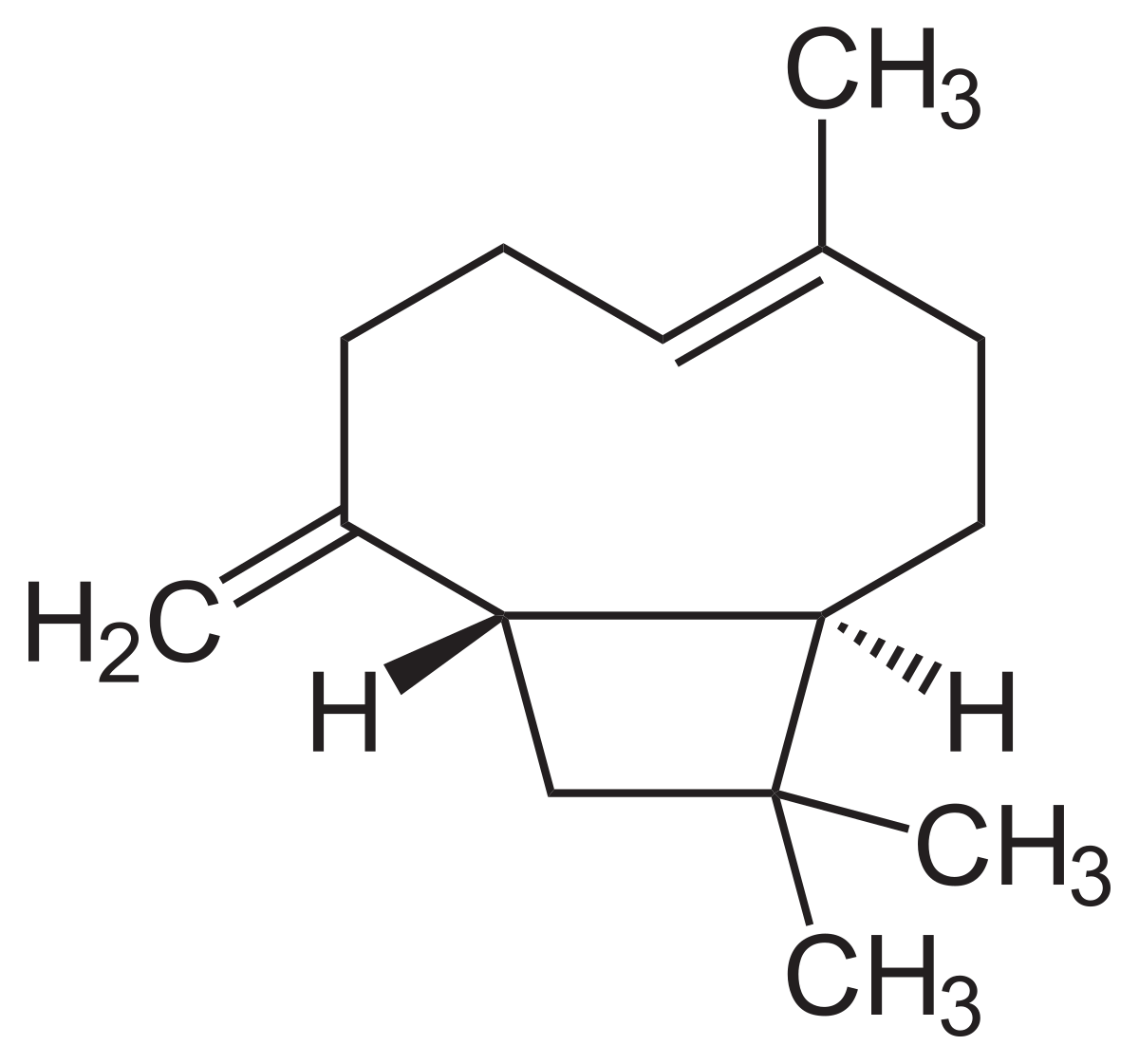

    Beta-caryophyllene
    Beta-cedrene

    Many common scents can be traced back to specific molecules. Even small changes in a molecule can cause large changes in its scent. Check out a few familiar scents below!

    Common Scent Molecules

    6-Acetyl-2,3,4,5-tetrahydropyridine gives popcorn and baked goods their typical smell. A slight change creates 2-Acetyl-1-pyrroline, which is the main component of rice’s smell (Dhrubo, 2015).

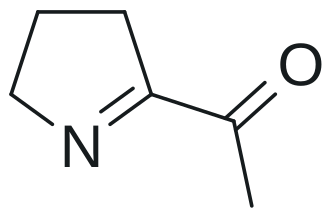
    6-Acetyl-2,3,4,5-tetrahydropyridine
    2-Acetyl-1-pyrroline

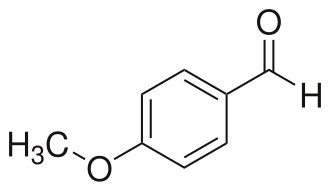
    4-Anisaldehyde is used a lot in the fragrance industry. It has a very strong sweet floral scent and is very similar to vanillin. Vanillin, as you may have guessed, is the main component of vanilla’s scent. Natural vanilla extract is made of hundreds of different molecules, but synthetic vanilla scent is usually just pure vanillin (Dhrubo, 2015).

    4-Anisaldehyde
    Vanillin

    Benzaldehyde has an almond-like odor and is very useful in the fragrance industry because of its simple structure (Dhrubo, 2015).

    Benzaldehyde

    Cinnamaldehyde makes up for around 90% of the scent of cinnamon (Dhrubo, 2015).

    Cinnamaldehyde

    Natural honey is an extremely complicated scent, made up of 187 volatile compounds, and varies based on its nectar source (Mahmoud et al., 2024). Phenylacetaldehyde is the main component of honey’s scent, but methyl phenylacetate is used for a synthetic honey scent because of its strength. It only takes a little bit of methyl phenylacetate to make a perfume or candle honey-scented (Dhrubo, 2015).


    Phenylacetaldehyde
    Methyl Phenylacetate

    Even fresh cut grass has its own molecule. (Z)-3-hexenal is one of the molecules released when grass is damaged, and is what gives it that freshly mowed lawn smell (Dhrubo, 2015).

    (Z)-3-Hexenal

    If you want to learn more about fun molecules, the American Chemical Society (ACS) has been publishing a “Molecule of the Week” since 2001. This past week’s molecule was myristicin, which is a primary component of many spices such as nutmeg, dill, parsley, and anise. Interestingly, its structure is very similar to that of amphetamines and can cause hallucinations if ingested in high doses (much higher than used for cooking). On their website, they have an archive of over one thousand molecules, complete with properties, history, and fun facts! Click here to check it out.


    How the nose decodes complex odors. (May 12, 2020). National Institute of Health. https://www.nih.gov/news-events/nih-research-matters/how-nose-decodes-complex-odors

    Gang, D. (June 2005). Evolution of Flavors and Scents. Annual Review of Plant Biology. 56, 301-325. https://www.annualreviews.org/content/journals/10.1146/annurev.arplant.56.032604.144128

    Gottfried, J., Wilson, D. (2011). Neurobiology of Sensation and Reward. National Library of Medicine. https://www.ncbi.nlm.nih.gov/books/NBK92786/

    Counet, C., Callemien, D., Ouwerx, C., Collin, S., (March 15, 2002). Use of Gas Chromatography−Olfactometry To Identify Key Odorant Compounds in Dark Chocolate. Comparison of Samples before and after Conching. Journal of Agricultural and Food Chemistry, 50(8), 2385–2391. https://pubs.acs.org/doi/10.1021/jf0114177

    Garg, S., Kumar, S., (1999). Volatile constituents from the flowers of Magnolia grandiflora L. from Lucknow, India. Journal of Essential Oil Research 11(5),, 633-634. https://aromadb.cimapbioinfo.in/web_essentialoil_details.php?id=CRESOL159

    Mahmoud, M., Kilic-Buyukkurt, O., Aboul Fotouh, M., Selli, S. (October 2024). Aroma active compounds of honey: Analysis with GC-MS, GC-O, and molecular sensory techniques. Journal of Food Composition and Analysis, 134(106545). https://www.sciencedirect.com/science/article/pii/S0889157524005799#:~:text=Compounds%20such%20as%20phenylacetic%20acid,the%20distinctive%20smell%20of%20honey.

    Dhrubo, J. S. (2015) Esters, Terpenes And Flavours: Make The Mood Cheers by Three Musketeers!. World Journal of Pharmaceutical Medicine, 4(8), 1-40. https://wjpr.s3.ap-south-1.amazonaws.com/article_issue/1438667348.pdf
  • The Science of Sharing Information: The A, B, Ts of Storytelling

    The Science of Sharing Information: The A, B, Ts of Storytelling

    And, the explosion of information across scientific and technical fields over the past few decades has created a world overflowing with data. Scientific publications, repositories, visualization platforms, as well as computational tools, have expanded dramatically to accommodate this surplus; however, the rate of knowledge production now exceeds the capacity of most audiences to process and internalize it meaningfully (Schröder et al., 2023). The dominant assumption remains that more information leads to more clarity, yet the trend of adding more slides, graphs, bullet points, along with articles, produces fact-stacked communication that fails to recognize that clarity does not come from completeness (Olson, 2013). Clarity emerges from narrative. Audiences do not automatically derive meaning from information. Although accuracy remains a priority in an information-dense world, narrative structure is often avoided in fear of oversimplification, even though effective communication is increasingly essential.

    But, information alone does not create understanding. The pursuit of more information mirrors the linguistic pattern of “and, and, and,” a communication style that overwhelms audiences with unordered detail and no narrative arc (ABT Narrative Training Program, n.d.). The brain requires structure to make meaning. The human language network encodes experience and knowledge as causal chains, not isolated facts (Chen & Bornstein, 2024); therefore, understanding relies on semantic cognition, the ability to construct a mental situation model from relationships among elements. Without narrative causality, no such model can form (Schröder et al., 2023), so when information is embedded in a narrative framework, audiences understand faster, remember longer, and also make more informed decisions (Schröder et al., 2023). Even expert audiences benefit from narrative scaffolding. Therefore, the MIT Communication Lab explicitly teaches Randy Olson’s And, But, Therefore (ABT) narrative structure in scientific communication because raw information is insufficient; without a narrative, understanding does not transfer.

    Therefore, understanding is the recognition of context, conflict, and resolution (Chen & Bornstein, 2024). The brain naturally thinks in stories, so Olson’s ABT model formalizes this cognitive pattern: “And” establishes shared reality, “But” highlights tension or a knowledge gap, and “Therefore” delivers implication or resolution (Olson, 2015). ABT is effective because it aligns with the brain’s cognitive architecture by providing meaning through structure, communicating the why, the stakes, as well as the direction; therefore, narrative is not optional for understanding. When findings are presented with contextual relevance, interpretation, and recall improve because ABT mirrors the brain’s process for constructing understanding.

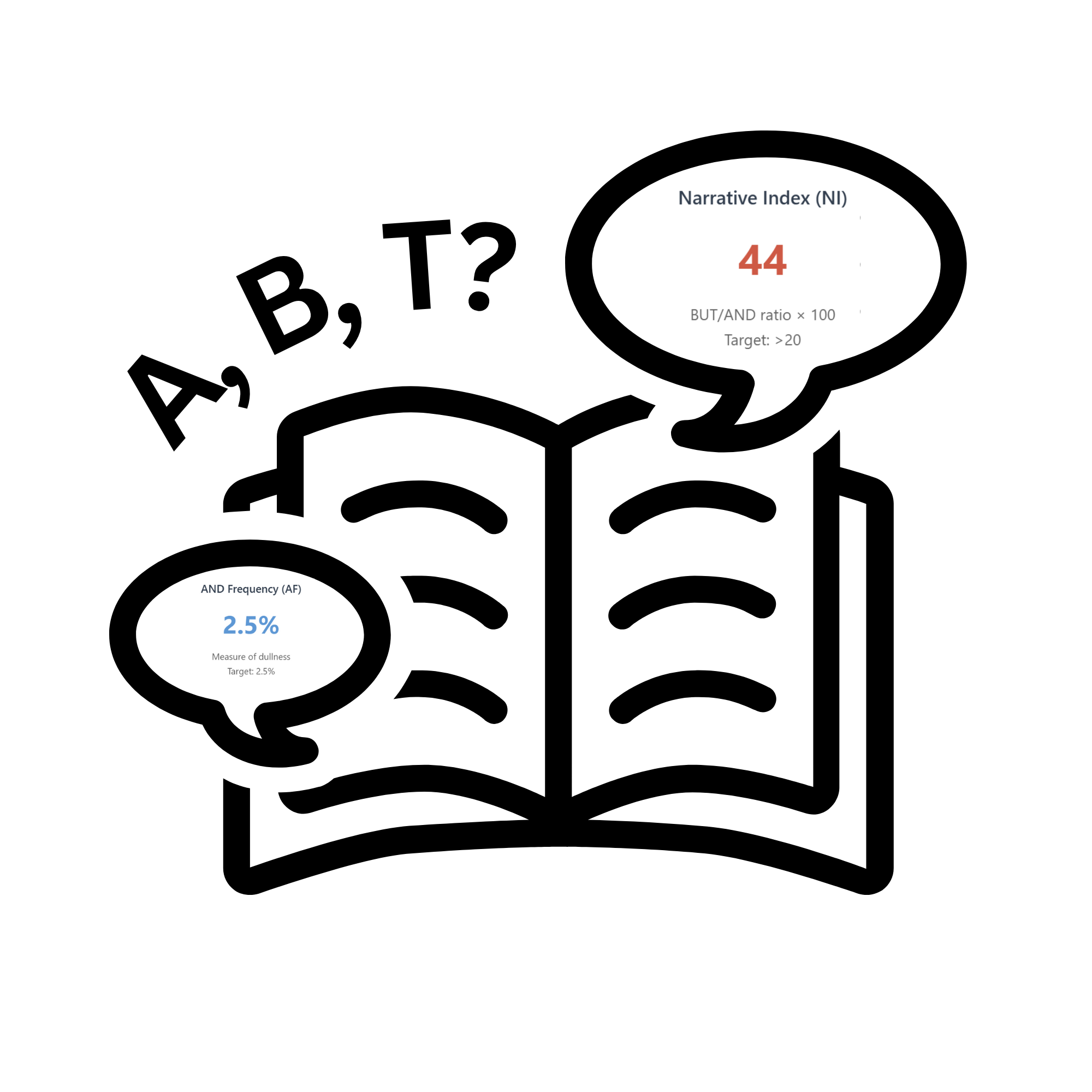
    We live in a world full of information, yet sharing it effectively is essential. But without a narrative structure, information fails to transfer. Therefore, the ABT model enables communication that conveys not only data, but meaning, memory, as well as insight. This article not only describes the ABT narrative but also embodies it through performing it. Using Randy Olson’s ABT-O-Meter, which quantifies narrative coherence, the writing scored an AND Frequency of 2.5% percent, which falls within the optimal 2% to 6% range, ensuring the writing remains connected but not repetitive. This article also has a Narrative Index score of 44, which remains above the threshold of 20 associated with narratively strong composition. This confirms that this article itself functions as a real-world example of the ABT framework in practice.


    References

    ABT Narrative Training Program. (n.d.). The ABT framework. https://abtframework.com/

    ABT Narrative Training Program. (n.d.). Randy Olson’s ABT-ometer: Analyze your text using narrative metrics. https://abtnarrative.com/abt_analyzer.html

    Chen, J., & Bornstein, A. M. (2024). The causal structure and computational value of narratives. Trends in Cognitive Sciences. https://doi.org/10.1016/j.tics.2024.01.003

    MIT Communication Lab. (n.d.). Scientific storytelling: The ABT method. Massachusetts Institute of Technology. https://mitcommlab.mit.edu/cee/commkit/scientific-storytelling/

    Olson, R. (2013). Randy Olson: Great Challenges Day [Video]. TEDMED. https://www.youtube.com/watch?v=ERB7ITvabA4

    Olson, R. (2015). Houston, we have a narrative: Why science needs story. University of Chicago Press.

    Schröder, K., Eberhardt, W., Belavadi, P., Ajdadilish, B., van Haften, N., Overes, E., Brouns, T., & Calero Valdez, A. (2023). Telling stories with data: A systematic review. arXiv. https://arxiv.org/pdf/2312.01164

  • Genetic Engineering: Woolld you, or woolldn’t you?

    Genetic Engineering: Woolld you, or woolldn’t you?

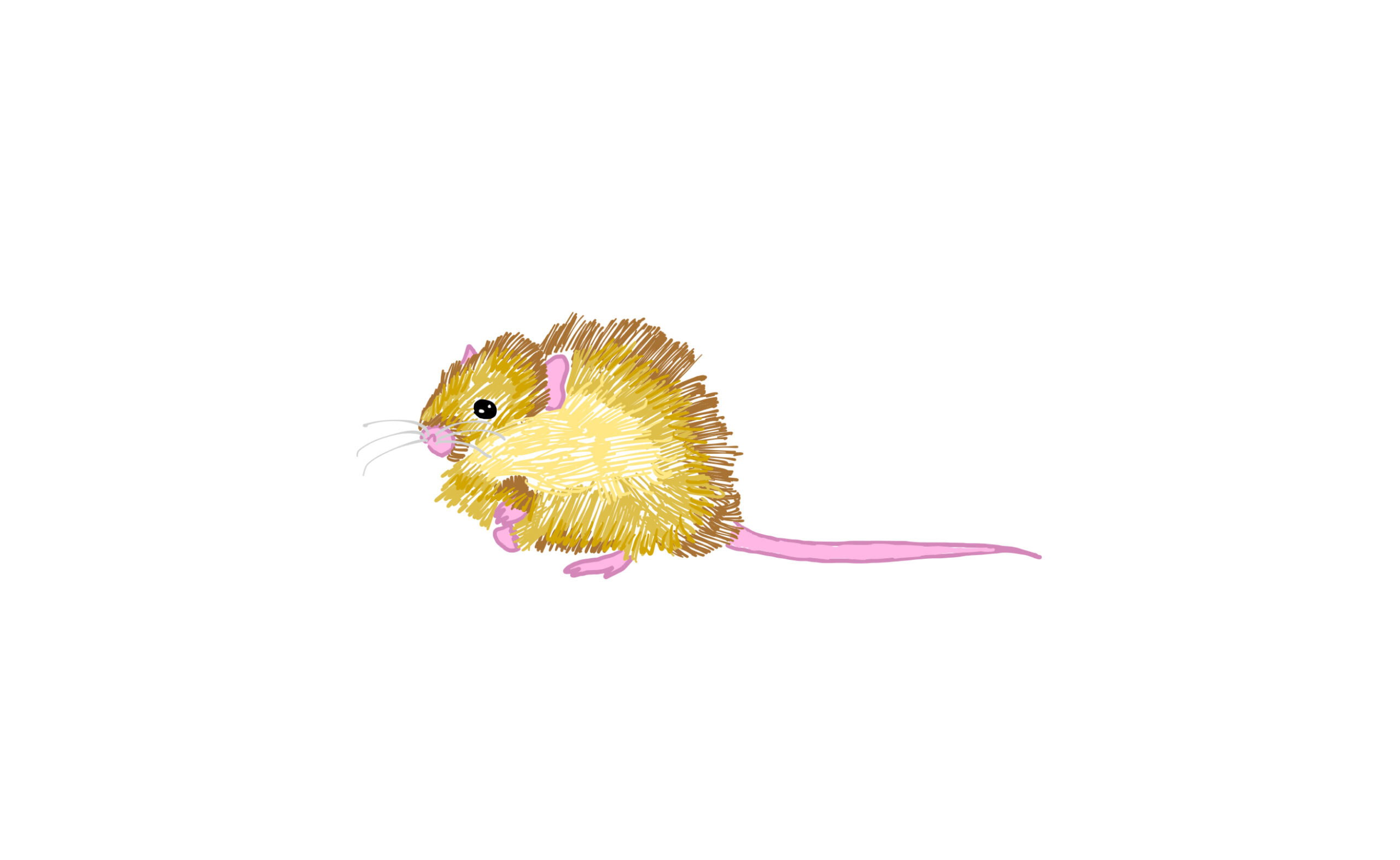
    Imagine a tiny mouse with long, golden-brown fur that looks like it belongs on a woolly mammoth! As of a couple months ago, you don’t have to imagine- scientists at Colossal Biosciences recently created mice like this by using a technique called genetic engineering. They added mammoth genes found in fossils into mouse embryos so the mice would grow thick, shaggy coats and develop traits that helped mammoths survive in the Ice Age. The researchers conducted this experiment to help them understand how mammoths stayed warm, and this might even lead to creating elephant species that can live in colder climates.

    What is genetic engineering?

    Genetic engineering works by changing an organism’s DNA, which is like the instruction book for life. DNA is made up of genes, and each gene gives directions for a specific trait, like eye color, height, or how thick an animal’s fur is, in this case. Scientists use a tool called CRISPR to cut or edit DNA very precisely. This allows them to remove, add, or change certain genes to add in traits, or even create new traits. For example, in this experiment, mammoth genes were added to mice to see how they affected hair growth and temperature regulation.

    We can we really bring back extinct animals?

    The idea of bringing back extinct animals sounds exciting, but it also comes with serious challenges. The world has changed a lot since mammoths roamed the Earth. There are no longer huge frozen grasslands for them to live in, and reintroducing mammoth-like creatures could harm existing ecosystems or create competition for resources. Some scientists worry that these new animals might struggle to survive or suffer in modern conditions that are too different from their original habitats. While bringing extinct animal might be possible, you can’t feasibly bring back an extinct environment to house them in. Due to this, we can’t truly bring back extinct animals that would survive for long periods of time in the wild.

    There’s also an ethical side to think about. Just because humans have the power to change life and the ecosystem doesn’t always mean we should. Many experts believe our focus should be on protecting endangered animals that still exist rather than reviving ones that are long gone.

    The “woolly mouse” experiment shows how powerful genetic engineering can be- it lets scientists explore ancient life in new ways. But it also reminds us that with every new discovery, we have to remember that the question is not only can we do this, but should be do this?

    References

    1. Unknown author. (2025, March 4). Woolly mammoth extinction: Mice with mammoth-like traits raise hopes for genetic engineering. NPR. Retrieved from https://www.npr.org/sections/shots-health-news/2025/03/04/nx-s1-5299962/woolly-mammoth-extinction-mice-genetic-engineering
    2. Davies, J. (2025, March 10). Colossal Biosciences engineers mice with woolly mammoth traits. Chemical & Engineering News, 103(06). https://doi.org/10.1021/cen-10306-scicon5
  • Vertigo: Living like you’re on a perpetual rollercoaster

    Vertigo: Living like you’re on a perpetual rollercoaster

    From ages 6-10, my uncle took my cousin and I to Navy Pier every summer. It’s July, school is out, the sun is shining, and not one multiplication table in sight! Fatty fair foods to our left and Lake Michigan to our right, the only thing missing was the adventure! Navy Pier doesn’t have many rides but there are a few that I was definitely excited for as a child. The only problem is, I can’t ride rollercoasters. And no, I am not afraid of heights. I still tried though it made my stomach hurt, but it got too much at one point and I stopped riding rollercoasters that day, and for the rest of my life. 

    This would not be a problem if it wasn’t affecting my daily life. In addition to not being able to enjoy 98% of the rides at Disney World, I have severe motion sickness. Motion sickness is a common condition so, I was not surprised that I have it.

    But my motion sickness doesn’t only affect me as a passenger. When I drive over large bumps or up steep hills, I flinch because of the stomach pain. Not only is this dangerous, but an Atlanta speed bump is nothing compared to a rollercoaster(at least it’s not supposed to be)!

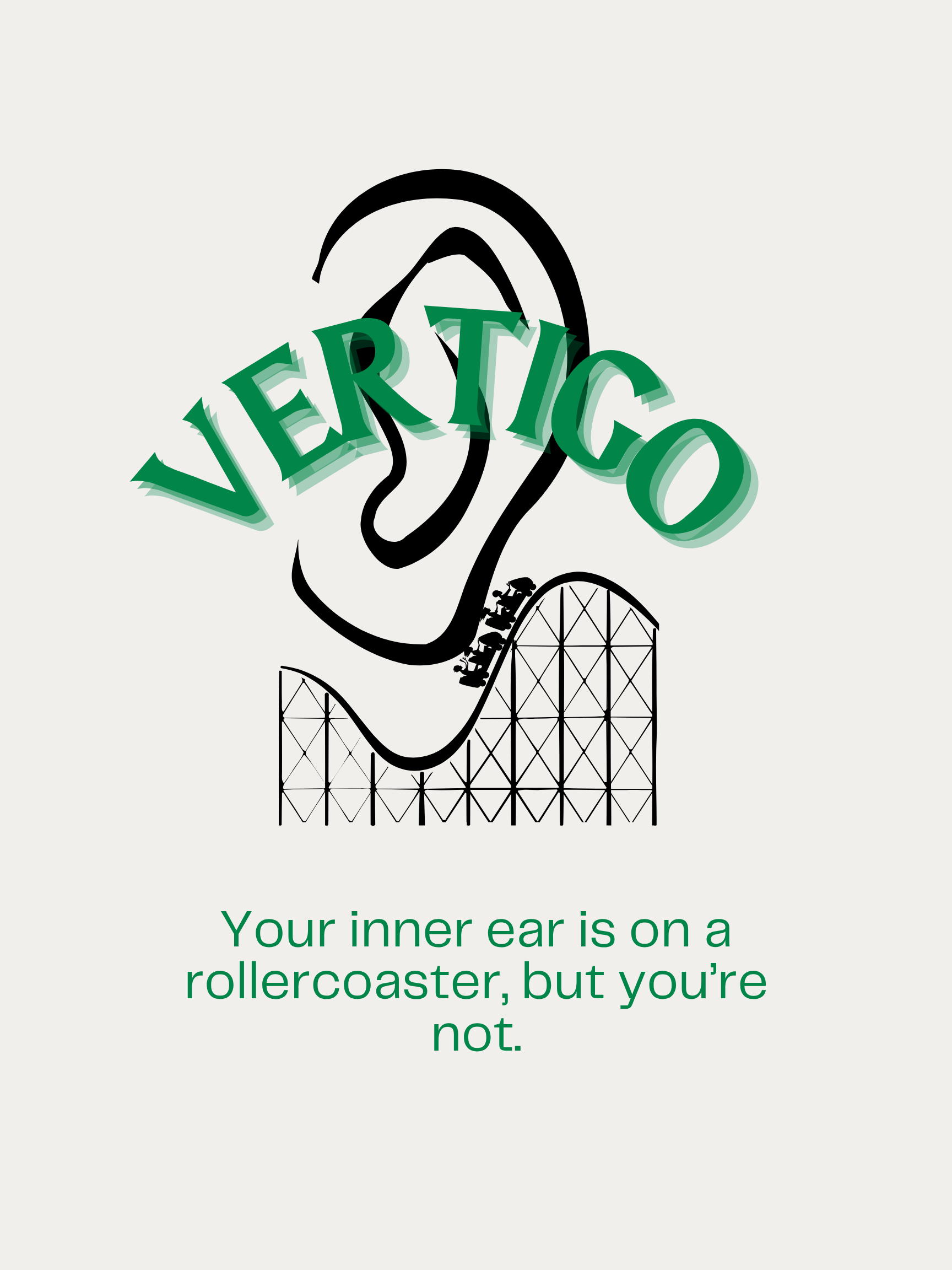
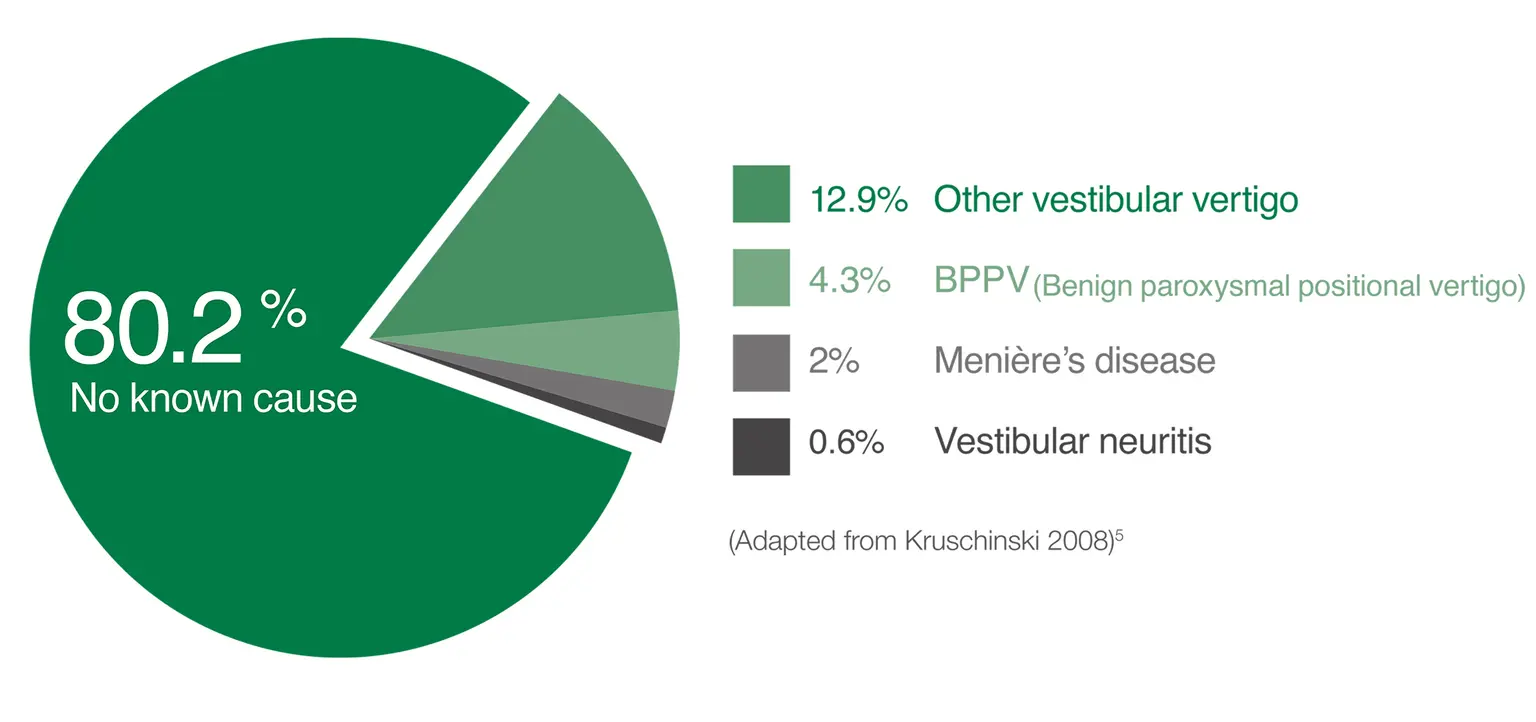
    So why can’t I ride rollercoasters? Why do I need to brace for impact driving up to my parents’ house? My mom gave me my first answer because she has a similar issue: Vertigo. Vertigo, though described as the sensation of spinning that leads to dizziness, is actually a symptom of several diseases/conditions such as: chronic migraines, benign paroxysmal positional vertigo(BPPV), persistent postural-perceptual dizziness(PPPD), or Meinere’s disease.  It’s also described as “disequilibrium”, which is just the feeling of being unbalanced constantly.

    Figure 2. Percentage of people who suffer with some variant of vertigo

    Here’s the science:

    The stomach drop that many people feel when riding coasters is because your internal organs lag behind when you fall(Berg, 2024). This slight disconnect makes you feel like you’re weightless! Your internal organs don’t move as fast as the rest of your body so that sends a signal to your brain fooling you into thinking gravity no longer exists.

    For people with Vertigo, this feeling is exhilarating. For me, it causes extreme nausea and pain. My stomach churns and my head starts aching, and then after 30 seconds it’s over. It turns out Vertigo is an inner ear problem. The inner ear is located in the vestibular system, which is a maze of canals filled with fluids and tiny crystals called otoconia.

    According to University of California San Francisco, otoconia are “composed of calcium carbonate, and help the utricle sense head tilt and acceleration by acting as a weight that will slide relative to the hair cells with head position changes”.  They can be easily displaced by external factors such as age or trauma, but it can also be a genetic mutation. 

    When the otoconia ends up in the wrong palace such as the semicircular canals, your brain thinks that there is movement of fluid throughout the inner ear when there really is not. This miscommunication of signals is what causes serious nausea, dizziness and even severe pain. Essentially, your inner ear tells your brain that you’re moving at a rapid pace but your eyes are also telling your brain that you’re not moving at all. Because the brain is receiving different signals, the rest of the body suffers the consequences. 

    For me, it depends on the activity. Yes, I can ride the kiddie rides at Six flags. No, I cannot ride “Goliath”. I am not afraid of heights or planes. But when a plane lands, I often brace myself because the speed at which we land does cause a lot of pain. I also do not get sea sick, which is interesting because many people with motion sickness also have sea sickness.

    Solutions:

    1. Motion sickness glasses. 
      1. Though they may look funny, many people have said these glasses help with car rides. The liquid inside the glasses helps balance the signal your inner ear and your eyes are sending to the brain.
      2. Antihistamines 
        1. Antihistamines can often be used to suppress the vestibular system’s hyperactivity when moving.
          1. Medicine such as Mezclizine, commonly known as Dramamine is the most popular form of medicine to help reduce motion sickness. Cinnarizine is also an antihistamine that is used for travel sickness.
      3. Surgery
        1. For people with Meniere’s disease, surgery may be required to correct the inner ear’s dysfunction.
      4. Sit in the passenger seat!
        1. Because the front wheels of responsible for the direction of the car, turns may feel less harsh. If you sit in the back, you’re farther away from the turning wheels so motion sickness is more likely. Drivers are even less likely to feel motion sickness.

    My solutions:

    1. I take iron supplements to help with dizziness/anemia, so that motion sickness doesn’t make me pass out.
    2. I don’t ride rollercoasters.

    References

    https://www.ama-assn.org/public-health/prevention-wellness/what-doctors-wish-patients-knew-about-vertigohttps://ohns.ucsf.edu/balance-falls/BPPV

    https://www.nhsinform.scot/illnesses-and-conditions/ears-nose-and-throat/vertigo/https://

    www.rd.com/article/motion-sickness-glasses/

    https://www.meandve.org.uk/information-and-support/treatment-and-management/surgery

    https://www.canva.com/design/DAG3Yocer34/Lielrs9QrT29fb-6T_CN2Q/edit?utm_content=DAG3Yocer34&utm_campaign=designshare&utm_medium=link2&utm_source=sharebutton

    https://www.google.com/url?sa=i&url=https%3A%2F%2Fwww.heel.com%2Ftherapeutic-areas%2Fvertigo%2Fvertigo&psig=AOvVaw3VWlit1xLmX4e-YTrBrPfh&ust=1762563486136000&source=images&cd=vfe&opi=89978449&ved=0CBYQjRxqFwoTCLCOsOTq3pADFQAAAAAdAAAAABAE

    https://www.warrantywise.co.uk/blog/advice/travel-advice/10-ways-to-deal-with-car-sickness/#:~:text=Sit%20in%20the%20front%20seat,further%20from%20the%20turning%20wheels.