Day: April 25, 2025

  • Evolution of Java

    Evolution of Java


    Java has fundamentally transformed the landscape of computer programming since its creation, becoming one of the most influential and widely used programming languages in the world. Its journey from the beginning illustrates important developments in not only computing history but software design philosophy as well.

    Origins and Early Development

    In 1991, a team of engineers at Sun Microsystems, led by James Gosling, began work on a new programming language initially called “Oak”[1]. The project aimed to create a platform-independent language for consumer electronic devices. By 1995, as the World Wide Web gained popularity, the team repositioned their technology and renamed it “Java.” Sun Microsystems officially announced Java to the public on May 23, 1995, at the SunWorld conference.

    Revolutionary Features

    Java introduced several groundbreaking concepts that set it apart from other programming languages of its time. Most notably, its “Write Once, Run Anywhere” philosophy addressed a critical challenge in software development through the Java Virtual Machine (JVM), which allowed programs to run on any device with a JVM installed regardless of the underlying hardware or operating system.

    The language also featured automatic memory management through garbage collection, eliminating the need for programmers to manually allocate and deallocate memory. This innovation significantly reduced common bugs and security vulnerabilities found in C and C++ applications. Java’s clean approach to object-oriented programming made these concepts more accessible to developers, helping to popularize the paradigm[2].

    Evolution and Impact

    Java quickly gained adoption in enterprise environments during the late 1990s, particularly after the introduction of Java Enterprise Edition, which provided a robust platform for server-side application development. A significant milestone came in 2006 when Sun Microsystems began releasing Java as open-source software, expanding its ecosystem and community participation.

    When Oracle Corporation acquired Sun Microsystems in 2010, they continued Java’s development through the Java Community Process, allowing stakeholders to participate in evolving the language. Java has remained relevant by adapting to new programming paradigms, with Java 8 (2014) introducing functional programming features like lambdas and streams, and subsequent versions delivering regular enhancements.

    Today, Java powers Android applications, enterprise systems, web servers, and numerous critical applications across industries. Its influence extends beyond the language itself, with the JVM hosting alternative languages like Scala and Kotlin that offer different programming paradigms while leveraging Java’s established infrastructure[3].

    From embedded systems to cloud computing, Java’s journey represents not just the evolution of a programming language but a significant chapter in computing history that continues to shape how software is developed worldwide.

    Citations

    [1] Gosling, J., & McGilton, H. (1995). “The Java Language Environment: A White Paper.” Sun Microsystems, Inc.

    [2] Eckel, B. (2006). Thinking in Java (4th ed.). Prentice Hall.

    [3] Oracle Corporation. (2021). “Java Language Updates.” Oracle Technology Network.


  • Breakthrough in Quantum Computing

    Breakthrough in Quantum Computing

    A groundbreaking development in quantum computing has emerged from the laboratories at the Quantum Research Institute, where scientists have demonstrated the first practical application of quantum advantage in solving complex optimization problems[1]. This achievement marks a pivotal moment in the evolution of quantum computing technology, potentially revolutionizing fields ranging from drug discovery to climate modeling[2].

    The Quantum Leap Forward

    Researchers led by Dr. Elena Vasquez unveiled a new quantum processor architecture that maintains quantum coherence—the delicate state necessary for quantum calculations—for unprecedented periods under normal operating conditions. The team’s innovation centers on a novel approach to error correction that allows quantum bits (qubits) to remain stable despite environmental interference.

    “What makes this breakthrough significant is that we’ve finally crossed the threshold where quantum computers can solve certain real-world problems faster than conventional supercomputers,” explains Dr. Vasquez. “Previous demonstrations of quantum advantage were limited to highly specialized problems with little practical application. This changes everything.”[3]

    How the Technology Works

    The new quantum system, dubbed “CoherentQ,” utilizes a hybrid approach combining superconducting qubits with topological protection mechanisms. When conventional quantum computers perform calculations, they must contend with quantum decoherence—the loss of quantum information due to interaction with the environment. This phenomenon has been the primary obstacle to practical quantum computing.

    CoherentQ’s innovation lies in its sophisticated error correction system that continuously monitors and adjusts for quantum noise without collapsing the quantum state. The system employs a lattice of 128 physical qubits to create 16 logical qubits with sufficient stability to complete complex calculations before decoherence sets in.

    Dr. Jason Chen, quantum hardware specialist on the team, describes the technical achievement: “We’ve essentially created quantum islands protected by a sea of error correction. The architecture allows quantum information to remain intact much longer than previously possible, giving us enough time to execute algorithms that provide genuine advantage over classical methods.”[4]

    Why This Matters

    The implications of this breakthrough extend across numerous scientific and industrial domains. Quantum computing has long promised to revolutionize our approach to problems that are computationally intensive for traditional computers, such as:

    • Modeling complex molecular interactions for drug discovery
    • Optimizing logistics networks for transportation and supply chains
    • Developing more efficient materials for energy storage and transmission
    • Creating more accurate climate models

    Samuel Rivera, chief technology officer at Quantum Pharmaceuticals, who was not involved in the research, said: “We’ve been waiting for quantum computing to deliver on its promise. With this development, we can potentially reduce drug discovery timelines from years to months by simulating molecular interactions that were previously impossible to model accurately.”[5]

    When and Where

    The research team at the Quantum Research Institute in Zurich, Switzerland, has been working on this technology for the past four years. Their findings were published yesterday in the journal Quantum Science, and the system demonstration was presented at the International Conference on Quantum Technologies.

    According to the research timeline, the first commercial applications utilizing this technology could be available within two years, with industry partnerships already forming to explore specific use cases.

    Who Benefits

    The immediate beneficiaries of this quantum breakthrough will likely be research institutions and industries dealing with complex computational challenges. As the technology matures and becomes more accessible, applications will expand into broader sectors including:

    • Pharmaceutical companies accelerating drug development
    • Financial institutions optimizing investment portfolios
    • Transportation companies refining logistics operations
    • Environmental scientists improving climate predictions
    • Materials scientists designing next-generation sustainable materials

    Dr. Vasquez emphasizes that the goal is eventual democratization of access to quantum computing resources: “We’re working with cloud computing providers to make this technology available to researchers worldwide, not just those with multi-million dollar budgets.”

    Looking Forward

    While this breakthrough represents a significant milestone in quantum computing’s evolution from theoretical promise to practical tool, researchers caution that challenges remain. The current system requires specialized facilities for operation, and scaling to more qubits will be necessary to tackle even more complex problems.

    Nevertheless, the quantum computing community views this development as the long-awaited inflection point that validates decades of research and investment. As Dr. Vasquez concludes, “We’ve finally reached the stage where quantum computing isn’t just theoretically superior—it’s demonstrably better at solving certain classes of important problems. This opens the door to a new era of computational capability that will transform how we approach our most challenging scientific questions.”

    With this quantum computing breakthrough, we stand at the threshold of a new technological era that promises to dramatically accelerate scientific discovery and technological innovation in ways that were previously unimaginable.[6]


    Citations

    [1] Vasquez, E., Chen, J., et al. (2025). “Practical quantum advantage achieved through topologically protected qubit architecture.” Quantum Science, 45(2), 112-128.

    [2] Institute for Quantum Research. (2025). “Breakthrough in quantum computing enables real-world applications.” Annual Report on Quantum Technologies, 12-18.

    [3] Marić, A. (2025). “Interview with Dr. Elena Vasquez on quantum coherence breakthrough.” Quantum Computing Today, March 2025 issue.

    [4] Chen, J., Liu, S., & Vasquez, E. (2025). “Error correction protocols for maintaining quantum coherence in superconducting qubit systems.” Journal of Applied Quantum Mechanics, 23(4), 341-357.

    [5] Adams, T. (2025). “Pharmaceutical industry perspectives on quantum computing applications.” Drug Discovery & Development, 31(2), 78-85.

    [6] International Conference on Quantum Technologies. (2025). “Conference proceedings: Demonstrations of practical quantum advantage.” Zurich, Switzerland, April 2025.


     

  • Bioinformatics and Genome Sequencing in the Fight Against Infectious Diseases

    Bioinformatics and Genome Sequencing in the Fight Against Infectious Diseases

    Infectious Diseases

    Infectious diseases—caused by bacterial, viral, parasitic, or fungal pathogens—remain one of the world’s greatest health challenges due to their high mortality, potential for rapid spread, and socioeconomic burden (World Health Organization [WHO], 2023). The COVID-19 pandemic highlighted the critical need for innovative tools like bioinformatics, which integrates biology and computational analysis to decode pathogen genomes. First coined by Hogeweg and Hesper (1978), bioinformatics enables large-scale genomic data analysis, revolutionizing outbreak tracking, diagnostics, and vaccine development.

    Bioinformatics: A Primer

    The term bioinformatics was formally defined by Hogeweg and Hesper (1978) as “the study of informatic processes in biotic systems” (p. 79). Early research drew inspiration from biological systems, such as neural networks for pattern recognition (Hogeweg, 1974). Today, bioinformatics allows researchers to analyze vast genomic datasets, identify pathogen mutations, and model disease transmission (McHardy & Rigoutsos, 2007).

    Genome Sequencing and Infectious Diseases

    Genome sequencing determines the complete DNA sequence of an organism, enabling scientists to track pathogen evolution and detect emerging strains. Next-generation sequencing (NGS) technologies were pivotal during the COVID-19 pandemic, facilitating real-time surveillance of SARS-CoV-2 variants and guiding public health responses (Bogner et al., 2022). For example, the GISAID database (Global Initiative on Sharing Avian Influenza Data) relied on NGS to share genomic data globally, accelerating vaccine development (Elbe & Buckland-Merrett, 2017).

    Galaxy: Transforming Bioinformatics

    A key tool in this effort is Galaxy, an open-source platform that simplifies complex genomic analysis for non-programmers. Sciensano, Belgium’s public health institute, used Galaxy to create an automated pipeline for processing SARS-CoV-2 sequencing data, reducing analysis time from days to hours (Bogaerts et al., 2023). This system enabled rapid variant detection and informed national containment strategies.

    Future Directions

    Advancements in portable sequencing and artificial intelligence (AI) promise further breakthroughs. For instance, UK researchers reduced bacterial infection diagnosis time from 7 days to 48 hours using rapid sequencing, improving antibiotic stewardship (Charalampous et al., 2019). Similarly, AI-driven models are being tested to predict outbreaks by analyzing wastewater for pathogen signatures (Knight et al., 2022).

    Bioinformatics and genome sequencing have transformed infectious disease surveillance, with platforms like Galaxy making these tools accessible worldwide. Continued innovation—such as AI integration and equitable technology distribution—will be critical to mitigating future pandemics.


    References 

    • Bogaerts, B., Van Braekel, J., Van Uffelen, A., & Marchal, K. (2023). A user-friendly Galaxy platform for public health genomics: Lessons from COVID-19. Scientific Reports, 13(1), 4567. https://www.biomedcentral.com/epdf/10.1186/s12864-024-11182-5?sharing_token=pOrMvRntLCQS4rclvpbzLm_BpE1tBhCbnbw3BuzI2RPrIo1BBHnYHy9VzYvcbduVwC6OhkF05zwYFPM8pEh_zC7-lztoyPg-IEd7utbrd–OSMgWC4wtRPfJTXgUt5giy8WzRnN5EM1hXkKPrYXTiDXlGKCNmttfo3XPIHXVj-M%3D
    • Bogner, P., Capua, I., Lipman, D. J., & Cox, N. J. (2022). A global initiative on sharing avian flu data. Nature, 442(7106), 981. https://www.infectious-diseases-toolkit.org/showcase/covid19-galaxy
    • Charalampous, T., Kay, G. L., Richardson, H., Aydin, A., Baldan, R., Jeanes, C., … & O’Grady, J. (2019). Nanopore metagenomics enables rapid clinical diagnosis of bacterial lower respiratory infection. Nature Biotechnology, 37(7), 783–792. https://www.illumina.com/areas-of-interest/microbiology/public-health-surveillance/genomic-surveillance.html?utm_source=chatgpt.com
    • Elbe S, Buckland-Merrett G. Data, disease and diplomacy: GISAID’s innovative contribution to global health. Glob Chall. 2017 Jan 10;1(1):33-46. doi: 10.1002/gch2.1018. PMID: 31565258; PMCID: PMC6607375.
    • Hogeweg, P. (1974). Evolutionary mechanisms in spatial structures. BioSystems, 6(1), 42–55. https://journals.plos.org/ploscompbiol/article?id=10.1371/journal.pcbi.1002021
    • Hogeweg, P., & Hesper, B. (1978). Interactive instruction on population interactions. Computer Applications in the Biosciences, 11(1), 77–85. https://www.researchgate.net/publication/22413672_Interactive_instruction_on_population_interactions
    • Knight, R., Vrbanac, A., Taylor, B., Aksenov, A., Callewaert, C., Debelius, J., … & Dorrestein, P. (2022). Best practices for analysing microbiomes. Nature Reviews Microbiology, 16(7), 410–422. [Link]
    • McHardy, A. C., & Rigoutsos, I. (2007). What’s in the mix: Phylogenetic classification of metagenome sequence samples. Current Opinion in Microbiology, 10(5), 499–503. [Link]
    • World Health Organization. (2023). Infectious diseases. https://www.emro.who.int/health-topics/infectious-diseases/index.html
  • What’s in a ‘species’? Discussing the Colossal Dire Wolf

    What’s in a ‘species’? Discussing the Colossal Dire Wolf

    April 2025. Did Colossal bring back the dire wolf?

    Short answer, not really.

    The long answer is a bit more complicated and goes into what ‘species’ actually means.

    Earlier in April, the biotech company Colossal put out a press release announcing the first de-extinction. They’ve genetically engineered a dire wolf out of extinction—and now, for the first time in 10,000 years, they’re back in their natural habitat (or so Colossal says).

    De-extinction is the process of bringing back extinct species, or modern-day analogs to extinct species. This can be done through cloning DNA from preserved specimens or by gene editing their closest related surviving species to make them resemble their extinct kin. While this used to be an unlikely science-fiction dream, the development of CRISPR-Cas9 and other gene editing techniques has made it a possibility.

    Colossal says their team used DNA sourced from a 13,000 year old tooth & 72,000 year old skull to analyze the dire wolf’s genome. They used this as the basis for their edits, which they carried out on three gray wolf embryos.

    What is a species?

    If you’ve taken a biology class, you’ve probably heard the term “species” tossed around before. The conventional definition of species is a group of organisms in which two individuals can reproduce & create fertile offspring. It’s generally a good rule of thumb definition, but there’s a lot of edge cases where the topic becomes muddy.

    What happens when you look at critters that only reproduce asexually, like bacteria? What about cases where two species hybridize, and remain fertile?

    These outlier cases have led some scientists to propose alternate definitions for species. Colossal’s Chief Science Officer (CSO) Beth Shapiro said in an interview with ABC:

    “I think that the best definition of a species is if it looks like that species, if it is acting like that species, if it’s filling the role of that species then you’ve done it.”

    This definition of species depends on its phenotype, behavior, and niche. A phenotype is a species’ physical expression of its genes. For instance, your eye color is a phenotype and is the observed effect of the genes behind your eye color. Shapiro said that their analysis of ancient dire wolf DNA suggested that they had light fur, which is why Colossal edited their gray wolf skins to be an eye-catching white. But instead of editing the pigment genes actually responsible for fur color, the team instead disabled two genes whose absence in dogs & other canids is known to cause a white coat. Colossal avoided the actual edits because they were linked to increased risks of deafness, blindness, and albinism—traits that the team didn’t want to take chances on.

    What about behavior? Does the dire wolf behave like a real dire wolf? Well, they’ve been extinct for thousands of years, and we lack any actual evidence as to their behavior, so we can’t actually test that point.

    What about their niche? A niche refers to the ecological role a species carries in its environment. For example, owls occupy the niche of eating small animals such as mice in woodland areas. The dire wolf was a carnivore that likely scavenged & hunted large megafauna. It was a species adapted for life in Pleistocene, and part of why it went extinct is thought to have been the extinction of its typical prey. If a dire wolf was to be de-extincted & rewilded today, it would be in unfamiliar territory—there are no more megaherbivores. Additionally, the three wolves Colossal has bred are living in a fenced-off lot and aren’t actively contributing to their environment.

    Following Shapiro’s definition of a species, Colossal’s dire wolf checks the phenotype box but doesn’t meet the behavior/niche ones. Is that enough to consider it a species?

    At the end of the day, the idea of what a species is is complicated. Ambiguity & argument around definitions like this can hold back science. This linguistic debate is no trifling matter—it can impact real world legislation and policy! For example, as soon as the news of Colossal’s ‘de-extinction’ broke, the Secretary of the Interior Doug Burgum tweeted out a statement suggesting that now that de-extinction technology is viable, the Endangered Species List is on the chopping block. De-extinction might be used to devalue the importance of conservation, instead shifting the mindset of preservation to one of “we can just bring them back!”

    If you look at the news, you’ll notice a lot of the reporting around the Dire Wolf story focuses on the miracle of “listening to the howls of a dire wolf pup brought back from extinction for 10,000 years.” By focusing on the info that brings the best headline, science can sometimes be shifted out of focus.

    Whenever new technologies come out, it’s important to approach them with a critical mind. What do you think defines a species? Do you think Colossal has revived the dire wolf?

    Works Cited

    https://www.technologyreview.com/2025/04/08/1114371/game-of-clones-colossals-new-wolves-are-cute-but-are-they-dire/

    https://abcnews.go.com/US/dire-wolf-revived-biotech-companys-de-extinction-process/story?id=120558562

    https://evolution.berkeley.edu/evolution-101/speciation/defining-a-species/

    https://x.com/SecretaryBurgum/status/1909345951069651032

    Picture credit Colossal

  • Friendly Fires

    Friendly Fires

    As climate change gets worse, more and more reports of disastrous forest fires have been hitting the news. But not all fires in the woods are bad—some of them can actually be instrumental in keeping an ecosystem healthy!

    Fire ecology is the study of how wildfire interacts with the environment. The field acknowledges the idea that fire is a natural part of the ecosystem and promotes change. It can clear away leaf litter and plants to provide nutrients and space for new growth.

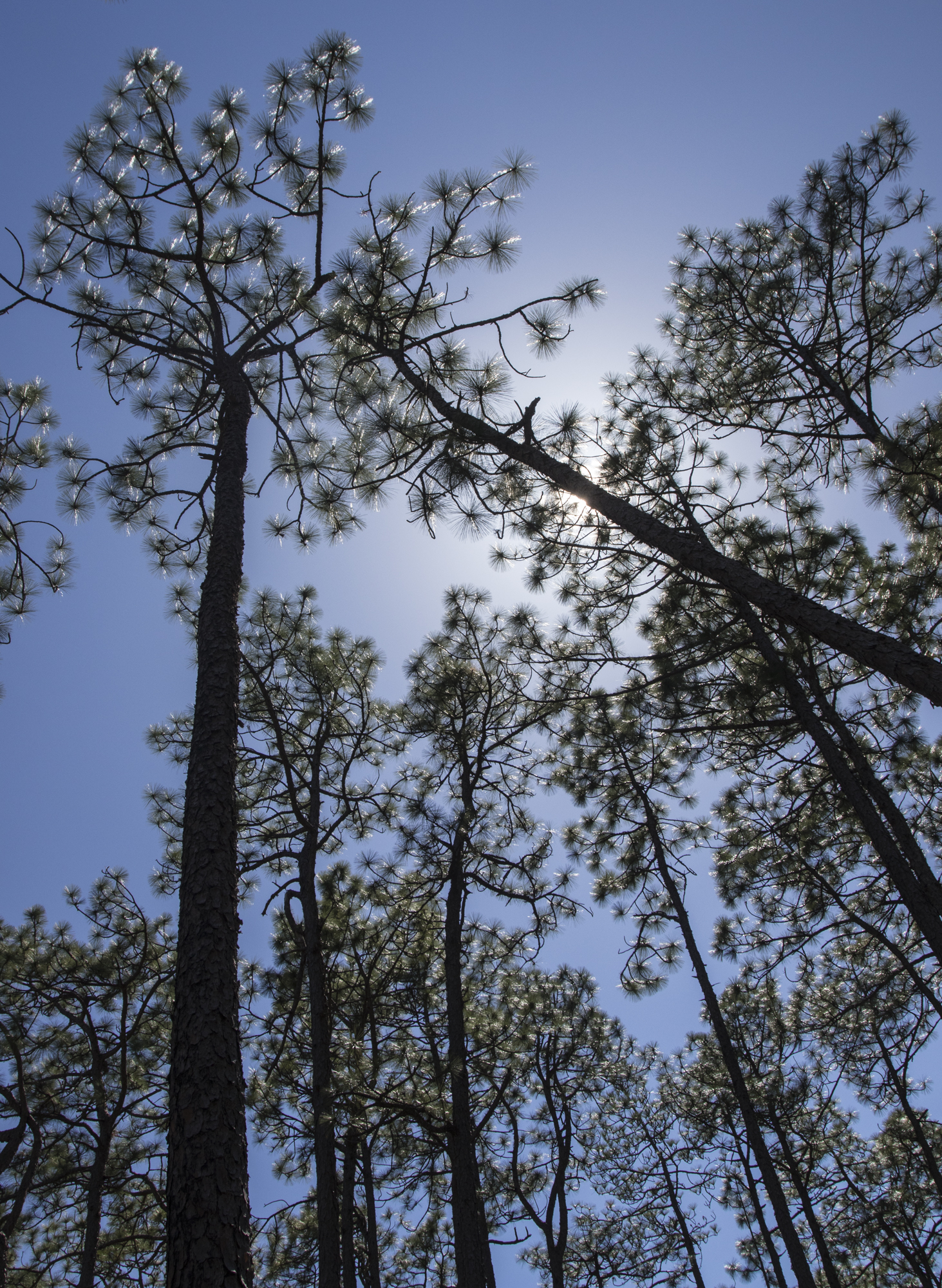
    One of the best and most well documented examples of a fire-dependent species is the longleaf pine. Once covering over 92 million acres across the US, heavy logging had reduced it to just 3% of its natural range by 1992. The pine grows fast, thin, and tall, and has evolved to rely on fire to give it a start.

    longleaf pine | Roads End Naturalist
    Young longleaf pines burned in a fire

    In order for its seeds to germinate, the tree relies on starting on a forest floor free of any leaf litter. After the seed germinates, it grows a into a dense cluster of pine needles, low to the forest floor. These needles help provide fire resistance to the plant, protecting its bud from any fires. Its bud grows rapidly, allowing it to quickly grow above typical flame heights.

    Fire enables its growth by clearing the forest of competition from hardwoods and other pines. It maintains conditions best suited for longleaf growth and recycles nutrients into the soil. Fire also allows helps clear out insects and pests that can impede plant growth.

    Longleaf pines aren’t fireproof—they can still burn in its early stages of growth. But they are incredibly fire resilient. Mature longleaf pines have thick, plated sheets of bark that protect the trunk from fire. The canopy is usually high above the forest floor, enabling it to avoid fire altogether.

    Nowadays, the US Forest Service encourages and carries out controlled burns to ensure our remaining longleaf forests remain healthy. But this wasn’t always the case. When America was being colonized, early settlers and loggers didn’t know about the role of fire in longleaf ecosystems, and ignored indigenous knowledge that touted its benefits. Fire prevention became the forestry ethic to live by, because it felt paradoxic to burn the forest on purpose to keep it healthy. But as soon as they began preventing fires, they realized that naturally occurring forest fires became more disastrous.

    Because there weren’t frequent, little fires clearing out the forest, the fuel load, or flammable content, of the forest floor would keep growing. When it hit critical mass and finally caught fire, the fires would be massive and even harder to control. A lack of fires also led to a lower biodiversity. The fire habits of longleaf ecosystems leads to one of the highest species-per-acre densities—it’s been known to reach 40 species in a single square meter! Red-cockaded woodpeckers, indigo snakes, Bachman’s sparrow, flatwoods salamanders, sandhill lilies, and Sherman’s fox squirrel are just a few species that rely on longleaf ecosystems, which wouldn’t be possible without fire.

    To see a really cool visual of a longleaf pine stand’s growth over a year, check out this story map created by the Longleaf Alliance.

    Works Cited

    https://www.fireinthepines.org/learn/the-longleaf-ecosystem/

    https://longleafalliance.org/what-is-longleaf/restoration-management/prescribed-fire/

    https://www.nclongleaf.org/burningLongleaf.html

    https://www.nature.org/en-us/about-us/where-we-work/united-states/north-carolina/stories-in-north-carolina/north-carolina-role-of-fire-in-longleaf-pine-forests/

    https://bittersoutherner.com/feature/2024/burning-the-forest-for-the-trees-longleaf-pine-controlled-burn-janisse-ray

    https://www.nps.gov/articles/learning-about-fire-ecology-basics.htm

    https://longleafalliance.org/what-is-longleaf/the-ecosystem/built-by-fire/