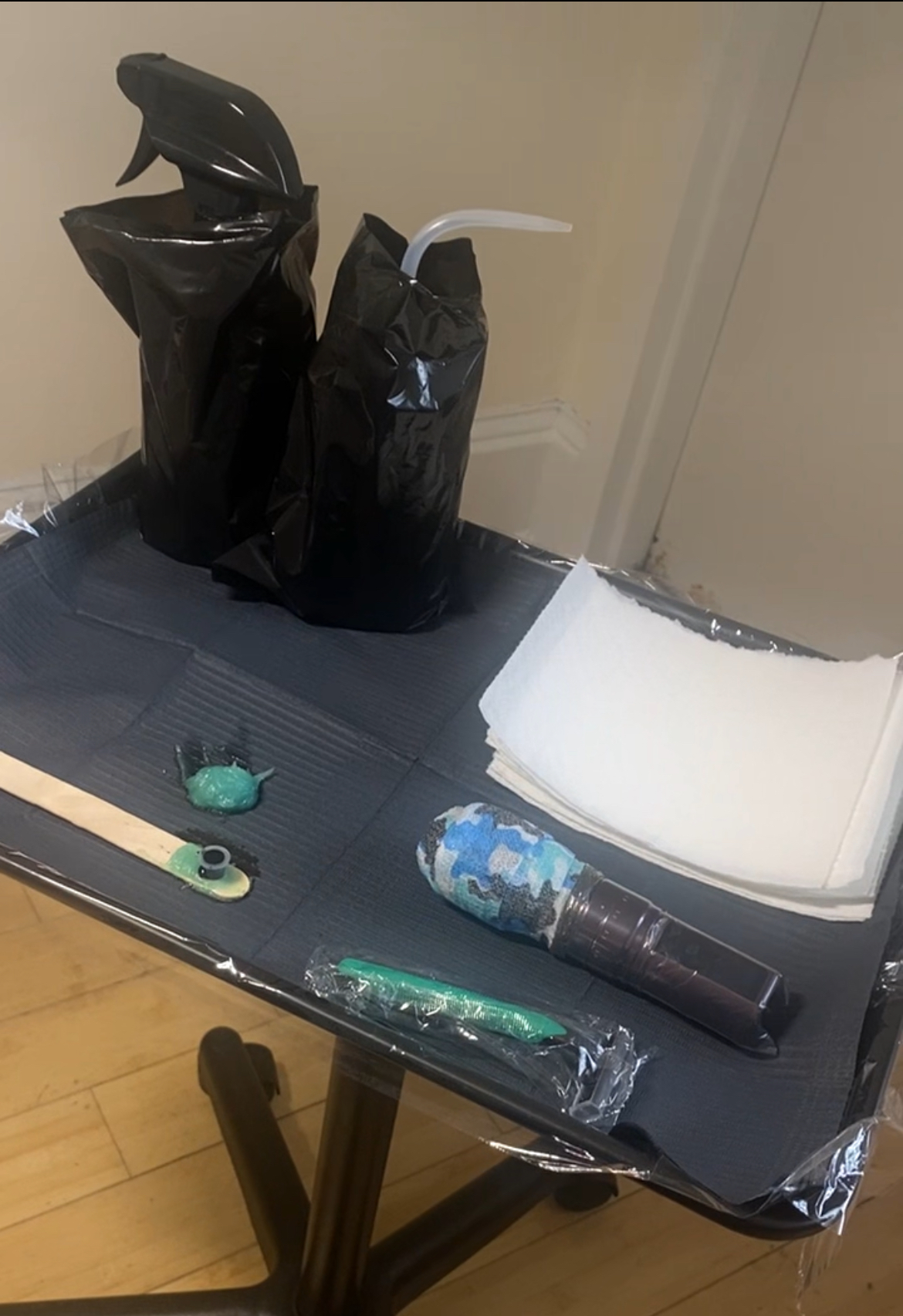
A Brief History of Tattooing
Tattoos have been part of history for thousands of years, serving as cultural markers, expressions of identity, and art. There are many methods of tattooing, such as stick and poke with a mallet and needle and machine tattoo guns. While styles and meanings have changed, one question many people may have is how do tattoos actually work?
The Permanence of Tattoos
The nature of tattoos lies in the body’s response to injury and pigment. In essence, tattoos are an open wound when first done. When a tattoo needle pierces the skin, it inserts pigment into the dermis, the second layer of skin that lies beneath the outer epidermis, which is composed mainly of the cell called keratinocytes. Unlike the epidermis, which renews itself every few weeks, a process called skin turnover, the dermis remains relatively stable, allowing ink to stay in place (Magnum Tattoo Supplies, 2024).
Macrophages, a type of immune cell, rush to the area to absorb the foreign ink particles. Some of these macrophages remain in the dermis with the ink trapped inside, while others die, releasing the pigment again and restarting the cycle. This immune response is important for the tattoo’s visibility and permanence (Mimzi Pma, 2023).
Skin Layers and Needle Depth
Tattooing requires precise depth control. The epidermis, which sheds over time, cannot hold ink permanently. If the needle deposits pigment too shallowly, the ink will fade as the skin regenerates. On the other hand, if the needle penetrates too deeply into the hypodermis (subcutaneous fat layer), it can cause a “blowout”. This is a smudged or blurry effect as ink disperses into fat tissue and can cause scarring (Mykhalevych, 2025).
Daemon, a practicing tattoo artist, explains: “Needle depth is kind of complex depending on the type of skin you’re tattooing and how thick the skin is in certain types of the body… you can tell when you’re going too deep when you see the ink starts to bleed into the vein.” In hand-poked methods, she relies on feeling and auditory cues like a soft “pop” to gauge correct penetration depth.
Pigment Chemistry: What’s in Tattoo Ink?
Tattoo inks are composed of pigments in a carrier solution. Black ink commonly contains carbon or iron oxide. White inks may use titanium dioxide, which can cause allergic reactions in some people. Lastly, colored pigments vary widely. Red often contains mercury sulfide or azo dyes, while greens and blues may include copper-based compounds (Miranda, 2019).
Some inks use organic pigments, especially in vegan or eco-conscious formulations. These pigments can be less stable and may break down faster. Moreover, different skin tones and types can influence how pigments appear and heal. As Daemon notes, “Certain ink might not show up as well on darker skin types… and sometimes ink or healing products can cause mild skin reactions.”
Healing and Aftercare
A fresh tattoo is an open wound, vulnerable to infection and irritation. The aftercare process is crucial to both healing and the tattoo’s long-term appearance. As Daemon emphasizes, “Don’t touch it, don’t scratch it… [because] you’re going to pick the scab off and the ink is going to fall out with it.”
She recommends gentle cleansing with unscented soap, using a thin layer of ointment, and limiting sun exposure. New technologies like second skin bandages offer a breathable barrier during the healing process but must be used with care to avoid excess moisture buildup. Additionally, moisturizing remains important even after healing, as dry skin can cause fading and distortion.
Aftercare is not only about preventing infection but preserving the artwork. “It’s a piece of art,” Daemon says. “Taking care of it and taking care of yourself will make it look super good.”
Concluding Remarks
Tattooing is a combination of biology, chemistry, and craftsmanship. From understanding skin anatomy to mastering pigment behavior and immune responses, both science and skill are important aspects in the art of tattooing. As tattoos continue to grow in popularity and cultural significance, so too does our scientific appreciation for them.
Sources Cited
Mykhalevych, Alina. (2025). “Physico-Technical Basis for Needle Depth Control in Fine Line Technique”, Universal Library of Innovative Research and Studies; 2(1): 01-06. DOI: https://doi.org/10.70315/uloap.ulirs.2025.0201001.
Kapoor, Sky. (2021, October 31). From machines to macrophages: Breaking down the science of tattooing. The Varsity. https://thevarsity.ca/2021/10/31/science-of-tattooing/
mimzipma. (2023, July 5). The science of tattooing—Mimzipma. https://mimzipma.com/science/
Miranda, M. D. (2019). Tattoos and tattoo inks: Forensic considerations. WIREs Forensic Science, 2(1), e1360. https://doi.org/10.1002/wfs2.1360
The science behind why and how are tattoos permanent. (2024, February 12). Magnumtattoosupplies. https://www.magnumtattoosupplies.co.uk/blogs/article/the-science-behind-why-and-how-are-tattoos-permanent
Weiß, K. T., Schreiver, I., Siewert, K., Luch, A., Haslböck, B., Berneburg, M., & Bäumler, W. (2021). Tattoos – more than just colored skin? Searching for tattoo allergens. JDDG: Journal der Deutschen Dermatologischen Gesellschaft, 19(5), 657–669. https://doi.org/10.1111/ddg.14436