Day: April 18, 2025

  • The Science Behind JaPow

    The Science Behind JaPow


    This past winter break, I had the pleasure of returning to the beautiful country of Japan. This trip was different from the other ones because this time, I was getting to see Japan in winter. Every season brings a different feel to the country, with different emphasises on its culture, like hot spring for winter. Another addition to this trip includes going skiing. This was a non-negotiable for my boyfriend, as he develops an insatiable desire for the slopes once December hits. I was a bit intimidated when I first found out since I had not gone skiing since more than a decade ago. The blurred memories of skiing with an instructor came to mind, and the one word I heard all too often:  “Pizza!”. 

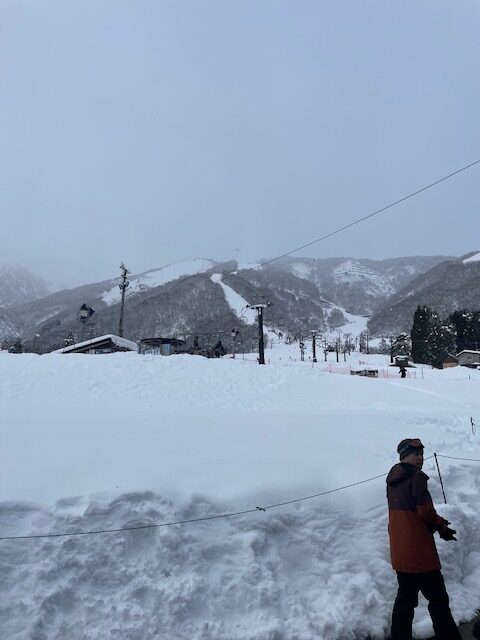
    Fast forward the long flight, train ride, and hike up to the ski resort– it was time. Since the train arrived in the afternoon, we got to the resort midday- there were already set tracks in the snowy mountains. Skiing down the mountain was terrifying with my limited experience. What surprised me was how much lighter and easier it was the next day. We got to the ski resort right when it opened- 8am on the dot. Skiing down was just as nerve inducing, but it seemed like I was floating a bit on the snow. My turns were slower, and therefore easier to execute. Coming to a stop was also more gradual as the snow easily piled behind my skis. This led me to do some research behind the science of snow and the effects it has for the slopes.

    For snow in the Niseko region of Japan, there are special weather conditions that cause its special snow conditions. It is comically referred to as “Japow” for its powdery snowfall which gives an airy and light conditions for skiing. Snowfall for skiing is rated for its quality, quantity, and consistency, and Japan happens to have the perfect conditions for snow.


    Snowfall in the Japanese Alps takes place under two distinct meteorological scenarios. One scenario involves snowfall associated with synoptic cyclones, while the other is influenced by the northwest winter monsoon, which originates from the frigid Asian continent and moves over the warmer waters of the Japan Sea (Maejima 1980). The Japan sea scenario brings heavy snowfall because of the temperature difference between the water body and the air mass over the Japan Sea (Ninomiya, 1976). The distribution of snowfall associated with the Japan Sea effect is predominantly influenced by orographic lifting  (Estoque and Nimomiya, 1976).. As a result, the northern region of the Northern Japanese Alps experiences significantly greater snowfall compared to the southern regions of the Northern, Central, and Southern Japanese Alps.


    Even with all this information about how the snow should be the best for skiing, I fell many times during my trip. Even the green trails would put my balance and concentration to the test. All in all, come to Japan to ski and hopefully you are skillful enough to enjoy it!


    Estoque, M.A. and Ninomiya, K. (1976) ‘Numerical simulation of Japan Sea effect snowfall’,   <i>Tellus A: Dynamic Meteorology and Oceanography</i>, 28(3), p. 243-253. Available at: https://doi.org/10.3402/tellusa.v28i3.10285.


    Maejima, I.. (1980). Seasonal and regional aspects of Japan’s weather and climate.. 54-72. https://www.researchgate.net/publication/293128007_Seasonal_and_regional_aspects_of_Japan’s_weather_and_climate


    Takami, Kazuya & Kamamoto, Rimpei & Suzuki, Kenji & Yamaguchi, Kosei & Nakakita, Eiichi. (2024). Relationship between Newly Fallen Snow Density and Polarimetric Parameters Obtained from X-Band Radar Observations along the Sea of Japan Coast in January 2021. Journal of Atmospheric and Oceanic Technology. 41. 10.1175/JTECH-D-23-0114.1. 

  • How to Publish a HTML and JavaScript Game on GitHub

    How to Publish a HTML and JavaScript Game on GitHub

    Recently, I took part in the Atlanta Science Festival 2025 STEM edition. The STEMcomm VIP team organized a version of Scavenger Hunt, and I was part of the CyberQuest Team. I was responsible for the Scavenger Hunt game, which needed an online interactive site. I figure that GitHub Page is a good free platform to do this. However, GitHub Page has had quite a few updates in recent years and the guide sites have not updated accordingly. I spent quite some time trying to figure it out, and here I am wanting to share how I did it.

    In the past week I published an article about how to beat the popular 2048 game. You can take a look if you are interested!

    https://2026fat.chargedmag.org/2025/04/how-to-become-an-expert-at-2048/

    https://2026fat.chargedmag.org/2025/04/how-to-become-an-expert-at-2048/

    So, in this example, we are publishing a variant of 2048. Credit the codes to

    https://www.geeksforgeeks.org/design-a-2048-game-in-javascript/

    1. Install a code editor like Visual Studio Code. If you already have one then just use yours. Choose the best one for your Operating Systems (OS). I’m using Windows for this tutorial.

    https://code.visualstudio.com/

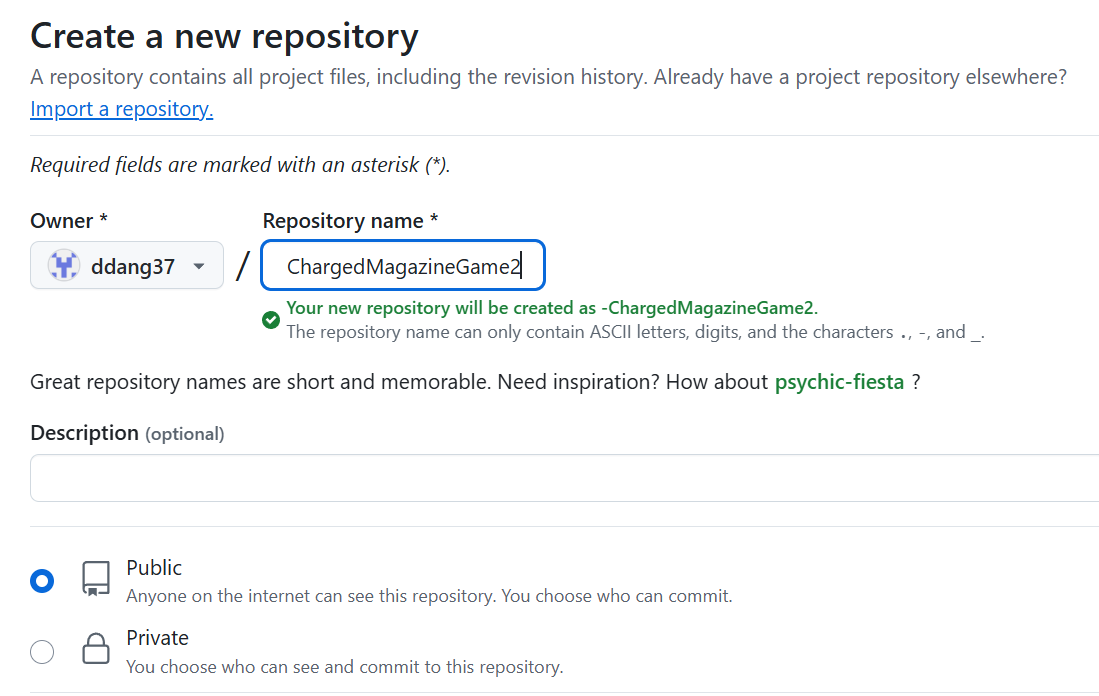
    2. Create a GitHub account and make a public repository. You can choose or use alternative platforms that are able to host an HTML site.

    https://github.com/

    https://github.com/ddang37/ChargedMagazineGame2

    3. Clone this repository onto your local computer. There are alternative ways to do it. I recommend using GitHub Desktop which makes things easier. Follow the corresponding guide below if you are new to GitHub.

    https://docs.github.com/en/repositories/creating-and-managing-repositories/cloning-a-repository

    If you use GitHub Desktop:

    https://docs.github.com/en/desktop/adding-and-cloning-repositories/cloning-a-repository-from-github-to-github-desktop

    4. Open the local repository folder in your Code Editor.

    Create a HTML, CSS, and JavaScript file. Let’s name them game.html, style.css, and dynamic.js. You can change the names and have additional files for more complicated games.

    5. Write the codes into the files. HTML with elements, CSS with stylings, and JavaScript with animation and interaction. 

    For starters, you can search online for sample code and modify from there (make sure to credit the sources!). There are plenty of variants and implementations. You can also create your own!

    You can also fork from the original popular 2048 code:

    https://github.com/gabrielecirulli/2048

    The codes we are using is a much simpler implementation, but still difficult:

    https://www.geeksforgeeks.org/design-a-2048-game-in-javascript/

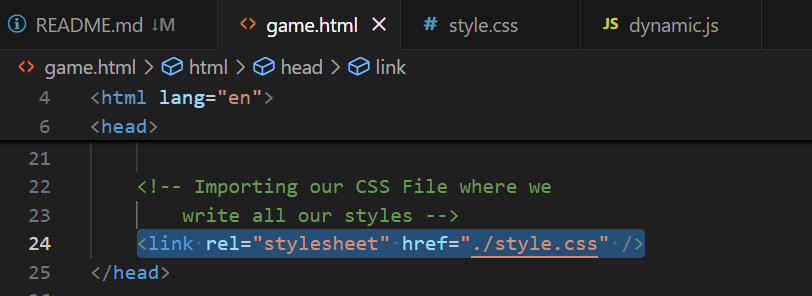
    6. If your codes are not original from scratch, make sure your game.html file is referring to the correct style.css and dynamic.js. 

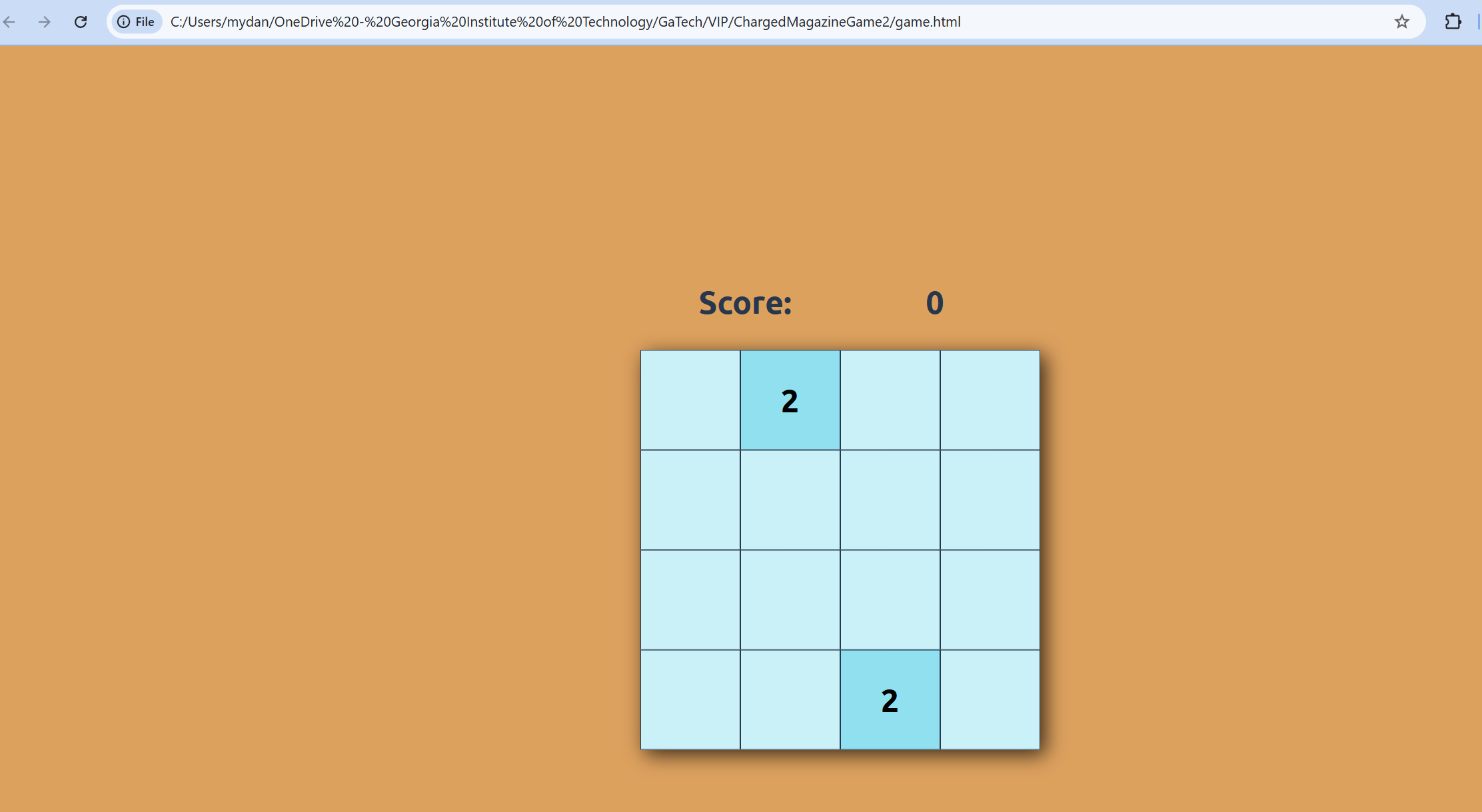
    7. Save the codes. Double click the HTML file from file explorer, it should open a chrome site of your HTML game.

    8. When you are satisfied with the result, commit your changes to the online repository. You can do this multiple times, even after you publish the site.

    https://github.com/git-guides/git-commit

    If you use GitHub Desktop:

    https://docs.github.com/en/desktop/making-changes-in-a-branch/committing-and-reviewing-changes-to-your-project-in-github-desktop

    9. When you are ready to publish your code, go to your repository online. Go to Setting > Pages > Build and deployment > Branch, change None to main. An option for the folder will appear, just keep the default. Click Save.

    10. After a few minutes the page will go live. It will show up at the top under GitHub Pages.

    11. Click on the URL or Visit site. Add the extension of the HTML file name and the game will show up!

    https://ddang37.github.io/ChargedMagazineGame2/game.html

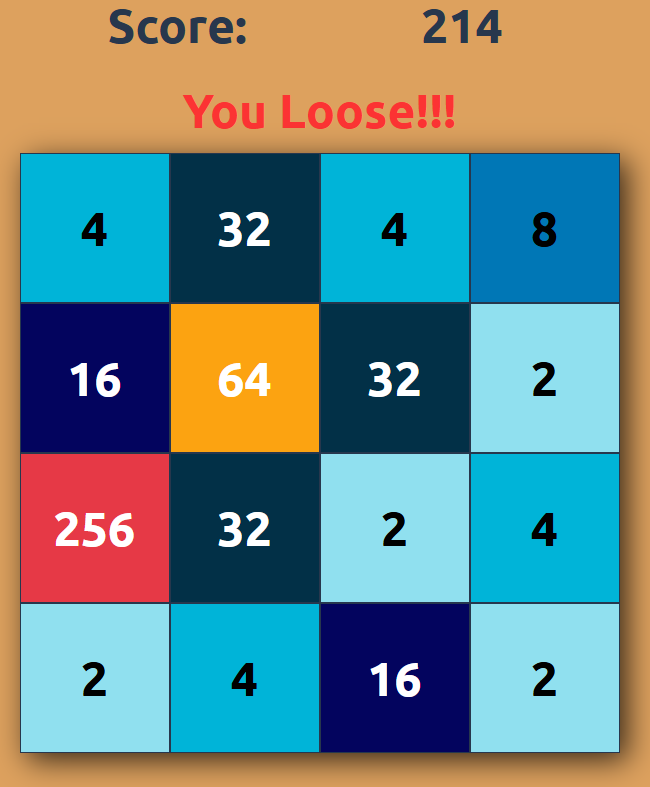
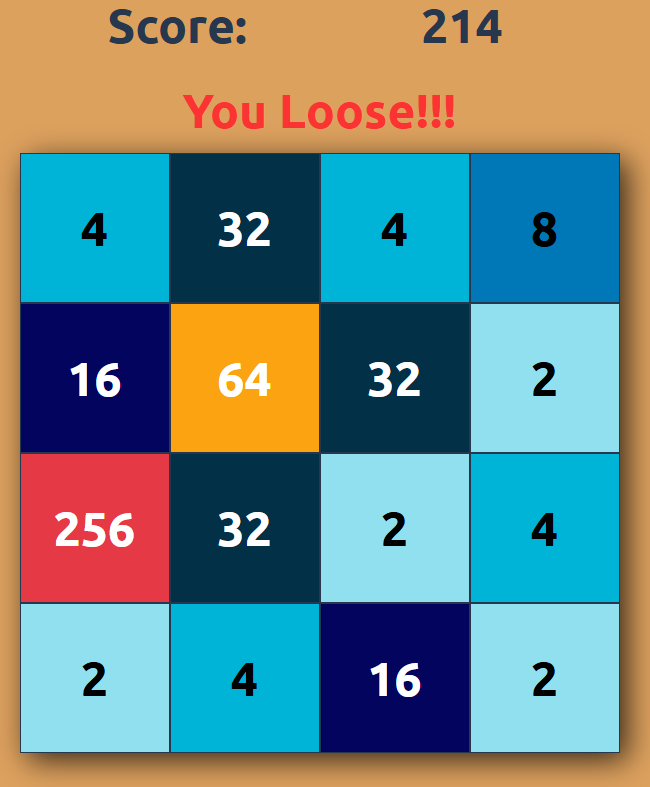
    For this 2048, the game do not autogenerate a tile of 2 or 4 upon making a move, but rather based on time. The random generated tiles can be 2, 4, 8, or higher based on the current tiles on the board. This make the game much harder to win.

    Fun fact: If you left this game alone, except for sliding, the game could play by itself!!!

    Note: The website might take up hours to update if you commit new changes after publication. If CSS stylings are not working like it did locally, double check if there’s any Chrome extension blocking it. If the website takes forever to update, try making the repository private and then public again. Refer to GitHub information sites if otherwise.

    https://docs.github.com/en/pages/getting-started-with-github-pages/github-pages-limits

    References:

  • The Power of Music Therapy

    The Power of Music Therapy

    When we listen to music, our moods and minds are influenced in ways we might not notice. Listening to music activates different parts of our brain, which has been shown to positively affect brain development, learning, and functioning (Areas, 2005). Some of these functions include “attention, listening, speech production, emotions, motor skills, memory, coordination, and decision making” (Areas, 2005).

    I noticed that I gravitate towards certain music depending on my mood or the time of day. And for the longest time, I struggled with finding the perfect genre of music to listen to when I study or get academic work done.

    I found I couldn’t listen to my favorite songs or music because my brain quickly developed a negative association between my favorite songs and whatever I’m doing. For example, I thought listening to my favorite songs could help me get through the work, but when I go back and listen to the songs again weeks or months later, I would be reminded of the time I was stressed and anxious from studying or completing a major project.

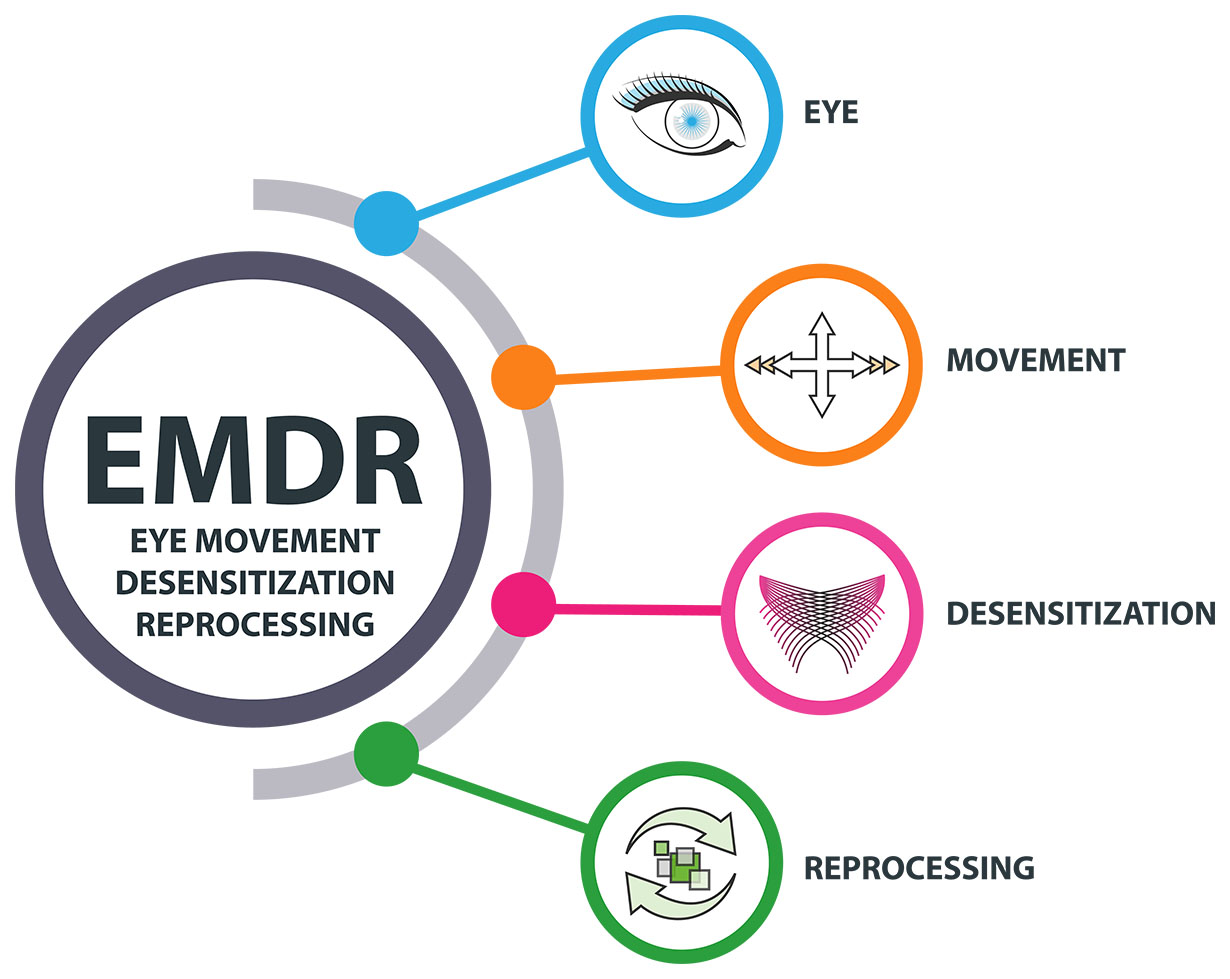
    So, I experimented with different genres: piano, lofi, classical, meditation, music with nature sounds, video game music, movie/show soundtracks, but they never stuck. One day, I came across hour-long videos on YouTube of binaural beats and ‘bilateral stimulation music’. It turns out this ‘bilateral stimulation music” is used for a therapy method called EMDR (eye-movement desensitization and reprocessing).

    Brief Overview of EMDR

    EMDR is a therapeutic approach based on the adaptive information processing (AIP) model (Oren & Solomon, 2012). Sometimes thought of as a variant of cognitive-behavioral therapy, EMDR involves an eight-phase approach that helps a person perceptual information (memories) that have been ‘maladaptively stored’ (Shapiro, 2002). Research has found EMDR therapy to be an effective treatment of trauma (Oren & Solomon, 2012). With EMDR therapy, we can process disturbing events, especially ones that we aren’t aware of. Other goals of EMDR includes “facilitates resolution of memories, …, desensitize stimuli that trigger present distress as a result of second-order conditioning, and incorporate adaptive attitudes, skills, and behaviors for enhanced functioning within larger social systems” (Shapiro, 2002).

    When we listen to bilateral stimulation, the brain can process negative or traumatic experiences which leads to memory reconsolidation (Oren & Solomon, 2012). Some other methods of EMDR besides bilateral stimulation music (alternating auditory tones) includes side-to-side eye movements and alternating hand taps (Oren & Solomon, 2012).

    However, van den Hout and Engelhard (2012) argue that these bilateral stimulation techniques may not be essential for the therapeutic effect. Instead, they suggest that what makes EMDR effective is the taxing of working memory during trauma recall. In other words, van den Hout and Engelhard claim that EMDR works best when we make our brain do two things at once.

    What is bilateral stimulation music?

    For bilateral music to be effective, listeners should hear the music using headphones. The music alternates between the right and left ear stereo channels. This bilateral music helps a person process stressful or traumatic memories without triggering severe stress (“Bilateral Music fo Anxiety, Stress and Trauma”).

    Listening to this music engages both hemispheres of our brain, which then activates the parasympathetic nervous system. The parasympathetic nervous system is responsible for our “rest-and-digest” response, which helps our mind transition from a state of anxiety to a state of calmness (“How Bilateral Stimulation Works to Reduce Anxiety“). The superior colliculus and the mediodorsal thalamus tune in, resulting in the recollection of happy memories.

    Screenshot 2025-04-14 233122.png

    This screenshot is of the video from YouTube that I’ve been listening to regularly for the past few months. When I listen to this kind of music, it feels like the auditory stimulation scratches an itch in my brain.

    As someone who becomes anxious often, listening to bilateral stimulation music has been extremely beneficial for me!


    Featured image credits: https://www.bansalneuro.com/discover-the-benefits-of-emdr-therapy-at-a-ray-of-hope-in-libertyville-il-and-kenosha-wi.html

    References:

    AREAS, I. T. (2005). Music Therapy.

    Bilateral music for anxiety, stress and Trauma. eMentalHealth.ca Resource Directory. https://primarycare.ementalhealth.ca/Ottawa-Carleton/Bilateral-Music-for-Anxiety-Stress-and-Trauma/index.php?m=article&ID=84502

    How bilateral stimulation works to reduce anxiety. Bay Area CBT Center. (2024, April 19). https://bayareacbtcenter.com/how-bilateral-stimulation-works-to-reduce-anxiety/

    Oren, E., & Solomon, R. (2012, October 3). EMDR therapy: An overview of its development and mechanisms of action. European Review of Applied Psychology. https://www.sciencedirect.com/science/article/pii/S1162908812000692?casa_token=mVz1zHojkoAAAAAA%3AJ5j4PhCogXtXhY11ATj3mwypOG0zBVHLICbxs5kCMQZ7Sr-S_d-qFCkTyou7WLmMRoBMpR85GQ

    Shapiro, F. (2002). EMDR 12 years after its introduction: Past and future research. Journal of clinical psychology, 58(1), 1-22.

    van den Hout, M. A., & Engelhard, I. M. (2012). How does EMDR work? Journal of Experimental Psychopathology, 3(5), 724–738. https://doi.org/10.5127/jep.028212

  • Resilience in Ruin: Continuity of Cancer Care in Times of Crisis

    Resilience in Ruin: Continuity of Cancer Care in Times of Crisis

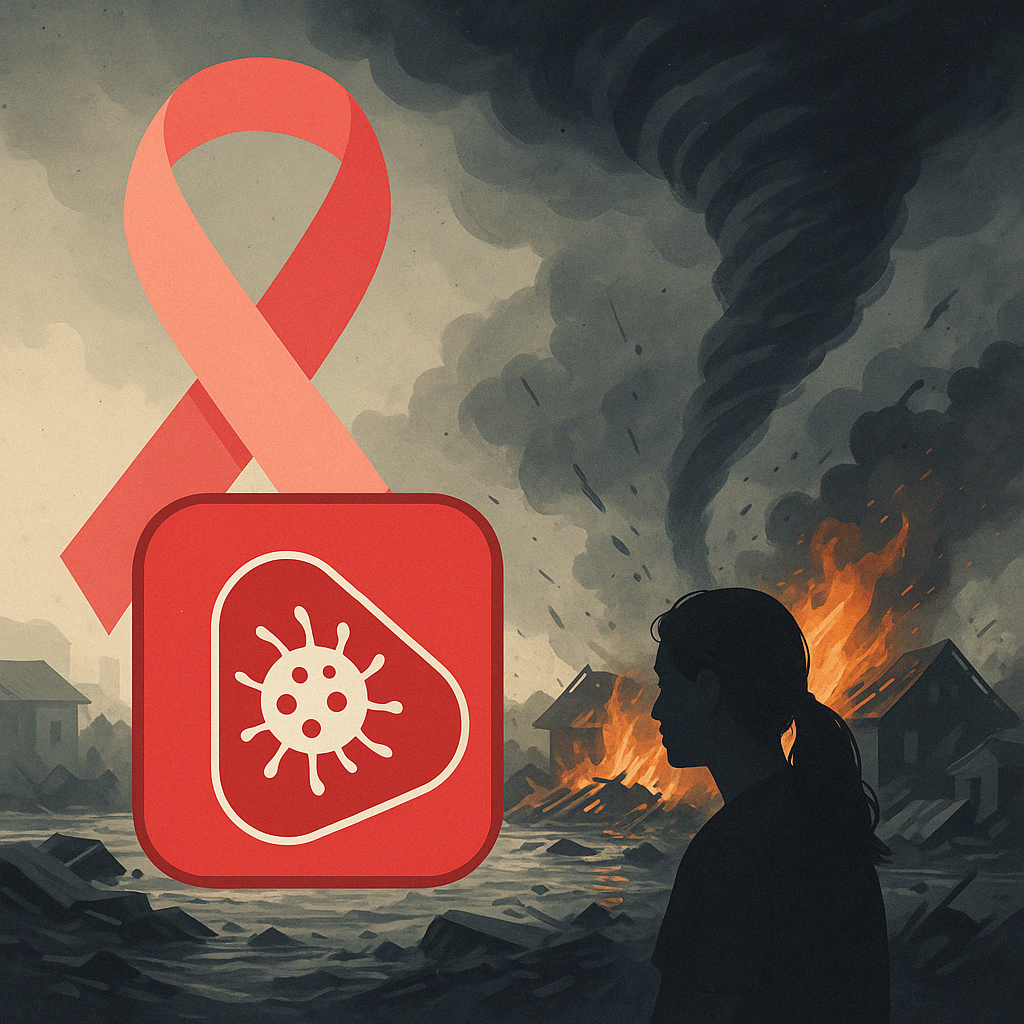
    When a slow, devastating illness collides with the speed and chaos of disaster, the consequences can be dire. Cancer demands constancy—structured protocols, timed treatments, uninterrupted care. Disasters, on the other hand, dismantle. They disrupt and displace, often without warning. As floods rise and conflicts erupt, what becomes of the cancer patient whose chemotherapy is scheduled for tomorrow? Or the child awaiting biopsy results? These questions are no longer hypothetical—they are urgent. We live in a world in which climate-induced events, pandemics, and political instability are increasingly common, and yet cancer care systems remain woefully unprepared (Meara et al., 2015). More alarmingly, disaster preparedness plans globally tend to focus heavily on trauma and communicable diseases, leaving chronic illnesses like cancer out of the picture (Spiegel et al., 2018). This gap in planning and policy is not just an oversight—it is a failure that costs lives. Cancer does not wait. It does not decelerate in times of emergency, and thus our response systems must be re-engineered to reflect that urgency.

    Throughout history, the story is tragically familiar. In West Africa during the 2014–2016 Ebola outbreak, already-strained healthcare systems collapsed under the weight of contagion. Oncology units shuttered. Diagnostics were suspended. It is estimated that cancer diagnoses dropped by more than half—not because the disease disappeared, but because access to care did (Lal et al., 2020). During the COVID-19 pandemic, the narrative repeated. Nearly 1.5 million cancer surgeries were postponed or canceled globally in the first phase alone, creating a backlog that continues to impact patients today (COVIDSurg Collaborative, 2020). The disruptions extended beyond surgical delays: patients missed chemotherapy cycles, radiotherapy sessions were halted, and research trials were suspended. Even long after the initial waves subsided, patients continued to face delays due to workforce shortages, overwhelmed hospitals, and financial strain. In low-income countries, the effects were particularly acute—many patients never returned to care at all (Hanna et al., 2020). For diseases where timing can determine survival, such delays are nothing short of devastating.

    Not all disasters make global headlines. In Haiti, the slow erosion of healthcare capacity due to political instability has silently decimated oncology care. The country has only one radiotherapy machine, often out of service due to power outages or mechanical failure (IAEA, 2021). Few outside the region know that patients are sometimes forced to travel to the Dominican Republic—an international journey that requires money, paperwork, and time most do not have. In Ukraine, following the 2022 invasion, radiation oncology centers were damaged by shelling, not as deliberate attacks on health services, but as collateral in broader infrastructure strikes. Linear accelerators were damaged, and hospitals had to triage power between radiotherapy equipment and ventilators. These cascading failures don’t just interrupt care—they erase it.

    Why is cancer care so fragile in the face of crisis? Unlike many medical disciplines, oncology depends on a convoluted web of components: technology, personnel, pharmaceuticals, and precise timing. Sophisticated machines like PET, MRI, and CT scanners are fixed and highly location-bound. Radiation therapy requires specialized shielding and uninterrupted electricity. Chemotherapy drugs often demand cold-chain logistics and exact calibration. When disasters strike—whether they be cyclones or armed conflict—these systems do not adapt; they fracture (Beddoe, 2019). Health workers are reassigned to trauma units. Oncology wings are converted into ICUs. Supply chains buckle under logistical bottlenecks. Medications expire in warm storage rooms. The loss of a single link can compromise the entire therapeutic chain.

    Additionally, health information systems often crash, wiping out records, imaging histories, and continuity plans. Paper records, still common in many parts of the world, are destroyed by flooding or lost in evacuation. Digital systems, where they exist, may lack redundancy or cloud backup (Chan et al., 2022). In such fragile architectures, resilience isn’t just a buzzword—it is a literal matter of life and death.

    The price for this failure is rarely paid by the wealthy or politically protected. Rather, the toll is borne by those already standing at society’s margins. It is the refugee with no address, no insurance, and no voting rights. The woman in a remote village with cervical cancer whose screening was never completed. The child born into the shadow of war, whose swollen lymph nodes go ignored until too late. In Syria, Sudan, Gaza, and beyond, cancer becomes the silent casualty of humanitarian disaster (El Saghir et al., 2018). These patients are not just neglected; they are erased from the narrative.

    In Lebanon, where millions of Syrian refugees reside, a cancer diagnosis for a non-citizen can be a de facto death sentence due to high costs and lack of access to specialized care (Saab et al., 2019). In Yemen, where humanitarian funding has been slashed, cancer patients are reportedly turning to unproven herbal remedies in desperation. These lives are marginalized not only by disaster but by the systems built to respond to disaster. The harm is not accidental—it is structural.

    Less discussed are the internal migrants—those displaced not across borders, but within their own country. After floods in Pakistan displaced over 30 million people in 2022, many oncology patients were unable to access urban hospitals.

    Temporary shelters set up for the displaced did not include oncology services. In the United States, Hurricane Maria’s destruction of Puerto Rico’s infrastructure led to cancer patients being airlifted to mainland hospitals—but only those with Medicaid portability or private insurance could access care. Disaster response often assumes temporary needs. But cancer care is not temporary. It cannot be paused and resumed without consequence.

    Can we truly plan for the unpredictable? Can we outpace disaster with foresight? The answer, increasingly, is yes. The key lies in data-driven prediction. Artificial intelligence and climate modeling can forecast hotspots of disaster exposure, layered with population health maps to anticipate where cancer care will likely be disrupted. Rwanda, for example, has implemented a national telemedicine network that connects rural health centers with oncology specialists, ensuring continuity of consultation even when physical access is compromised. These are not theoretical innovations—they are operational strategies that can be scaled globally. Predictive algorithms can also identify patients most at risk of losing care continuity, enabling pre-disaster outreach and medication stockpiling. This is anticipatory medicine—a shift from treating the aftermath to engineering the future.

    Decentralization is another pillar of resilience. Cancer care must move beyond capital cities and elite hospitals. In India, the expansion of mobile cancer screening and treatment units has proven effective for reaching underserved populations (Pramesh et al., 2014). In Kenya, Project ECHO connects rural clinicians with top oncology experts in real time, democratizing expertise and shrinking the urban-rural divide (Strother et al., 2021). In the Philippines, emergency response plans now incorporate considerations for cancer patients, including medication supply reserves. These models not only deliver care—they redefine what care infrastructure looks like.

    Technology can serve as a lifeboat when all else fails. In Rwanda, Zipline drones ferry medical supplies including cancer medications across impassable terrain. In Bangladesh, solar-powered healthcare facilities ensure that diagnostics and treatments can continue even after grid failures during cyclones. Electronic health records with cloud backups ensure that a displaced patient’s oncology file can travel with them, digitally intact, across regions (Guleria & Dua, 2021). These innovations aren’t luxuries; they are future standards. Health systems must invest not just in gadgets but in technology ecosystems that are climate-resilient, secure, and scalable.

    For all this progress, the most urgent questions are moral. Who is accountable when patients fall through the cracks? When pharmaceutical embargoes block cancer treatments in war-torn nations, who intervenes? When governments prioritize military spending over oncology units, who is held responsible? (UNDRR, 2015). These are not just questions of policy—they are tests of our ethical architecture. Global health law must evolve to classify cancer care as a protected service during crisis, much like food and shelter. This includes safeguarding cancer infrastructure under international humanitarian law and establishing international corridors for drug delivery in conflict zones (Lancet Commission on Global Access to Pain Control and Palliative Care, 2018; Singh et al., 2020).

    The WHO’s Global Initiative for Childhood Cancer shows what coordinated international action can achieve. But such initiatives must expand in both scope and binding authority. Cancer must be built into every emergency preparedness and response framework. Countries must be incentivized—perhaps even mandated—through funding structures and international law to protect cancer services during disaster. Civil society must demand this from their leaders. Humanitarian response teams must include oncologists and palliative care specialists. Cancer cannot be an afterthought.

    This is not just about survival—it is about justice. Continuity of cancer care in the face of disaster is a barometer of our civilization. It is a reflection of how we value life, dignity, and equity. The crises ahead—climate displacement, antimicrobial resistance, economic collapse—will test us even more deeply. If we are not ready, we will repeat the same pattern of delay, death, and denial. But if we choose to be ready—if we design for disruption, plan for pain, and invest in resilient care—we can ensure that no diagnosis becomes a death sentence simply because the ground shook, the skies opened, or the sirens wailed. The next disaster is coming. The question is not if—but whether we will meet it with courage or complacency.


    References

    Beddoe, A. M. (2019). Elimination of cervical cancer: Challenges for developing countries. E-cancer Medical Science, 13, 975. https://doi.org/10.3332/ecancer.2019.975

    Chan, E. Y. Y., Huang, Z., Lo, E. S. K., Kim, J. H., Hung, K. K. C., & Shaw, R. (2022). Digital health in the management of non-communicable diseases during and after disasters: A systematic review. International Journal of Environmental Research and Public Health, 19(5), 2777. https://www.mdpi.com/1660-4601/19/5/2777

    COVIDSurg Collaborative. (2020). Elective surgery cancellations due to the COVID-19 pandemic: Global predictive modelling to inform surgical recovery plans. British Journal of Surgery, 107(11), 1440-1449. https://doi.org/10.1002/bjs.11746

    El Saghir, N. S., Soto Pérez de Celis, E., Fares, J. E., & Sullivan, R. (2018). Cancer care for refugees and displaced populations: Middle East conflicts and global natural disasters. American Society of Clinical Oncology Educational Book, 38, 433-440. https://ascopubs.org/doi/10.1200/EDBK_201365

    Guleria, R., & Dua, S. (2021). e-Health in India: Challenges and opportunities. Journal of Family Medicine and Primary Care, 10(1), 151-154. https://www.jfmpc.com/article.asp?issn=2249-4863;year=2021;volume=10;issue=1;spage=151;epage=154;aulast=Guleria

    Hanna, T. P., King, W. D., Thibodeau, S., Jalink, M., Paulin, G. A., Harvey-Jones, E., O’Sullivan, D. E., Booth, C. M., Sullivan, R., & Aggarwal, A. (2020). Mortality due to cancer treatment delay: Systematic review and meta-analysis. BMJ, 371, m4087. https://www.bmj.com/content/371/bmj.m4087

    International Atomic Energy Agency (IAEA). (2021). Directory of radiotherapy centres. IAEA. https://www.iaea.org/resources/databases/dirac

    Lal, A., Erondu, N. A., Heymann, D. L., Gitahi, G., & Yates, R. (2020). Fragmented health systems in COVID-19: Rectifying the misalignment between global health security and universal health coverage. The Lancet, 397(10268), 61-67. https://www.thelancet.com/journals/lancet/article/PIIS0140-6736(20)32228-5/fulltext

    Lancet Commission on Global Access to Pain Control and Palliative Care. (2018). Alleviating the access abyss in palliative care and pain relief—an imperative of universal health coverage: The Lancet Commission report. The Lancet, 391(10128), 1391-1454. https://www.thelancet.com/journals/lancet/article/PIIS0140-6736(17)32513-8/fulltext

    Meara, J. G., Leather, A. J., Hagander, L., Alkire, B. C., Alonso, N., Ameh, E. A., Bickler, S. W., Conteh, L., Dare, A. J., Davies, J., Mérisier, E. D., El-Halabi, S., Farmer, P. E., Gawande, A., Gillies, R., Greenberg, S. L., Grimes, C. E., Gruen, R. L., Ismail, E. A., … & Yip, W. (2015). Global Surgery 2030: Evidence and solutions for achieving health, welfare, and economic development. The Lancet, 386(9993), 569-624. https://www.thelancet.com/journals/lancet/article/PIIS0140-6736(15)60160-X/fulltext

    Pramesh, C. S., Badwe, R. A., Borthakur, B. B., Chandra, M., Raj, E. H., Kannan, T., Kalwar, A., Kapoor, S., Malhotra, H., Nayak, S., Rath, G. K., Sagar, T. G., Sebastian, P., Sarin, R., Shanta, V., Sharma, S. C., Shukla, S., Vijayakumar, M., Vijaykumar, D. K., … & Sullivan, R. (2014). Delivery of affordable and equitable cancer care in India. The Lancet Oncology, 15(6), e223-e233. https://www.thelancet.com/journals/lanonc/article/PIIS1470-2045(14)70117-2/fulltext

    Saab, R., Jeha, S., Khalifeh, H., Zahreddine, L., Bayram, L., Merabi, Z., Abboud, M. R., Muwakkit, S., Tarek, N., Haidar, C., Fahd, M., El Solh, H., Al-Ahmari, A., Al-Sweedan, S., Al Sudairy, R., Jastaniah, W., Amayiri, N., Sultan, I., Ghandour, K., … & Al-Rawas, A. H. (2019). Displaced children with cancer in Lebanon: A sustained response to an unprecedented crisis. Cancer, 124(7), 1464-1472. https://acsjournals.onlinelibrary.wiley.com/doi/full/10.1002/cncr.31273

    Singh, T., Sharma, S., & Nagesh, S. (2020). Socio-economic impact of COVID-19 pandemic in India. International Journal of Pervasive Computing and Communications, 16(4), 309-319. https://www.emerald.com/insight/content/doi/10.1108/IJPCC-06-2020-0053/full/html

    Spiegel, P., Khalifa, A., & Mateen, F. J. (2018). Cancer in refugees in Jordan and Syria between 2009 and 2012: Challenges and the way forward in humanitarian emergencies. The Lancet Oncology, 15(7), e290-e297. https://www.thelancet.com/journals/lanonc/article/PIIS1470-2045(14)70067-1/fulltext

    Strother, R. M., Asirwa, F. C., Busakhala, N. W., Njiru, E., Orang’o, E., Njuguna, F., Skiles, J., Carter, J., Mega, A., & Kaspers, G. J. (2021). AMPATH-Oncology: A model for comprehensive cancer care in sub-Saharan Africa. Journal of Cancer Policy, 19, 100282. https://www.sciencedirect.com/science/article/pii/S2213538321000424

    United Nations Office for Disaster Risk Reduction (UNDRR). (2015). Sendai framework for disaster risk reduction 2015-2030. UNDRR. https://www.undrr.org/publication/sendai-framework-disaster-risk-reduction-2015-2030

  • Artificial Intelligence Space Travel

    Artificial Intelligence Space Travel

    Artificial Intelligence Space Travel
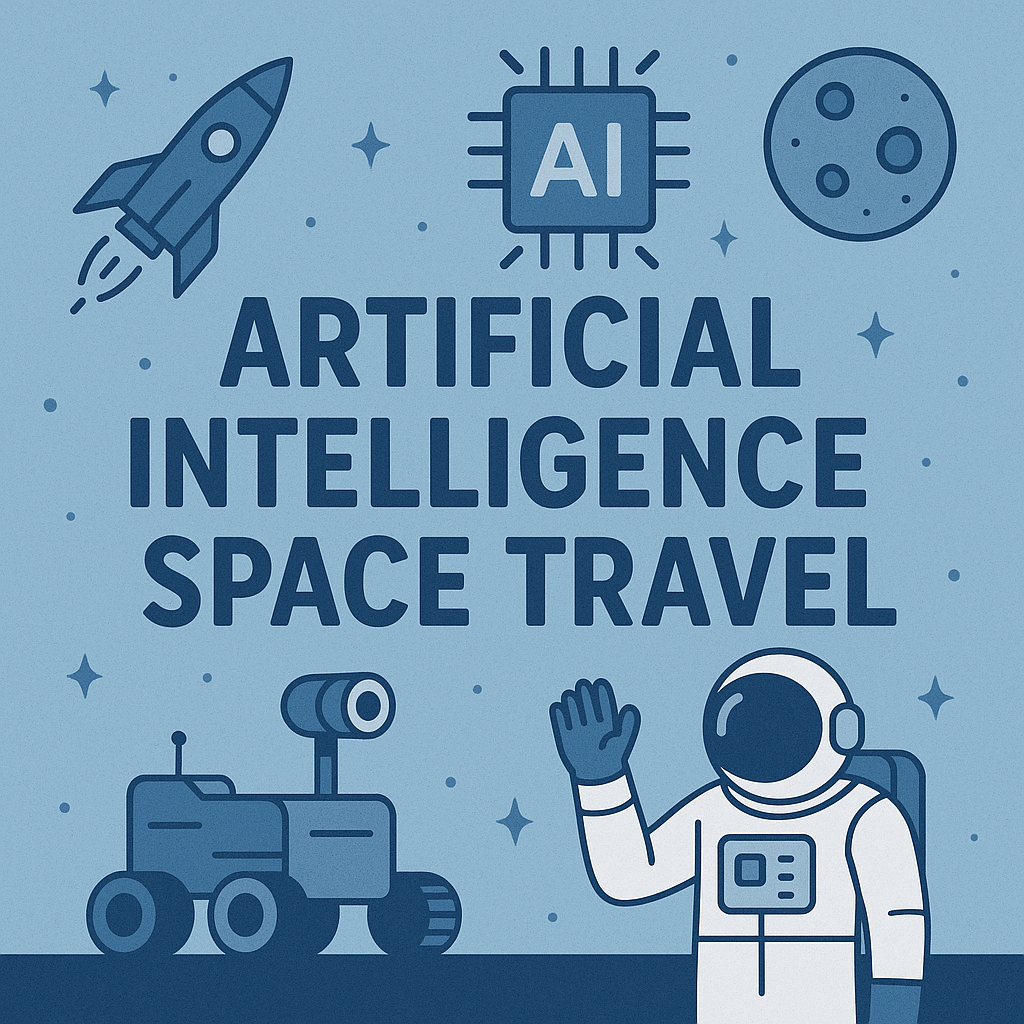
    In the ever-growing universe, artificial intelligence (AI) is becoming a pivotal tool for space exploration. While on Earth, the role of AI in science—most significantly through large language models (LLMs)—is transforming the pace of research and discovery, off Earth, its role is equally significant. AI is now at the cutting edge of how we explore the solar system and beyond, pushing boundaries once deemed impossible due to time, geography, and technology limitations.

    Space travel has uniquely complex issues: enormous communication delays, dangerous environments, unmapped terrain, and thin real-time monitoring. In flights spanning millions of miles, the time a signal takes to reach Earth, and back is too long to employ human micromanaging. To offset this, scientists and engineers have turned to AI as a helper, vital decision-maker, and data processor in real time.

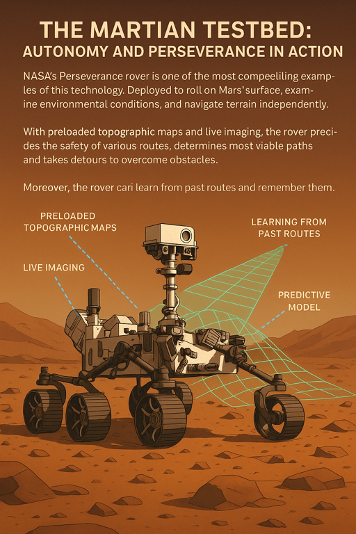
    The Martian Testbed: Autonomy and Perseverance in Action
    NASA’s Perseverance rover is one of the most compelling examples of this technology. Deployed to roll on Mars’ surface, Perseverance isn’t just driving around according to commands from Earth. Its sophisticated AI system allows it to read sensor data, examine environmental conditions, and navigate terrain independently.

    With preloaded topographic maps and live imaging, the rover predicts the safety of various routes, determines the most viable paths, and takes detours to overcome obstacles. The predictive model enables the rover to optimize its mission objectives—cover more distance, sample more, and minimize risk. Perseverance can think and learn while it moves.

    Moreover, the rover can learn from its past routes and remember them. Navigation through learning like this, which conceptually is close to how LLMs train their answers to be better after repeated cycles, makes Perseverance an increasingly efficient vehicle the longer it runs.

    The Edge of Intelligence: From Mars to the Outer Moons
    Mars is just the beginning. AI is designed to play an even more significant part in the next wave of missions—to Jupiter’s frozen moon Europa, Saturn’s ethane-rich Titan, and farther out. These destinations provide more hostile and alien conditions than Mars, with more risks and fewer opportunities for in-time human interference.

    On these missions, spacecraft must do everything from data analysis and route planning to system checks and equipment deployment. AI models must determine what data to return to Earth, what anomalies are worth investigating, and even potentially re-routing missions in flight if new challenges arise.

    AI is also transforming orbital science. Space telescopes now generate more data than any human community hopes to review. AI programs trained on this information can spot patterns, remove distracting noise, and highlight phenomena, like exoplanets or black hole candidates, worthy of further investigation. As we build more capable observatories, AI’s function as a research assistant in the sky will continue to grow.

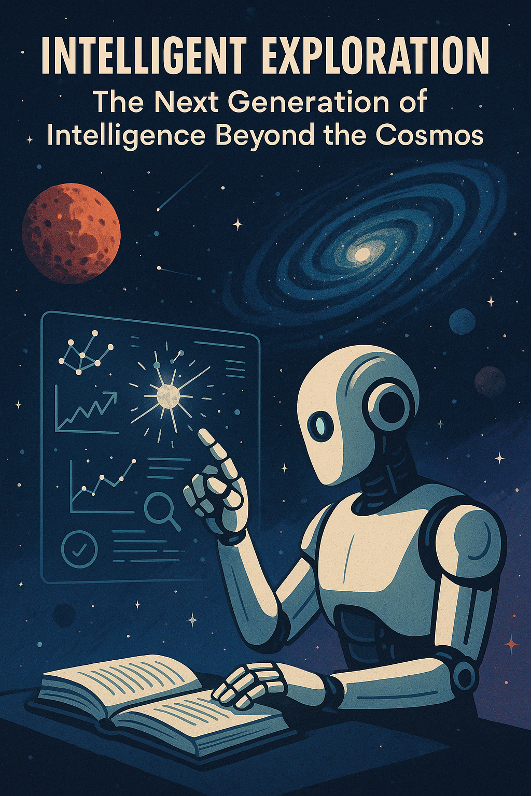
    Intelligent Exploration: The Next Generation of Intelligence Beyond the Cosmos
    The actual breakthrough of AI in space isn’t one of technology but philosophy. They are no longer passive tools but are becoming active agents in the pursuit of discovery. They sometimes read, predict, and act before human researchers know of a new finding.

    This is a shift in how we think about exploration. Instead of human beings at the center of every moment, we now share that place with intelligent systems that reach further than we can, respond faster than we can, and carry our curiosity into places we can’t yet go to ourselves.

    For scientists and engineers, this alliance with AI is more than a convenience—it’s a necessity. The more hazardous our destinations become, the greater our dependence on machine intelligence to light the way.

    The Future: AI as Our Celestial Colleague
    As space travel heightens and the industry of AI becomes more revolutionized, more things are to be learned when it comes to AI. Where every decision counts in extreme environments, AI systems may monitor life support, recommend maintenance, or enable communication among multicultural crews.

    Here on Earth, the same AI platform can simulate missions, train astronauts, and analyze mission outcomes at a speed and scale never imagined.

    No less than the LLMs are rewriting the way we do research in every field, from literature to biology, and autonomous AI is rewriting the rulebook for space science.

    References

    ESA. (2023, September). Artificial intelligence in space. ESA. https://www.esa.int/Enabling_Support/Preparing_for_the_Future/Discovery_and_Preparation/Artificial_intelligence_in_space

    Gómez-Pérez, J. M. (2022, October 7). Artificial Intelligence and Natural Language Processing and Understanding in Space: A Methodological Framework and Four ESA Case Studies. arXiv. https://arxiv.org/abs/2210.03640?utm_source=chatgpt.com

    Mars 2020: Perseverance Rover. (2021, February 18). NASA Science. https://mars.nasa.gov/mars2020/

    Oche, P. A. (2021, December). Applications and Challenges of Artificial Intelligence in Space Missions. ResearchGate. https://www.researchgate.net/publication/356771832_Applications_and_Challenges_of_Artificial_Intelligence_in_Space_Missions


  • Multicellular Archaea?

    Multicellular Archaea?

    All life is classified into three overarching domains: archaea, bacteria, and eukarya. We are all familiar with eukarya, seeing that humans fall under this domain, and bacteria, but archaea are often forgotten. They are defined as single-celled prokaryotes, meaning they exist as a cell without a defined nucleus. Archaea inhabit extreme environments, such as hydrothermal vents or salt lakes, and highly acidic or alkaline conditions. This is the main reason there is not as much information on archaea as there is on bacteria and eukarya. It is difficult to isolate these species from such environments and recreate the conditions in a lab setting.

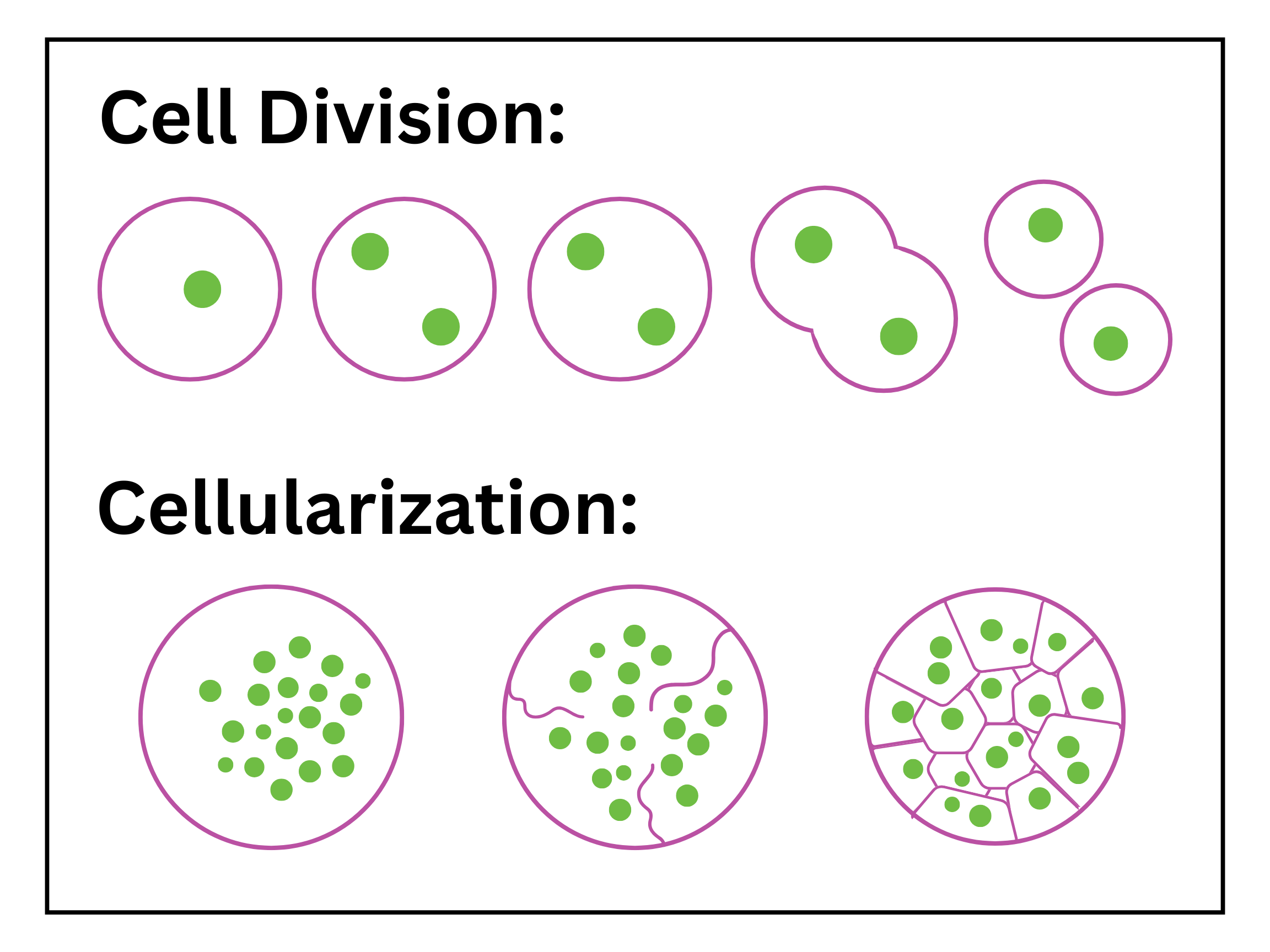
    But new findings in cell biology have put the single-cellularity of archaea into question. Normally, when under excessive pressure, cells will halt all cell division as a protective mechanism to ensure all cells have adequate volume and are without genetic defects. Recently, a species of archaea found in hypersaline environments, H. volcanni, was found to undergo a process closely resembling cellularization instead of regular cell division when under pressure. Cell division is the more common and orderly process, usually mitosis and cytokinesis, where a single cell replicates its DNA once and increases in size until it splits into two daughter cells. Cellularization, on the other hand, is when a single cell replicates its DNA until it has multiple nuclei, then splits into many smaller cells. Archaea do not have nuclei, but the process they underwent in the experiment strongly resembled that of eukaryotic cellularization.

    In animals, cellularization is rare, primarily found in the early development of fruit fly embryos. In this case, the process forms tissues, which are the basis of multicellular organisms, defined as a group of cells that work together for a common function. The multicellular archaea can’t quite be defined as tissue, since they don’t have the connection and interaction that tissue does, but it is definitely an interesting new find. This also serves as evidence for the theory that multicellularity evolved before the teamwork seen in multicellular organisms.

    H. volcanii also has certain traits that make this process favorable. They naturally contain multiple copies of their DNA spread throughout the cell, and their cell division is influenced by the pressure of their surroundings, which they recognize through their membrane tension. The cellularization also produces two types of cells, peripheral and central scutoid cells, each with distinct structural protein patterns. Further implications of this are unknown, but it will be exciting to watch this newfound trait of archaea unfold.

    Pillai, E., & Brunet, T. (2025). Archaea go multicellular under pressure. Science, 388(6742), 28-29. https://www.science.org/doi/10.1126/science.adw6689?utm_source=sfmc&utm_medium=email&utm_campaign=ScienceAdviser&utm_content=distillation&et_rid=1095835014&et_cid=5579756
    Niederberger, T., & et al. (1998). Archaea. Encyclopedia Britannica, https://www.britannica.com/science/archaea
    Rados, T., Leland, O., Escudero, P., Mallon, J., Andre, K., et al. (2025). Tissue-like multicellular development triggered by mechanical compression in archaea. Science, 388(6742), 109-115. https://www.science.org/doi/10.1126/science.adu0047#:~:text=The%20advent%20of%20clonal%20multicellularity,at%20a%20critical%20cell%20size
    Liu, C. (2017). Archaea. Innovative Genomics Institute (IGI). https://innovativegenomics.org/glossary/archaea/