Day: December 16, 2024

  • Hidden in Plain Sight: How Metamaterials Are Making Invisibility a Reality

    Hidden in Plain Sight: How Metamaterials Are Making Invisibility a Reality

    The power of invisibility is one that I have always found to be fascinating, there are many things you could do if you were invisible. The idea of being able to bring this power to life is mind-boggling. The second post of this series will cover invisibility and how scientists are taking us one step closer to being unseen. Superheroes and popular characters like Violet Parr, Harry Potter, and Randall Boggs were capable of invisibility through their unique methods. Things like natural-born powers, invisibility capes, and monster abilities, are methods that are not capable of being replicated by science… at least not yet. The method we will cover here boils down to the basics of how we see things, the way our eyes perceive light. Scientists are playing around with light bending and optics to make objects “disappear”.

    How Do We See?
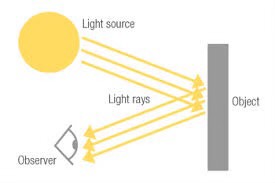
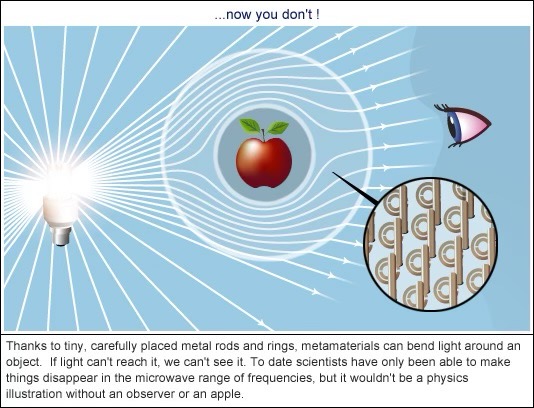
    To understand invisibility, we must first understand what it means for us to see an object. The process of seeing begins with light. When you see an object, what you are seeing is the light reflecting off that object and entering into your eyes. To make an object invisible, this fundamental interaction with light must be altered. More specifically, the light rays would need to be bent or diverted around/away from the object, preventing them from reaching the eyes and therefore making it unperceivable to the eyes (Lo, 2018).

    Metamaterials
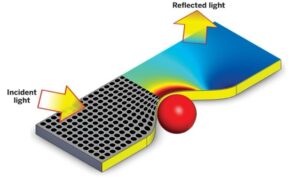
    Scientists are creating metamaterials, which are “artificial materials with the ability to control physical phenomena” (Lo, 2018). With these materials, scientists can control and manipulate light rays, helping create invisibility. This process, known as light bending, is a key component in invisibility cloaks. This is further explained by scientists who state, “Metamaterials are composites designed to have a negative index of refraction, which imparts the extraordinary capability to bend light away from or around an object made from or coated with the material” (“Metamaterials Bend Light to New Levels,” 2023b).  Despite the challenges in scaling these technologies, the progress in metamaterial research could revolutionize how we interact with the physical world and lead to advancements in various scientific fields.

    Challenges
    There are two main challenges when trying to reach full invisibility, size and range. Unfortunately, the invisibility effect isn’t as broad as one might hope. Researchers have only managed to develop metamaterials that function with a single wavelength of light, corresponding to just one color. This means the material can create invisibility in controlled settings with a single light color, but not in natural environments where multiple colors of light are present. While these invisibility cloaks are a remarkable breakthrough, they aren’t perfected for the stealth needed in real-world conditions, limiting them to certain factors. Another challenge is the size of objects. Bigger items are more difficult to manage, and current metamaterials aren’t capable of hiding something as large as the human body. While scientists are optimistic that new ideas and designs will help tackle this problem, it will likely be some time before we can reach the point of making humans fully “disappear” (Lo, 2018).

    Real-World Applications

    Although there are many challenges in the journey to invisibility, there are highly beneficial theoretical uses for this ability that make it all the more exciting to achieve. According to researchers, “the Rochester Cloak, for instance, could one day allow surgeons to see through their hands, preventing their hands from blocking their view of what they’re operating on” (Lo, 2018). This use could change science and the way we view healthcare completely. There are many motivations for perfecting the invisibility cloak as it could help so many in the long run.

    Conclusion

    Though complete invisibility remains a dream and goal for most of us, it is hard to ignore the remarkable progress scientists have made in controlling light to achieve partial invisibility. The innovation of metamaterials and spectral cloaking is bringing us closer to a future where invisibility will leave the realm of fiction and enter into reality. Although the methods are limited, they are the first steps to becoming like the superheroes we see on our screens. If this is what scientists have created so far, I cannot wait to find out what else the future holds for us.


    References

    Lo, A. (2018). Hidden From Plain Sight: Can Science Create Real-Life Invisibility? – Science Communication Club. Utoronto.ca. https://scc.sa.utoronto.ca/content/hidden-from-plain-sight-invisibility/

    Metamaterials Bend Light To New Levels. (2023). Chemical & Engineering News, 86(33). https://doi.org/10.1038/nature07247)


  • Super Strength Unlocked: The Rise of Exoskeleton Technology

    Super Strength Unlocked: The Rise of Exoskeleton Technology

    Superheroes have become such an essential part of pop culture, captivating us with powers far beyond what we know as humanly possible. You likely have watched a superhero movie, read a comic book, or even seen superheroes in your front yard when handing candy out for Halloween. As a kid, I marveled at the idea of having my own powers. As a teenager, I watched Marvel movies all the time because it was so interesting to see made-up powers and the creativity behind them. Now, as a STEM college student, I am learning more about the amazing creations science and technology can bring to life. Now, I wonder: could these powers exist one day, and if so, how close are we to giving humans these abilities? This series will explore how close we are to achieving “superpowers” through advancements in STEM—from super strength to telekinesis and even invisibility. Each post will dive into science and technology bringing us closer to making these powers a reality.

    Super Strength

    Heroes like the Hulk, Superman, Wonder Woman, and many others have been portrayed as having super strength. One that I find particularly interesting is Iron Man— a regular human who, through science and technology, built a suit that granted him super strength and other powers. The idea of using science to create such technology is no longer just fiction; in fact, it’s becoming a real possibility to give humans abilities beyond natural limits. This is happening today through the development of exoskeletons.

    Exoskeleton

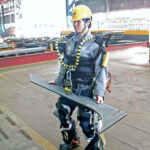
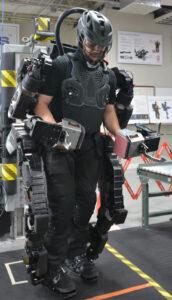
    Engineers have been working hard to create exoskeletons that give their wearers an enhanced level of strength. It is stated that “Combining the principles of hydraulic pressure and computer simulation, these suits allow the wearer to complete feats of strength previously confined to comic books and the silver screen” (Osborne & Osborne, 2017). Exoskeletons do not have a mind of their own and are not controlled remotely, they are a tool to aid in human tasks. The exoskeleton responds to its “human operator” and their movements. One such exoskeleton, the HAL-5, assists users by reducing fatigue, supporting static weight, and reinforcing the human frame (Osborne & Osborne, 2017). Meanwhile, Sarcos Robotics has developed the Sarcos Guardian XO, a full-body robotic exoskeleton that enables users to lift up to 200 pounds with ease (Ackerman, 2022).

    Real-World Applications

    Around the world, there are a vast number of exoskeletons being developed, all for different purposes and demographics. Some exoskeletons are built to help elderly individuals with tasks that require strength, while others assist soldiers in the field with activities like crawling, running, and carrying heavy objects. This technology not only boosts productivity but also enhances worker safety when performing labor-intensive tasks. Sarcos Robotics claims that a single worker with the Guardian XO can handle the workload of 4-10 people. According to OSHA regulations, the recommended one-person load is 51 pounds, and that number is reduced if the object must be lifted repeatedly, held for extended periods, or moved over a distance. However, with the Guardian XO, a worker can lift four times that weight, continuously, at speeds of up to 3 mph (Ackerman, 2022).

    Challenges

    One of the biggest obstacles to advancing and commercializing exoskeletons is the high power demand. Operating these suits requires a significant amount of energy due to the high-pressure requirements. The HAL-5, for example, is battery-powered but only lasts around 2.5 hours on a full charge (Osborne & Osborne, 2017). Finding a more efficient or portable power source could make exoskeleton technology more practical and widely accessible.

    Conclusion

    It is fascinating to see how much science has advanced the ability to have “superpowers”. Thinking about where science and technology could go from here is even more interesting. There is still a long way to go in the quest to give humans super strength, but it can no longer be said that it is impossible to do so.


    References

    Ackerman, E. (2022, August 18). Sarcos demonstrates powered exosuit that gives workers super strength. IEEE Spectrum. https://spectrum.ieee.org/sarcos-guardian-xo-powered-exoskeleton

    Osborne, M., & Osborne, M. (2017, November 13). Engineering Super Strength: Combining man and Machine – USC Viterbi School of Engineering. USC Viterbi School of Engineering – USC Viterbi School of Engineering. https://illumin.usc.edu/engineering-super-strength-combining-man-and-machine/