
Day: November 23, 2024

  • Navigating the Side-effects of Gel Nail Polish

    Navigating the Side-effects of Gel Nail Polish

    Rise to Popularity

    Gel nail polish has become popular through the internet and social media platforms such as TikTok for its durability and easy application. It is relatively new to the market so there is not much research done on the side effects. Online, users have easy access to do it yourself (DIY) gel nail polish kits. However, the improper application of these products, particularly when DIY-ing, can lead to severe allergic reactions due to the exposure of uncured chemicals. This could lead to allergic contact dermatitis and ultraviolet-induced lesions. While it may appear to be a faster, cheaper, and easier manicure method than other options, it is important to know the health implications of using gel nail products and how user informed choices can protect nail health and prevent adverse effects.

    UV/LED Lamps

    Gel nail polish is a type of nail polish that is made up of oligomers and ultraviolet (UV) catalysts. After application of the polish, it is hardened or cured under a UV or LED lamp for a period around 2 minutes or 30 seconds depending on the lamp and the strength of energy emitted. The lamp causes oligomers in the polish to change their structure, hence curing the liquid and leading to polymerization (Putek 202). While this may seem harmless, in reality, cumulative exposure to UV light may cause ocular toxicity (cataracts, macular degeneration) and UV lamps can emit 4.2 times more energy than the sun (Litaiem 2022).

    Nail Lesions 

    The usage of gel nail polish is also associated with various nail lesions. These include pterygium inversum unguis (a triangular wedge of tissue), pseudoleukonychia (white spots on the nail surface), lamellar splitting, brittle nails, thinning of the nail plate, yellow discoloration, pincer nail deformity, and ridged nails (Litaiem 2022). Such damage can result from both the application and removal processes, which often involve mechanical peeling, soaking in acetone, or exposure to other harsh chemicals. During the removal process, oftentimes the nail is often wrapped in aluminum soaked with acetone and then a cuticle pusher and nail buffer are used to remove the remaining gel. Hence, exposing the nails to harsh chemicals.

    Allergic Contact Dermatitis

    Additionally, gel nail polish may cause allergic contact dermatitis due to its chemical components, particularly methacrylates like 2-hydroxypropyl methacrylate (HPMA) and 2-hydroxyethyl methacrylate (HEMA) (Litaiem 2022). These acrylic monomers, responsible for many acrylate-induced allergic reactions, are polymerized under UV or LED lamps during curing. However, incomplete polymerization, especially in DIY setups without professional-grade equipment, can leave methacrylates on the skin. As a result, increasing the risk of allergic reactions. Once allergic contact dermatitis develops, there is no cure, only avoidance of products containing the triggering compounds. Studies suggest that improper application techniques and removals, such as at-home gel manicures performed by non-professionals, may further increase the risk of side effects. 

    Takeaways

    Making sure one is informed about the potential risks of side-effects associated with gel nail polish, such as nail damage and allergic reactions, is critical to making safer and more conscious decisions. However, it is disheartening that despite these risks, many people feel compelled to prioritize beauty standards over their health and would continue to get gel manicures. This reflects how societal pressures and cultural norms often place appearance above well-being, perpetuating choices that may lead to long-term harm. Greater awareness and education are important to challenge these norms.


    Sources Cited

    Litaiem, N., Baklouti, M., & Zeglaoui, F. (2022). Side effects of gel nail polish: A systematic review. Clinics in Dermatology, 40(6), 706–715. https://doi.org/10.1016/j.clindermatol.2022.07.008

    Putek, J., Przybyła, T., Szepietowski, J. C., Baran, W., & Batycka-Baran, A. (2020). Side-effects associated with gel nail polish: A self-questionnaire study of 2,118 respondents. Acta Dermato-Venereologica, 100(18), 5931. https://doi.org/10.2340/00015555-3684
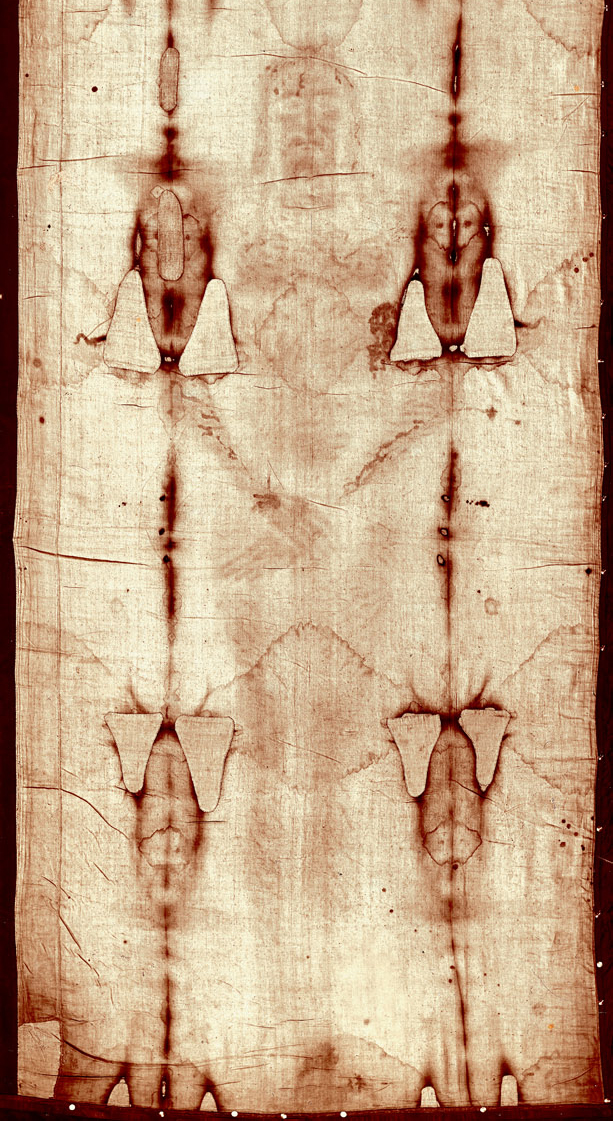

     

  • The Shroud of Turin

    The Shroud of Turin


    Without the analysis of historical artifacts, much of the history we know today would be non-existent. It is through the scientific exegesis of many artifacts that we are able to understand the history of the human race. When looking back on the most critical and historic artifacts we come across many varieties, such as the Rosetta Stone, the Venus of Willendorf, the Dead Sea Scrolls and many more. But one historical artifact that stood out amongst the others has a unique backstory. This artifact is the most scientifically studied artifact in all of history…The Shroud of Turin. In this article we delve deeper into what the Shroud Of Turin is,  how it came about and understanding both sides of the spectrum.
    The Shroud of Turin is a 14.5 x 3.5 foot linen cloth bearing the faint image of a man who appears to have suffered physical trauma consistent with crucifixion. The cloth has been preserved in the Cathedral of Turin, Italy, since 1578 (Wilson, 2010). While its origins are debated, the first historically documented appearance of the shroud was in France in the 1350s.

    The image on the shroud shows both the front and back of a male figure, with apparent wounds corresponding to biblical accounts of Jesus’s crucifixion. The image’s unique properties have puzzled scientists, as it appears to be a photographic negative and contains three-dimensional information that becomes visible when analyzed with modern imaging technology (Jackson et al., 2019).

    In 1988, radiocarbon dating tests conducted by laboratories in Oxford, Zurich, and Arizona dated the shroud to between 1260 and 1390 CE, suggesting it was a medieval creation (Damon et al., 1989). However, some researchers have challenged these results, arguing that the tested sample may not have been representative of the entire shroud due to repairs and environmental contamination (Rogers, 2005).

    The shroud’s weave pattern matches first-century Middle Eastern textiles, and pollen samples found on the cloth include species specific to the Jerusalem area (Frei, 1982). However, skeptics argue that such materials could have been introduced during the shroud’s documented travels through these regions in medieval times.

    The Shroud of Turin continues to generate significant interest from both religious and scientific communities. While the Catholic Church has neither officially endorsed nor rejected the shroud’s authenticity, it recognizes its significance as an important icon of Christian faith. The shroud remains a powerful symbol that draws millions of pilgrims to Turin during its rare public exhibitions.


    Citations

    Damon, P. E., Donahue, D. J., Gore, B. H., Hatheway, A. L., Jull, A. J. T., Linick, T. W., … & Valladas, H. (1989). Radiocarbon dating of the Shroud of Turin. Nature, 337(6208), 611-615.
    Di Lazzaro, P., Murra, D., Santoni, A., Fanti, G., Nichelatti, E., & Baldacchini, G. (2010). Deep ultraviolet radiation simulates the Turin Shroud image. Journal of Imaging Science and Technology, 54(4), 40302-1.
    Frei, M. (1982). Nine years of palynological studies on the Shroud. Shroud Spectrum International, 1(3), 3-7.
    Jackson, J. P., Jumper, E. J., & Ercoline, W. R. (2019). Correlation of image intensity on the Turin Shroud with the 3-D structure of a human body shape. Applied Optics, 58(9), 2683-2691.
    Rogers, R. N. (2005). Studies on the radiocarbon sample from the Shroud of Turin. Thermochimica Acta, 425(1-2), 189-194.
    Wilson, I. (2010). The Shroud: The 2000-Year-Old Mystery Solved. Bantam Press.

  • AI & Historical Texts

    AI & Historical Texts

    When looking at the past, it’s very hard to decipher how exactly certain situations unfolded. We must look to historical texts in order to garner a revelation on how this domino effect of history unfolded to our present day. The issue with analyzing historical texts is that it is under the umbrella of human error and with human error comes human bias which when analyzing historical texts to reveal historic events to the world, this bias can become very dangerous. Dangerous to the point where it can (and has) altered our perception of history. In this article we will look to AI and how analyzing historical texts through AI can help suppress these human errors.

    The implementation of AI in historical analysis has revolutionized how we approach primary sources. Machine learning algorithms can now process vast quantities of historical documents, identifying patterns and connections that human researchers might miss or take years to discover. For instance, the Venice Time Machine project, led by researchers at École Polytechnique Fédérale de Lausanne, has successfully digitized and analyzed thousands of historical Venetian documents, revealing previously unknown patterns in trade relationships and social networks (Williams, 2022). This breakthrough in historical research demonstrates the potential for AI to uncover hidden narratives and connections that traditional methods might overlook.

    AI systems offer several significant advantages in historical analysis that extend beyond mere pattern recognition. Advanced natural language processing (NLP) models can analyze historical texts in multiple languages and adapt to archaic writing styles, making cross-cultural comparison more accessible than ever before (Chen & Rodriguez, 2023). Furthermore, these systems can provide comprehensive statistical analysis of historical trends, helping to validate or challenge existing historical narratives with data-driven insights that would be impossible to generate through traditional research methods alone.

    However, it’s crucial to acknowledge that AI itself is not free from bias. The algorithms are trained on data sets that may contain their own inherent biases, and the programming decisions made by developers can inadvertently influence results. As noted by Dr. Sarah Thompson (2023) in her work on digital humanities, “AI should be viewed as a complementary tool to traditional historical research methods, not a replacement.” This understanding has led to the development of various safeguards in the field, including regular calibration of AI models against peer-reviewed historical research and cross-validation of findings using multiple AI systems. The collaboration between historians and AI experts has become essential to ensure appropriate interpretation of results and maintain the integrity of historical research.

    The integration of AI in historical analysis represents a significant step forward in our ability to understand the past more objectively. Projects like the Historical Document Analysis Initiative (HDAI) demonstrate how machine learning can help identify and correct for biases in historical narratives while preserving the essential human element of historical interpretation (Garcia et al., 2024). These developments have opened new avenues for research and understanding, allowing historians to approach their subjects with unprecedented depth and precision.
    The more we refine these technologies, the greater the relationship between AI and historical research becomes. Researchers have found that combining traditional historical methods with AI-powered analysis can provide a more complete and nuanced understanding of historical events and their interconnections. This hybrid approach allows historians to maintain their crucial role in interpretation and analysis while leveraging the powerful capabilities of AI to process and analyze vast amounts of historical data.

    The future of historical research lies in this careful balance between human expertise and technological capability. While AI offers powerful tools for analyzing historical texts with reduced human bias, it’s essential to remember that complete objectivity remains elusive. The goal is not to remove human judgment entirely but to enhance it with technological capabilities that can help identify and minimize unconscious biases. As we continue to develop more sophisticated AI tools, the partnership between human historians and machine learning systems will become increasingly valuable in our quest to understand the past more accurately.

    By developing more accurate and comprehensive understandings of historical events, we can better inform current decision-making processes and policy development. The ability to analyze large amounts of historical data quickly and efficiently while also accounting for potential biases helps create a more nuanced and accurate picture of our past, which in turn helps us better understand our present and prepare for our future.


    Citations

    Donovan, M. (2023). How AI is helping historians better understand our past. *MIT Technology Review*.
    Williams, R. (2022). The Venice Time Machine: Digital Humanities at Scale. *Digital History Quarterly*, 18(2), 45-67.
    Chen, L., & Rodriguez, A. (2023). Natural Language Processing in Historical Research: Advances and Challenges. *Journal of Digital Humanities*, 12(4), 89-112.
    Thompson, S. (2023). Digital Tools and Historical Method: A Critical Assessment. *History and Computing*, 15(3), 201-224.
    Garcia, M., et al. (2024). The Historical Document Analysis Initiative: First Year Results. *Digital Scholarship in the Humanities*, 39(1), 1-28.