Day: April 29, 2024

  • Why Does Mars’s Moon Look Like That? A Dive into Moon Formation

    The other day, I came across a funny meme on Instagram.
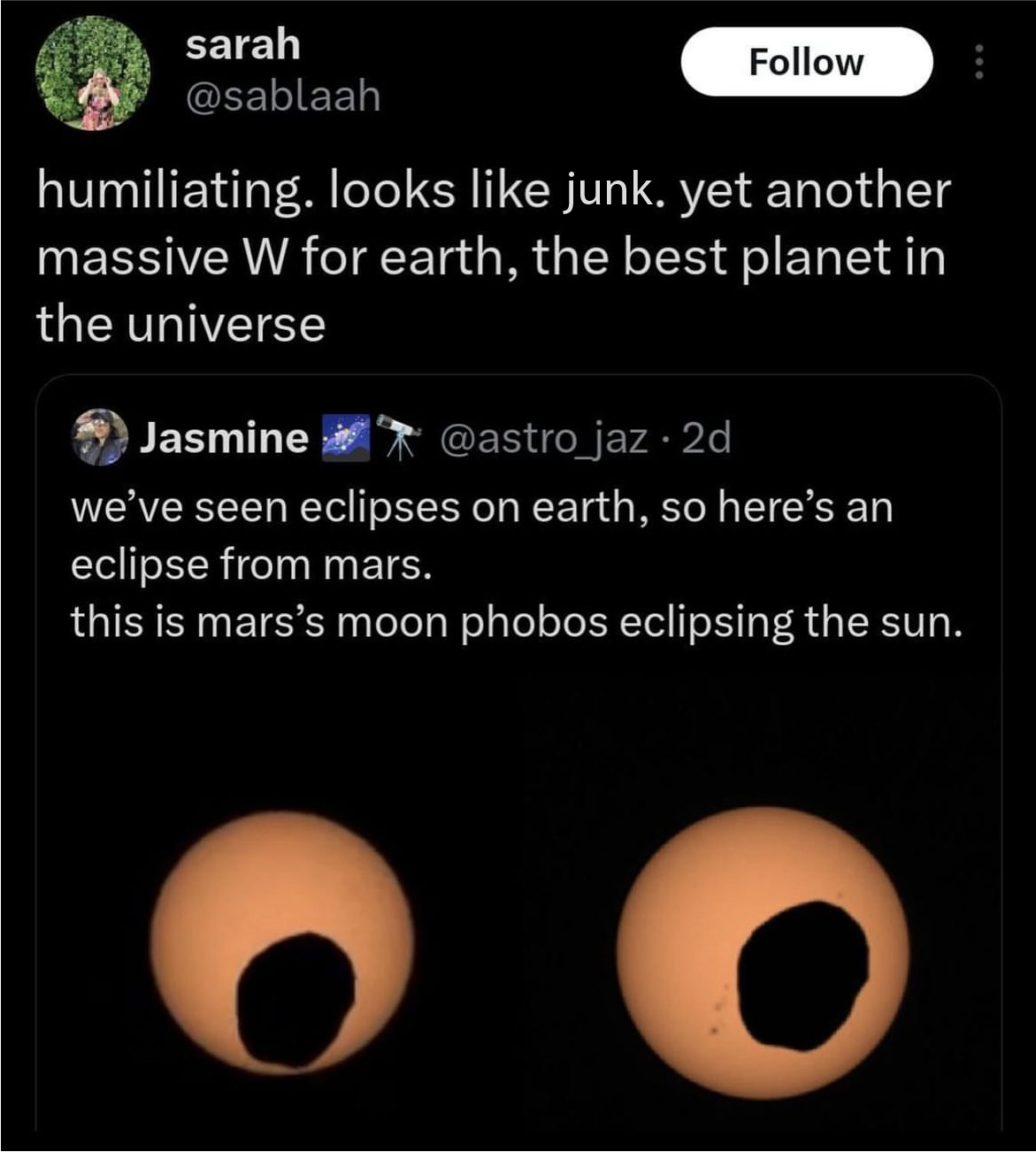


    I laughed, I gave it a like, and I moved on with my life- kind of. As I continued with my day, one thought kept creeping up in the back of my mind- “Why does Mars’s moon look like that?” It doesn’t even look like a moon, from the standards of as average Earth-dweller, who is so used to the beautiful, spherical, and almost perfect moon that we have been spoiled by. Why is Earth’s moon so perfect, while Mars’s moon looks like it just hopped off the nearest asteroid belt into Mars’s orbit?


    Mars has two moons, Phobos and Deimos. There is no absolute consensus among the scientific community on how these two moons came to be, but there are two main theories. The first theory, known as the Capture Theory, is that Mars’s moons are captures asteroids, meaning debris created during the early formation of the solar system were pulled into Mars’s orbit by the planet’s gravitational pull. The fact that the two moons are so small and irregularly shaped supports the Capture Theory, along with the fact that they are visibly much darker in color than the Red Planet. The opposing theory is known as the Impact Theory, proposes that Mars underwent some impact from some collision during its early years, uplifting debris that aggregated into two moons. Recent photographic evidence has suggested that Deimos is composed of a rocky material, very similar to what makes up Mars, which supports the Impact Theory and opposes the Capture Theory, which would expect the moons to be made of a more carbon-rich material. There is also debate to whether or not these two moons are even made of the same material, or moreover, were even formed in the same event.
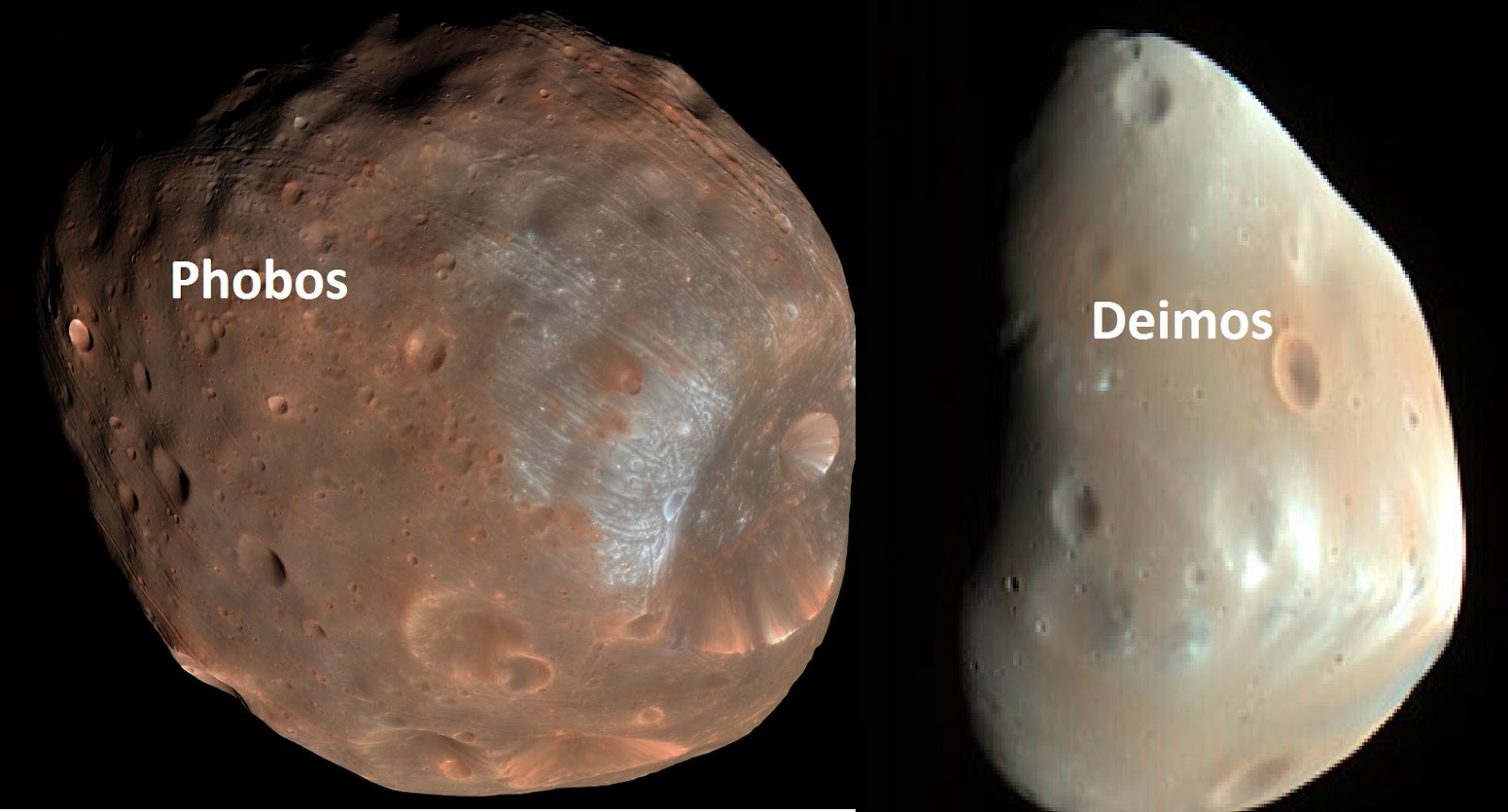
    There are a great deal of unknowns about how Mars’s moons were formed, but however they came to be, they sure look a lot different from our moon. While formation process may play a role in this, the main reason for this difference, is mass. Our moon has an approximate mass of 7.348 × 10²² kilograms, while Mars’s larger moon, Phobos, has a mass of only 1.060×10¹⁶ kilograms. While these both seem like huge numbers, the masses of these two moons are on vastly different scales, with Phobos being about 0.000014% the mass of Earth’s moon. In summary, Mars’s moons are tiny, and this accounts for the fact that they look so nonuniform.


    When the Earth’s moon was forming, it became rounded due to the same principle that causes every other sizable celestial body to become spherical- self gravity. Self-gravity is the gravitational force that an object exerts on itself. Once a body accumulates enough mass, this force will pull in towards its center, forming a spherical shape. This final stage is known as hydrostatic equilibrium. Every object that has mass has some amount of self-gravity, even people! But of course, we do not have nearly enough mass for our self-gravity to pull us into a sphere. So that’s the main reason Mars’s moons are so misshapen; they’re too small to exert a strong enough self-gravitational pull on themselves. But, there is one more piece to the puzzle. Mass isn’t the only things that cause celestial bodies to become rounded. The other secret ingredient is material.


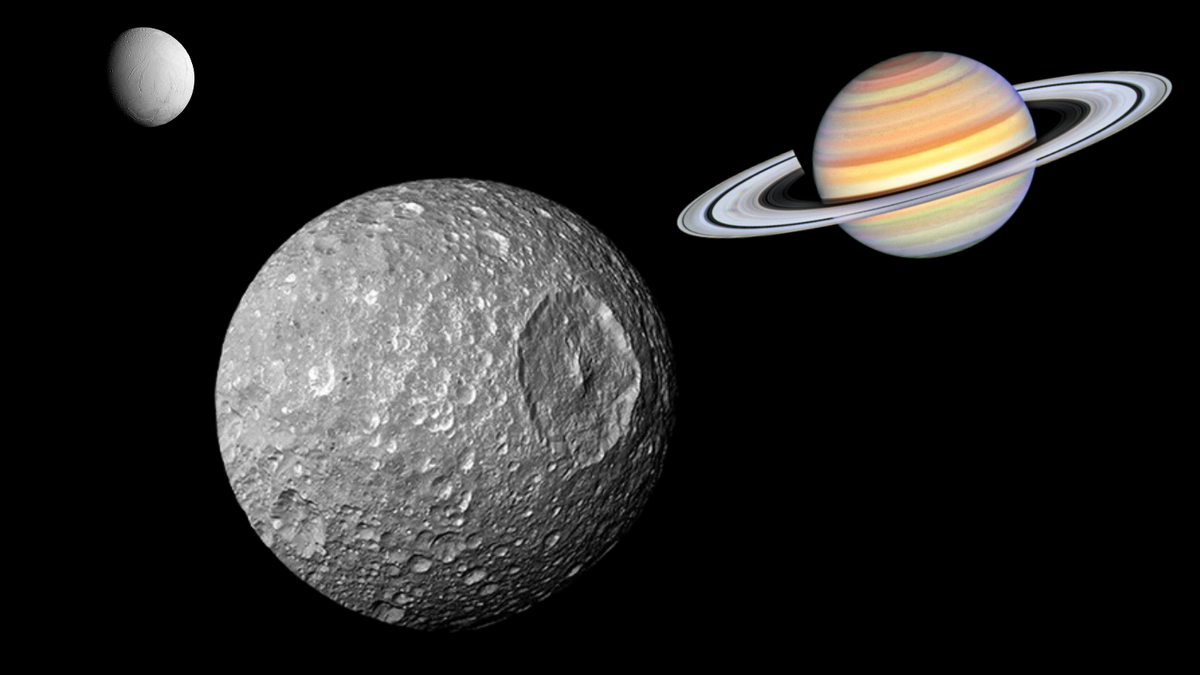
    For bodies to reach a spherical state, their self-gravity must be strong enough to warp and squish the physical material that they are composed. For example, a hypothetical body made of only liquid water would not need much mass in order to achieve hydrostatic equilibrium, because water molecules can be moved around with very little force. There are other materials, such as iron, that resist gravitational pulls even more, and require even more mass to become spherical. The smallest known celestial body that has reached hydrostatic equilibrium is Saturn’s moon, Mimas, which has a diameter of only 396 km. This moon has a very low density, and is composed of mainly ice, and a small amount of rock. This composition gives Mimas a low resistance to its own self-gravity, hence allowing it to become spherical, even with its small mass.
    While the answer to my original question turned out to be pretty simple, topics involving space always have a way of becoming more complex. I hope you were able to learn something from this article, or maybe find a topic that you would like to learn more about. There are still so many unknowns in this topic, including exactly what Mars’s moons are even made of, but there is also new and exciting research coming out every day.


    Sources

    Coffey, D. (2023, November 13). Why are things in Space round?. LiveScience. https://www.livescience.com/space/why-are-things-in-space-round#:~:text=Gravity’s%20rounding%20effect%20is%20a,into%20a%20sphere%2Dlike%20shape.

    Giant impact may explain origin of martian moons phobos and deimos. Smithsonian Insider. (n.d.). https://insider.si.edu/2010/12/giant-impact-may-explain-origin-of-martian-moons/

    Jonti Horner                          Professor (Astrophysics). (2024, March 5). I’ve always wondered: Why are the stars, planets and Moons Round, when comets and asteroids aren’t? The Conversation. https://theconversation.com/ive-always-wondered-why-are-the-stars-planets-and-moons-round-when-comets-and-asteroids-arent-160541

    Metcalfe, T. (2023, May 18). A new look at Mars’ Moon Deimos highlights its mysterious origin. Astronomy Magazine. https://www.astronomy.com/space-exploration/a-new-look-at-mars-moon-deimos-highlights-its-mysterious-origin/




  • Artificial Rain- Real or Sci-Fi

    It’s a futuristic fantasy that many have dreamed up, that humans could someday possess the power to control the weather. Artificial weather is an interesting, but ultimately fantastical pipe dream, or is it? Would you believe me if I told you that countries around the world have been artificially altering the weather for decades? Maybe you would, and maybe you’ve heard the term “cloud-seeding” going around in the media recently. You may have heard that it is an innovative, new solution to water scarcity and climate change. Or, maybe you heard that it is causing immense harm to the environment, including some extreme cases of flooding in the Middle East. But, what exactly is cloud-seeding, and why is it being done? Is this new innovative process a solution to environmental issues, or is it another cause?


    To understand how cloud-seeding works, it is important to understand the science behind how clouds form. Clouds are formed when evaporated water cools and condenses around a small dust or salt particle in the atmosphere. A common misconception about cloud-seeding, is that these dust particles are being released into the atmosphere to facilitate the formation of clouds. That is close, but not completely accurate to what cloud seeding is. Cloud seeding is less concerned with cloud formation, and more concerned with increasing precipitation. There are multiple types of cloud seeding, but they all involve releasing particles (usually a type of salt) into already existing clouds to act as ice nuclei. These crystalline particles increase the rain-fall capacity of the cloud by causing ice crystals to form around the ice nuclei, thus increasing the ability of the cloud to induce precipitation. Cloud seeding has been used in the US and many other countries in the world for decades to fight drought, help agriculture, disperse fog, and even help out struggling ski resorts by increasing snowfall.


    Cloud seeding has only been a widespread practice for a few decades, and the lack of research on the topic has led to the emergence of many environmental and ethical concerns. Because cloud-seeding has not been in practice for long, it is difficult to predict the long-term environmental effects on ecosystems. Cloud seeding often includes the release of materials such as silver-nitride, dry ice, and salt into the atmosphere, all of which, though being relatively harmless, have not been studied in their long-term ecological effects. There are also concerns about the meteorological effects of artificial rain, and what larger effects altering the climate could produce. More research is required to fully understand this, but there is evidence to suggest that altering weather patterns in one area could inadvertently affect the climate in a completely different region, or disturb climate patterns in general. There are also ethical concerns over this practice, as it brings up the question of who owns and controls natural resources. In regions where water scarcity is a pressing issue, concerns over who controls and owns water resources is a growing debate, and the concept of “creating” rain in one region amplifies these concerns.


    Now, it is time to address one of the biggest accusations that cloud-seeding has received- that this technology has directly caused some disastrous flooding events. On April 16, 2024, a record amount of flooding caused by heavy rainfall hit the United Arab Emirates, heavily affecting the cities of Dubai and Sharjah. Cloud seeding is a common practice in this region and was immediately blamed as the cause of the flooding. However, after some investigation by experts into the flooding cause, it seems unlikely that cloud-seeding played a role. Dr Friederike Otto, senior lecturer in climate science at Imperial College London, stated that, “Even if cloud seeding did encourage clouds around Dubai to drop water, the atmosphere would have likely been carrying more water to form clouds in the first place, because of climate change” (BBC). Meteorologists at BBC also mentioned that heavy storms had already been forecasted by systems that do not take into account artificial rain fall caused by cloud seeding. So, this tremendous weather event was not in fact caused by cloud seeding, but is another long-term effect of human-caused global warming. Higher air and ocean water temperatures from global warming increases evaporation and cloud formation, subsequently leading to increased precipitation. Global warming seems to be a common thread connecting a plethora of increased occurrences of natural disasters that we have seen in the last decade.

    In conclusion, the concept of artificial weather, once confined to the realm of science fiction, has become a reality in many parts of the world through cloud-seeding. While initially seen as a solution to water scarcity, the widespread use of cloud-seeding raises significant environmental and ethical concerns. The lack of long-term research on its ecological impacts, coupled with the potential for unintended meteorological consequences underscore the complexity of manipulating weather patterns. Moreover, recent events such as the flooding in Middle East highlight the need for a deeper understanding of the interactions between human behavior and natural processes in the context of climate change. While cloud seeding may not be directly causing these floods, as many people were quick to believe, it is clear that we as a society have much to learn about the long-term effects our actions have on the environment we are so eager to alter. As we navigate the relationship between innovation and responsibility, it becomes increasingly clear that the quest to control the weather requires careful consideration of its broader implications for our planet.


    Sources

    Anderson, B. (2024, April 23). What is cloud seeding (or Artificial Rain)?. Greenly. https://greenly.earth/en-us/blog/ecology-news/what-is-cloud-seeding-or-artificial-rain

    CBS Interactive. (n.d.). What is cloud seeding and did it play any role in the Dubai floods?. CBS News. https://www.cbsnews.com/news/what-is-cloud-seeding-and-did-it-impact-dubai-floods/

    How climate change is making record-breaking floods the new normal. UNEP. (n.d.). https://www.unep.org/news-and-stories/story/how-climate-change-making-record-breaking-floods-new-normal

    Silva, M. P. & M. (2024, April 17). What is cloud seeding and did it cause Dubai flooding?. BBC News. https://www.bbc.com/news/science-environment-68839043

    What is cloud seeding?. DRI. (2022, September 19). https://www.dri.edu/cloud-seeding-program/what-is-cloud-seeding/#:~:text=Cloud%20seeding%20is%20a%20weather,base%20for%20snowflakes%20to%20form.

  • The Science of Why We Love Music

    The Science of Why We Love Music

    Why do patterns of sound have so much power over us, stirring our emotions, evoking memories, and leaving a permanent impact on us? Music has been an integral part of human culture for centuries, from the bards of ancient civilization to modern pop artists, serving as a universal language. Human beings have an inherent capacity for music appreciation and enjoyment which is ingrained in our cultural and biological makeup. While speech primarily serves as a means of communication, music serves a different purpose, allowing us to express and experience emotions, moods, and affective states that enhance our quality of life.

    When we hear music, our brains start processing the sound right away. The auditory perception system is like our brain’s “music analyzer.” It breaks down the music into different components, like pitch, rhythm, and melody. This happens in several areas of the brain, including the brainstem, thalamus, and auditory cortex. For example, when you listen to a piece of music, your brainstem picks up the vibrations in the air created by the sound. These vibrations are then sent to the auditory cortex, where they’re decoded into recognizable sounds and patterns. This process allows us to distinguish between different notes, chords, and rhythms in the music we hear.Moreover, our brains can detect subtle changes in pitch and timing, which are essential for understanding melodies and rhythms. This ability to process and analyze sound is crucial for our enjoyment of music because it helps us make sense of the patterns and structures within the music.

    But it’s not just about understanding the music as our brains also try to predict what’s coming next. This predictive ability is crucial for making sense of the music and anticipating how it will unfold. Think of it like predicting the next plot twist in a movie based on the clues you’ve picked up along the way. Our brains are constantly making predictions about the music we’re listening to based on patterns and expectations formed from our past experiences. This predictive process helps us anticipate how the music will progress and allows us to stay engaged with the music as it unfolds. For example, if you’re listening to a familiar song, your brain might anticipate the next verse or chorus based on the patterns established earlier in the song. This predictive ability is what keeps us engaged with the music and makes it feel satisfying when our predictions are correct.

    Now, why does music make us feel so good? When we listen to music that we enjoy, our brains release chemicals like dopamine, which are associated with pleasure and reward. This happens in a part of the brain called the reward system, which is responsible for reinforcing behaviors that are beneficial to our survival and well-being. When our brains detect that the music we’re listening to is pleasurable, they release dopamine, which makes us feel good. This is why listening to music can be such a joyful experience – it literally makes our brains happy! Moreover, studies have shown that our brains respond more strongly to music that exceeds our expectations or surprises us in some way. Our brains are essentially saying, “Wow, that was even better than I thought – I love it!” This heightened response in the reward system is what makes certain pieces of music feel especially satisfying and enjoyable.

    So, when we listen to music, our brains go through a complex process of perception, prediction, and reward. The auditory perception system helps us understand the music, the prediction system helps us anticipate how it will unfold, and the reward system makes us feel good when we hear something we enjoy.

    Understanding these processes can help us appreciate why music has such a powerful effect on our emotions and well-being. It’s not just about the sounds we hear – it’s about how our brains interpret and respond to those sounds, creating feelings of happiness and enjoyment. So, the next time you find yourself lost in your favorite song, remember that it’s not just music – it’s a symphony of brain activity bringing you joy and pleasure.


    Sources:

    Schrock, K. (2009). Why Music Moves Us. Scientific American Mind, 20(4), 32–37. https://doi.org/10.1038/scientificamericanmind0709-32

    Zatorre R. J. (2018). Why Do We Love Music? Cerebrum:the Dana forum on brain science, 2018, cer-16-18.

  • Medieval Medicinal Remedies Not to Try at Home

    Medieval Medicinal Remedies Not to Try at Home

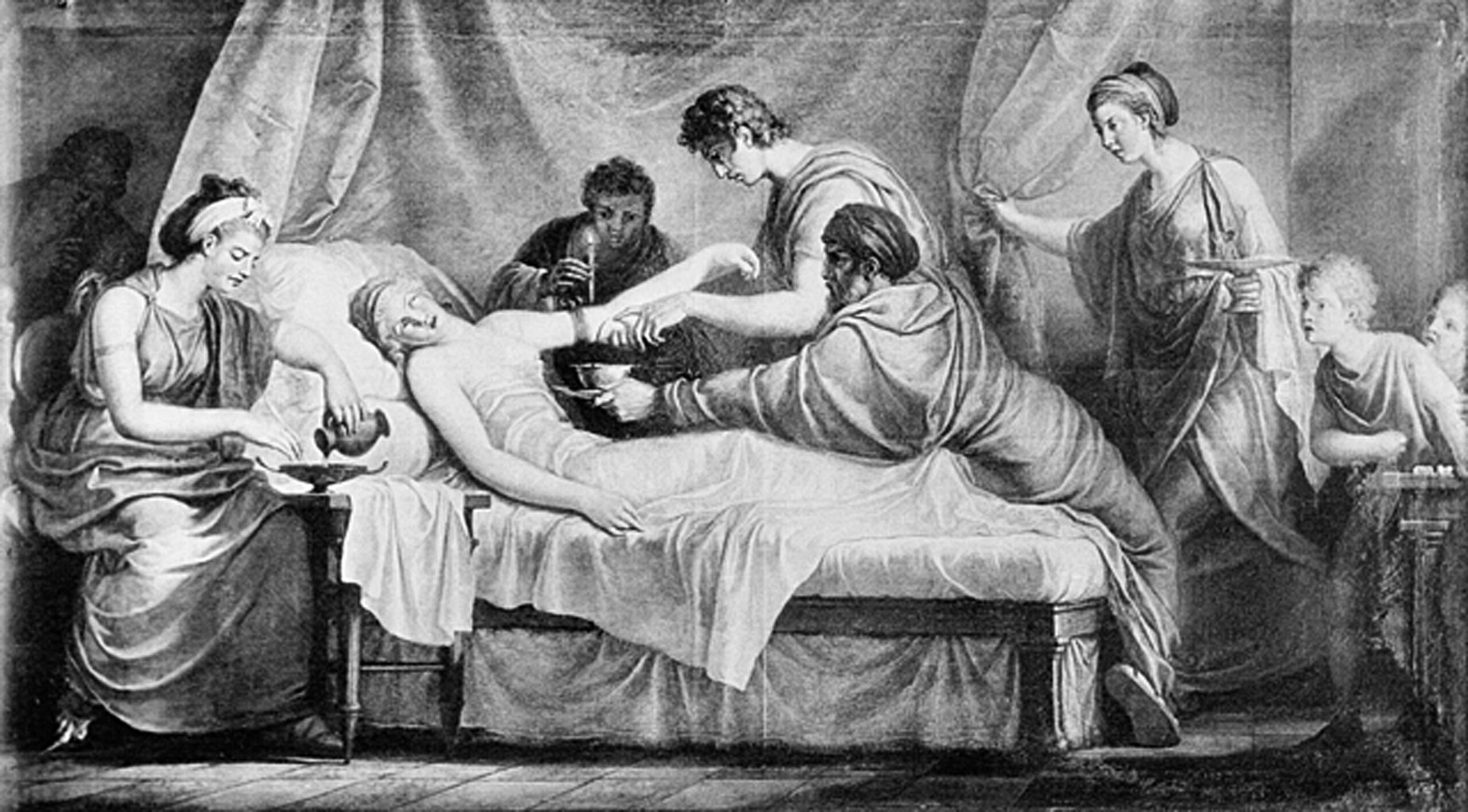
    In the medieval era, medicinal practices were influenced by a blend of herbalism, superstition, and early medical theories. This led to an array of home remedies, some effective, some strange, some which should never be practiced today, that people of that time used to cure themselves of their ailments. Here’s a list of the most common remedies of that time.

    For migraines

    The medieval remedy for migraines was boiling barley with herbs like betony and vervain, then wrapping them in a cloth and applying them to the head. Betony, a grassland herb, was commonly used in medieval remedies for various ailments and is still utilized in modern medicine for treating severe headaches and migraines. Vervain, known for its glycoside derivatives, was also used in the remedy and is still applied today in modern treatments for migraines, depression, and anxiety.

    For a sore throat

    The medieval remedy for quinsy involved a rather gruesome procedure: stuffing a cat with various ingredients like hedgehog grease, bear fat, resins, fenugreek, sage, honeysuckle gum, and wax, then roasting it and using the gathered grease to apply on the patient’s body. This bizarre treatment is just one example of harmful medieval practices that should not be practiced today. 

    For a cough

    The medieval remedy for treating a cough was consuming a mixture of horehound juice and diapenidion, a confection made from barley water, sugar, and egg whites drawn out into threads. Horehound, known for its effectiveness in treating coughs, was combined with diapenidion, which provided a sweet and pleasant taste. Some parts of this remedy are still used today as sugar, a key ingredient in diapenidion, is used in over-the-counter cough remedies for its soothing effects on the chest. 

    For an upset stomach

    To relieve colic caused by trapped wind, medieval medicine prescribed a remedy made from carminatives, cumin and anise, steeped in white wine for three days and nights. After drying for nine days on an ash board, the mixture was powdered and ingested in pottage or as a drink. Alternatively, dill and fennel could be used for the same purpose, similar to modern gripe water formulas. This concoction usually took around 2 weeks to prepare, so patients would likely purchase this remedy from apothecaries.

    For gout

    To treat gout, medieval people would prepare an owl by plucking it, cleaning it, and salting it before placing it in a pot covered with a stone and baking it in an oven until burnt. Once burnt, the owl was pounded with boar’s grease to create a mixture used for anointing the affected area. However, this treatment was likely entirely ineffective and only led to an unfortunate situation for the owl. 

    A stye/bump on the eye

    The remedy for a stye, or a small painful bump, on the eye was done through first pounding either onion or leek and garlic, then mixing them with equal parts of wine and bull’s gall. After letting the mixture stand for nine nights in a brass bowl, it was strained and applied to the eye with a feather at night. This concoction, though initially unappealing in appearance and odor, exhibited potent antibiotic properties due to the antimicrobial components of onion, garlic, and bull’s gall. Additionally, the reaction between the wine and brass bowl produced bactericidal copper salts. Recent research has validated the efficacy of this remedy, prompting further investigation for potential use against antibiotic-resistant infections like MRSA. 

    For burns and scalds

    Medieval medicine recommended using the slime of a live snail to treat burns and scalds, a simple yet effective remedy that reduces blistering and alleviates pain. Recent scientific studies have confirmed that snail slime contains a range of beneficial properties, including antioxidants, antiseptics, anti-inflammatories, and skin-repairing compounds like collagen and elastin. Modern skincare products, known as “Snail Gel,” now utilize these properties for treating minor injuries such as cuts, burns, and scalds.

    For sciatica nerve pain

    Medieval remedies for sciatica or pain caused by the sciatic nerve often included a mixture of ingredients such as the gall of a red ox, water-pepper, cumin, and suet. These ingredients were boiled together to create an ointment-like gruel, which was then applied to the affected area. Additionally, the patient was instructed to apply heat to the hip bone and use hot cloths on the area. Despite the questionable effectiveness of the ingredients, the combination of bed rest and heat treatments may have provided some relief for sciatica symptoms.


    Sources

    Anastasi, L. (2023, January 13). Medieval History – Herbal Medicine in the Middle Ages. Medieval History. https://historymedieval.com/herbal-medicine-in-the-middle-ages/

    Freeman, J. (2022, August 17). Do not try this at home: Medieval medicine under the spotlight in major new project. University of Cambridge. https://www.cam.ac.uk/stories/curious-medieval-medicine

    Mason, E. (2015, April 20). 9 weird medieval medicines. History Extra; History Extra. https://www.historyextra.com/period/medieval/9-weird-medieval-medicines/

  • Astronomy of the Ancient Skies

    Astronomy of the Ancient Skies

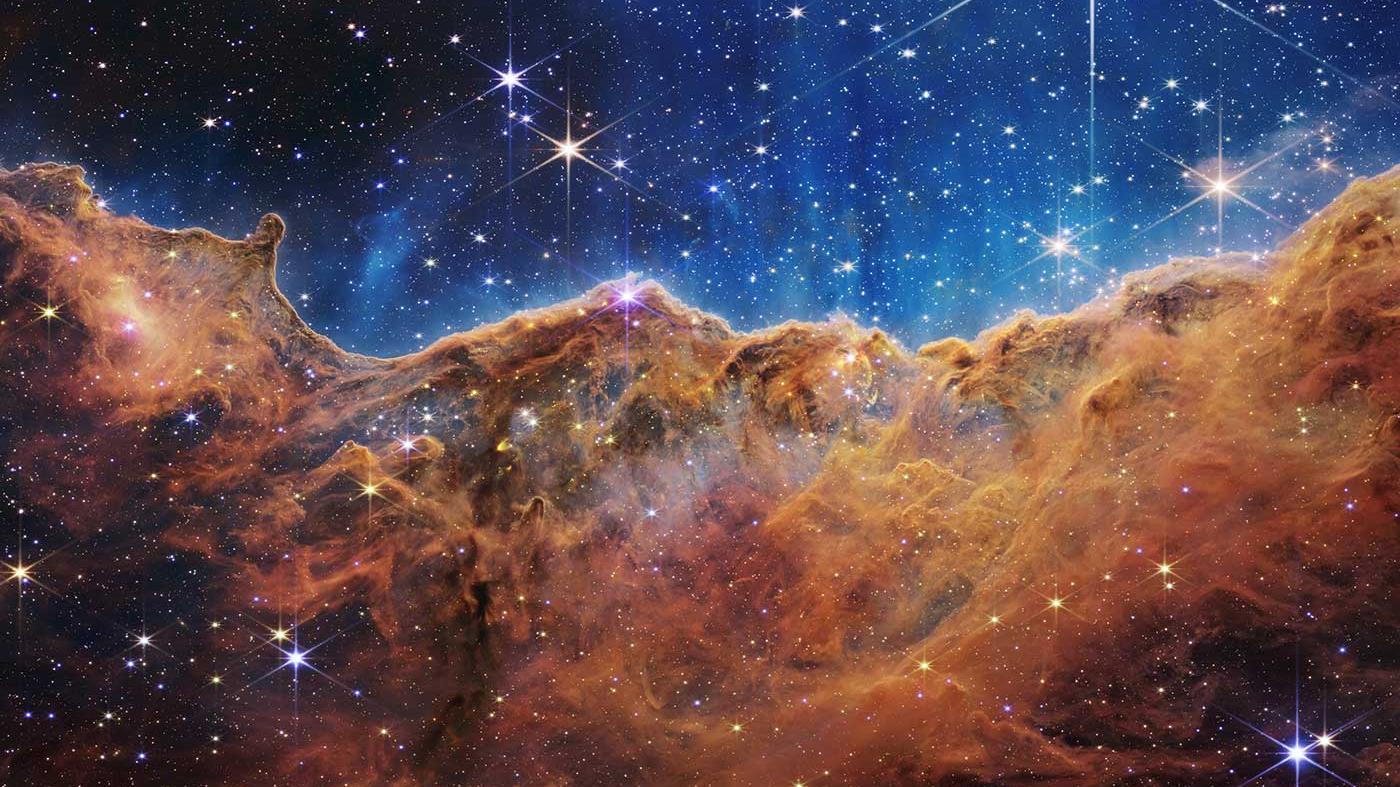
    The night sky has captured people’s imagination for cultures across the world throughout human history. From the ancient Mesopotamians and Egyptians to the Mayans and Greeks, ancient people used the stars to shape their beliefs, practices, and societies. 

    One such civilization was Mesopotamia, where the night sky held great mysteries for the ancient inhabitants of Sumer, Babylon, and Assyria. Ancient Mesopotamians studied celestial bodies like the Moon and planets, blending astronomy, astrology, and religion into “astral science.” They developed a lunar calendar around 3000 BCE, with names for celestial entities like the Moongod dating back to 2500 BCE. By 1800–1000 BCE, they named the five visible planets. These celestial bodies were seen as divine manifestations and interpreted as signs from gods. Moreover, Babylonian scholars recorded celestial events to predict future phenomena, introduced zodiac and mathematical astronomy, and developed horoscopy and astrology by the 5th century BCE. 

    Ancient Egyptian astronomy primarily served practical purposes, particularly in time measurement for calendars and daily cycles. The earliest calendar was lunar, synchronized with the star Sirius to align with the natural year. This evolved into a 365-day calendar, divided into three seasons of four 30-day months, with five additional days. The observation of decans rising at nightfall, combined with a 30-day month divided into three 10-day ‘weeks,’ led to the establishment of the 24-hour day. However, the Egyptians also found ways to connect the cosmos to the events of Earth. The Egyptians tracked the movements of stars, particularly Sirius, whose rising was at the same time as the annual flooding of the Nile. This celestial event, known as the “heliacal rising of Sirius,” was believed to lead to agricultural abundance,  and they also built structures like the Great Pyramids of Giza to align with celestial phenomena.

    In Mesoamerica, the ancient Mayans had a similar sophisticated astronomical tradition. Mayan astronomers developed detailed and precise calendars that tracked the movements of celestial bodies through centuries of astronomical observations. Specifically, the Maya Long Count calendar, which spans over 5,000 years, reflects their understanding of astronomical cycles and the way in which they were integrated into Mayan society. Celestial events such as solar eclipses and the equinoxes led to rituals, as they would mark important agricultural cycles and religious ceremonies. Moreover, structures such as Chichen Itza were built for ceremonies in order to align with the movements of the sun and stars.

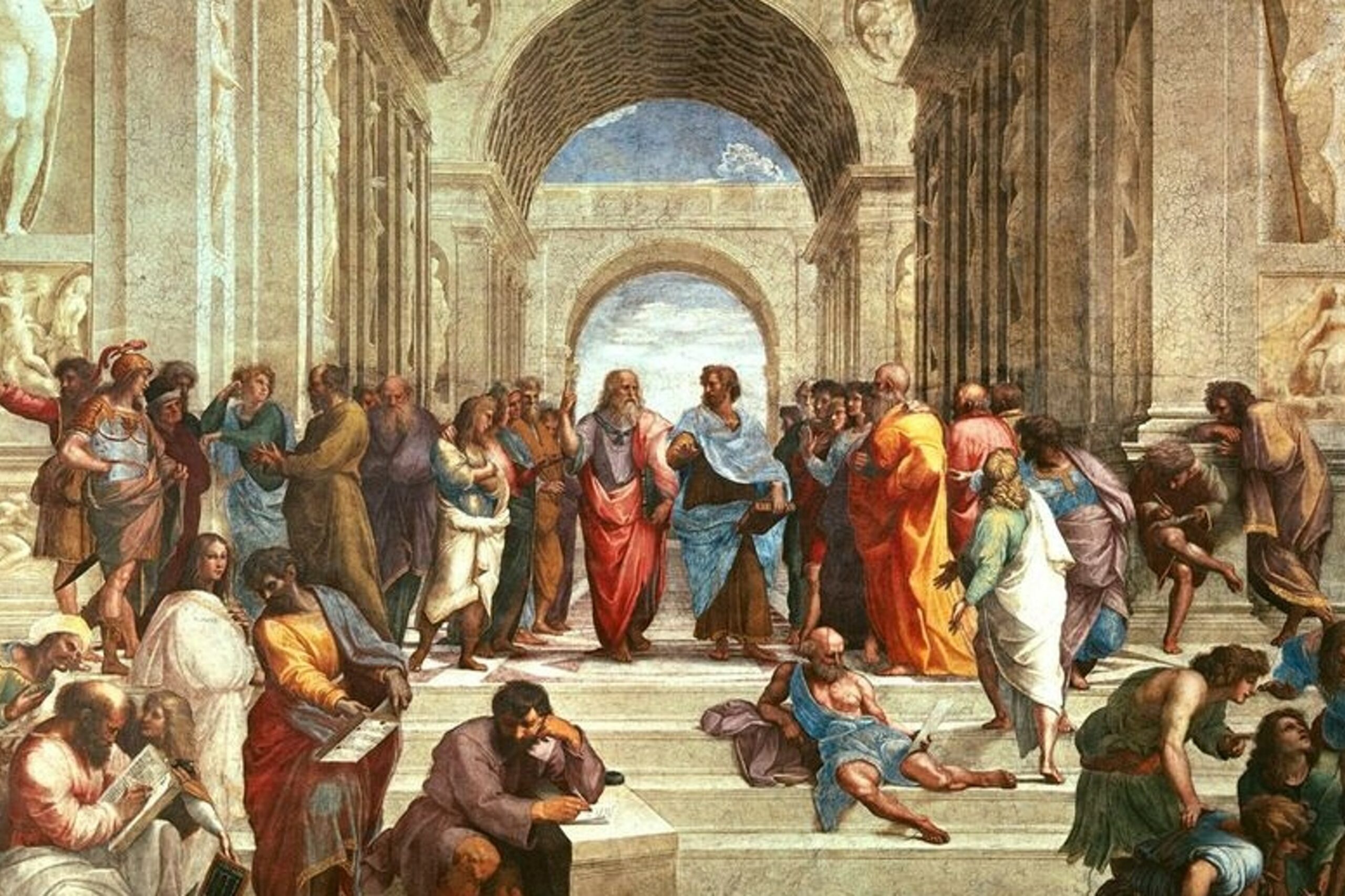
    In ancient Greece, philosophers and scholars used the night sky as a means to pose fundamental questions about the nature of the universe and humanity’s place within it. Building upon earlier Babylonian and Egyptian astronomical traditions, Greek scholars such as Thales of Miletus, Pythagoras, and Aristotle sought to understand the fundamental nature of the cosmos. One of the fundamental contributions of Greek astronomy was the idea of a geocentric model of the universe, which stated that Earth was at the center of the universe. This idea was famously articulated by Aristotle, who argued that Earth, being the heaviest element, must occupy the central position in the universe. Additionally, Claudius Ptolemy in his work “Almagest,” developed a mathematical model of planetary motion based on a system of nested circles called epicycles which predicted the positions of the planets relative to Earth. Greek astronomers also applied their knowledge of the cosmos to build various instruments, including the astrolabe and armillary sphere, which allowed for precise measurements of celestial positions and movements. 

    Ancient astronomy was some of humanity’s first attempts to decode the universe. The observations and scientific ideas across these diverse civilizations the globe shows the value that humans have placed on this field and the meaning it carries with us. Today, we can continue the legacy of ancient astronomers by continuing to be captivated by the night sky and growing our knowledge of it. 


    Sources:

    Chatley, H. (1939). Ancient Egyptian Astronomy. Nature, 143(3617), 336–336. https://doi.org/10.1038/143336b0

    Goldstein, B. R., & Bowen, A. C. (1983). A New View of Early Greek Astronomy. Isis, 74(3), 330–340. https://doi.org/10.1086/353302

    Ossendrijver, M.  (2020). The Moon and Planets in Ancient Mesopotamia. Oxford Research Encyclopedia of Planetary Science. Retrieved 20 Apr. 2024, from https://oxfordre.com/planetaryscience/view/10.1093/acrefore/9780190647926.001.0001/acrefore-9780190647926-e-198.

    Tedlock, B. (1999). Maya Astronomy: What We Know and How We Know it. Arch, 14(1), 39.

  • Science During the Age of Enlightenment

    Science During the Age of Enlightenment

    The 17th and 18th centuries were a time of profound transformation in Europe in regards to thought, reason, skepticism, and empirical observation. This was nowhere more pronounced than during the Age of Enlightenment, its intellectual and philosophical movements leading to modern democracy, with the ideas ushered in during this time forever changing the scope of Western science. 

    The thinkers of the Enlightenment were inspired to question beyond the limits of scientific reasoning at that time and change human understanding. During the early 17th century, European intellectual reasoning consisted of religious dogma and Aristotelian philosophy, with it being unthinkable to challenge the medieval church’s idea of a divine and static universe that centered around Earth. Therefore, the ensuing Scientific Revolution during this time revolutionized the way that Europeans thought about the world and set a new standard for deductive reasoning and scientific observation. 

    Science at this time was conducted predominantly by scientific societies and academies rather than universities, and while some societies had links to universities, most societies operated on their own. These societies grew to have control over their publications, the election of new members, and the administration of the organization, with there being over 70 different scientific societies by 1789. Additionally, science during this time became more popular among the increasingly literate populace and the public was introduced to various scientific ideas. 

    One thinker who was thought to establish the foundations for the movement was Francis Bacon, who is known for establishing empiricism and the scientific method. His book, Novum Organum, discussed a new approach to gathering knowledge from systematic experimentation, inductive reasoning, and empirical observation. He also wrote about the idea of testing hypotheses through experimentation as a way to pursue scientific inquiry. He was the first advocate for the idea of separating religion from science, and his impact on the science world remains today as the scientific method is still seen as the standard way to approach discoveries. 

    The most pivotal scientific thinker of that age whose legacy remains today is Sir Isaac Newton. His Principia Mathematica described classical mechanics and presented the laws of motion and universal gravitation through mathematical observation and analysis. His law of universal gravitation and the laws of objects in motion changed the way that people practiced science and indicated the need for empirical observation and evidence behind scientific ideas rather than religion. Through this, Newton was able to demonstrate how the same physical laws govern both terrestrial and celestial environments, challenging the ideas of the universe at that time. These insights would also eventually lead to advancements in the fields of physics, astronomy, and engineering.

    Another scientist during this time was Carl Linnaeus, a botanist and physician. His book, Systema Naturae, established the binomial nomenclature for species classification where each species is assigned a two part Latin name for its genus and species. Linnaeus ordered animals and plants into defined groups, such as domains and phyla, and used the scientific ideas of observation and rational analysis to study various evolutionary relationships and biodiversity. His work shaped people’s understanding of nature and created a framework for how botany, zoology, and ecology is studied. 

    Overall, the Age of Enlightenment was an integral part of scientific and intellectual history and changed the way that Europe viewed reason, individualism, and progress. While the Enlightenment might not have explored all modern thought, the scholars, scientists, and thinkers of this time sought to break free from the limited knowledge of their world and seek new truth and ideas. Today, we can reflect on the science from the Enlightenment to continue to make bold scientific discoveries and create our impact on the world. 


    Sources:


    Bristow, W. (2010, August 20). Enlightenment (Stanford Encyclopedia of Philosophy). Stanford.edu; Stanford University. https://plato.stanford.edu/entries/enlightenment/

    Duignan, B. (2024, March 28). Enlightenment. Encyclopædia Britannica. https://www.britannica.com/event/Enlightenment-European-history 

    Zucker, S., & Harris, B. (2016, January 7). The Age of Enlightenment, an introduction. Smarthistory. https://smarthistory.org/a-beginners-guide-to-the-age-of-enlightenment/ 

  • The Discoveries of the Human Genome Project

    The Discoveries of the Human Genome Project

    Few scientific quests have sought to unravel the essence of what makes us human as the Human Genome Project. The Human Genome Project (HGP) began with the US Department of Energy launching a study to detect genetic mutations about atomic bomb survivors in Japan. Eventually, the National Institute of Health joined, along with a collection of countries across the globe, into what became a public consortium by the Human Genome Organization. HGP officially began in 1990 with a completion goal of 2005, and thus researchers set up to map the scope of homo sapien DNA, the code that determines our traits. 

    Through HGP, scientists uncovered various discoveries about genetics. One such finding was that human DNA isn’t as unique as we originally thought. The genomes of people who are not closely related to each other like siblings or parents are estimated to be different by about 1 in every 1,200 to 1,500 bases. What this means is that if we consider a stretch of DNA having anywhere between 1,200 to 1,500 bases, we would expect to find one difference between the sequences, and this difference could be as small as a single letter change or single nucleotide polymorphism, or as large as differences in the number of copies of certain sections of DNA, also known as the copy number variations. Additionally,  nearly 50% of our DNA is similar to that of other organisms, with more than 40% of our proteins being similar to those of flies and worms.

    Scientists also found out that genes are not evenly spread out across the 24 human chromosomes, and that some regions have many genes clustered together called rich neighborhoods, while others have few genes, known as desert areas. These desert areas consist of 20% of our genetic code, and the other 80% is made up of clustered neighborhoods. Moreover, the human genome has around 20,000 genes for protein building, which is only 2% of our total DNA. This extremely small percentage was the biggest disappointment for the scientists of the HGP, as they had hoped there would be over 100,000 genes in our genome. This discovery challenged the idea that each gene makes only one protein, and eventually led researchers to understand that the complexity of humans isn’t solely determined by the number of genes, but rather by the different ways in which genes code for proteins.

    Today, we can understand that while the Human Genome Project didn’t address all the expectations and ambitions of earlier scientists, it also forever changed the landscape of the study of genetics. Through the HGP, researchers established large databases of genetic data and published to the world the human genome sequence, ensuring that the genome can be accessible at our fingertips. Moreover, in the late 1980s, computers were relatively simple, but by the time the HGP had finished, we had the internet and powerful computers to handle all this genetic data. This led to a new era of digital biology, where scientists and clinicians could analyze vast amounts of genetic information.

    However, with genetic research also comes various ethical implications. One is about who should own and control genetic data – if researchers and healthcare providers should have access to it for genetic studies and patient care, there is also the issue of how ethical it is for companies to commercialize and profit from this data, especially if they sell the information to third parties. Questions around who can patent genes and genetic technologies arose and the impact this can have on genetic research and healthcare. Moreover, with sequencing the entire human genome, there also needs to be safeguards to protect the privacy and confidentiality of the participants’ genetic information from data misuse or unauthorized access. Lastly, there needs to be equitable access to the benefits of genetics research, ensuring that people of marginalized communities are not only participating in the studies, but also receive the advanced healthcare and medicine that emerges from these discoveries. 

    The lessons we’ve learned from the Human Genome Project can guide us to improve our knowledge of genetics and conduct genomic research responsibly and ethically. Moreover, by understanding how our knowledge of the building blocks of humanity have evolved over time, we can develop a greater appreciation for how far science has progressed. 


    Sources:

    Collins, F. S. (1999). Medical and societal consequences of the Human Genome Project. New England Journal of Medicine, 341(1), 28–37. https://doi.org/10.1056/nejm199907013410106 

    Gibbs, R. A. (2020). The Human Genome Project Changed Everything. Nature Reviews Genetics, 21(10), 575–576. https://doi.org/10.1038/s41576-020-0275-3 

    Moraes, F., & Góes, A. (2016). A Decade of Human Genome Project Conclusion: Scientific Diffusion about our genome knowledge. Biochemistry and Molecular Biology Education, 44(3), 215–223. https://doi.org/10.1002/bmb.20952 

    Watson, J. D. (1990). The Human Genome Project: Past, present, and future. Science, 248(4951), 44–49. https://doi.org/10.1126/science.2181665