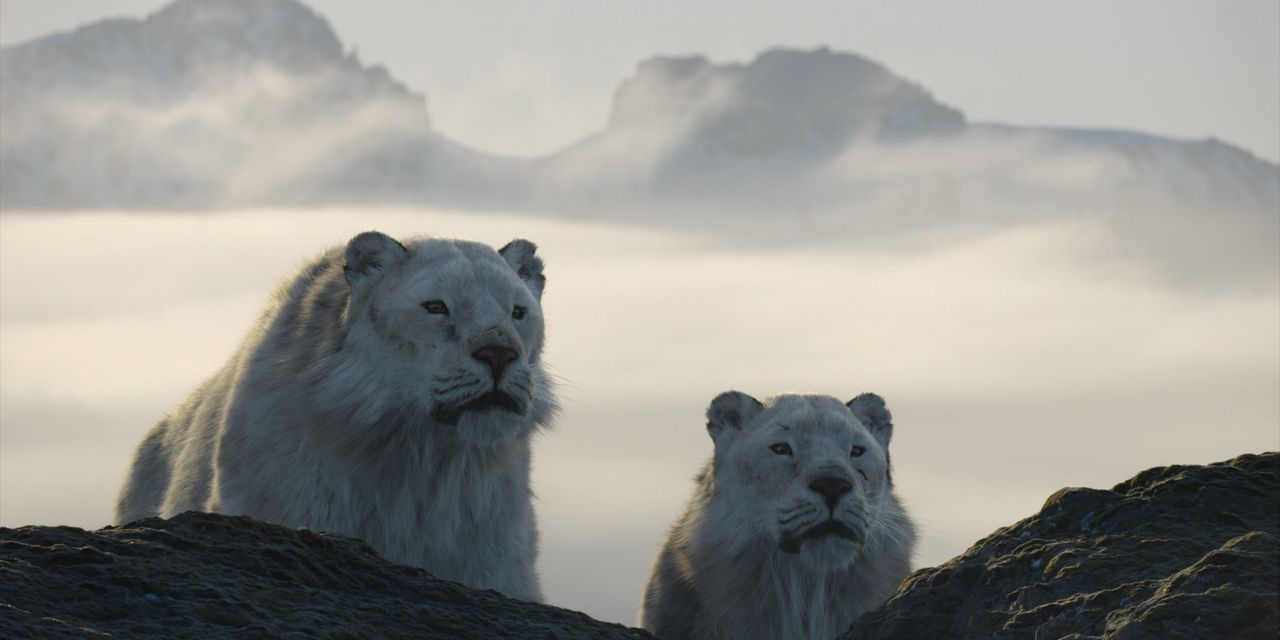
The image above features two Cave Lions, beautifully captured looking out over the icy foothills of Madagascar. The lions look pristine, and the photo would fit right in inside the latest edition of National Geographic. Except for the fact that this picture isn’t real, and Cave Lions have been extinct for around 14,000 years. This photograph is screen captured from an episode of Netflix’s Life on Our Planet, and the Cave Lions are completely computer generated.
Now, maybe you guessed that these animals were made with CGI. The fur looks a little but too soft and perfect, and their expressions look just a smidge too human. There are certain tells that can give away whether something is real or computer generated, and human eyes are great at spotting them, usually.
The other day, I was watching an episode of Life on Our Planet, and I found myself completely unable to distinguish between real and computerized animals. Even prehistoric animals, which I knew were long extinct, looked and moved so realistically that I thought the producers could have filmed some real, unique and unknown creature, and edited the scale and colors to make it look like something new. The way the animals moved, the way they interacted with their environments- my brain could not comprehend the notion that these animals were simply rendered and animated computer models. This coupled with the fact that the real wildlife shots from Life on Our Planet are so beautiful, detailed, and crisp, that even the real animals appear fake at times, had me questioning the authenticity of every scene that I saw.
Most of the animals depicted in this docuseries are completely real, and breathtaking videos are produced from the tireless work of on-site videographers, who can spend months on location just to get that perfect shot. It is only when depicting dinosaurs and other prehistoric creatures, that the production team relies on CGI.
It was shocking to me how realistic CGI models have become. One way to see how this technology has improved is to compare the CGI rendering of dinosaurs from Jurassic Park, created in 1993, and Life on our Planet, created in 2023.
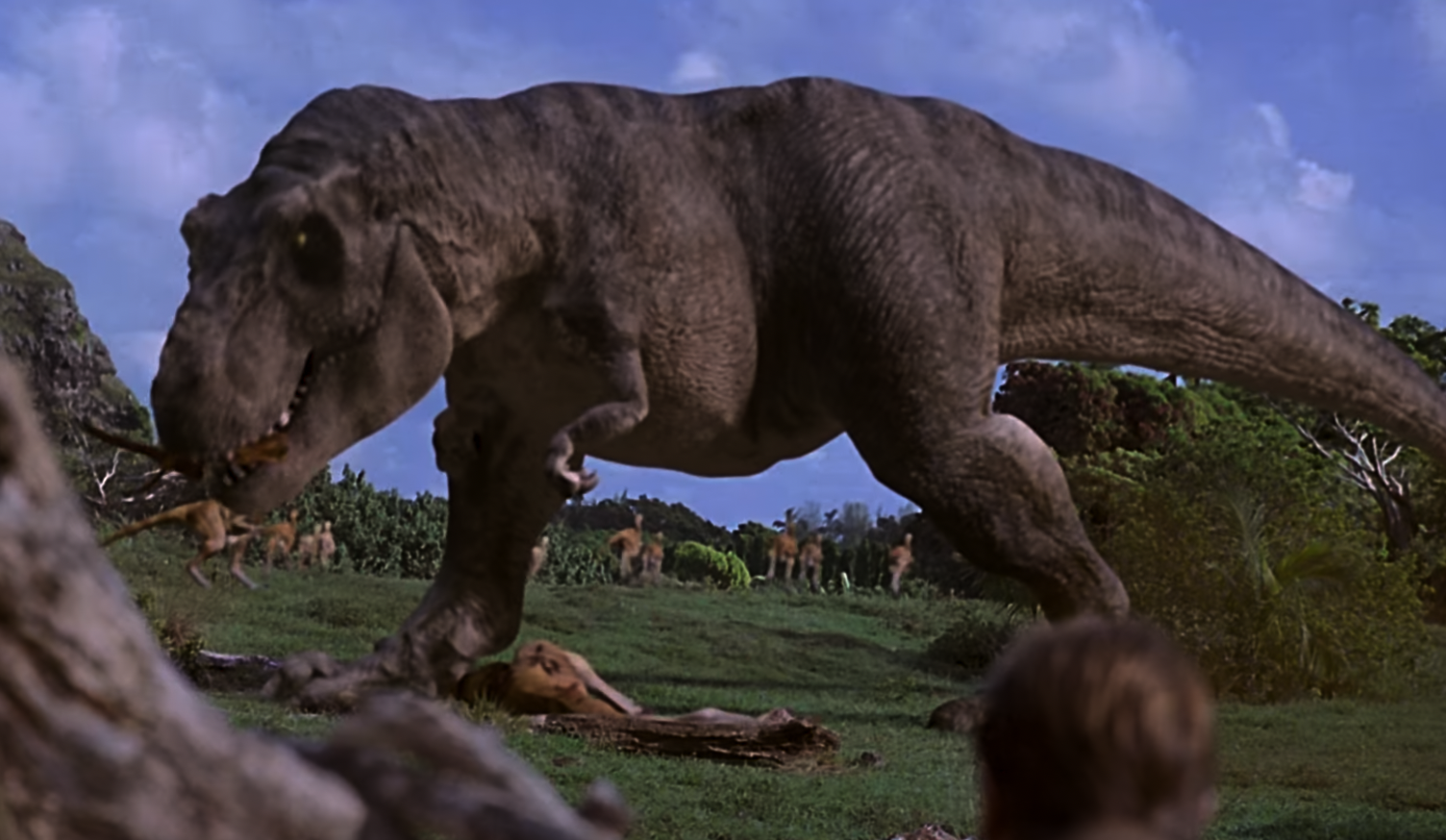
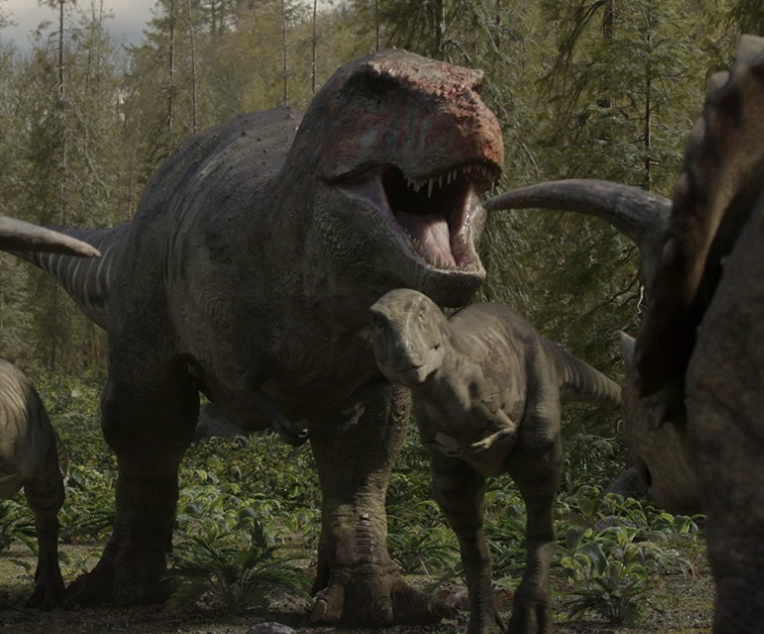
Watching these two clips makes the differences over 30 years even more clear. The contrast in texture, movement, and overall quality has gotten remarkably better since the days where CGI was still in its experimental stages. CGI was not truly integrated into movies until the early 70s. Jurassic Park was a trailblazer in CGI, and considering how early it was made, the computer-generated dinosaurs look pretty good. Jurassic Park utilized RenderMan technology, the same program that was adopted by Pixar and used to create Toy Story and Avatar. Since then, RenderMan has evolved with technology, maintaining its position as one of the most advanced rendering technologies by adopting features like raytracing, which could light animated scenes better than ever before by simulating the behavior of actual light.
Life on Our Planet works with a variety of technologies to create their hyper realistic, 3D animations. Their process is primarily done through Industrial Light and Magic, or ILM, a visual effects company founded by George Lucas in 1975 to create effects for the original Star Wars film. ILM utilizes the 3D modeling program, Autodesk Maya, and renders with RenderMan.
The process for creating these hyper-realistic, CGI creatures for Life on Our Planet is quite extensive. As is documented in behind-the-scenes content for the series, it begins with filming the scenery. Taking beautiful shots of nature is no longer enough. The film crew has to plan every detail of the final scene before they even start filming. Where will the animal stand? What path will it move in? Every twig and leaf in its path must be removed or otherwise accounted for in order to produce a believable animation
But animals don’t simply glide over the ground; they affect their environment. How can film-makers create the illusion that an animal is interacting with its environment without it even being there? In cases where the animal is making drastic, visual changes to the environment, like a dinosaur eating a branch off a tree, filmmakers will greenscreen (or more accurately, “bluescreen”) themselves into the scene, modifying the environment with a visible hand that will be edited out later. Smaller and less noticeable environmental interactions can be completely done in post-production, but before we can understand that, it’s important to know how the environment is rendered with this type of CGI.
In Life on Our Planet, the first step of post production takes place within the Layout Department, and it involves baking in images taken on site into a digital environment in which the animation will take place. With CGI this advanced, the entire environment must be rendered before a character can be placed in it. Simply editing an animation into raw footage would not be able to produce the environmental interactions that are needed to make a character truly seem part of a scene. The animal will need a physical terrain to move across. It will need to be placed behind objects in the foreground. The best method to achieving this is a complete environmental rendering, which, as can be seen in the docuseries, is completely indistinguishable from regular footage.
Once the digital environment is formed, animators can create believable environmental interactions. Slightly adjusting the terrain can give the appearance of a footprint. An animal can scratch a tree, turn up some foliage, or unearth dirt.
The process for creating CGI animations is complex, and it varies across studios, production companies, and type of work. Life on Our Planet provides us with a view into the potential of CGI so create true to life animations and visuals, and believable environmental interactions. By melding the real world with the computerized, this series has created some of the most realistic and beautiful animations we have seen yet. Considering the fact that CGI has only been meaningfully used in film for around 50 years, it is exciting to imagine the possibilities as technologies advance even further.
Works Cited
Life on Our Planet | Filming Dinosaurs in The Real World | Netflix. (2023, November 3). Www.youtube.com. https://www.youtube.com/watch?v=nKRP2Zc6udA
Nast, C. (2019, April 10). “Our Planet” filming locations: where was the Netflix series shot? CN Traveller. https://www.cntraveller.com/gallery/our-planet-filming-locations
Petychakis, M. (2020, June 29). How Technology Evolutions changed Animation. APILama. https://apilama.com/2020/06/29/how-technology-evolutions-changed-animation/
Schrodt, P. (2023, November 9). What Did Dinosaurs Really Look Like? “Life on Our Planet” Filmmakers Explain. Netflix Tudum. https://www.netflix.com/tudum/articles/life-on-our-planet-what-did-dinosaurs-look-like
Tyson, J. (2000, November 14). How Industrial Light and Magic Works. HowStuffWorks. https://entertainment.howstuffworks.com/perfect-storm.htm