Day: December 5, 2023

  • Scary or Social? The Secret Lives of Creepy Creatures

    If I asked you to think of some “scary” or “creepy” animals, what sorts of creatures would you think of? From tiny bats to massive sharks, there are plenty of animals considered by most people to be “creepy” or even somewhat monstrous. Why do we consider these particular creatures to be the scary ones, though? When we spot an animal with sharp teeth or an ominous color palette, it can sometimes be tempting to assume the worst; however, these creatures are often mischaracterized. Many of them are fascinating to study and express some complex social behaviors. While it would be incorrect to say that animals experience relationships or social lives in the same way we do, you might still find some ways to relate to these creepy creatures if you dare to look a little deeper. Let’s take a peek at a few of those animals and some behaviors of theirs that might make them a little less scary.

    Vampire bats might just be the most iconic animals associated with scary stories and Halloween- how could they not be with a name like “vampire bat” and a diet of blood? They’re not cruel creatures, though; in fact, vampire bats are known to form strong social bonds with one another and do “favors” for each other. Female vampire bats are known to share food with other females, including both non-relatives and family (Carter and Wilkinson). Humans often share out of companionship or politeness, but bats do so for a somewhat different reason. Most adaptations in organisms occur in order to increase the organism’s fitness, or likelihood of passing down their genetic code to the next generation. If a bat shares food with a family member, who likely shares much of its genetic code, that family member is more likely to survive and pass genetic material it shares with the initial bat onto offspring (Carter and Wilkinson). But, how does sharing food with other bats that may have very few genetic similarities to an initial bat increase fitness? According to a 2015 study, when a female shares food with another, the receiving bat will often share food with the initial food-donating bat in turn when it is in need (Carter and Wilkinson). In this way, vampire bats can increase the chance that they will survive through a shortage of food or other emergency to pass their genes onto their offspring.

    Bat social bonds also become stronger over time, much like our own. According to a 2020 study, when forming a new social bond with another bat, vampire bats will start by grooming the other bat. This is much less risky than sharing food since the bat loses far less resources from it. If the other bat returns the grooming, the two bats will begin to groom each other more frequently until eventually becoming sufficiently able to trust that the other will return favors. From this point, the bats will begin to share food with each other, sure enough that their sacrifice of resources will someday be returned in kind (Carter et al.). Vampire bat social bonds even extend to hunting. A 2021 study showed that vampire bats that spend a lot of time together in their roost will interact with each other more frequently than with other bats while they hunt and may even work together to find food (Ripperger and Carter).

    Sharks are widely feared and often depicted as monsters in pieces of popular media like Jaws and The Meg. While sharks are highly effective predators and occasionally attack humans, they’re not mindless monsters; in fact, many types of sharks are fairly social and can even learn from each other. According to National Aquarium museum exhibit curator Jay Bradley in a National Geographic article, whitetip reef sharks, like many other fish, don’t sleep the same way we do, instead resting while still awake (qtd. in Gibbens) in areas of water with a powerful current, which helps them to breathe, and with protection from their own predators (Gibbens). Additionally, according to Birch Aquarium spokesperson Caitlin Scully in the same article, while they don’t interact directly with or cooperate much with each other, these sharks do gather in large groups both to rest and hunt (qtd. in Gibbens). When they rest together, it often looks like they’re cuddling! Additionally, certain sharks are able to learn information and behaviors from each other, a phenomenon called social learning. A 2013 study tasked young lemon sharks with touching a target in order to obtain food. Sharks who had not yet performed the task were more capable of performing it successfully when they were allowed to watch experienced sharks touch the target and obtain food from it (Guttridge et al.). Although not all sharks are social creatures in the traditional sense, they’re certainly more social than their reputation as horrible and often solitary monsters would have you think.

    Ravens, crows, and other darker-colored members of the family Corvidae (corvids) are often considered omens of bad things to come in horror stories. In the biological community, however, corvids are considered to be some of the most intelligent members of the animal kingdom, and demonstrate some very intriguing social behaviors. According to a 2012, study, captive ravens can begin to form social connections with one another when they aren’t even a year old yet, with the strongest relationships and least fighting occurring between closely related ravens, or kin. Additionally, as young ravens grow older, they tend to take the side of family members in fights between other ravens rather than defaulting to the side of whichever raven started the fight like very young ravens and even some other social species like hyenas. The study also indicated that ravens may favor ravens that they have social bonds with, but are not biologically related to, in fights, but this was not completely confirmed (Loretto et al.). Ravens also sometimes make up with other ravens whom they are close to after fighting with them and are less likely to fight again after reconciling. This is likely because ravens gain many benefits from social relationships with each other, many of which are similar to what vampire bats get out of their relationships (being groomed, sharing food, and even additional fitness in the case of direct relatives). Reconciling with friends they have fought with ensures that neither raven loses those valuable benefits over a simple fight (Fraser and Bugnyar). Finally, ravens can learn certain behaviors by watching other ravens perform them, a phenomenon called social learning. Ravens are particularly good at social learning, however, when they watch their siblings perform a task (Schwab et al.). These “omens of death” don’t just have deep social lives- they’re no bird-brains, either!

    So, what did you think? Does knowing that vampire bats share with each other, that sharks “cuddle” with each other, and that ravens can “forgive” each other after a conflict make them all a bit less scary and a lot more fascinating? There’s often a lot more to animals than what meets the eye, or what popular culture likes to portray them as. Don’t get me wrong- I love a good shark horror movie- but the true secret lives of our world’s “creepiest” creatures can be just as interesting.

    Works Cited

    Carter, Gerald G., et al. “Development of New Food-Sharing Relationships in Vampire Bats.” Current Biology, vol. 30, no. 7, Apr. 2020, pp. 1275-1279.e3. DOI.org (Crossref), https://doi.org/10.1016/j.cub.2020.01.055.

    Carter, Gerald G., and Gerald S. Wilkinson. “Social Benefits of Non-Kin Food Sharing by Female Vampire Bats.” Proceedings of the Royal Society B: Biological Sciences, vol. 282, no. 1819, Nov. 2015, p. 20152524. DOI.org (Crossref), https://doi.org/10.1098/rspb.2015.2524.

    Fraser, Orlaith N., and Thomas Bugnyar. “Ravens Reconcile after Aggressive Conflicts with Valuable Partners.” PLOS ONE, vol. 6, no. 3, Mar. 2011, p. e18118. PLoS Journals, https://doi.org/10.1371/journal.pone.0018118.

    Gibbens, Sarah. “Video Shows How Sharks ‘Sleep’ in Large Groups.” National Geographic, National Geographic Partners, LLC, Aug. 2017, https://www.nationalgeographic.com/animals/article/whitetip-reef-sharks-sleeping-mexico-video-spd?rnd=1697795254296&loggedin=true. Accessed 5 April 2023.

    Guttridge, Tristan L., et al. “Social Learning in Juvenile Lemon Sharks, Negaprion Brevirostris.” Animal Cognition, vol. 16, no. 1, Jan. 2013, pp. 55–64. Springer Link, https://doi.org/10.1007/s10071-012-0550-6.

    Loretto, Matthias-Claudio, et al. “Ontogeny of Social Relations and Coalition Formation in Common Ravens (Corvus Corax).” International Journal of Comparative Psychology, vol. 25, no. 3, 2012. DOI.org (Crossref), https://doi.org/10.46867/IJCP.2012.25.03.05.

    Ripperger, Simon P., and Gerald G. Carter. “Social Foraging in Vampire Bats Is Predicted by Long-Term Cooperative Relationships.” PLOS Biology, vol. 19, no. 9, Sept. 2021, p. e3001366. PLoS Journals, https://doi.org/10.1371/journal.pbio.3001366.

    Schwab, Christine, et al. “Enhanced Social Learning between Siblings in Common Ravens, Corvus Corax.” Animal Behaviour, vol. 75, no. 2, Feb. 2008, pp. 501–08. ScienceDirect, https://doi.org/10.1016/j.anbehav.2007.06.006.
  • A Future of Painless Tattoos

    A Future of Painless Tattoos

    Introduction: A Breakthrough in Tattooing

    In a groundbreaking scientific advancement, researchers at the Georgia Tech have introduced painless and bloodless tattoos using microneedle patch technology. This innovative approach aims to make medical tattoos more accessible and create new possibilities for cosmetic tattoos, all while eliminating the pain associated with traditional tattooing methods.

    Microneedle Technology (Prausnitz et al., 2023)

    Microneedle Patch Tattoos

    Traditional tattoos involve large needles and painful, time-consuming processes. The Georgia Tech team has redefined tattooing with microneedles smaller than a grain of sand, made of tattoo ink encased in a dissolvable matrix. These microneedles are designed to efficiently deposit ink in the skin, eliminating the need for repeated punctures and offering a painless tattooing experience.

    Tattooing Technique

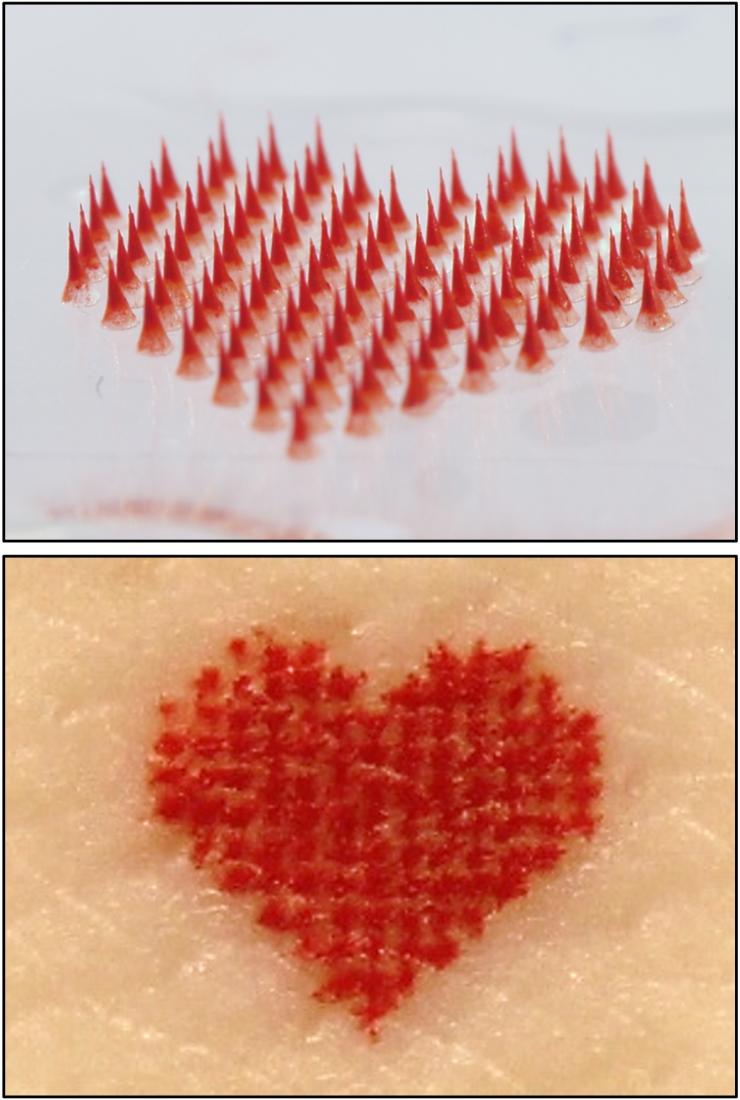
    Microneedle patch tattoos employ a unique technique, imprinting designs using microneedles arranged in specific patterns. Acting like pixels, each microneedle contributes to creating intricate tattoo images. The process involves applying a patch containing tattoo ink-filled microneedles to the skin for a few minutes, after which the microneedles dissolve, leaving the ink embedded in the skin without bleeding.

    From Medicine to Cosmetics

    Medical Tattoos

    Microneedle patch tattoos have diverse applications in the medical field, from covering scars and guiding radiation treatments to serving as medical alerts for conditions like diabetes and epilepsy. The technology not only improves accessibility to medical tattoos but also offers a potential avenue for physiological monitoring and encoding complex health information.

    Pain-Free Aesthetics

    The painless nature of microneedle patch tattoos opens new doors for cosmetic applications. Beyond medical use, these tattoos can be self-administered for cosmetic purposes, providing an easy and painless alternative to traditional tattooing. The technology even includes privacy features, such as tattoos visible only under ultraviolet light, enhancing personal choices.

    A Painless Tattoo Revolution

    Long-lasting and Permanent

    Research indicates that microneedle patch tattoos can last for at least a year, offering a permanent option for those seeking aesthetic tattoos without the associated risks. The technology provides a canvas for creativity while minimizing infection risks and discomfort.

    Encoded Information and Animal Identification

    Microneedle patch tattoos aren’t limited to humans; they can be used to encode information in the skin of animals, offering a painless and discreet alternative to traditional identification methods. This development has implications for sterilization status indications in pets and could revolutionize how we care for our animal companions.

    Conclusion

    The science behind microneedle patch tattoos represents a fusion of technology and creativity, offering painless and accessible alternatives for medical and cosmetic purposes. While respecting the artistry of traditional tattoos, this scientific innovation opens new opportunities for patients, pets, and individuals seeking a pain-free tattooing experience.

    References

    Georgia Institute of Technology. (2022, September 14). Researchers develop painless tattoos that can be self-administered. ScienceDaily. https://www.sciencedaily.com/releases/2022/09/220914141006.htm

    Li, S., Kim, Y., Lee, J. W., & Prausnitz, M. R. (2022). Microneedle Patch tattoos. iScience, 25(10), 105014. https://doi.org/10.1016/j.isci.2022.105014

  • AI’s Attempt at New Yorker Cartoons

    AI’s Attempt at New Yorker Cartoons

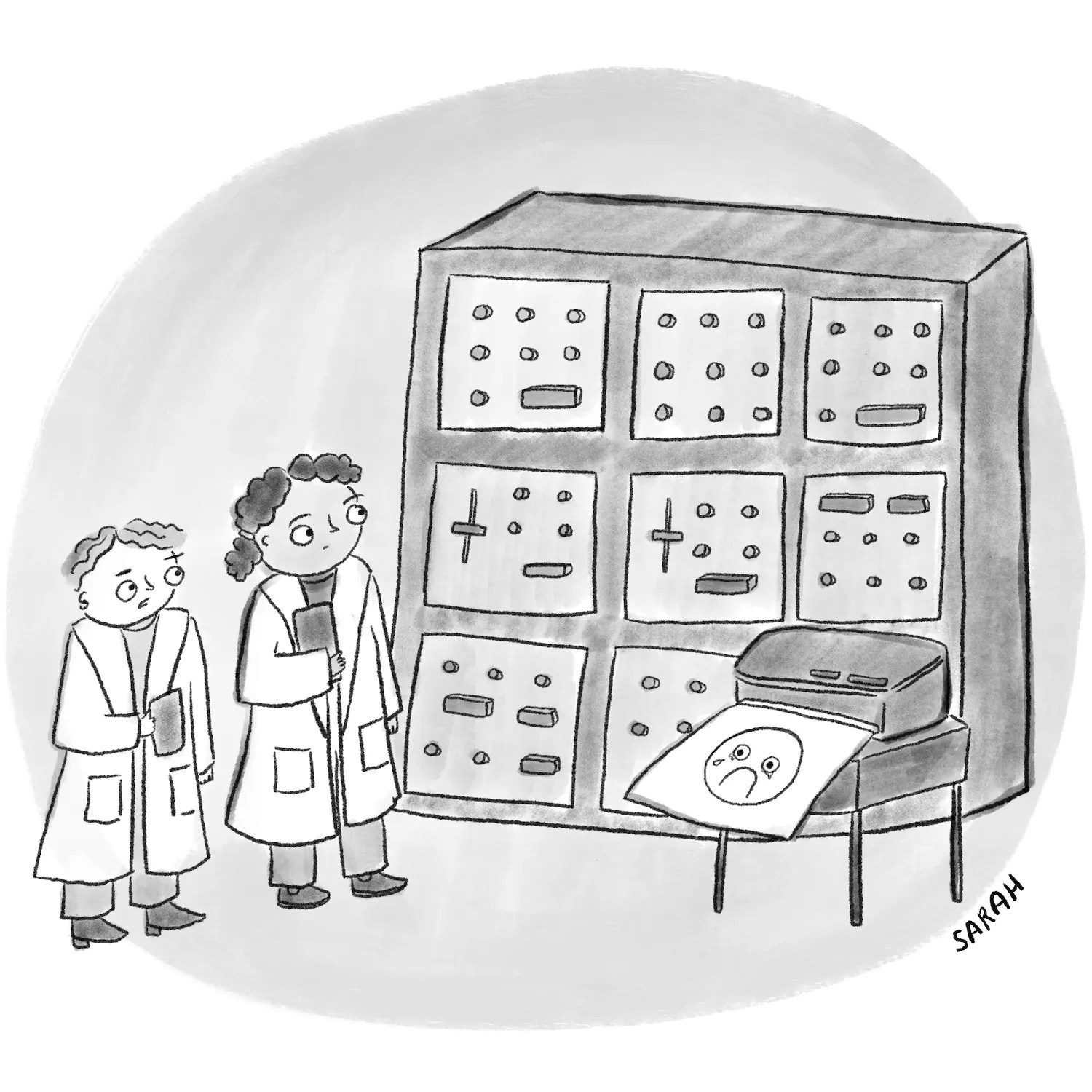
    Artificial Intelligence (AI) has made remarkable strides in generating jokes, but the burning question remains: Can AI truly comprehend humor? In this exploration, we delve into the scientific challenges posed to AI models through tasks derived from the New Yorker Cartoon Caption Contest, aiming to uncover the depth of AI’s understanding of humor.

    The Experiment: Testing AI’s Wit

    Task 1: Matching Jokes to Cartoons

    The first challenge involved matching jokes to cartoons, a task requiring a grasp of the intricate relationships between visual elements and textual humor. The study included both multimodal models, which directly analyzed cartoon images, and language-only models, which relied on descriptions of visual scenes to simulate human-level visual understanding.

    Task 2: Identifying Winning Captions

    The second task tasked AI models and human participants with identifying winning captions from a pool of entries. Humans consistently outperformed AI across these tasks.

    Task 3: Explaining the Humor

    The pinnacle of the experiment was explaining why a winning caption was funny. Here, they explored the depth of understanding required to decipher the often indirect and playful allusions to human experience and culture present in New Yorker cartoons.

    Results: AI’s Struggle with the Punchline

    Findings revealed that both multimodal and language-only models struggled across all three tasks. Even the best multimodal models lagged 30 accuracy points behind human performance in matching jokes to cartoons. Moreover, when provided with ground-truth visual scene descriptors, human-authored explanations consistently outshone the best machine-authored ones, showcasing the existing gap in humor comprehension.

    Implications and Future Possibilities: The Role of AI in Humor Creation

    While machines may not fully “understand” humor, they display impressive capabilities. The question of true understanding remains debatable, but AI’s proficiency in these tasks is undeniable. The study opens doors to the potential use of AI as a collaborative tool for humorists, offering a fresh perspective on ideation and creativity in the realm of humor.

    References

    Cornell University. (2023, July 31). That’s funny — but AI models don’t get the joke. ScienceDaily. https://www.sciencedaily.com/releases/2023/07/230731122233.htm

    Hessel, J., Marasovic, A., Hwang, J. D., Lee, L., Da, J., Zellers, R., Mankoff, R., & Choi, Y. (2023). Do androids laugh at Electric Sheep? humor “understanding” benchmarks from the New Yorker Caption Contest. Proceedings of the 61st Annual Meeting of the Association for Computational Linguistics (Volume 1: Long Papers). https://doi.org/10.18653/v1/2023.acl-long.41

  • The Mechanics of Oreo Twisting

    The Mechanics of Oreo Twisting

    Oreo cookies, beloved for their delicious combination of creamy filling and wafer layers, have become the subject of a scientific study exploring the mechanical mysteries behind their unique properties. Researchers at MIT have delved into the science of Oreo cookies, investigating the distribution of their creamy center, the torque required to twist them open, and the fascinating behavior of the cream under stress.

    Torque Measurements and Cream Texture

    The researchers measured the torque needed to twist open an Oreo, revealing similarities to turning a doorknob and only a fraction of the force required to open a bottle cap. The cream’s failure stress, the force per area needed to deform it, was found to be twice that of cream cheese and peanut butter, resembling the stress magnitude of mozzarella cheese. The cream’s texture was classified as “mushy.” Adding milk into the equation revealed another layer of scientific wonder. Dunking Oreos in milk resulted in a decline in the elastic modulus of the wafer due to swelling. 

    Cream Distribution Mystery

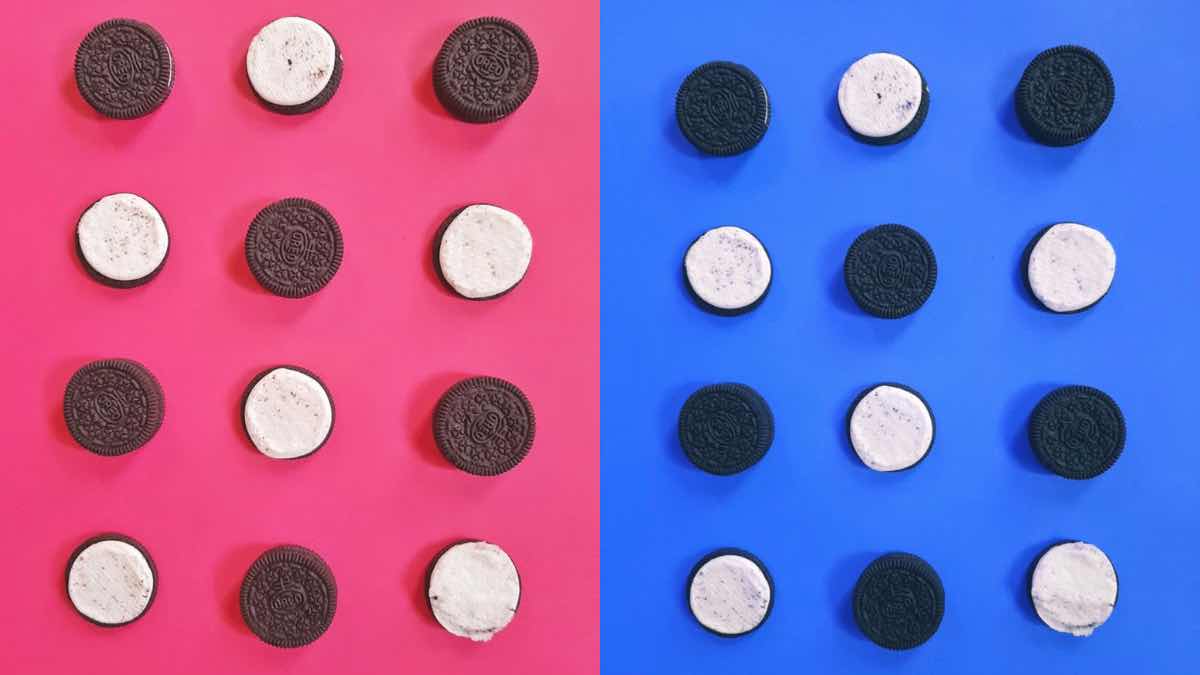
    Despite variations in filling levels and flavors, the study found that the cream tends to separate onto one wafer rather than evenly between both. The researchers mapped this distribution and observed a tendency for the cream to stick to the inward-facing wafer, suggesting a post-manufacturing environmental effect.

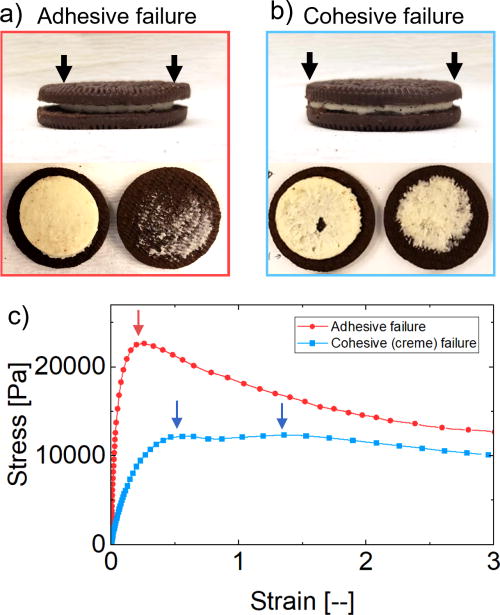
    FIG. 7. (a) While most creme layers failed adhesively in boxes of new cookies, (b) cookies exposed to adverse conditions may cause creme to spread from its initial manufactured state, and then cohesive failure was typical for most cookies in the box. These visual signs of changing creme fill levels (indicated by the black arrows in (a) and (b) are typical but not deterministic predictors of failure mode. (c) Failure tests also distinguished between cases in the computed stress–strain curves resulting from the measured torque as a function of imposed rotation angle. There was a single peak stress for adhesive failure, which occurs as a single delamination step, and two or more maxima in stress for cohesively failing creme layers due to the more complex dynamics of cohesive failure propagation along nonplanar surfaces. Cohesive failure was also typically observed to result in a higher failure strain and lower failure stress, as shown here.

    Manufacturing Process Influence

    Videos of the manufacturing process revealed that a slight time delay in placing the cream between wafers may contribute to better adhesion to the first wafer, influencing the subsequent distribution during twisting.

    FIG. 1. (a) What happens when you twist an Oreo? (b) Eventually it splits into two parts, exposing the creme. (c) and (d) We observed that in a typical failure profile for Oreos from newly opened boxes, the creme most often tends to remain on one side, “wafer 1,” with a consistent orientation per box. In this case, wafer 1 faces to the left side of the upright box for a standard size package of regular Oreos. The creme occasionally splits between sides, often due to defects or small fractures in one or both wafers. (e) This is consistent for cookies with different creme levels, with a strong bias toward wafers facing one side of the box rather than the other, facing left for regular, right for double, and up for mega (where rows are oriented vertically rather than horizontally) in standard size packages.

    The Oreometer

    To make the study accessible and interactive, the researchers even designed a 3D-printable device called the “Oreometer,” allowing precise control over the twisting force applied to an Oreo. This device can be used for tabletop experiments and provides an opportunity for hands-on exploration of Oreo mechanics.

    A 3D printed Oreometer is used to perturb cookies with scientific precision by applying a known and controlled torque. (a) In this device, (1) the cookie is mounted first into one half and then (2) the second half of the rubber band-powered clamps, which are then (3) placed into the vertical assembly mount. (4) “Penny castles” are mounted on the wings, and coins are successively loaded to one side to apply controlled torque until (5) the creme yields. (b) Results replicate values measured by the laboratory rheometer. (c) Photographs demonstrate the same tool, also including the rubber bands in two different arrangements designed to apply different levels of gripping strength in the clamps.

    Confectionary Insights

    The study not only provides a scientific investigation into the mechanics of Oreos but also opens possibilities for further exploration into the design of food materials. The researchers suggest that adding texture to Oreo wafers might enhance cream adhesion, leading to a more even split when twisted open.

    In conclusion, Oreos offer more than just a delightful treat—they serve as a fascinating canvas for exploring the intricate science behind food materials and rheology.

    References

    Massachusetts Institute of Technology. (2022, April 19). Engineers introduce the Oreometer. ScienceDaily. https://www.sciencedaily.com/releases/2022/04/220419124037.htm

    Owens, C. E., Fan, M. R., Hart, A. J., & McKinley, G. H. (2022). On Oreology, the fracture and flow of “milk’s favorite Cookie®.” Physics of Fluids, 34(4). https://doi.org/10.1063/5.0085362

  • Human Brain Regions Tierlist (NOT CLICKBAIT)

    Human Brain Regions Tierlist (NOT CLICKBAIT)

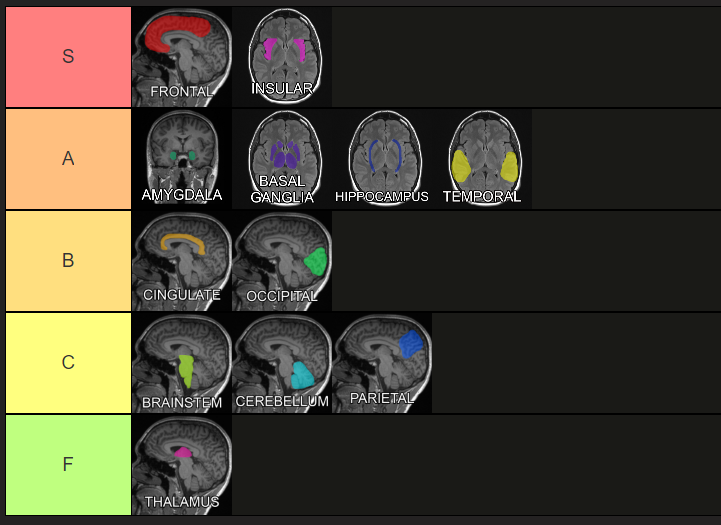
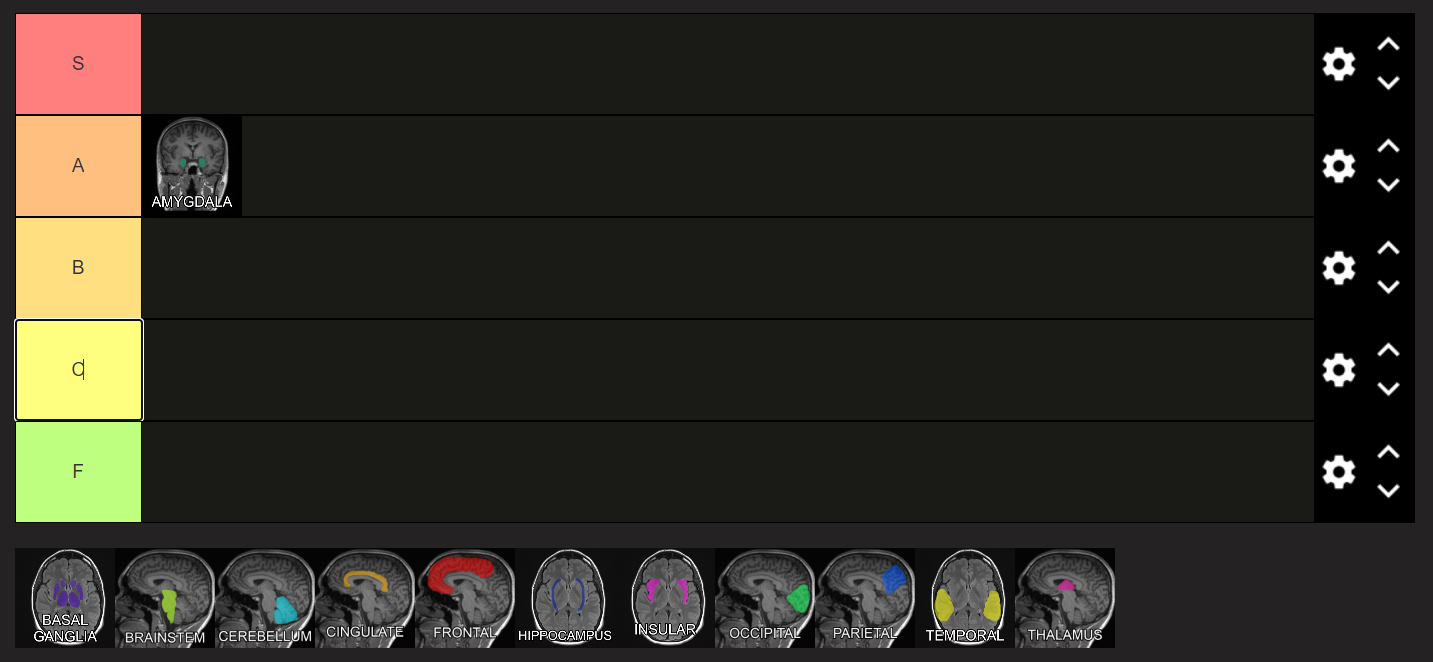
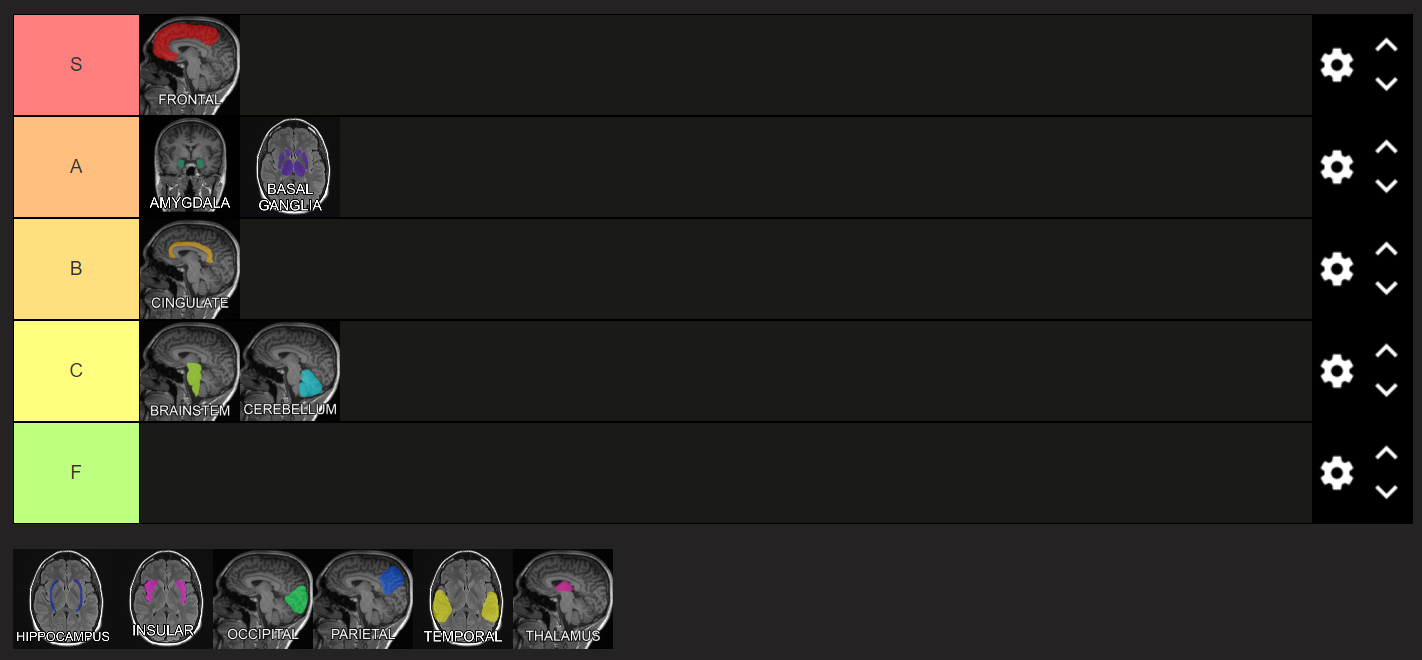
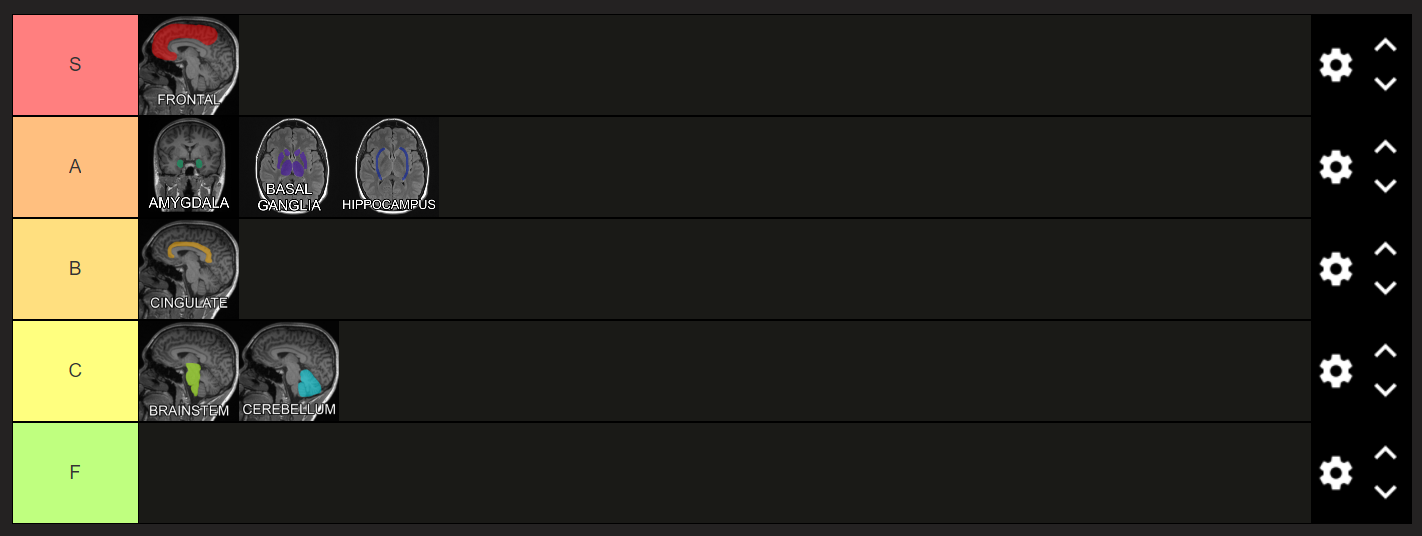
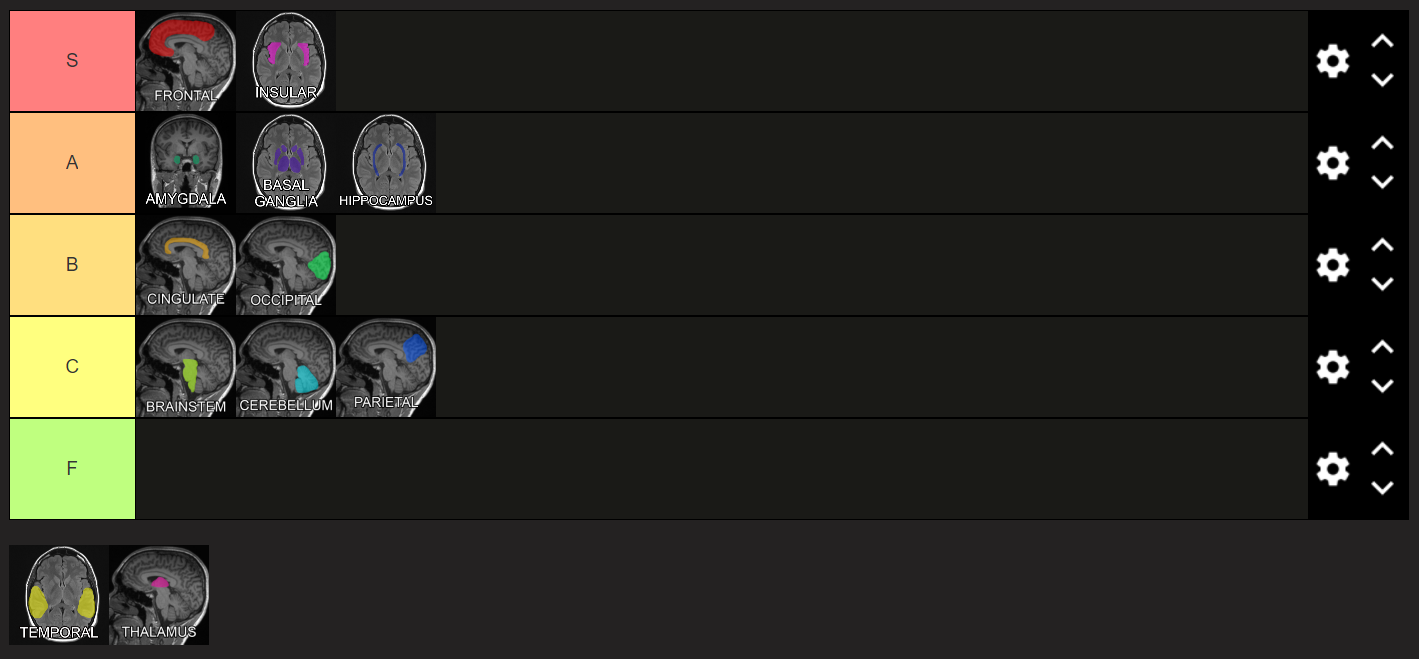
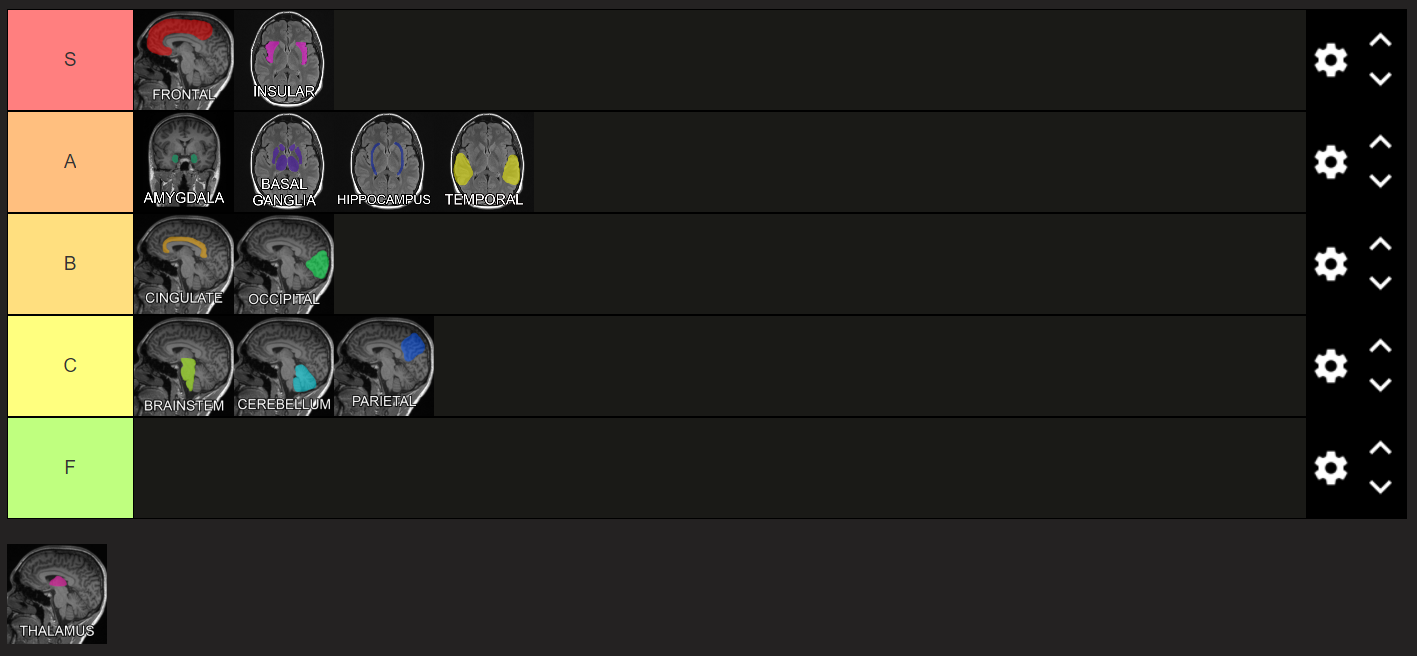
    Okay, guys. It’s the end of the semester and my brain is kind of fried. That being said, it would be fun and informational to rank the human brain regions. I used Tiermaker, and this is how I define the different categories. Feel free to make a tierlist yourself before you read the rest of the article to see how our rankings match up.

    S tier: coolest brain regions. iconic amazing perfect

    A tier: pretty interesting but just missing that star quality, y’know?

    B tier: it’s fine. a little boring maybe

    C tier: boooooooring

    F tier: I have personal beef against this mound of fatty squishy brain tissue

    Let’s go!

    Amygdala

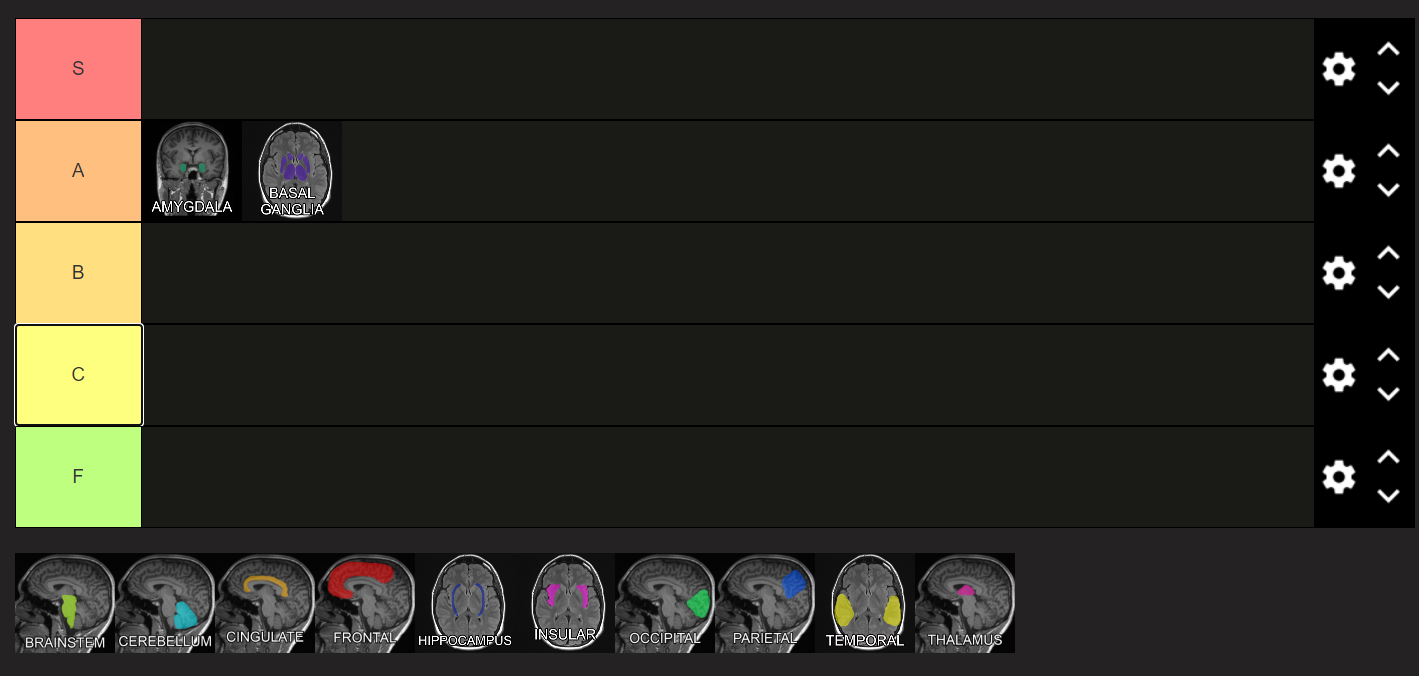
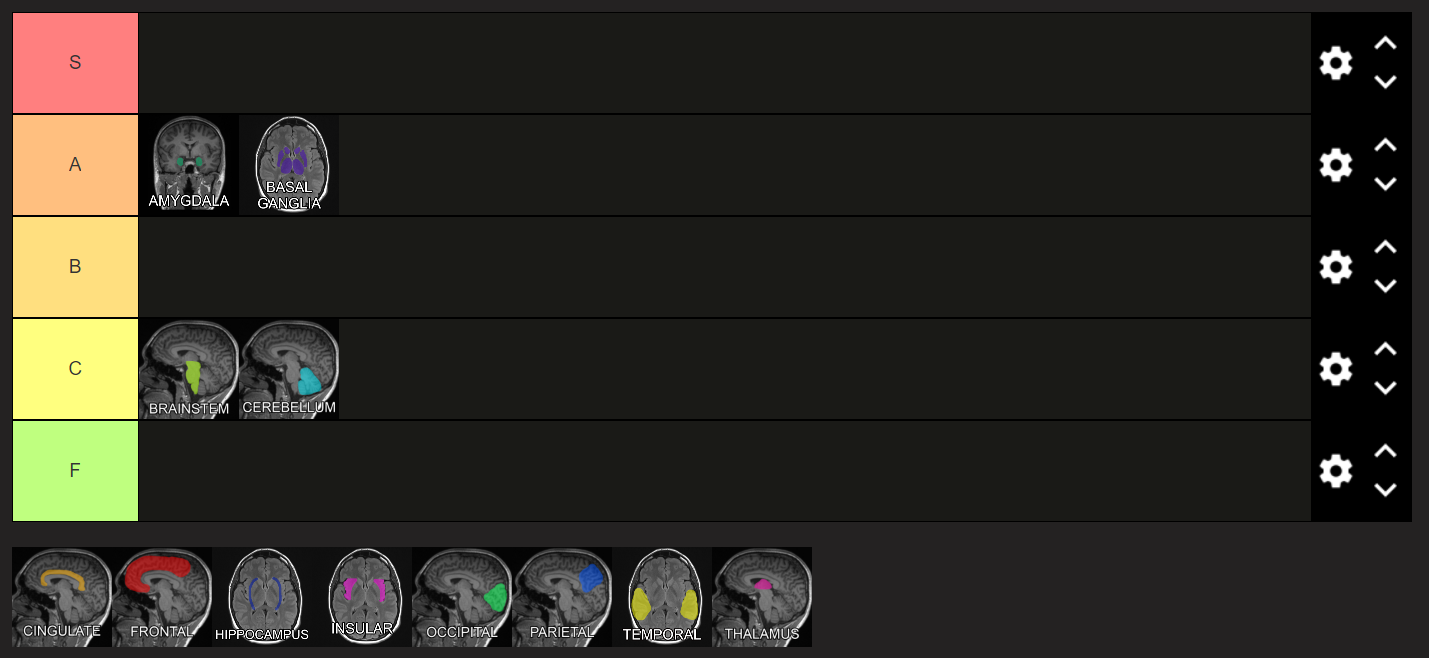
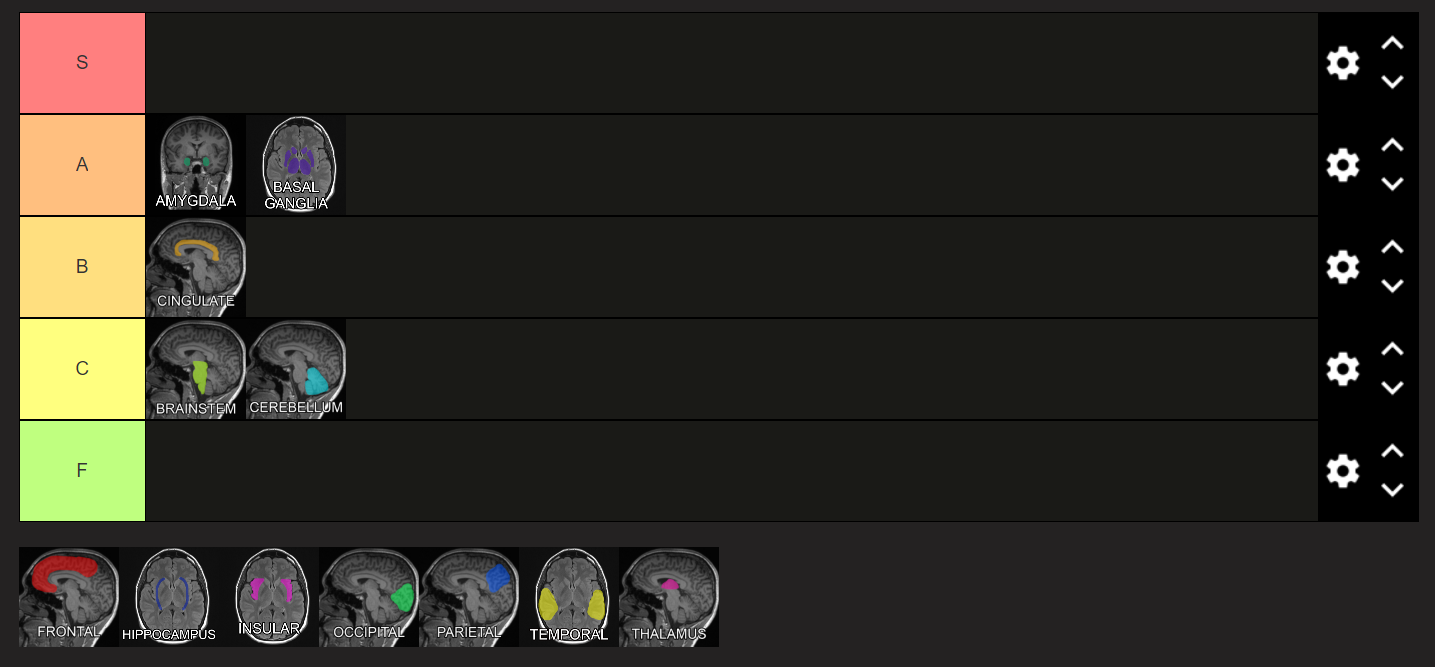
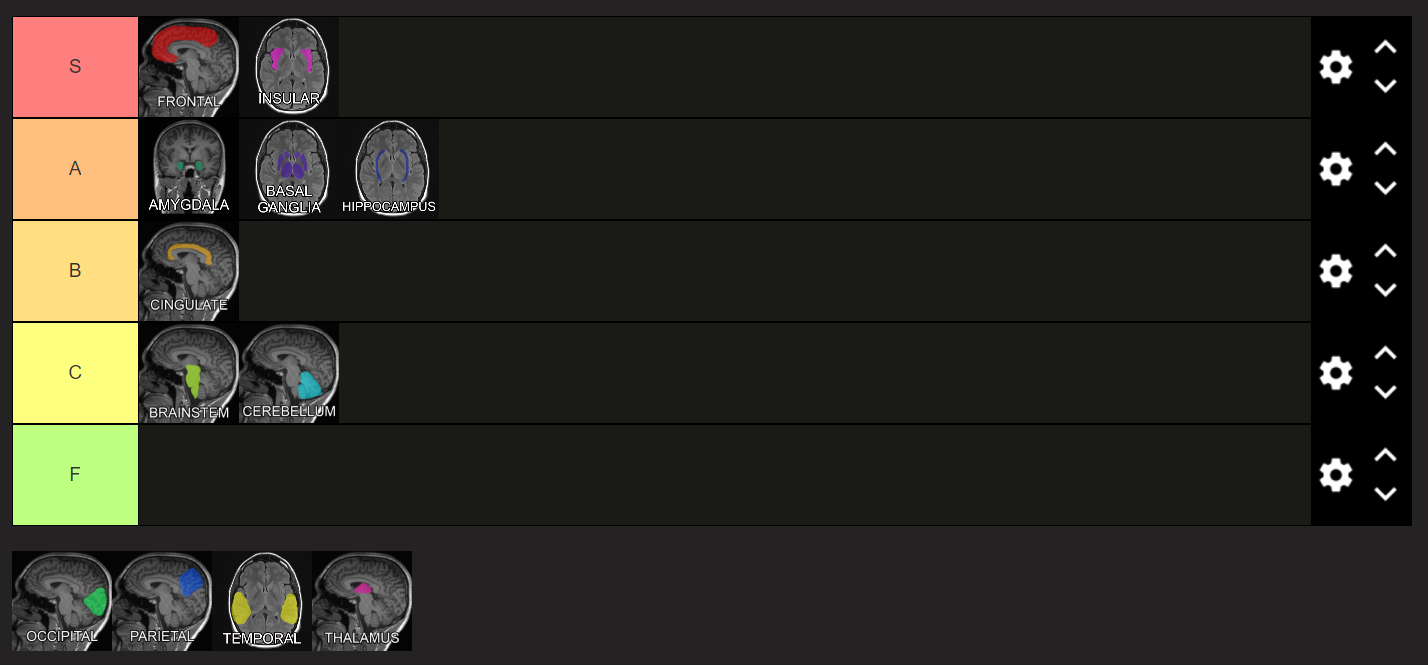
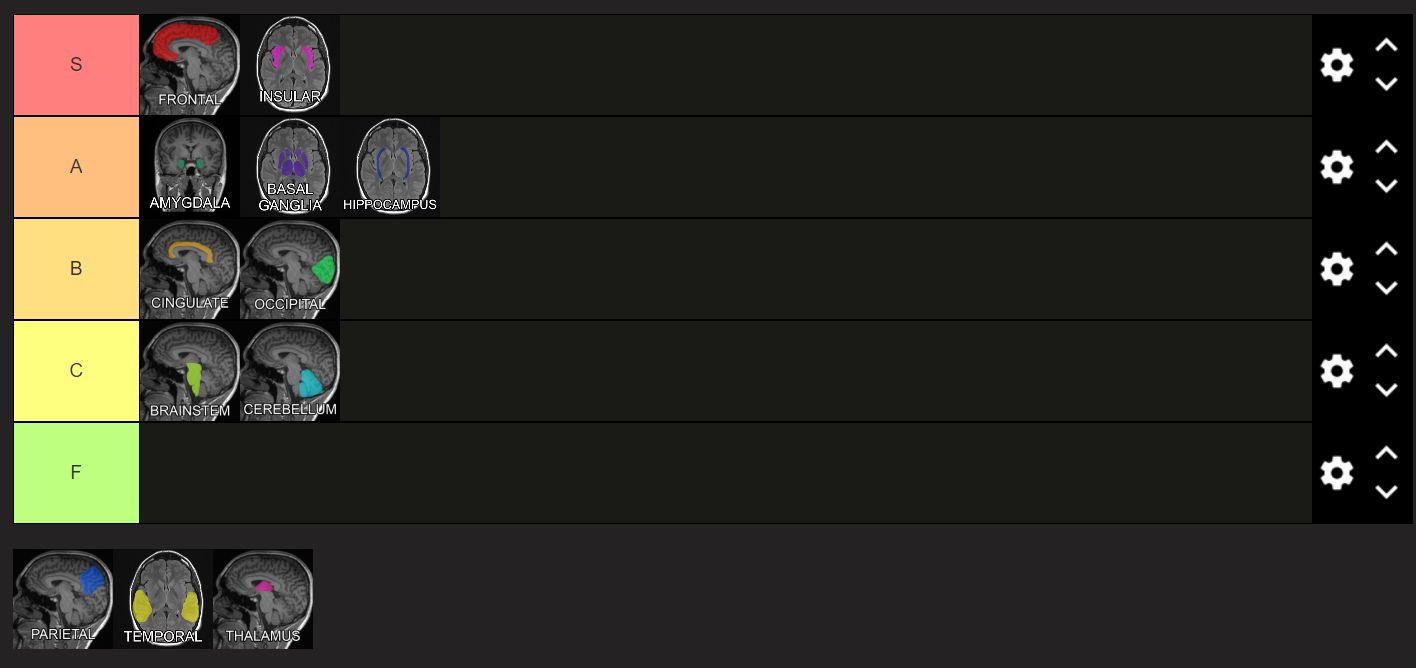
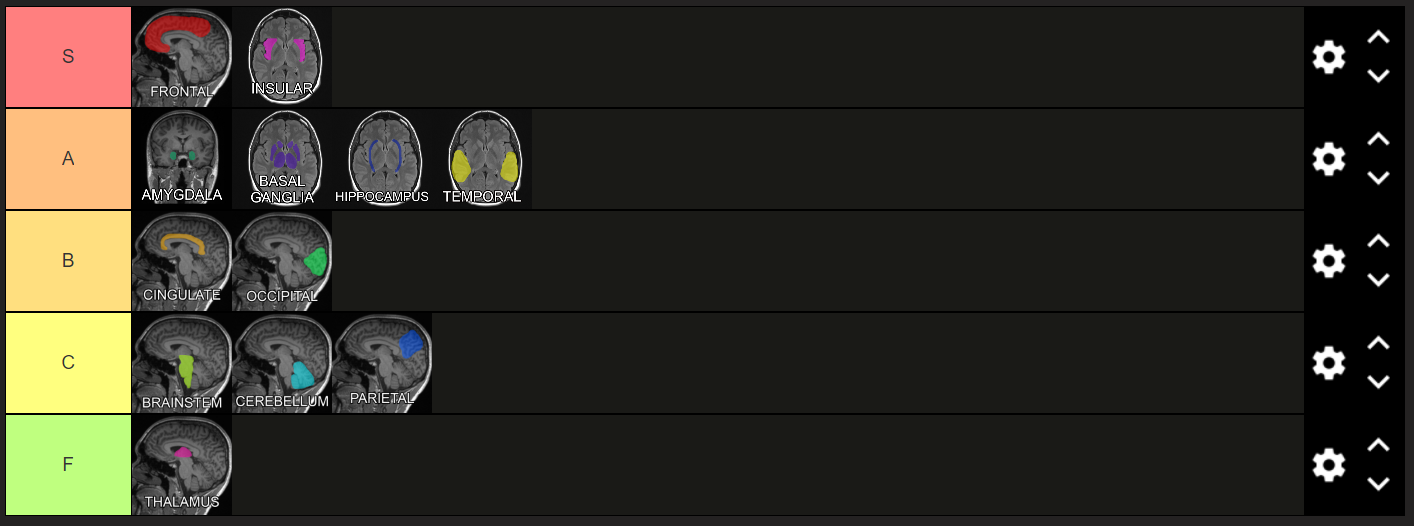
    A tier. Really interesting in that it’s involved in so many circuits (fear, memory, even smell!). If you didn’t have it, you wouldn’t be able to avoid harmful situations–famous patient S.M. had her amygdalae removed and she wasn’t able to get scared at movies or notice when people were robbing her! She’s kinda been pop cultured to death, though…everyone kinda already knows her deal. She needs to bring something new to the table.

    Basal Ganglia

    A tier! Okay, I’m gonna say it, I’m biased! This is the area of the brain I research in lab. The basal ganglia isn’t well known outside of neuro circles, but ganglia just means a collection of nodes. This little string of pearls is near the center of our brain and controls voluntary movements while stopping unwanted movements. When things go awry, you can get tics, difficulty moving, or tremors. Think Parkinson’s disease or Huntington’s disease. The basal ganglia is a beautifully complex brain region, but she’s a little hard for beginners to understand. God knows I’ve had many headaches trying to wrap my head around what goes on in here.

    Brainstem and Cerebellum

    Grouping these 2 together in C tier feels right. Sure, these two play crucial roles doing (brainstem) and coordinating (cerebellum) movements, but these are pretty basic hardware found in pretty much any animal with a centralized brain. These were the first brain areas of the brain to evolve, after all, and they’re the first parts of the brain to form in a human embryo. I’m just saying that you praise basketball players for dunking, not for knowing how to dribble. Too simple.

    Cingulate (cortex)

    B tier because while I’m really intrigued by it, I always forget all the bajillion things it’s involved in. This gyrus stretches from where the frontal cortex is to the somatosensory cortex (senses), motor cortex (movements), and corpus callosum (connects the two halves of your rain). So, it’s involved in a ton of circuits relating to the way you behave and feel. It’s a part of this cool club called the limbic system, which makes you feel emotions and effects your motivation, learning, and memory. This system also includes the amygdala and its origins are also pretty far up the evolutionary tree, so it’s got retro vibes. Groovy.

    Frontal Lobe S tier! What is there to say about the frontal lobe? She’s pretty much the it girl in pop psychology at the moment, and it’s hard not to see why. Young Gen Z on the internet love to use the fact that their frontal lobes aren’t mature yet as an excuse for everything–and can you blame them? This area of your brain controls decision-making, goal-setting, and is also involved in self awareness, cognition, and memory too. She can do it all! Your frontal lobe helps determine your personality and controls pretty much any voluntary movements you do (that’s pretty much everything that isn’t hearts beating or intestines squelching). And she is definitely not making me rank her at the top. Absolutely not. I have control. But if my sense of self is determined by my frontal lobe then can I truly be separ–

    Hippocampus

    A classic girlie! One of the first to be really understood, so an A tier feels right. Don’t underestimate the svelte size of this structure in this picture–this area may have been named after the Greek word for “seahorse”, but he has a mighty function. Our memories are formed in the hippocampus, which also acts as a hub for us to remember stuff later. He specialized in one thing, and he does it well! Would be S tier, but I seem to misplace mine around finals.

    Insula

    This one’s an underrated classic! The insula is a region inside the brain under the cortices that’s involved in smell and taste. It is also the area of our brain that helps us feel our organs and know what’s going on under our skin, a “sixth sense” called interoception. This area is still poorly understood, which means it has an air of mystery about it. But what we do know is really cool and spooky. S-tier.

    Occipital Lobe

    B tier. Not much to say about this one. It helps you see!

    Parietal Lobe

    Out of the “big four” lobes of the brain (frontal, occipital, temporal being the others), the parietal lobe is the most forgotten one. Every time I think of what it does, I think sensory, maybe? And that is what the parietal lobe does. A lot of sensory information is processed here–in particular, touch, temperature, and pain. All three together are called somatosensation. But honestly, “processing” sensory information is not the most interesting to me. C tier.

    Temporal Lobe

    This lobe is best known for housing the language centers of the brain (Broca’s area and Wernicke’s area), but it’s involved in so much more! The amygdala and hippocampus are inside this lobe, so fittingly, this one also goes into A tier. This lobe is not just language, but also memory, social functions, emotions, and even some vision! This is because this lobe is just so large and connects with so many regions. The back end of the temporal lobe is right next to the occipital! If you’ve ever heard of synesthesia, people who have it often have more connections between their temporal and occipital lobes. Accordingly, the most common subtype of synesthesia, where sounds are associated with colors, is colored hearing. This lobe is just really cool–and as much as we know about it, we’re still finding new things out all the time!

    Thalamus

    F-tier. F-tier! Look–I love the brain. That’s why I decided to spend 4 years studying it. That’s why I want to research it when I graduate. But this tiny tiny area is the whole reason I wanted to add an F tier. This area of the brain is like a relay hub where pretty much every area of the brain connects to. That sounds great, until you realize there are hundreds of nuclei (neuron groups) that scientists have identified that do all sorts of different things with about six or seven different separate pathways. There are so many that we’ve had to group them into the anterior nuclear group, the medial nuclear group, midline nuclear group, intralaminar nuclear group, the lateral nuclear group (not to be confused with the ventral lateral group), and so on. Confused yet? This is the most annoying thing about neuroscience to me, and the thing that I feel like puts people off studying the subject. Because who wants to memorize all that? Anyway, if you disagree, you drill all that into your brain for a Neuroanatomy class and get back to me. Take it up with my 97 card “Thalamic Nuclei Groups” Anki set.

    Well, here’s my final ranking! How did it match up to yours? Did you learn something new? At least, I hope it made you think of the jelly stuff in your skull a little differently.

  • Secrets of Animal Immortality

    Secrets of Animal Immortality


    Senescence and Telomeres

    Biological aging, scientifically known as senescence, involves changes in an organism’s biology after maturity. Telomeres, repetitive DNA sequences at chromosome ends, play a crucial role in preventing DNA damage during cell division (Urdaneta, 2023). Imagine them as protective caps at the end of our chromosomes.


    Our cells start with a healthy supply of telomeres, but each year we lose around 31 of them due to cell duplications. This loss limits the number of times cells can divide, impacting tissue repair and contributing to the aging process. Interestingly, animals with longer telomeres tend to enjoy longer lifespans (Urdaneta, 2023).


    Lobsters

    Lobsters, those crustacean wonders of the ocean, possess a remarkable ability to regenerate even in their old age. Lobsters owe their longevity to the presence of telomerase enzymes scattered throughout their organs. Telomerase helps maintain the conditions of youthful cells for an extended period, showcasing nature’s ingenuity in the battle against aging (Joseph, 2013).

    Hydras

    Enter the hydra, a mesmerizing eukaryotic organism that breaks all the rules of biological aging. Hydras continually divide on a cellular level, effectively “editing” flaws in their DNA during the replication process. What sets them apart is their ability to produce and maintain telomeres, rendering them biologically immortal. The hydra challenges our understanding of senescence, offering insights into potential pathways for extending lifespan (Joseph, 2013).

    Hydra (genus) - Wikipedia

    Jellyfish

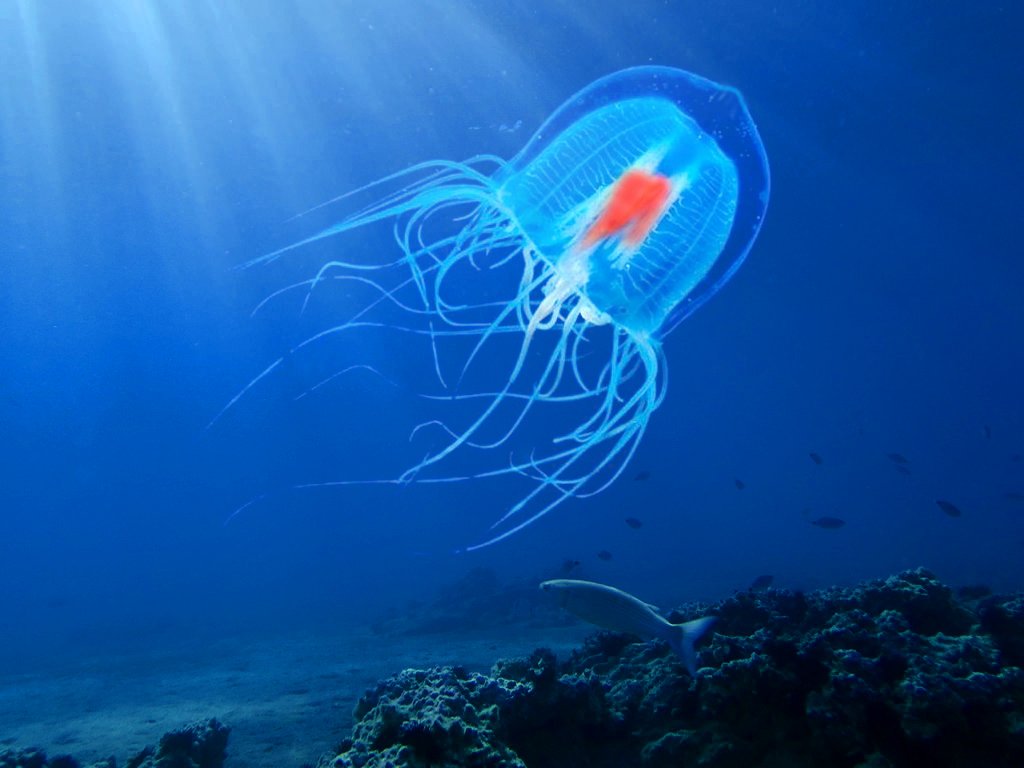
    The immortal jellyfish, scientifically known as Turritopsis dohrnii, dances through the ocean with a unique strategy for perpetual life. When faced with threats, disease, or aging, this petite creature undergoes transdifferentiation. It transforms into an earlier life stage, the polyp stage, essentially hitting the reset button on its life cycle. This process not only rejuvenates the jellyfish but also allows it to clone itself, perpetuating its genetic code in an awe-inspiring display of biological immortality (Joseph, 2013).

    Telomeres: A Summary

    In the intricate dance of life, telomeres emerge as central players, orchestrating the rhythm of aging and regeneration. From lobsters’ telomerase-powered longevity to hydras’ defiance of senescence and jellyfish’s transdifferentiation ballet, animals present a captivating narrative in the exploration of cellular immortality. These creatures beckon scientists to unravel the mysteries of telomeres, hinting at potential breakthroughs in understanding and potentially manipulating the aging process.


    References

    Joseph, A. (2013). Senescence, cancer, and immortality. Young Scientists Journal, 6(13), 9. https://doi.org/10.4103/0974-6102.107611

    Urdaneta, I. (2023, July 28). The “biological immortality” in certain animal species. Resonance Science Foundation – Explore the Connected Universe. https://www.resonancescience.org/blog/the-biological-immortality-in-certain-species

  • Autonomous Vehicles: The Road Ahead

    Autonomous Vehicles: The Road Ahead

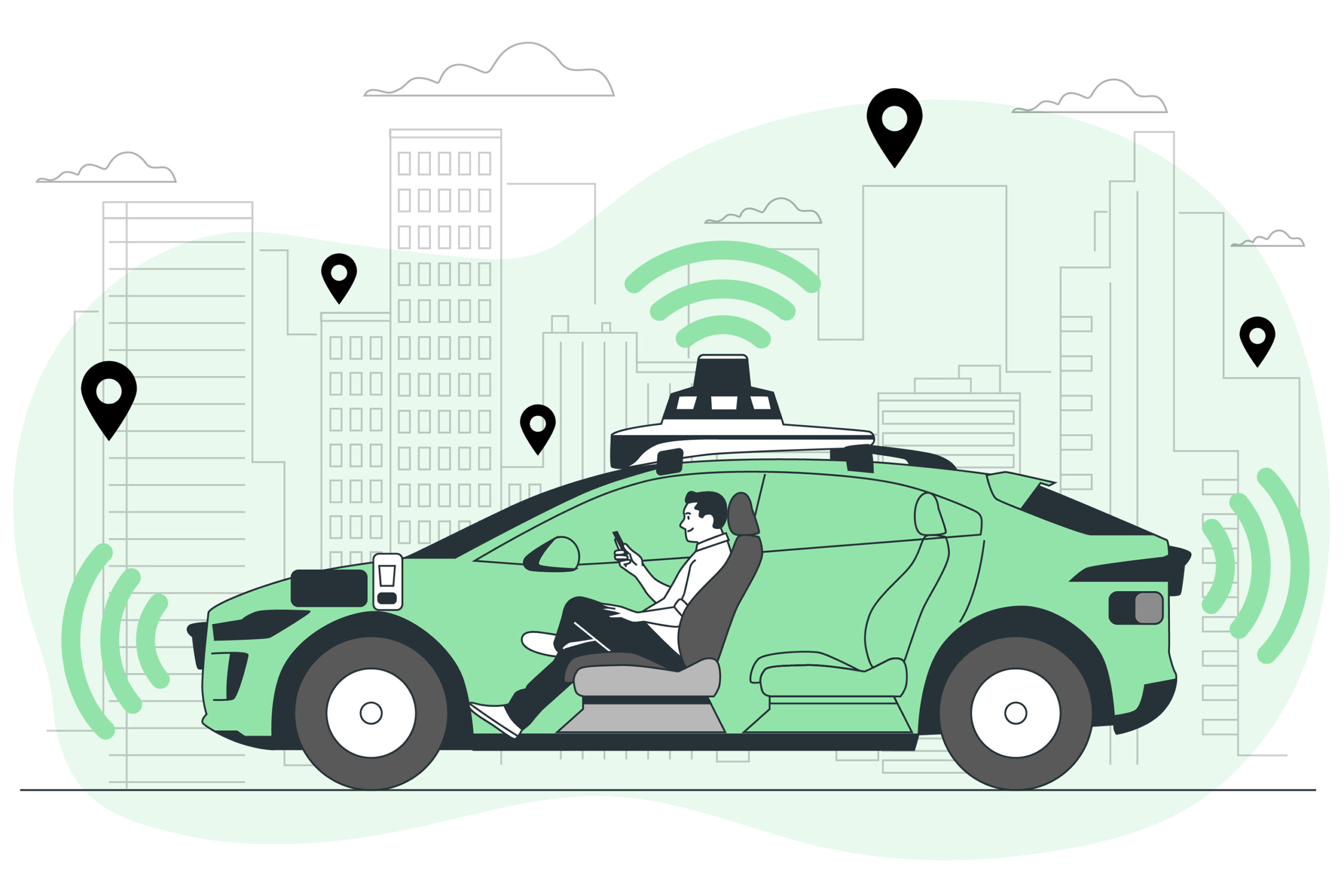
    Autonomous vehicles (or “self-driving cars”) was once a fantasy only seen in sci-fi shows and little kid’s drawings; but today, they are rapidly becoming a reality. There have been major advancements in technology over the last 20 years and the way we think about transportation is about to be revolutionized.

    [1]

    But how do self-driving cars drive themselves?

    Well, self-driving cars utilize a massive amount of sensors, cameras, radar, and artificial intelligence to get a map of the world around them, navigate it, and drive without human intervention. Companies like Waymo, General Motors, and – most famously – Tesla are at the forefront of this technology. They’ve all invested heavily in research and development; in fact, according to a report by McKinsey & Company, self-driving vehicles could, by 2030, account for up to 15% of auto sales worldwide [2].

    Many people – young and old – see the potential benefits of AVs. The most short-term impact is an increase in the safety of driving. The National Highway Traffic Safety Administration’s research found that human error is a factor in 94% of serious crashes [3]. Due to the fact AVs operate without distractions, impairments, or human error, they could drastically reduce accidents, saving lives and improving health outcomes. Moreover, as AVs could communicate with each other, they could significantly improve traffic efficiency by reducing congestion and optimizing driving patterns.

    There’s also, of course, the ecological angle. Self-driving cars are often electronic, presenting an opportunity for substantial reductions in emissions. A study by the International Transport Forum (ITF) at the OECD suggests that if managed properly, AVs could reduce energy consumption in urban transport by up to 50% [4].

    However, the road to widespread adoption of autonomous vehicles is fraught with challenges. A significant hurdle is legislative and regulatory. Governments around the world are grappling with how to regulate this emerging technology. Establishing universal standards for safety and performance, adapting infrastructure, and updating road laws to accommodate Self-driving cars are complex tasks that require coordinated effort and time.

    There’s also the concern about the economic impact, particularly job displacement in driving-related professions. 3.6 million Americans are truck drivers [5] and 5.6 million are Uber or Taxi drivers [6]; that’s 8.9 million workers, or 2.5% of the workforce that would become unemployed. While new jobs will be created in tech and maintenance, these will require a high level of education, proficiency in English, and other barriers that driving does not have. This will lead to a significant shift in the employment landscape that will hurt the most marginalized.

    So while autonomous vehicles have the potential to revolutionize transportation, offering numerous benefits in terms of safety, efficiency, and environmental impact, the path forward requires navigating technical, regulatory, ethical, and societal challenges. We have to steer this innovation towards a future where roads are safer, commutes are smoother, and the environmental footprint of transportation is minimized.

    Sources:

    1. “The Future of Self Driving Cars: Top Companies and Challenges.” TechAhead, 6 Nov. 2023, www.techaheadcorp.com/blog/future-of-self-driving-cars.

    2. Deichmann, Johannes, et al. “Autonomous Driving’s Future: Convenient and Connected.” McKinsey & Company, McKinsey & Company, 6 Jan. 2023, www.mckinsey.com/industries/automotive-and-assembly/our-insights/autonomous-drivings-future-convenient-and-connected.

    3. “NHTSA Estimates Traffic Fatalities Continued to Decline in the First Half of 2023.” NHTSA, 28 Sept. 2023, www.nhtsa.gov/press-releases/2023-Q2-traffic-fatality-estimates#:~:text=An%20estimated%2019%2C515%20people%20died,and%20second%20quarters%20of%202023.

    4. Cazzola, Pierpaolo, and Philippe Crist. “Assessing the Environmental Performance of New Mobility.” Itf Oecd.org, 2020, www.itf-oecd.org/sites/default/files/docs/environmental-performance-new-mobility.pdf.

    5. “Number of Truckers at All-Time High.” Census.gov, 27 July 2022, www.census.gov/library/stories/2019/06/america-keeps-on-trucking.html.

    6. Campbell, Harry. “How Many Uber Drivers Are There?” The Rideshare Guy, 17 Mar. 2023, therideshareguy.com/how-many-uber-drivers-are-there.