
Day: December 1, 2023

  • The science and history of the PB&J sandwich

    The science and history of the PB&J sandwich

    The PB&J sandwich is a humble combination of sweet, salty, and creamy. Where exactly did this classic sandwich originate, and what are the details behind its nutritional value?

    Before the invention of the PB&J, its three essential ingredients had to be born, beginning with the peanut butter. In 1895, Dr. John Harvey Kellogg patented a process for creating peanut butter, and marketed it as a protein-rich source for patients who couldn’t chew solid food very well. In 1903, Dr. Ambrose Straub patented a peanut-butter-making machine. Peanut butter made its debut at the 1904 St. Louis World Fair, where its popularity skyrocketed [1, 2]. 

    Peanut butter was considered a delicacy during this time, and the first PB&J sandwich recipe was published by Julia Davis Chandler in the Boston Cooking School Magazine of Culinary Science and Domestic Economics. However, this recipe was intended to be served as delicate finger sandwiches at parties and in tea rooms [2, 3].

    Next comes the jelly. Marmalade and jam had been around for a long time, but the familiar purple jelly component of the PB&J was created when Paul Welch patented a method for pureeing grapes into jelly in 1917, naming it Grapelade [2].

    The final piece of the puzzle: sliced bread. The bread slicer was invented in 1928 by Otto Frederick Rohwedder. The availability of pre-sliced bread and the commercialization of the peanut butter industry increased the accessibility of the PB&J ingredients and popularized the sandwich across the nation [2, 3].

    Now that we know its origin story, let’s move on to the science of the PB&J. The nutritional breakdown: a typical PB&J has 15 grams of protein, 13 grams of fat, and 12.5 grams of sugar [4]. While a lot of sugar is never a good idea, for an active individual it can provide a needed burst of energy, and the combination with protein and fat ensures one feels full and satisfied. 

    According to a 2021 study from the University of Michigan School of Public Health, eating a PB&J can add up to 33 minutes to your life span [5]. This study assigned a health nutritional index that measured the health effects from the consumption of over 5,800 different foods, quantifying the results in minutes of healthy life gained or lost. The authors mention that this apparent health benefit of the PB&J is driven by the nut content of the sandwich, which is the source of the protein and fat. Therefore, while the PB&J is not a superfood, it is a much better option than some other processed foods, like hot dogs, which scored notoriously low during the study.

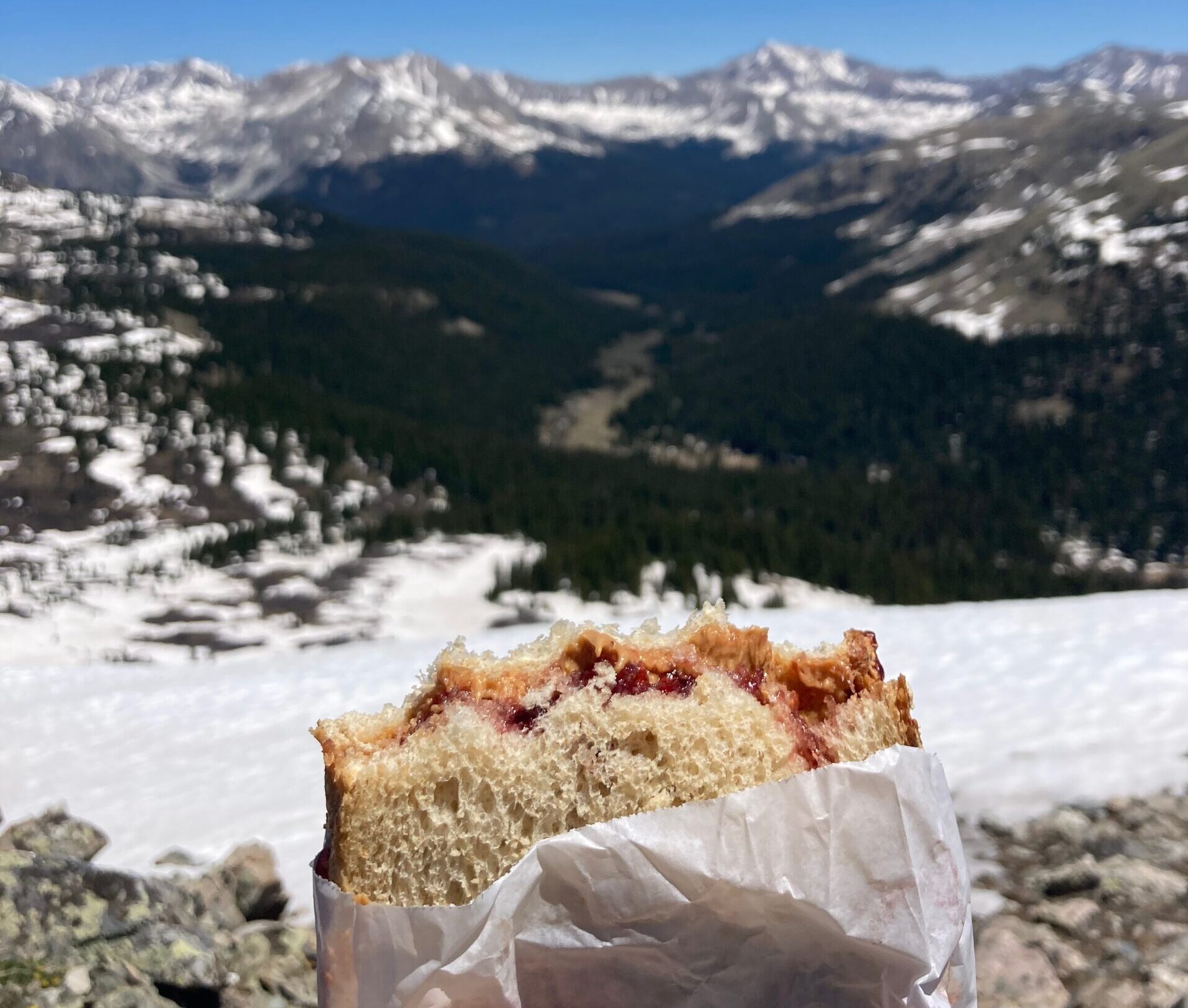
    I can personally attest to the PB&J’s standing as great adventure fuel (all of the photos in this article are from the variety of lunchtime views I’ve shared with a PB&J). It is my go-to for hiking and backpacking trips for a number of reasons: it’s affordable, portable, and customizable. Purchasing the ingredients won’t break the bank, and it doesn’t need to be refrigerated (honestly, I think PB&Js taste even better when they’re a little bit squished…). Additionally, PB&J customization is endless. I personally like to toast the bread or add a layer of plain potato chips to up the crunch factor, but one can also make changes to boost health benefits. Using whole-grain bread, swapping jelly for real fruit slices (banana is particularly delicious), or using natural nut butter are all ways to make the PB&J a little bit healthier.
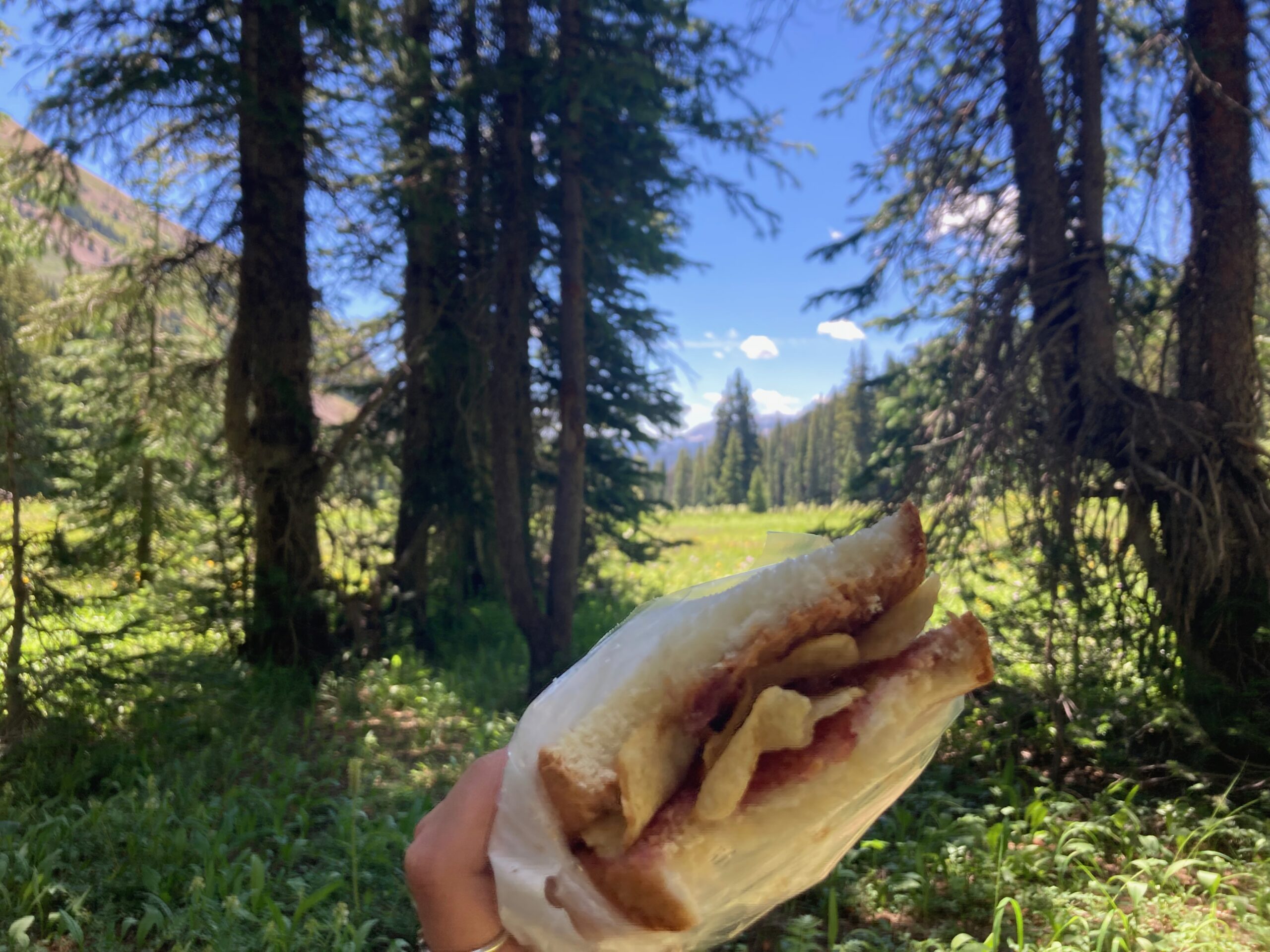
    Now you know a little bit about the history and science behind a PB&J sandwich, as well as ways to customize it to make it healthier or even more delicious. 


    References

    [1] National Peanut Board. (2023). Who invented peanut butter? Retrieved from https://nationalpeanutboard.org/news/who-invented-peanut-butter/

    [2] National Peanut Board. (2023). Who invented the peanut butter and jelly sandwich? Retrieved from https://nationalpeanutboard.org/news/who-invented-the-peanut-butter-and-jelly-sandwich/

    [3] Dean, S. (2013). History of the PB&J, from spa food to school lunch. Retrieved from https://www.bonappetit.com/entertaining-style/trends-news/article/history-of-the-pbj

    [4] National Peanut Board. (2023). 5 reasons PB&J is the best sandwich ever. Retrieved from https://nationalpeanutboard.org/news/5-reasons-pbj-is-best-sandwich-ever/#:~:text=A%20PB%26J%20has%2015%20grams,of%20energy%20that%20athletes%20need.

    [5] Stylianou, K. S., V. L. Fulgoni III, and O. Jolliet. (2021). Small targeted dietary changes can yield substantial gains for human health and the environment. Nature Food, 2, 616-627.

  • Matcha Magic

    Matcha Magic

    What is matcha? 

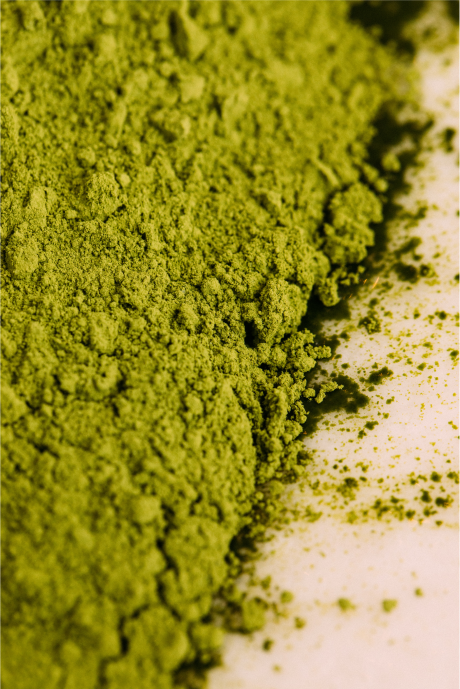
    Matcha is high-grade green tea grounded into powdered form. It comes from the leaves of the Camellia sinensis plant.

    Compared to other teas, matcha is a little quirky, due to the fact that it is shade grown, then steamed or stone ground.

    Shade grown means that it is made from shade-grown tea leaves where tea bushes are proteced from sun and light is filtered in a controlled manor. Shading boosts chlorophyll production, which gives the leaves a richer green color. The lack of sun reduces the plant’s photosynthesis of the leaves, which alters the naturally occurring levels of caffeine, flavanols, sugars, antioxidants, and theanine.

    The leaves are then treated with steam heat within to halt the oxidation process and bring out the color even more. Doing this creates a unique flavor profile of sweet and vegetal.

    Matcha can also be stone ground; this is when the leaves are laid flat to dry and become tencha (leaves from which matcha is made). The tencha leaves are stripped of their stems and venins with the remaining ground in slow-turning mills to yield a smooth green tea powder.

    How do you make matcha?

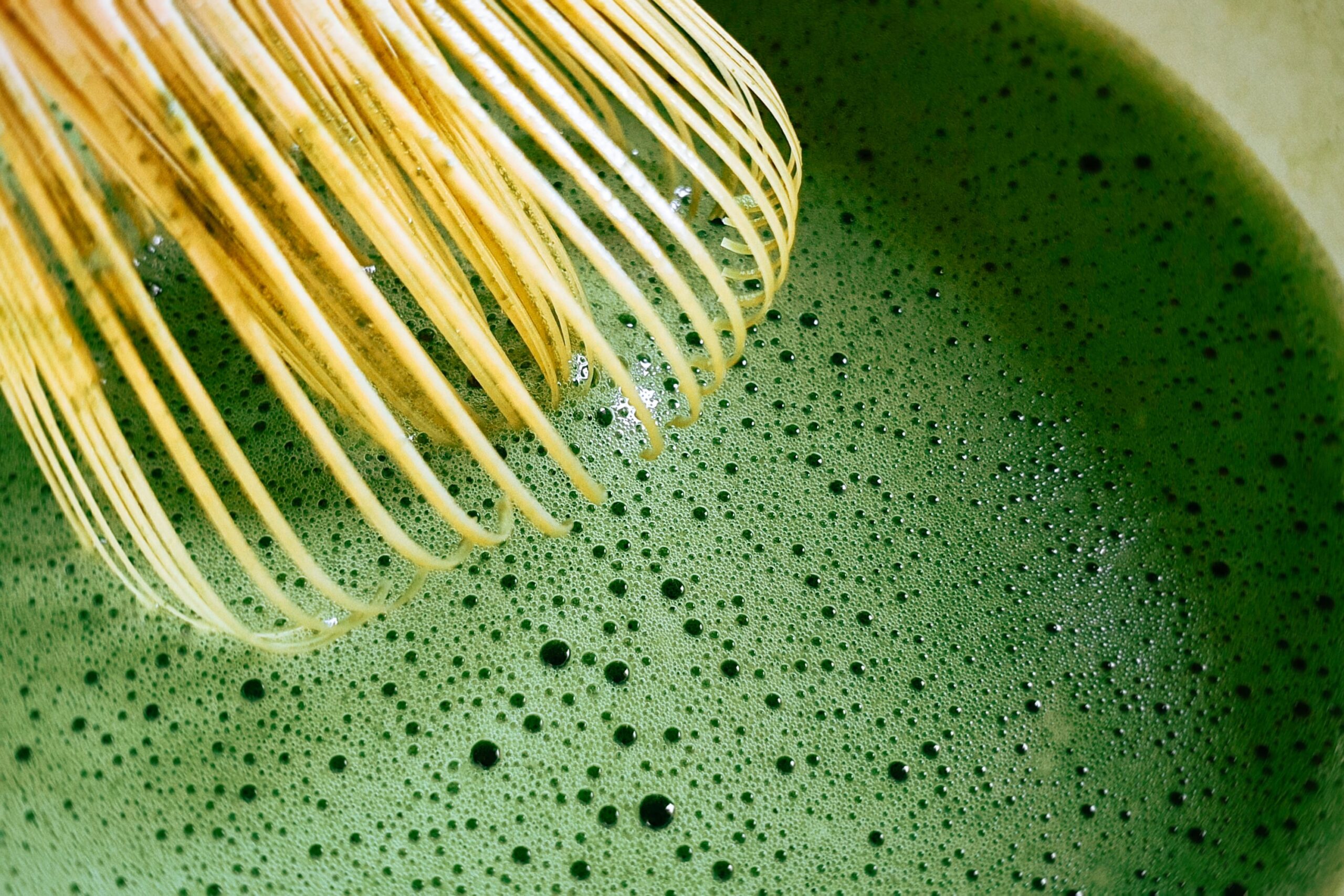
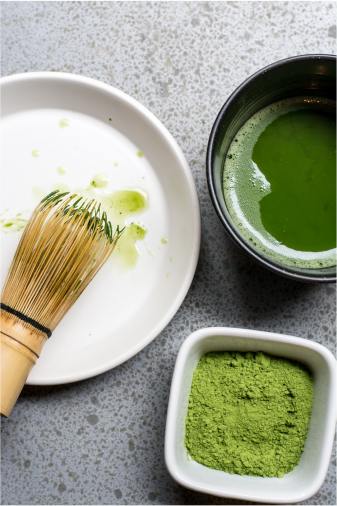
    To make a delicious matcha drink, whisk the powder into hot water to form a frothy drink. Whisking promotes aeration, allowing the matcha powder and water to mix with air to give it a thick head of foam on top. The matcha can be a tea, latte, or even a smoothie!

    Does matcha have caffeine?

    Yes, matcha does have cafeeine! It has less caffeine than brewed coffee, but more than green tea. The tea leaves retain more of their caffeine content. Consuming matcha means you’re consuming the ground tea leaf, which means you’re ingesting more caffeine content than youw ould from the extraction of tea leaves.

    What’s the difference between Green Tea and Matcha?

    Green tea uses brewed tea leaves with a light, grassy flavor. Matcha, on the other hand, is the pulverized version of green tea leaves. It has a stronger concentration of some key nutrients and antioxidants.

    References

    • https://www.teatulia.com/tea-varieties-101/what-is-matcha.html 
    • https://www.medicalnewstoday.com/articles/matcha-vs-green-tea#summary
    • https://www.sugimotousa.com/blog/how-to-whisk-matcha#:~:text=to%20Enjoy%20Matcha-,Why%20Whisk%20Matcha%3F,head%20of%20foam%20on%20top.


  • Stem-Tober 2023 | Cereal or a Rock?

    Stem-Tober 2023 | Cereal or a Rock?

    StemComm’s Fall 2023 event was Stem-tober Block Party! We invited everyone to join us for a fun evening with science-based activities, prizes, and more! We had our event near where the physics students have their annual pumpkin drop. 

    Ideation & Brainstorming: 

    In the ideation process, we split into groups to come up with some ideas for what we wanted our fall event to be. We came up with over 10 ideas. To narrow them, I made a google form that had everyone rank their top 3 choices. After looking at the results, we decided on these activities:

    Group 1: Liquid Nitrogen Ice Cream and dragons Breath Candy

    Group 2: Gene-Tic-Tax

    Group 3: Dragon’s Beard Candy

    Preparation:

    I was part of Group 1, so we got together and discussed what some of the materials were required. We originally wanted to do ice cream, so we made this list:

    • Materials Needed for Ice Cream
      • Liquid Nitrogen from Chem Department
      • Gloves
      • Ice Cream Base
        • Milk (4 cups)
          • Oat milk
        • Sugar (1 cup)
        • Vanilla extract (1 teaspoon)
        • Corn Starch (3 tablespoons plus 2 teaspoons)
      • Metal Bowl (large)
      • Hand mixer

    We quickly decided not to do the liquid nitrogen ice cream and to just focus on the dragons breath candy because it would be easier to make as people came up to our table.

    We had some options as to what we wanted to dip into the liquid nitrogen that would give participants “dragon breath.” We were thinking of dipping cereal, so we requested to order large spherical cereal, but it wasn’t going to come on time, so we ordered regular Fruit Loops and marshmallows instead. We also ordered bamboo skewers and contacted a professor to get access to liquid nitrogen canisters. 

    The last thing we had to get ready was our poster. We had a poster designed on Figma with a fun dragon and fire visual. We also had some more informational posters that would describe what liquid nitrogen was and how we were using it in our experiment demonstration. 

    Day of the Event:

    Before the event, I went to the library to print out the poster. After, I met up with all the StemComm people near the Howey building where our event was taking place and helped set up the table, liquid nitrogen setup, and posters. It was a little slow in the beginning, some people who came up to our table were just students passing by, or people who were trickling in for the Pumpkin Drop event. Soon, more people pulled up to our event and we were dipping cereal in liquid nitrogen to give to as many people as we could. 

    It was really fun to see people’s reactions to the texture, taste, and density of the liquid nitrogen-dipped cereal. After trying it myself, I found the cereal to be almost the same density as a rock. It was tougher to bite on and made a really big crunch sound. 

    If I could change one thing about what we did for the event, it would be make it more apparent that the usage of liquid nitrogen can be hazardous and to partake in our activity at your own risk.

  • Cracking the Code: The Towers of Hanoi

    Cracking the Code: The Towers of Hanoi

    Now that we have developed a fundamental understanding of how different counting systems, especially binary, work, we can begin to understand the optimal solution to the Towers of Hanoi.

    One by One 

    Because binary digits are restricted to just one of two values, counting in binary has a particularly interesting rhythm. Understanding this rhythm is crucial in solving the Towers of Hanoi problem. This online binary counter is particularly useful in visualizing this rhythm. Beginning from zero, continue to count up, adding one with each step. Keep track of the index of the value that switches to a 1 at each step:

    0, 1, 0, 2, 0, 1, 0, 3, 0, 1, 0, 2, 0, 1, 0, 4, …

    Solution to the Towers of Hanoi

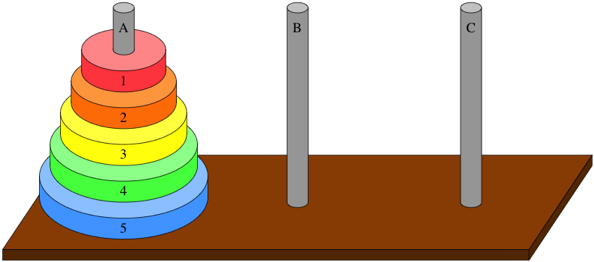
    Interestingly enough, the most optimal solution to the Towers of Hanoi comes from following this rhythm exactly. To tie the two together, first assign numeric indices to the disks: 0 is the smallest, 1 the next smallest, and so on. Then, simply follow the pattern, at each step moving the disk whose index matches the next number in the sequence.

    For example, consider the 3 disk problem:

    • 0: move disk 0 to the right peg
    • 1: move disk 1 to the middle peg
    • 0: move disk 0 to the middle peg
    • 2: move disk 2 to the right peg
    • 0: move disk 0 to the left peg
    • 1: move disk 1 to the right peg
    • 0: move disk 0 to the right peg

    And then we are done! There are some beautiful symmetries to this pattern. Also interesting is the fact that, for a setup with n disks, the optimal solution requires exactly 2^n – 1 moves.

    Why Does This Work?

    In so few words: recursion! Both the rhythm of binary counting and the problem of the Towers of Hanoi are self-similar problems. The idea of self-similarity ties directly into recursion: the full process, whether that’s counting up to a certain number or solving a problem with a certain number of disks, involves completing a smaller version of the process.

    In the Towers of Hanoi, consider again the 3 disk problem. If we were somehow able to move the stack of the 2 smallest disks as a single unit, then the problem would reduce to three steps:

    1. Move the 2-disk unit off of the third disk
    2. Move the third desk to the right peg
    3. More the 2-disk unit onto the third disk

    So, through a recursive approach, the problem becomes much simpler to solve.

    In the process of binary counting, return to the counter visualizer. Count up to the number 7 (111 in binary). Notice that we count up to the number 3 (11 in binary), roll over to 4 (100 in binary), and then count up three more to get to 7 (111). This exactly mirrors the recursive pattern in the Towers of Hanoi!

    Conclusion

    Oftentimes in mathematics, and in problem solving in general, finding an inventive way to connect and reduce one problem to another can make understanding optimal solutions much easier. The Towers of Hanoi, though it may appear as a confusing game at first, cleanly works in parallel to just counting up by one in binary. 

    References

    1. https://www.khanacademy.org/computing/computer-science/algorithms/towers-of-hanoi/a/towers-of-hanoi
    2. https://www.mathsisfun.com/games/towerofhanoi.html
    3. https://www.youtube.com/watch?v=2SUvWfNJSsM