The SAM-e Supplement: say goodbye to depression? TBD.
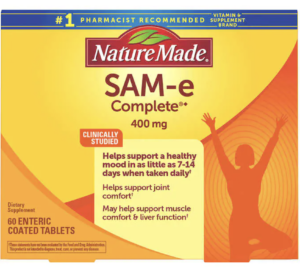 One year ago, as I was browsing the supplement aisle of Costco, a woman approached beside me. She started to fill her cart with boxes of SAM-e Complete. I was clearly contemplating whether or not to purchase some myself because she turned to me and told me that her daughter’s mood and mental health improved drastically after taking it. She couldn’t recommend it enough. Being easily swayed by others’ suggestions, I threw a couple in my cart. I took 400mg of SAM-e for 120 days — every morning before breakfast. It was with me through some of the darkest times of the semester, but looking back, I wouldn’t say it made much of difference (other than to my wallet). It might not have worked for me, but there’s a chance it could work for you.
Understanding Depression
Affecting more than 300 million people worldwide, depression is a common mood disorder that can strike at any age. Its symptoms can range from a lost of interest in activities and sleep problems to feelings of worthlessness and suicidal ideation (“Depression: Types of Depressive Disorders and Their Causes,” 2021). Depression impacts many aspects of an individual’s life and may require medication to treat. However, even with antidepressants, people continue to experience minimal responses to them. Or, they might suffer from one of its many side effects, driving them away from sticking to their medication. Situations like these have sparked the interest in natural remedies for treating depression. Research is still limited, but the over-the-counter supplement S-adenosyl-l-methionine (SAM-e) shows promise and an encouraging future.
A Little History
In Italy, Spain, and Germany, SAM-e has been available by prescription for decades. Only recently has the US started to sell it on its shelves. Still, only a handful of psychiatrists and clinicians have recommended it due to the uncertainty of its safety and effectiveness. Hopefully we’ll see more evidence come to light since many patients might be interested in an OTC option (D’Epiro, 2000).
How It Works
SAM-e is a methyl-donor molecule involved in metabolic pathways. It is found naturally in the body as a common amino acid in the blood. Amino acids are molecules that combine to make proteins, which are essential in supporting the growth and repair of tissue (Farnsworth, 2022). Unfortunately, the form of SAM-e found in food isn’t stable and our bodies can only generate a small amount.
SAM-e helps to produce and regulate hormones as well as maintain cell membranes (“SAMe,” 2020). Since it plays such an important in regulating key functions in the the body’s cells, abnormal levels can lead to depression and liver disease (“S-adenosyl-L-methionine (same): In depth,” 2017).
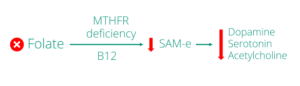
SAM-e levels in the body are dependent on Folate and B12. Depression is linked to deficiencies of these vitamins, which suggests that they could be linked to reduced SAM-e.
Simply put, a deficiency in folate → not able to metabolize folate properly → lower levels of SAM-e → less synthesis of neurotransmitters such as dopamine, serotonin, and norepinephrine.
With the help of SAM-e, depression symptoms can be reduced by stimulating the synthesis of these key neurotransmitters (Mischoulon, 2018).
The Evidence
SAM-e trials to test efficacy have ranged from 2 to 12 weeks and doses of 200mg to 3200mg. In a number of controlled experiments, SAM-e has been found to be more effective than placebo and just about equal to antidepressants when administered into veins or muscles. (Less evidence is available to support the use of oral SAM-e.) Data also suggests that SAM-e can be useful when taken in addition to antidepressants (Papakostas, 2009).
Current findings highlight the need for larger and longer studies to truly understand the value of SAM-e.
Why Could SAM-e Be Better For Me?
 SSRIs, a widely used antidepressant, blocks the reabsorption of serotonin, leaving more available for the neurons to use for signaling. SAM-e aids with the actual synthesis of serotonin (Majeed, 2022).
One of the major benefits of SAM-e is its minimal list of side effects. These include digestive problems, mild insomnia, irritability, and anxiety, which tend to resolve after a couple of weeks. Typical antidepressants can cause weight gain, sexual dysfunction, sedation, or cognitive interference (“SAM-e”, n.d.).
Antidepressants typically take 6 to 8 weeks before they begin working, while SAM-e seems to begin in as little as 2 weeks time (“S-adenosylmethionine,” n.d.). Tablets can also be combined safely with other drugs since it doesn’t have many interactions.
How Is SAM-e Not More Popular?
SAM-e has been shown to have a positive effect on depression treatment, but many of those studies were poorly designed or had a small sample size. Data on long-term safety has been limited as well. The perfect dose hasn’t been established either.
Should You Take SAM-e?
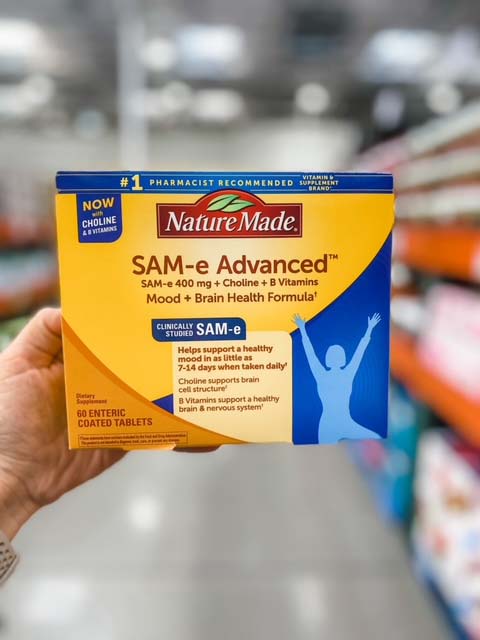
Patients who would benefit most from SAM-e are those with mild to moderate depression who would prefer not to see a doctor, are taking a treatment that isn’t working, or wish to avoid the adverse side effects of common antidepressants. The cost, unfortunately, may turn some away from trying out the supplement — one 400mg pill can cost between $.75 and $1.25. Although SAM-e is available as a safe and effective supplement, it is not recommended to treat major depression without advice from a doctor and it should not be considered a replacement for prescribed medication (D’Epiro, 2000).
Even though SAM-e supplements didn’t have a noticeable effect on me, it changed the daughter of the woman at the grocery store’s life. If you are considering an OTC supplement to relieve mild depression symptoms, it could be worth a try!
Resources
- Understanding Depression — the Basics
- SAM-e: For depression and more?
- SAM-e for depression: Potential benefits and research
- SAMe – Mayo Clinic
- S-Adenosyl-L-Methionine (SAMe): In Depth | NCCIH
- S-Adenosylmethionine (SAMe) for Depression: What Does the Evidence Say? – Psychopharmacology Institute
- S-Adenosylmethionine (SAMe) in major depressive disorder (MDD): a clinician-oriented systematic review – PMC
- Evidence for S-Adenosyl-L-Methionine (SAM-e) for the Treatment of Major Depressive Disorder | Psychiatrist.com
- SAM-e | Mental Health America
- S-adenosylmethionine Information | Mount Sinai – New York
- SAM-e: A Natural Alternative to Antidepressants
- https://static01.nyt.com/images/2022/04/26/well/21Well-NL-Antidepressants/21Well-NL-Antidepressants-superJumbo.jpghttps://www.costcoinsider.com/wp-content/uploads/2022/03/NatureMade-SAM-e-in-Costco.jpg