Day: April 24, 2023

  • The Apple M1 Chip: A Breakthrough in Personal Computing

    The Apple M1 Chip: A Breakthrough in Personal Computing

    The M1 chip, a custom-designed system-on-a-chip (SoC) for Mac computers, was introduced by Apple in late 2020. This chip is based on Arm architecture and uses a 5-nanometer (very small) manufacturing process, which enables a high density of transistors on the chip, resulting in high performance and low power consumption. ARM architecture is a type of instruction set architecture (ISA) that is designed for energy efficiency. It is used in a wide variety of devices, including smartphones, tablets, and laptops. The M1 chip uses ARM architecture, which is one of the reasons why it is so energy efficient. ARM architecture is a reduced instruction set computing (RISC) architecture. This means that it uses a smaller number of instructions than other types of ISAs, such as x86. This makes ARM architecture more efficient, because it takes less time to decode and execute instructions.
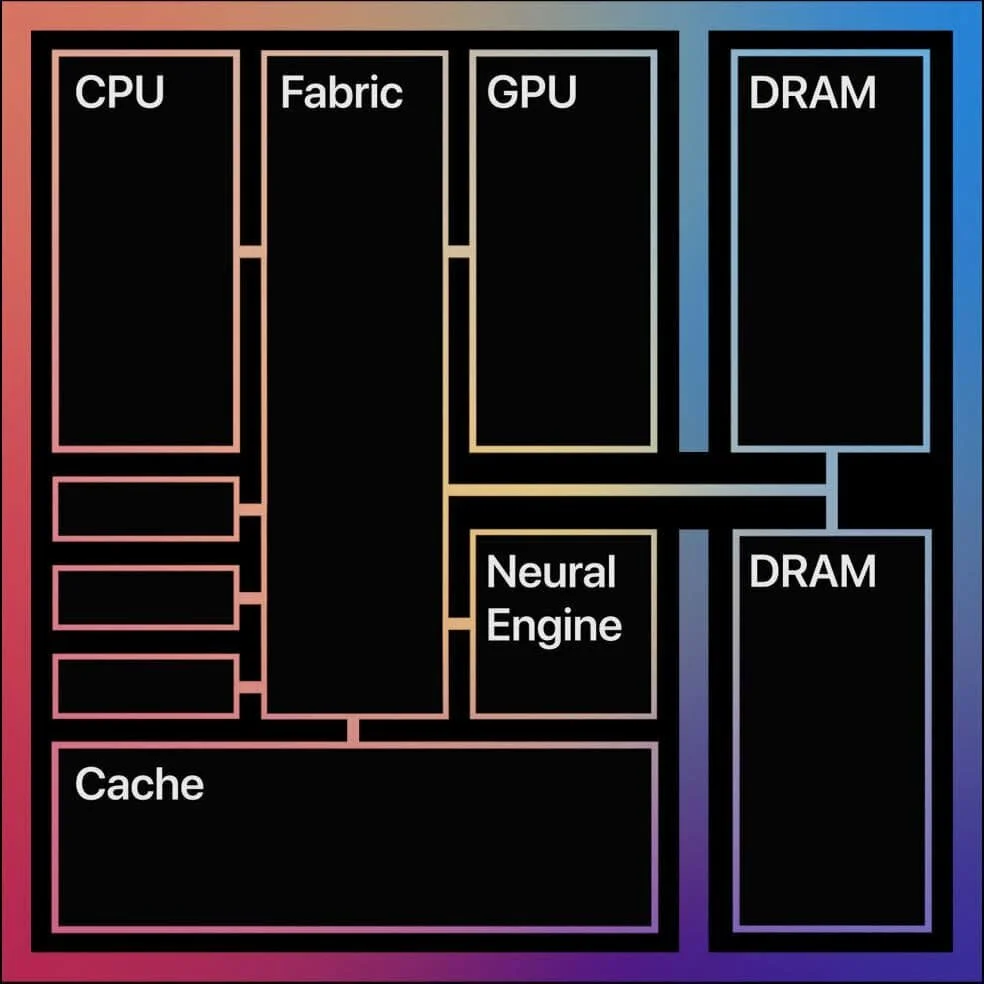
    Apple M1 Chip layout

    One of the most notable features of the M1 chip is its eight-core CPU, which comprises four high-performance cores and four high-efficiency cores. The high-performance cores operate at a higher clock speed and deliver significant computing power for demanding tasks such as video rendering and gaming. The high-efficiency cores consume less power and handle lighter workloads, such as browsing the web and checking emails. This architecture results in a balanced approach to power and performance.

    The M1 chip also provides powerful graphics processing capabilities for demanding applications such as 3D rendering and video editing. The GPU enables a seamless experience for users to render high-quality content and play graphically intensive games. Additionally, the M1 chip integrates a Neural Engine that is capable of delivering up to 11 trillion operations per second, enabling the chip to perform machine learning tasks with ease.
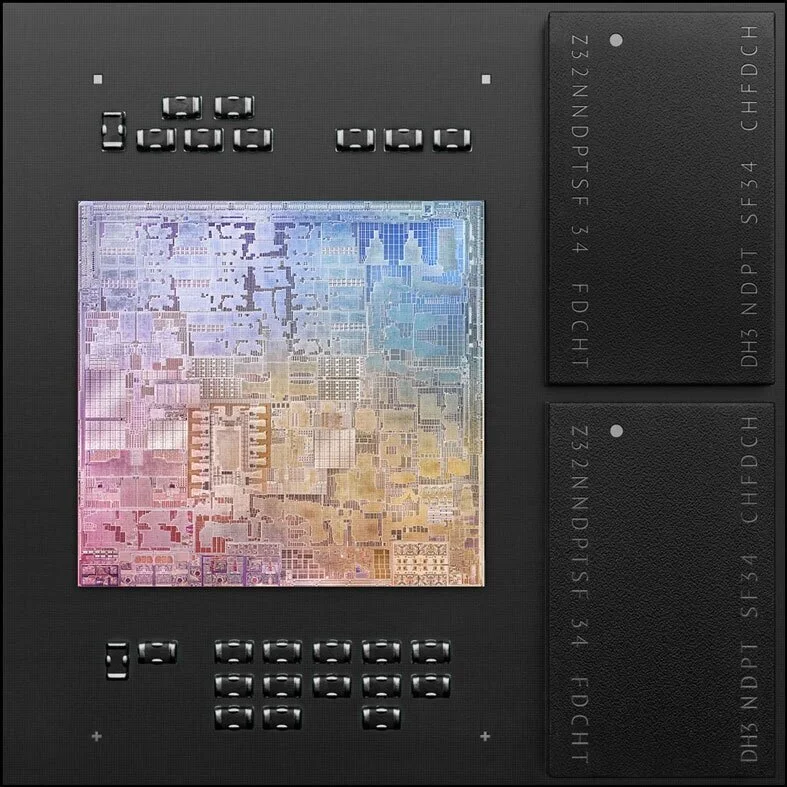
    Apple M1 Chip under the microscope

    Another feature of the M1 chip is its unified memory architecture. This design allows the CPU, GPU, and other components to share a single pool of memory, enabling faster data transfer and improved performance. This architecture also allows for a more efficient allocation of memory resources and a better utilization of system memory.

    Overall, the M1 chip is up to 3.5 times faster than the previous generation of Intel CPUs and is incredibly energy efficient, which allows Macs with the M1 chip to have up to 20 hours of battery life. The M1 chip’s design and implementation have been lauded for its energy efficiency, performance, and integration of key components onto a single chip. The M1 chip has reinvigorated the Mac line, delivering higher performance, longer battery life, and more efficient use of system resources.
     

  • Ada Lovelace: Countess, Programmer, Girlboss

    Ada Lovelace: Countess, Programmer, Girlboss

    Ada Lovelace is widely recognized as the world’s first computer programmer. Her life and work paved the way for the development of modern computing, and her legacy is still celebrated today. Ada Lovelace was a brilliant mathematician and writer born in London, England in 1815, and was the only legitimate child of the poet Lord Byron and his wife Anne Isabella Milbanke.

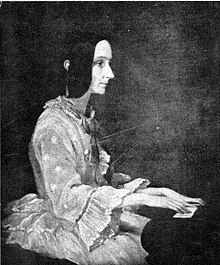
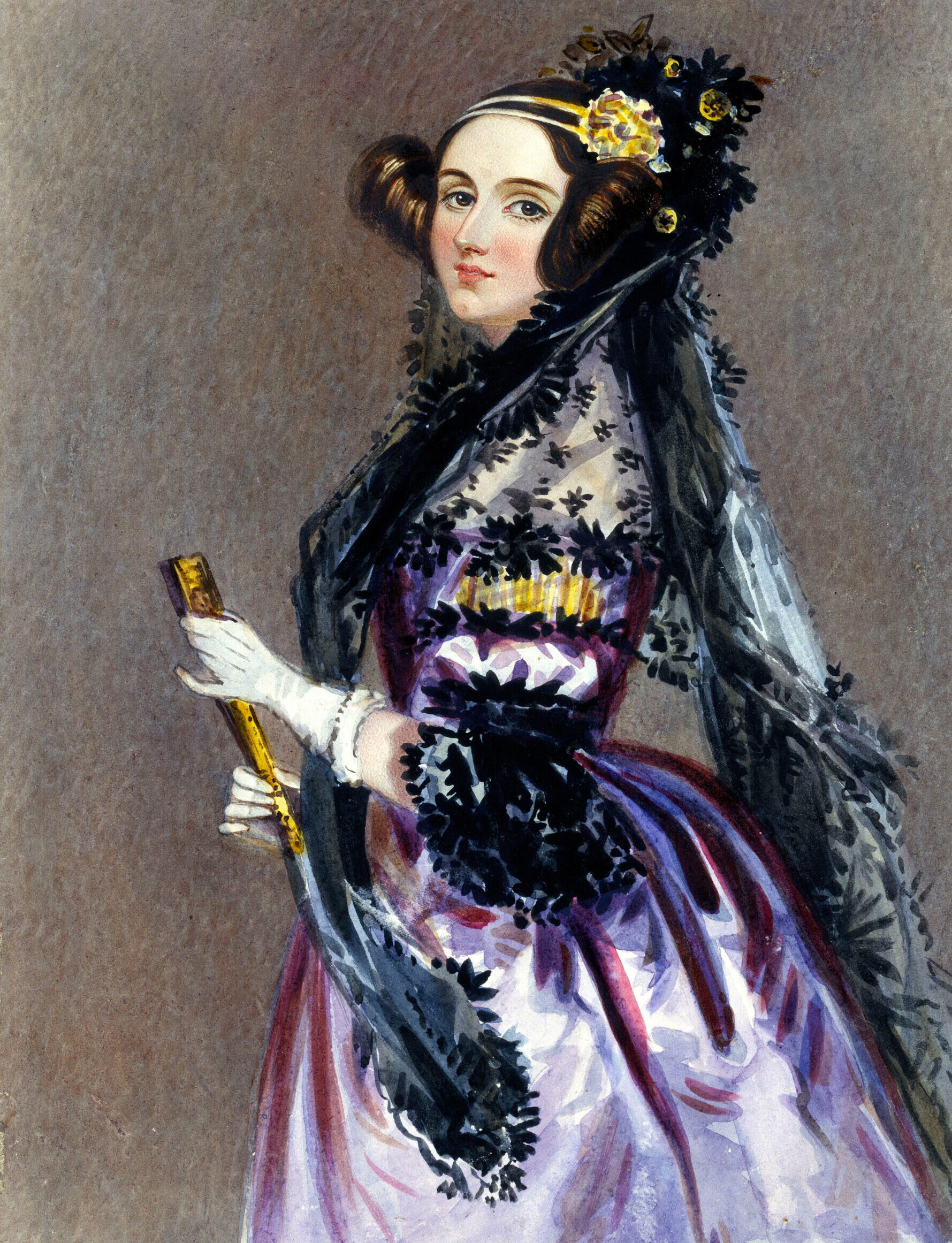
    Ada Lovelace, painted portrait circa 1836

    Lovelace’s mother was determined to raise her daughter to be a well-educated woman, and she hired some of the best tutors in London to teach her mathematics, science, and languages. Ada’s mother, who was concerned about her daughter’s potential to inherit her father’s poetic temperament, emphasized mathematics and science in her education. Despite the fact Ada’s early education in math and science was unusual for a young woman in the early 19th century, Lovelace was incredibly intelligent and she soon surpassed her teachers in her knowledge of mathematics. by age 17, she had become fascinated with Charles Babbage’s work on his Analytical Engine, a machine designed to perform complex calculations.

    In 1833, Ada Lovelace met Charles Babbage, a mathematician and inventor, at a party. Babbage had designed the Difference Engine, a machine capable of computing mathematical tables, and was working on his Analytical Engine, a more complex machine capable of performing various calculations.

    Ada’s helped him with the design of the Analytical Engine. She wrote an article on the machine in English, adding extensive notes on how the machine could be programmed to perform complex calculations beyond mathematical tables. These notes, which came to be known as “Sketch of the Analytical Engine,” contained what is now considered the first algorithm intended to be processed by a machine. Ada recognized that the machine’s potential was not just limited to mathematical calculations but could be used for any process that could be represented by symbols and numbers.

    Ada Lovelace, painted portrait circa 1852

    Lovelace died in 1852 at the young age of 36 from uterine cancer. However, her work on the Analytical Engine had a profound impact on the development of computer science. She is considered to be one of the most important figures in the history of computing, and her legacy continues to inspire women and girls around the world.

    Ada Lovelace was a visionary woman who left a lasting mark on the field of computing. Her work on the Analytical Engine and her ideas on computing and programming were far ahead of their time, and she is now recognized as the world’s first computer programmer. Ada Lovelace’s life and legacy continue to inspire people to pursue their passions and push the boundaries of knowledge and innovation.

    Works Cited

    “Ada Lovelace.” Ada Lovelace and the Babbage Engine, Computer History Museum, 2023, https://www.computerhistory.org/babbage/adalovelace/.

  • Why can’t I tickle myself?

    Why can’t I tickle myself?

    I admit it. I am SUPER ticklish. The slightest touch from both man and machine alike will have me squirming and giggling like a child. However, I am immune to the touch of one particular entity – myself. See, I’ve never been able to tickle myself. Trust me, I’ve tried (I had way too much free time as a kid.)

    Tickling is often described as an uncontrollable reflex response that occurs when a sensitive area of the body is stimulated in a certain way. This response is thought to be related to the fact that tickling is often associated with social interaction, and is therefore more likely to occur when someone else is tickling us.

    It is important to distinguish that there are two types of tickling:

    • Gargalesis, which is tickling that causes laughter when areas of the body are touched, and
    • Knismesis, which is tickling caused by light motion on the skin, which usually just feels like an itch.

    The kind of tickling I’m talking about today is Gargalesis, which is what we usually think of when we think of tickling. Knismesis can actually be self-induced! To experience it, try to touch your skin suuuper lightly. (I also did this as a kid. I had WAYYY too much free time.)

    When we try to tickle ourselves, we are essentially anticipating the sensation that we are about to feel. This anticipation of the sensation reduces the tickling response, making it less intense or completely absent. The brain is able to predict the sensation and to some extent, suppresses the ticklish feeling that we would normally experience when someone else tickles us.

    Additionally, when we try to tickle ourselves, we are able to predict the timing and location of the tickling stimulus. This makes the sensation less unpredictable, and thus, less ticklish. On the other hand, when someone else tickles us, we are unable to predict the timing or location of the tickling, making it more unpredictable and therefore, more ticklish.

    So, in summary, we can’t tickle ourselves as effectively because our brain is able to anticipate the tickling sensation and suppress the tickling response, making it less intense or completely absent.