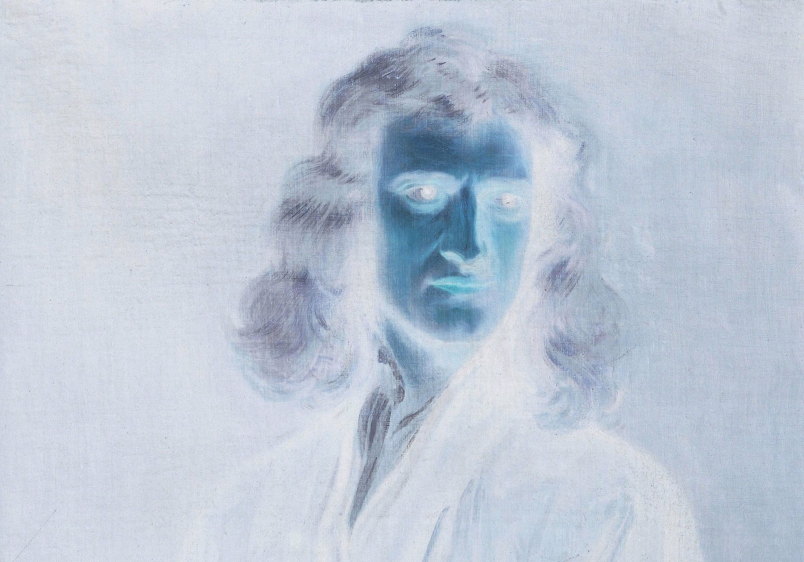
Isaac Newton is one of the most well known historical figures in the world of physics, and rightfully so. As the father of classical mechanics, Newton has many discoveries to his name. He was the first falling apple victim to understand the gravity of the situation; he got things moving in classical physics with his laws of motion; he shed some light on the mysteries of, well, light. Many people know him for his vast contributions to our understanding of the natural world, and Newton’s ideas were so significant that he even became president of the Royal Society, a prestigious group of scientists with a strong influence on the European scientific community during his time.
However, despite all his achievements, Newton was not the best role model. For a man who talks a lot about standing on the shoulders of giants, he sure had a chip on his own. Newton was a vain and vindictive individual who would often take advantage of his influence in order to punish those who got in his way. Today, we’ll be looking at three such cases of famous scientists whose lives were screwed over by the force of just one Newton.
Victim 1: Robert Hooke
Perhaps the most famous of Newton’s disputes was his rivalry with Robert Hooke (you may know him from Hooke’s law). The conflict between the two scientists began when Newton was at an early stage in his scientific career. Before Newton rose to power, Hooke was one of the most influential physicists of his time, so when Newton presented his findings to the Royal Society, it was Hooke whom he had to impress.
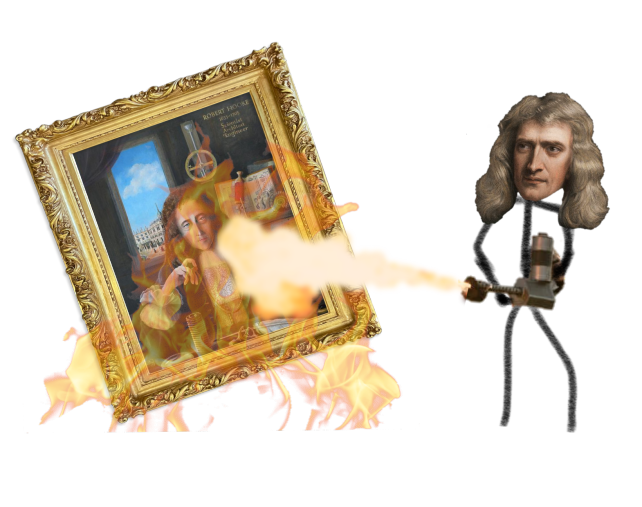
One of Newton’s early contributions to science was his theory on the properties of light and how light, Newton thought, consisted of particles. But Hooke and many other physicists at the time were supporters of the wave theory of light, so when Newton shared his ideas with the Royal Society, he was faced with admonishment from Hooke. As one could imagine, Newton did not take criticism lightly, and he held a grudge against Hooke for a long time. Over the years, the two physicists disputed over many things, such as who deserved credit for the concept of gravity, until Hooke’s death in 1703, coincidentally the same year that Isaac Newton became Royal Society president. According to an apocryphal story, Newton even kept his grudge after his rival died and gave orders to have the only painting of Hooke destroyed in an attempt to bury his legacy.
Victim 2: Gottfried Wilhelm Leibniz
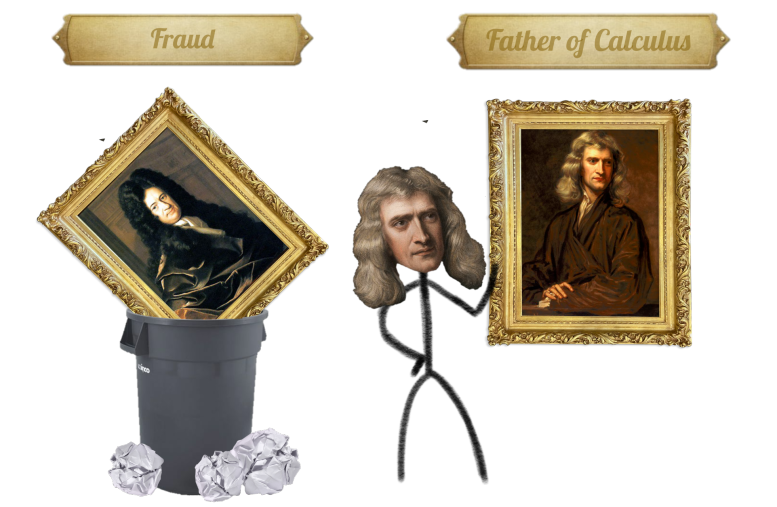
Who was the inventor of calculus? If your answer was Newton, you’d be correct. But if you thought it was Gottfried Wilhelm Leibniz, you aren’t wrong either. Today, the general consensus is that these two men both invented calculus on their own, but in the late 17th century, the topic was one of much debate among the scientific community.
While it is true that Newton invented calculus first, to maintain his reputation as an incredible genius, Newton had a knack for publishing his discoveries while concealing the ways in which he made them. This worked well for Newton until Leibniz independently discovered the same mathematical techniques Newton used to construct his theories and decided to share them with the rest of the world. Of course, when his techniques were no longer secret, Newton wanted all the credit for inventing calculus to himself and began a public dispute over the matter with Leibniz.
There were supporters on both sides of the debate, but Leibniz never stood a chance against Newton’s unmatched determination. In secret, Newton pumped out article after article in defense of himself and disguised them as writings from his friends, and eventually, the debate boiled down to the decision of the Royal Society, where Newton had the upper hand, of course. As the Society’s president, Newton organized a biased committee to investigate the matter. Ultimately, not only did the committee rule in favor of Newton, but it also accused Leibniz’s work of being derivative (pun very intended) and that Leibniz had plagiarized Newton’s ideas. Even up until his death, Leibniz never got the positive recognition he deserved. But at least today, outside of physics circles, Leibniz’s calculus notation is still the most widely used.
Victim 3: John Flamsteed
John Flamsteed, the Astronomer Royal, was another victim of Newton’s vitriol. As head of the Royal Observatory, Flamsteed spent much of his time looking at celestial objects and was known for keeping a meticulous record of his observations. In fact, Newton used Flamsteed’s observational data to help him write his original magnum opus, the Principia Mathematica, in which he described the foundations of classical mechanics. However, between Newton’s publication of the first edition of Principia and his venture into writing the second edition, things became sour between the two scientists. According to Flamsteed, Newton never showed him any signs of appreciation or respect despite his contributions to Newton’s work. He even accused Newton of publishing some of his findings without his permission. As such, Flamsteed was intent on denying Newton access to anymore data for his research.
However, in classic Newton fashion, in an attempt to obtain the data he needed, he used his authority as president of the Royal Society to forcefully take Flamsteed’s data and have it published by Flamsteed’s biggest rival, Edmond Halley. Luckily, in response, Flamsteed took Newton to court and had Newton’s actions nullified before any damage was done, and out of spite, Newton never acknowledged Flamsteed’s contributions to his theories ever again.
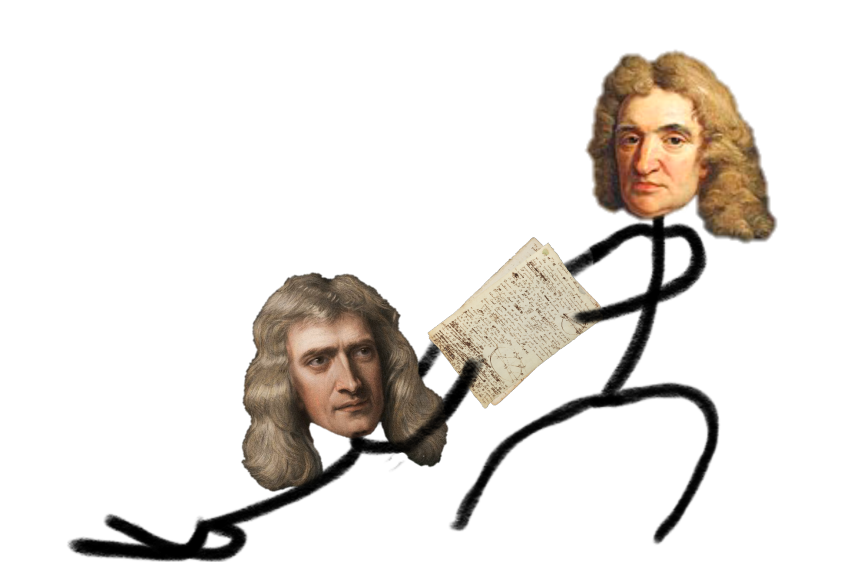
As you can see, Isaac Newton is a textbook example of why you should never meet your heroes. From framing Leibniz while he was alive to ensuring Hooke was unframed after death, Newton was one bad apple who gave other scientists a headache. And of course, Newton isn’t the only one. With just a little digging, you’d find that physics has quite a few other problematic big shots, and maybe those can be articles for another time. But as they say in the phys-biz, every quark has its quirk (I just made that up, but I hope it’ll catch on). What’s important is separating the physics from the physicist.
Sources
- MLA. Hawking, Stephen, 1942-2018. A Brief History of Time. New York :Bantam Books, 1998.
- https://mathshistory.st-andrews.ac.uk/Extras/Flamsteed_Newton/
- https://www.sciencedirect.com/science/article/pii/S0160932704000134
- https://www.writerstheatre.org/blog/newton-hooke-competing-theories/
- https://www.bbvaopenmind.com/en/science/leading-figures/hooke-the-genius-whose-big-mistake-was-confronting-newton/