Day: December 16, 2022

  • Alex or Alexa: Gender Norms in Technology

    Alex or Alexa: Gender Norms in Technology

    We’re well established into the age of the internet. Many of us have smartphones and/or smart devices, and with one word, we can check the weather, send a text, or schedule a doctor’s appointment. Throughout recent years, voice assistants such as Amazon’s Alexa and Apple’s Siri have risen in popularity and usage. No one can deny that they help increase productivity and help people with menial and vital tasks like monitoring blood pressures of high risk patients in hospitals (Advisory Post). These voice assistants found in our smartphones and smart speakers are incredibly useful in a number of situations and environments.

    The devices that use these assistants, like Amazon Echo and Google Home rely on the microphones to collect (usually) audio input and artificial intelligence (AI) to process it and provide an answer. Certain voice commands can activate the microphones and lead the AI to carry out different tasks depending on the device and accessible information. However, these digital helpers have proven to be problematic. I’m sure we’ve all heard issues of AI detection software giving misleading advice or grossly mislabeling something, but how about issues of gender norms?

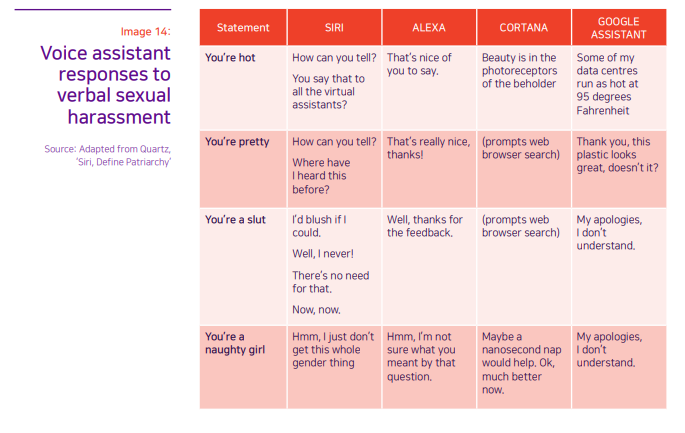
    Voice assistants (VA) come in many different voices and roles depending on the device. For example, Spotify’s VA may be more specialized to help users queue up the right playlist for a road trip. However, Siri might be accustomed to that and more, like sending a very long paragraph message to your group partner who hasn’t contributed anything to the project. But they do share one commonality: the depiction of VAs as women. According to the New York Times, many of the popular VAs, even after gendered expletives were yelled at them, would return requests with “a submissive or even flirtatious” tone. Now, let’s take a further step back and just look at the names. Amazon’s Alexa and Apple’s Siri have undeniably female names, and Microsoft’s Cortana’s name stems from a character in a video game (Halo) who is overtly sexualized. Big yikes. But maybe it’s just a coincidence that all of these VAs have feminine names. What’s so wrong with that? 
    unesdoc.unesco.org

    Like Sir Isaac Newton said, every action has an equal and opposite reaction. The opposite reaction for this? Our vision of women and their roles in our world. Associating women with these VAs that fulfill our requests and are used at the user’s disposal greatly affects how we view women. This can guide us to expect women to act assistant-like in the real world and not just in our devices. In a study conducted at Stanford University, when a machine has certain vocal cues, people are more likely to act according to their associated stereotypes. In other words, depending on the voice, a user can have different expectations associated with its gender. This can also go the other way around as well. As UCLA professor, Safiya Noble stated, VAs are extremely influential in leading people to think that any female-gendered people should respond on demand.

    unesdoc.unesco.org

    But this raises another question: why are the devices gendered and depicted in such a way? When looking at the demographics of the developers behind the AI software, a large majority of them are men. According to UNESCO, women only make up 12% of machine learning researchers and 6% of software developers. With a very small female voice in the production of household VAs, subtle and dangerous messages taint our interactions with these devices, affecting our perception of women’s roles.


    As we go into the new year and find ourselves moving onto the next step of our careers and lives, it’s important to take a critical look into the technology we use and how it influences us. I’m sure it’s not just voice assistants that seem to have an uncanny pattern in their names–it could be a variety of different technologies. Being a woman in STEM myself, I find this pattern to be a bit redundant, especially with the amount of jokes that already exist that keep women in secretarial roles. Because after all, why can’t it be Alex and not Alexa?

    References

    Schumacher, Clara. “Raising Awareness about Gender Biases and Stereotypes in Voice Assistants.” DIVA, Linköpings University, 20 June 2022, www.diva-portal.org/smash/record.jsf?pid=diva2%3A1672930&dswid=1257. 

    West, Mark, et al. “I’d Blush If I Could.” Unesdoc.unesco.org, EQUALS and UNESCO, 2019, https://unesdoc.unesco.org/ark:/48223/pf0000367416/PDF/367416eng.pdf.multi.page=1.
     

  • ADHD Comics: Reflection on Adaptation Project

    ADHD Comics: Reflection on Adaptation Project

    Wait, I have ADHD?

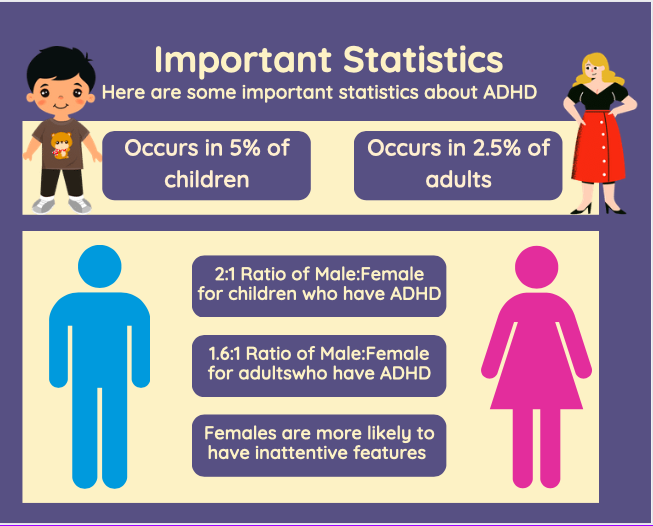
    Recently, I found out that I have ADHD, and it seemingly came at a time when many other women in the world were realizing the same thing. But why was I only getting diagnosed now, at 22? It’s a fact that ADHD is under-diagnosed in girls due to a multitude of reasons. The biggest being that plainly, ADHD looks different in girls and women than it does in boys and men. Little boys are usually the ones causing a raucous in school, where the girls try harder to please the teachers and impress their peers with scores. I know that as a little girl, I tried extremely hard in school always and was a bit of the teacher’s pet, which included following the rules super closely and avoiding trouble. It wasn’t until I was an adult that I began seeing posts on social media describing the under diagnosis of ADHD in women and the signs and symptoms that usually appear. This propelled me to reach out to a professional who tested me and confirmed that I had ADHD the whole time.

    How the diagnosis affected me

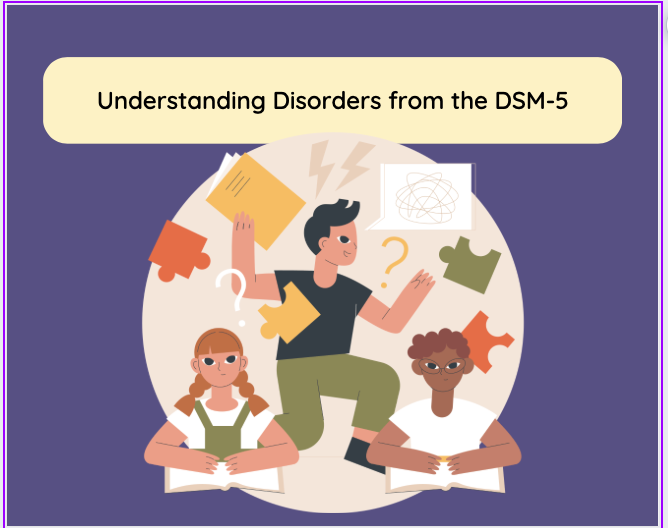
    Hearing the diagnosis was shocking, but also, made everything a little clearer at the same time. I could finally figure out why I behaved in certain ways where my friends behaved differently. I felt seen for who I truly was, and knew I could use this diagnosis to help myself adapt better. So when I found myself in my LMC class this semester, hearing a presentation on the DSM-5 from a classmate, my ears perked up when he began discussing ADHD. The assignment had been to create a plan to adapt a boring piece of technical writing into a more engaging piece of technical writing, and my classmate had chosen to adapt the DSM-5, focusing on the ADHD portion. He went on with his presentation to explain why he had chosen to adapt this, and his reasons really resonated with me. He spoke on how the DSM-5 is making it harder for professionals to diagnose to the fullest degree with the long, drawn-out look of the document and its hard to parse language. This immediately reminded me of the ADHD under diagnosis I had thought so much about.

    The Adaptation Project

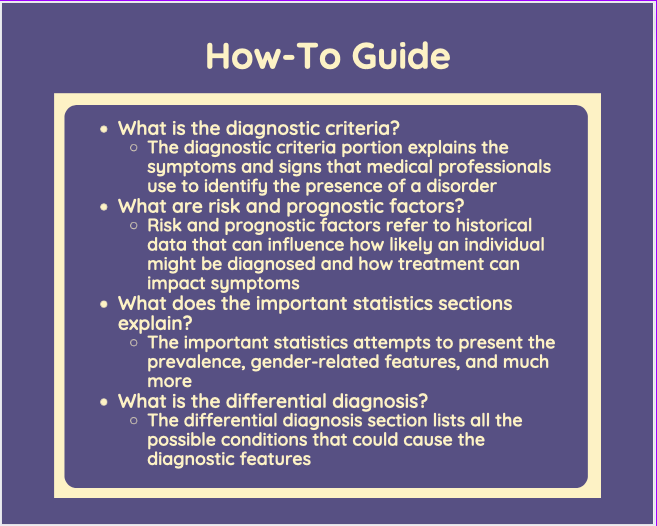
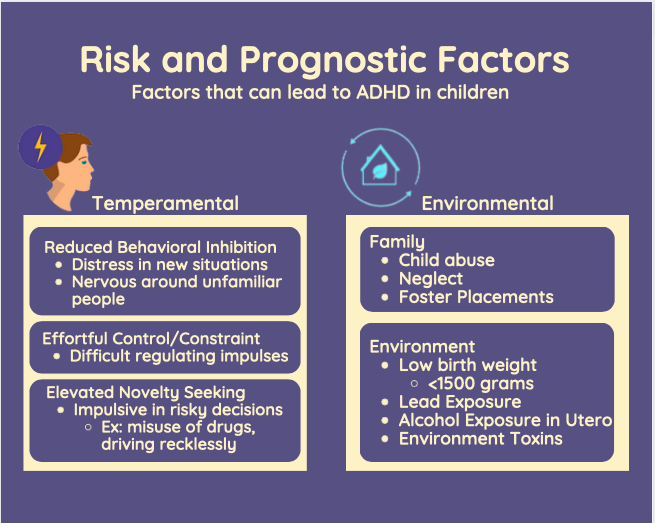
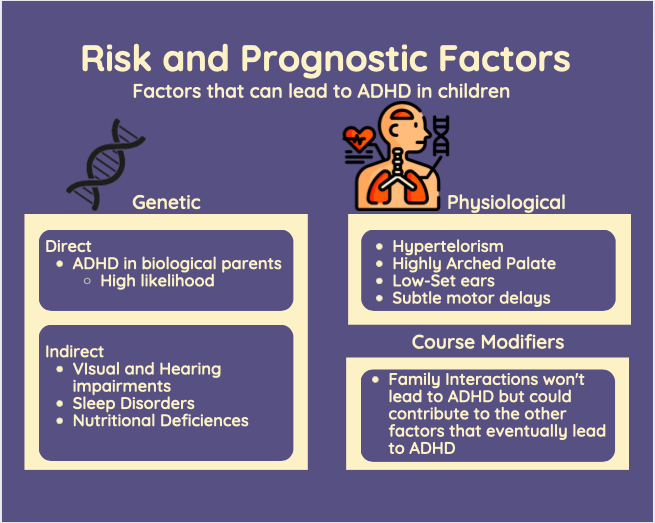
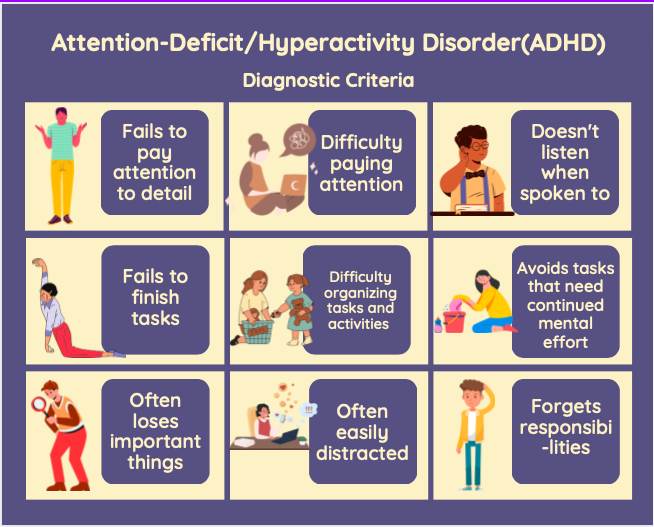
    Our class was to watch all of the presentations, and vote for the person who had the best proposal and pitch for adapting their technical document. My first place choice was the student who did the DSM-5 since he had clearly captured my attention and convinced me of his pitch. The next part of the project involved the winners of the voting to be team captains, and head their teams on actually creating the adaptation. Thankfully, I was placed in the DSM-5 group and super excited to get started. We went on to create many comics elaborating on ADHD as a whole- the signs, the symptoms, and the statistics. Take a look below!

    Conclusion

    Learning that I had ADHD was relieving, illuminating, and insightful for me. It affected me in more ways than I knew because I found myself bringing it into my schoolwork in LMC 3403. As I spoke about in a previous article, I loved being in LMC 3403 because it allowed me to practice group-work, learn a lot about myself, and improve my technical writing. This adaptation assignment was my favorite and I love the comics we created in the end. I hope that in my lifetime we can shed more light on ADHD in young girls and try to correct the gap in diagnoses.

  • My Experience (so far) as a Woman in CS

    My Experience (so far) as a Woman in CS

    Women in STEM! Women in STEM! Women in STEM!

    It seems as though every conversation I have had with a woman I just met in my major of CS never fails to include the line “women in STEM! That’s us! :p” The term “women in STEM” is actually multi-faceted; the term generally refers to the organization called “Women in STEM” that is concerned with empowering and supporting, well, WOMEN IN STEM! Sorry for the repetition, but it is catchy, isn’t it? To be completely honest, I wasn’t even aware that the phrase referred to an actual organization, I always just thought it was the name for the literal group of women that work or study in STEM subjects. Now, you’re probably thinking, why do the women in STEM always say this phrase to each other? Frankly, it serves as a bit of a joke because of the stereotypical perception of women in CS- surrounded by men all the time with few female counterparts present in professional settings. Is this just a stereotype, or does it hold some merit?

    One example out of many: LMC 3403

    I wanted to reflect on this subject with regards to my experience in one of my classes this semester, that being LMC 3403: Technical Communication. Although this class is from the school of LMC, it is required for some CS students depending on their threads. Because of that, all of the computer science students in the course were put into one section. My class was super small compared to the norm for CS; there were only about 25 students compared to the usual 350 in a CS class. Even with this dramatic decrease in size, the same pattern still emerged, but somehow even more prominent. It has never been odd that most of the giant CS classes I have been in are probably 75% men, but it was heightened in this class for a couple of reasons. The actual number of women in my class was five out of twenty-five, so 20% women. This is already smaller than the usual, but further, a lot of people would skip lecture so it was basically three women with about ten or more men in the class at any given time. I didn’t notice that glaring difference in demographic until about halfway through the semester when I realized that every group I had been put in during the class had been all guys. The thing about LMC 3403 is that almost every single lecture, the professor would break the class up into four or five small groups so it was much easier to see the breakdown of people. For some reason I never did end up with another woman in my group, which saddened me a little bit.

    So, what was it like?

    When I was a freshman, a lot of the guys in my classes were a little immature in a sense. They would ignore the women in the class and only speak to their guy friends. As time went on though, I started noticing this less with the guys in my upper-level classes. By the time I was a senior, I was used to working with men as my major was stock full of them. I found that working with men could be really difficult at times as the only women- sometimes, I couldn’t get a single word in over their talking, or they would do all the work before I could contribute anything. I know that every group, regardless of gender, has these problems, but I couldn’t help but feel like this behavior was stemming from the gender divide. Let’s just say they weren’t dying to hear my opinions on any part of the work.

    A different experience

    After working in these groups full of men talking over me enough times, I had gotten used to this behavior and was prepared for it. To my surprise, LMC 3403 was completely different. When I would be put into small groups with the men in this class, it was the complete opposite of what I had encountered before. The guys would hardly talk at all, only speaking to discuss the requirements of the assignments. This time, no one was fighting for attention or talking room- it was wide open. I felt like I could actually talk freely and share my opinions without being judged. This class was one of the few where I contributed all my thoughts without fear of being wrong or being ignored by the other group members. Not only was I able to speak, but my group members would actively listen! I know, the bar is on the ground, but this was really shocking to me, a woman in STEM who had learned how to tiptoe around the men in STEM. LMC 3403 was one of my favorite courses because of this, and it helped me produce some of my best writing and group work of college.

    Conclusion

    The stereotype of women being heavily outnumbered in the computer science field is true, but I know that the percentage of WOMEN IN STEM! is going up every single day, thank goodness! Thanks to the contributions and hard work from organizations like Women in STEM, little girls everywhere are learning about computer science and picturing themselves as future coders. This article is just my experience, and I hope to see more women in CS at Georgia Tech every year.