Day: October 8, 2022

  • Math is Friend, Not Foe

    Math is Friend, Not Foe

    Today I’d like to talk about everyone’s favorite, least-favorite subject in school: Math

    Math can seem very scary and complicated. And this feeling is very valid to have – math does get more complicated the more you learn. When faced with a problem like:one can really long for the days of “If Sally has 5 apples and gives away 3 how many apples remain?”.
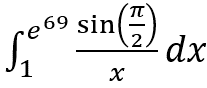
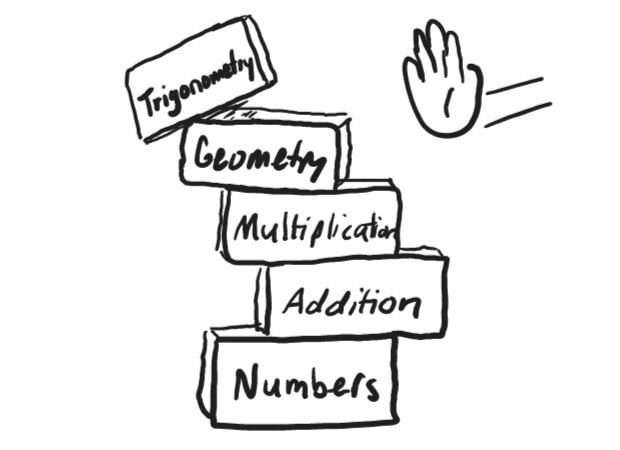
    But the beautiful thing about it, is that all math can be simplified. It builds up into complicated equations and problems, but it can always be broken back down to simple things!
     For example, if you know that sin(π/2) = 1, and how integrals work, you can solve this problem pretty easily – BUT therein lies the rub. Math is all just building blocks, but the key is knowing and sometimes memorizing what blocks to use (which is never fun). Just like it’s hard to understand 5 – 3 if you’re not familiar with counting, it’s almost impossible to answer that question if you’ve never been taught an integral or what sine is. 

    People place so much fear, stigma, and weight on doing math that it becomes so intimidating. So when faced with something strange and hard seeming, they panic and assume “I can never understand this”. BUT THEY CAN!

    We often don’t think about it, but back in elementary when everything about numbers and addition was new, it seemed so confusing then too.

    When I was in high school, I once tutored a fifth grader who needed help with long division, and I found myself having to relearn some key concepts that I’d forgotten and hadn’t thought about in years! I noticed the student was adding the large numbers incorrectly as they worked, so I said, “Oh you have to carry the one here.” To which they responded: “Why?”

    And I had to pause, and then think about because, why DO we do that? I knew it was something to do with numbers no longer being the same category but how did I explain that to someone unfamiliar? Which led me down a bit of a rabbit hole of looking up elementary school textbooks and lesson plans. Because without understanding something like “place values” (ones, tens, hundreds) it’s really hard to understand why you need to “carry a one” in long multiplication and division!

    Even something as retroactively simple as division was once completely baffling – but once you learn it, it becomes instinct. The same can be said for the most complex of mathematics: once you understand its rules, nothing can stop you! 

    If you can remember the rules of a triangle, you can remember sine. If you can understand a grid, you can build up to calculus and beyond.

    Now the hard part is learning all of this for the first time – especially when many people have been burnt out from math, or set at a disadvantage in the past by bad explanations and inattentive teachers who never helped them understand. That is the true tragedy of math, and admittedly makes the subject a lot harder for most. 

    But I’m here to say, never doubt yourself! Even old dogs can learn new tricks, and you can always learn the blocks and break it down when facing “complex” math!

    Think like a gamer: there are challenges, but with enough effort, grinding, and practice you can overcome it (and there’s nothing wrong with coming back later)!

    Math is all just building blocks at the end of the day: simple individual concepts on their own, but you can assemble them into complex structures – amazing but confusing, equations that can describe the way our world and universe work – that can be very intimidating. However, I think it’s very comforting to remember from time to time that even the most intricate towers are still made of individual bricks; and with enough time and effort, you CAN break it back down! 
  • Adventuring on Mi Teleférico

    Adventuring on Mi Teleférico

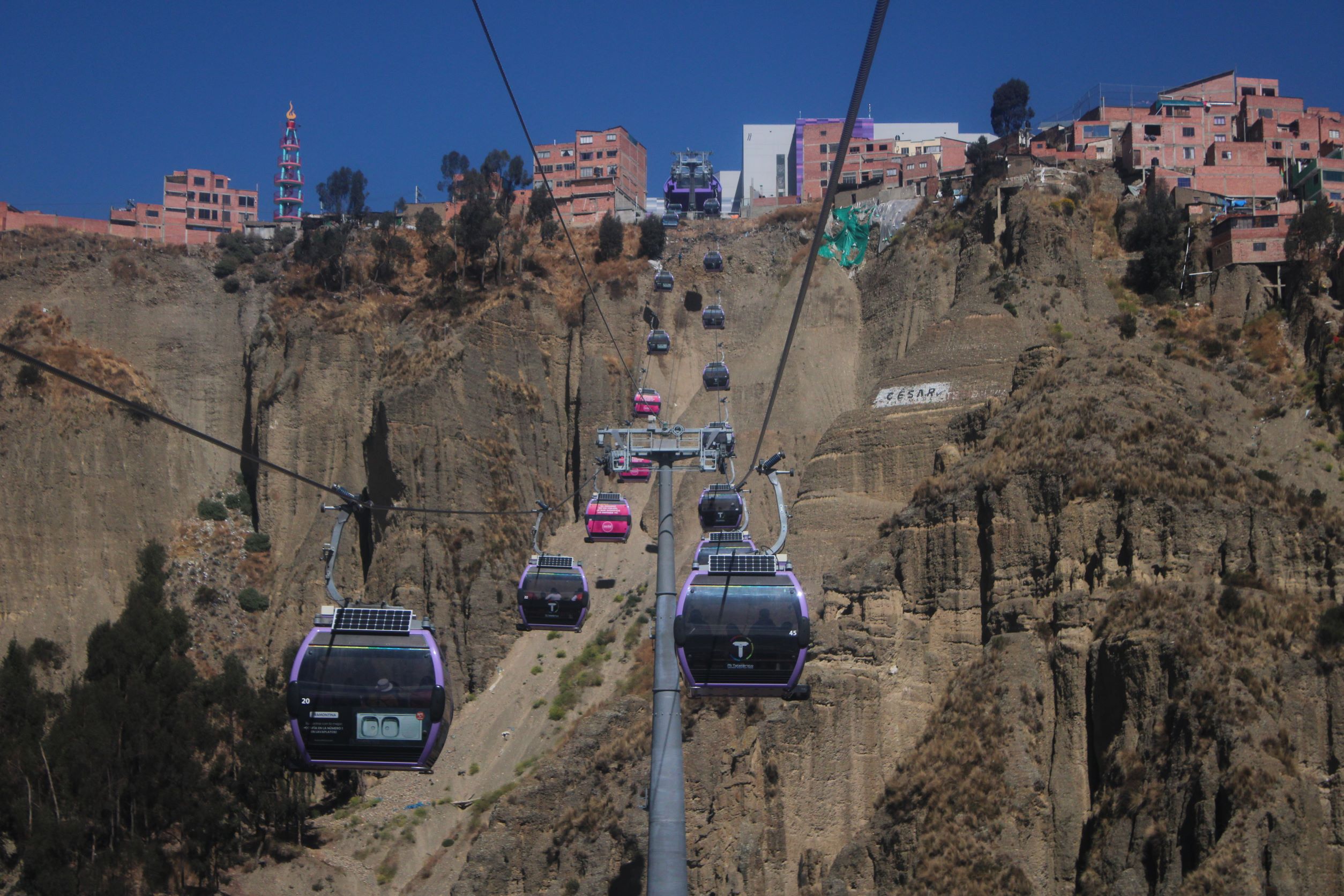
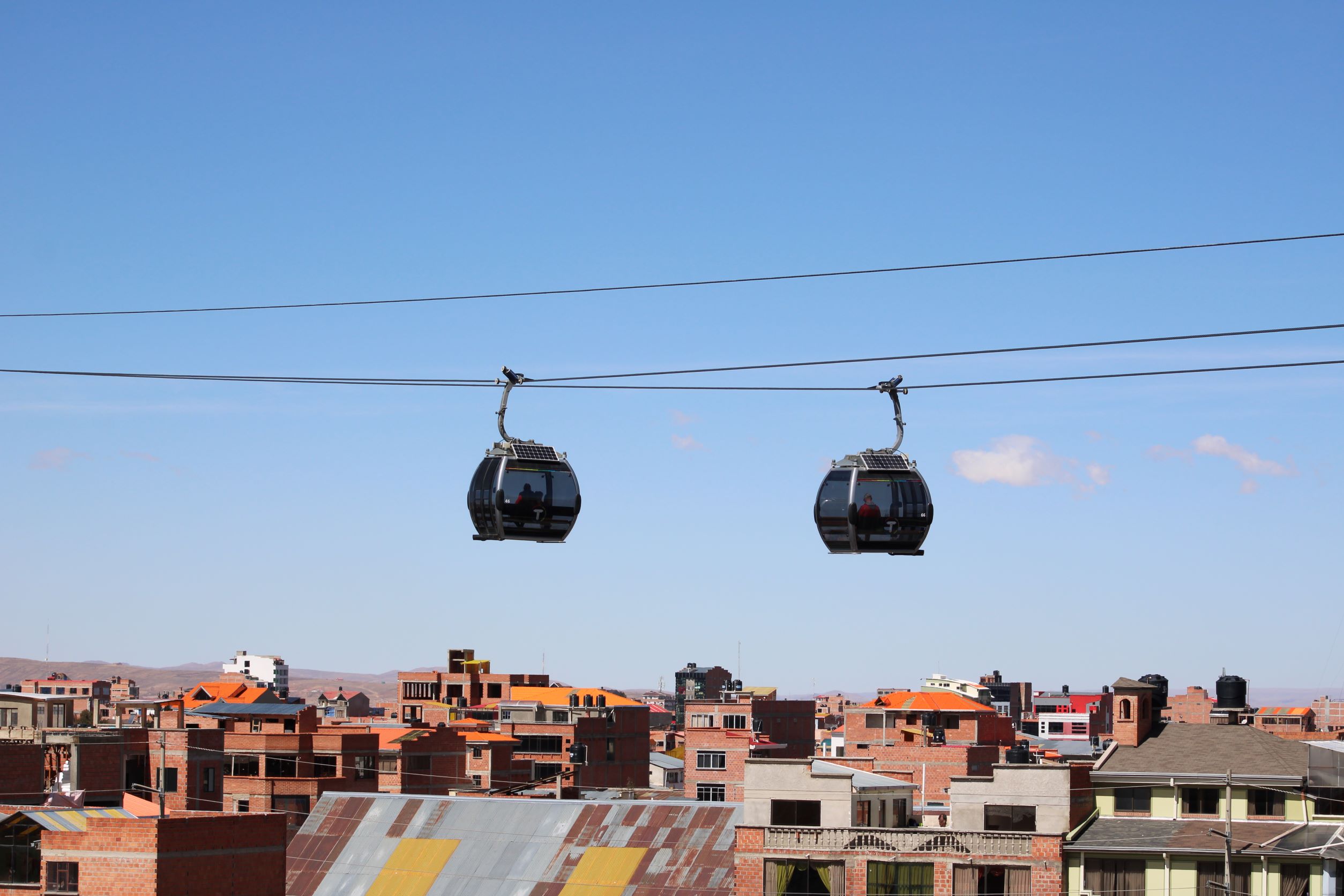
    Traveling through the aerial space is how I moved across the city during my visit to La Paz, Bolivia, last summer. No, I do not have wings or flying powers. I did not rent a helicopter or any kind or aircraft either. What I did was along with what hundreds of thousands of local citizens do every day: take rides in aerial lifts, also known as gondola lifts or cable cars. Every ride in the cabins of Mi Teleferico has been an amazing experience. Have you ever been to a ski/snowboarding resort and taken a lift or have riden a cable car at Six Flags Over Georgia? I confess that at Six Flags Over Georgia was my first time ever riding the Skyride or so-called gondola lift. This might have not crossed your mind, but that experience magnified what happened to me this past summer in La Paz.

    Since the early twenty century, modern cities have adopted different types of massive public transportations such as on the ground trains or underground subway trains. In general, these transportation systems are optimal for cities on relatively flat surfaces. Sometimes, lines of ferry boats are implemented when navigable bodies of water such as rivers or lakes could be used around cities. However, La Paz’s geography is quite different. La Paz is a hilly city built in a valley like a bowl with streets and avenues climbing steep hills and without navigable bodies of water. Therefore, in La Paz, a network of cable car lines has been considered the best option. MiTeleferico, the transportation authority, manages the network of cable cars which has been implemented as a system of mass transportation since about a decade ago.

    All relate back to Mi Teleférico in La Paz, Bolivia, which is also a home city deep into the heritage of my parents and family and by extension deep into mine as well. This past summer I had the opportunity once again to travel to Bolivia and visit my extended family. Bolivia is located in South America and is one of the two countries, along with Paraguay, that is landlocked. Bolivia has many interesting attractions both for native people and tourists.
    Some include:

    • Salar de Uyuni: the largest salt deposit in the world (Pic.1)

    Pic 1: Salar de Uyuni excursion in 2016

    • Lake Titicaca: highest navigable body of water in the world (Pic. 2)

    Pic 2: Lago Titicaca in Copacabana

    • A country with the highest capital: La Paz’s altitude  is ~3,600 meters (~12,000 feet) above sea level 
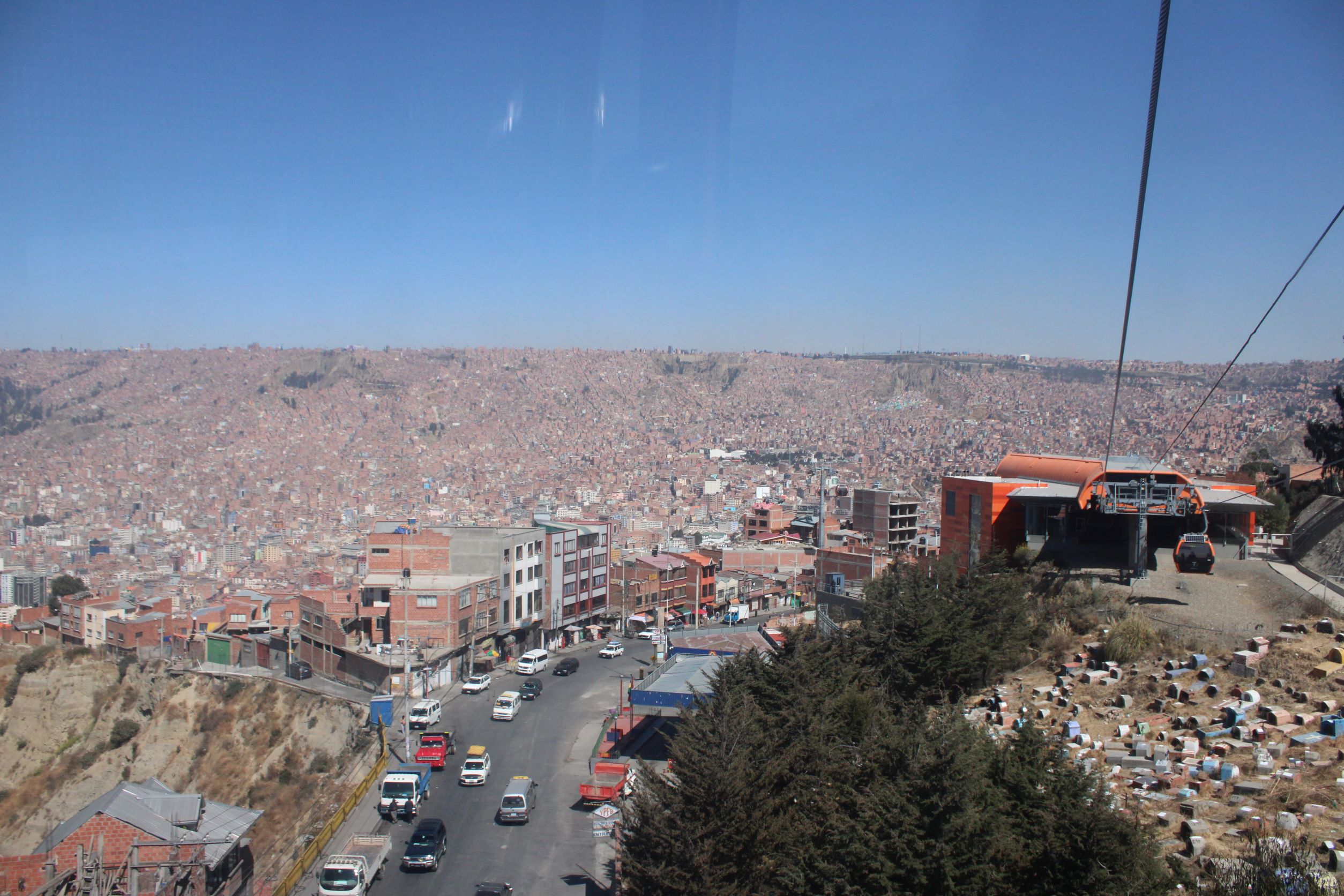
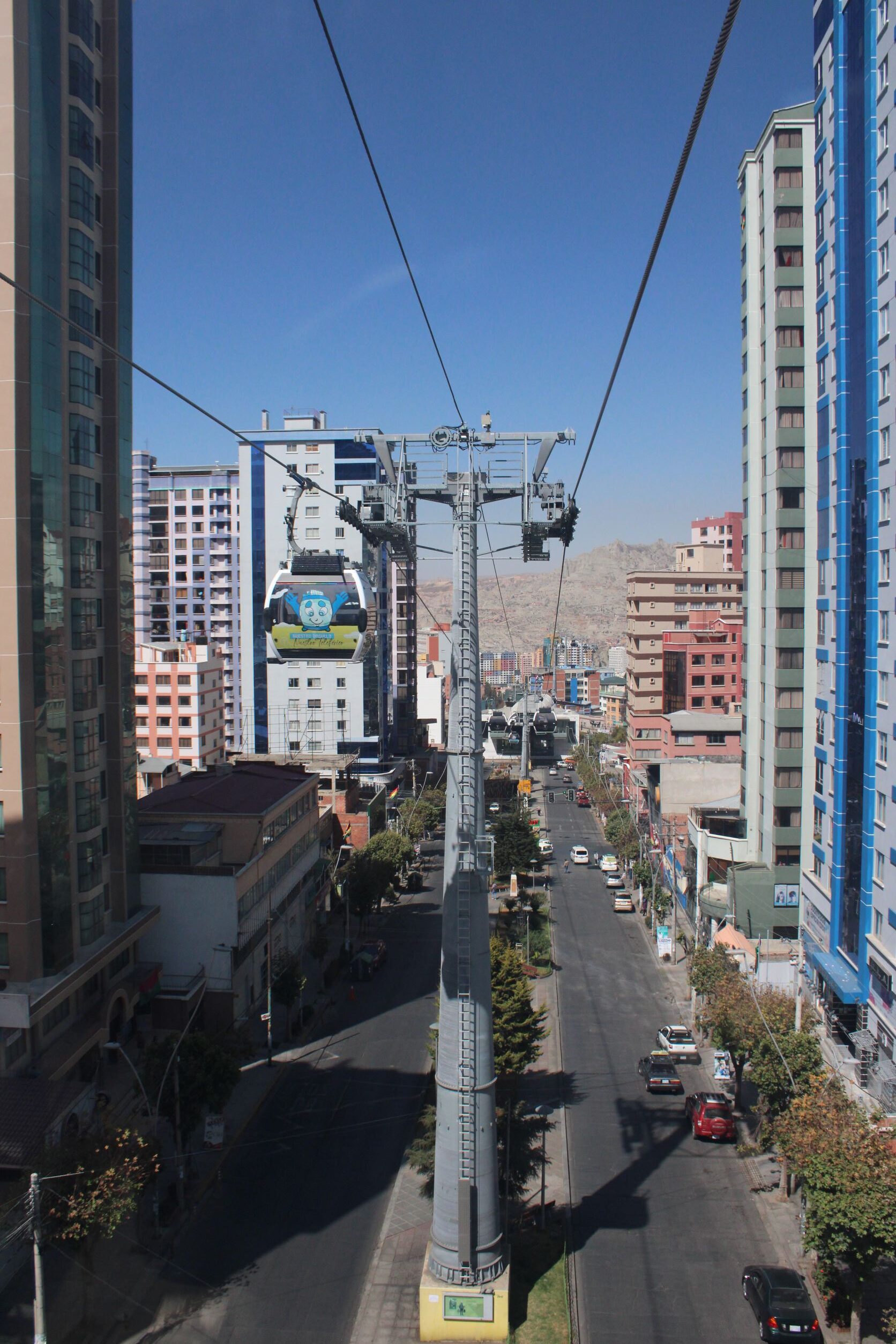
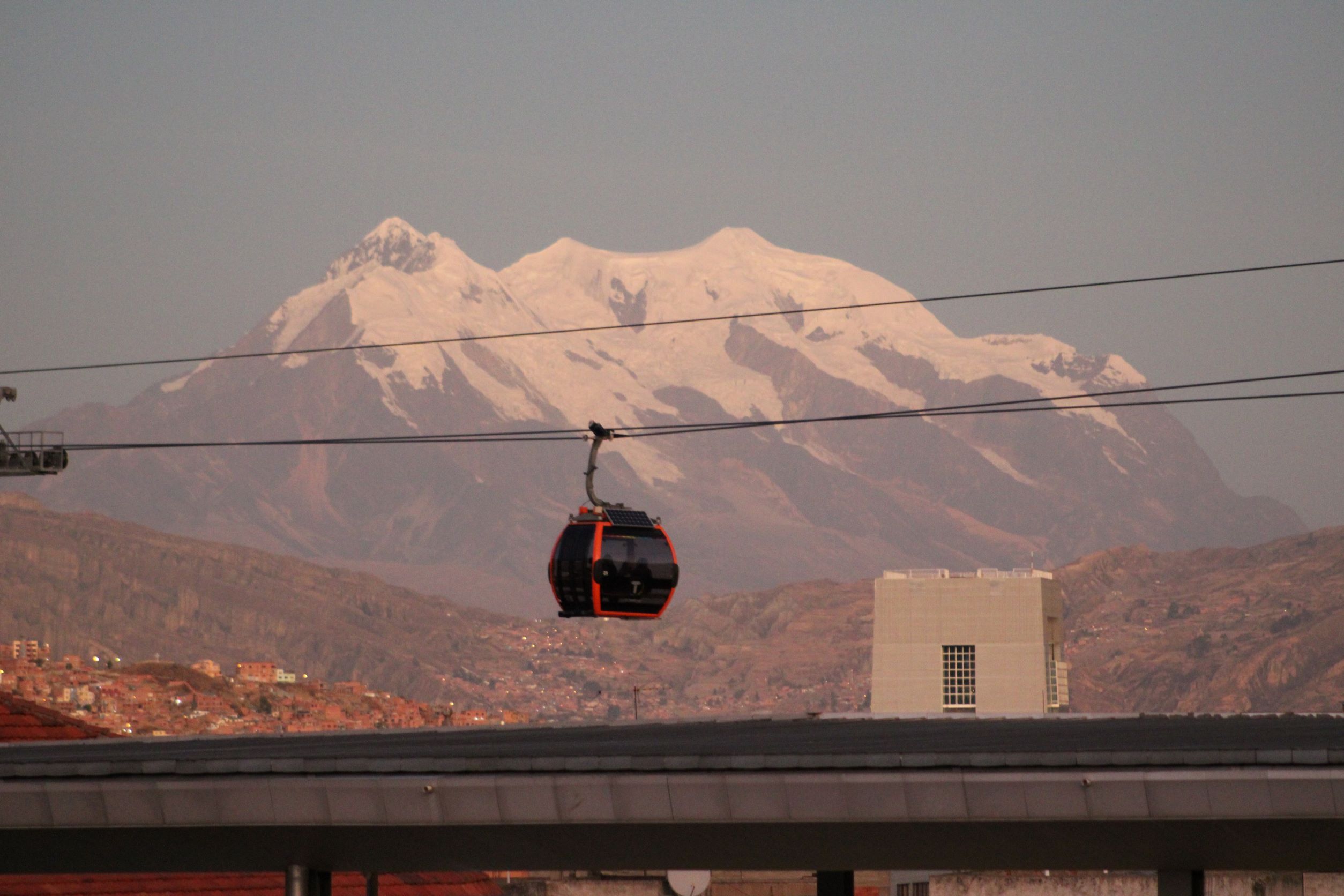
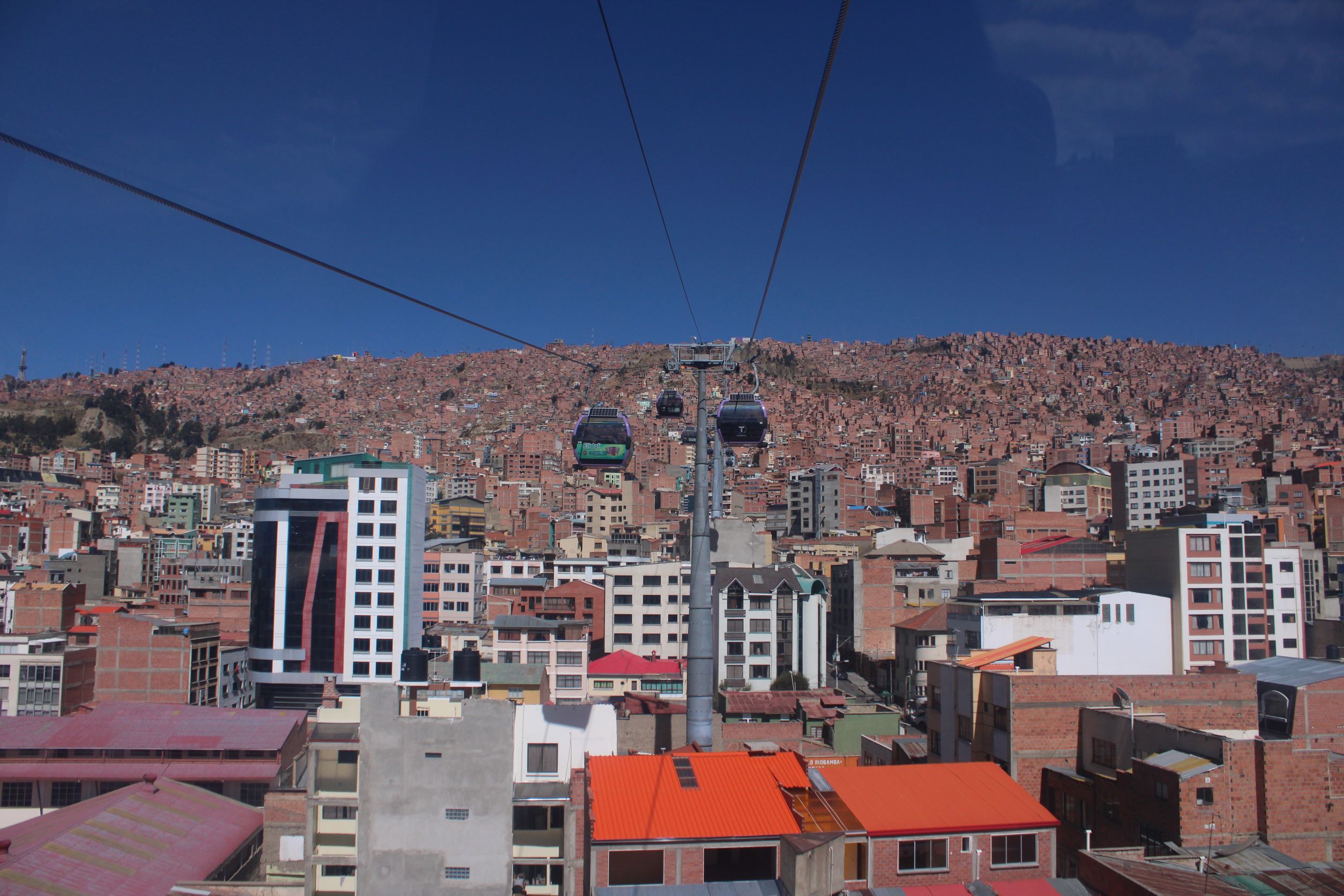
    • Mi Teleferico: longest and highest urban cable car network (Pics 3-10)

    Pic 3: On the Orange line feat. Illimani       Pic 4: View of the city from the Orange line 

    Among the many interesting attractions, we are going to focus on crossing the air space of La Paz city on Mi Teleférico while enjoying a magnificent view of the city. Mi Teleférico is a public system of transportation used by local people to overcome both the often jammed traffic and the steep streets of the city. It consists of 26 stations and includes 10 lines: Red, Yellow, Green, Blue, Orange, White, Light Blue, Purple,  Brown and Silver. As shown in my pictures, you get to see a big portion of the city on any color line. Which really caught my eye when I got on my first ride back in 2016. Not only do you get to your destination faster, you get to enjoy the view of the city. 

    Pic 5: In city on the White line     Pic 6: Ground view of the Silver line 


    If you are like me, you might be wondering how this type of machine works? How can it hold a car full with passengers up in the air without falling? Gondola lift is a type of transport that is mainly supported by cables in a continuous system. What is a continuous system you ask? Great question, to my understanding it is a system that runs smoothly with no delay, a continuous relay of cable cars from station to station. The cable cars rely on the cable rope because the cable car itself has no sort of power, like an engine. The system is passed through a drive bullwheel and returning bullwheel which the car’s cable is attached to. What I didn’t know is that there are different grip installations on the cable, the fixed grip and the detachable grip. As they are named, the fixed grip is permanently attached to the cable as both the wheels turn. On the other hand, the detachable grip detaches the cable from the car letting passengers enter and exit at a reasonable time 

    Pic 7: Red Central Station feat. Illimani  Pic 8: Close up of a cable car feat. Illimani 


    Pic 9: On the Purple line heading to the Pic 10. Purple Line going up to its station


    References:

    1. Altitude Sickness Bolivia & Peru: How to prevent it – bolivia hop. Bolivia Hop. (2021). Retrieved September 20, 2022, from https://www.boliviahop.com/altitude-sickness-peru-bolivia/ 
    2. 3D Living Studio. (2022, January 7). How Cable Cars Work and Detach From The Cable [Video]. YouTube. https://www.youtube.com/watch?v=i2gxfB1aW48&ab_channel=3DLivingStudio 
    3. Hinson, T. (2015, February 10). 10 of the world’s Best Cable Car Rides. CNN. Retrieved September 20, 2022, from https://www.cnn.com/travel/article/worlds-most-amazing-cable-cars/index.html 
    4. Lewis, R. (2021, July 13). 13 tantalizing Lake Titicaca facts to know. Rainforest Cruises. Retrieved September 26, 2022, from https://www.rainforestcruises.com/guides/lake-titicaca-facts#:~:text=It%20is%20world%2Drecord%20breaking,and%20Bolivia%20to%20the%20east 
    5. Unger, E. (2021, May 3). These salt flats are one of the most remarkable vistas on Earth. Travel. Retrieved September 20, 2022, from https://www.nationalgeographic.com/travel/article/how-to-see-salar-de-uyuni-salt-flats-bolivia#:~:text=Plan%20your%20trip%20with%20these%20tips.&text=Bolivia%27s%20Salar%20de%20Uyuni,prehistoric%20lakes%20evaporated%20long%20ago 
  • A Reflection On Divisive Foods: Coconut Water

    A Reflection On Divisive Foods: Coconut Water

    Everyone’s relationship with food is a unique one and often changes and fluctuates over time. For some, it’s simply a means of survival, and for others, it can be what they most look forward to during the day. I personally fall into the latter category and enjoy indulging in a large variety of foods whenever possible. But even with my open and adventurous nature towards different foods, I’ve always wondered why there are some foods that I strongly dislike but are otherwise loved by my friends and family. What is it about our relationship with food that causes us to love or hate certain dishes or ingredients? These “divisive foods”, as I’m choosing to call them, can be very polarizing in society, and over the past few months, I’ve found myself thinking about why these foods evoke this black-and-white response.


    Food is multidimensional

    Foods possess a variety of traits (besides the taste) that define them. Some have different chemicals that can react with compounds in our body, others have unique textures that can satisfy or disgruntle us, and others still can hold special memories associated with them through experiences. I believe these additional traits are the key to understanding why foods can be so polarizing. I hope to create a series out of several different popularly divisive foods, but for now, I’d like to discuss in particular the properties of coconut and coconut water.

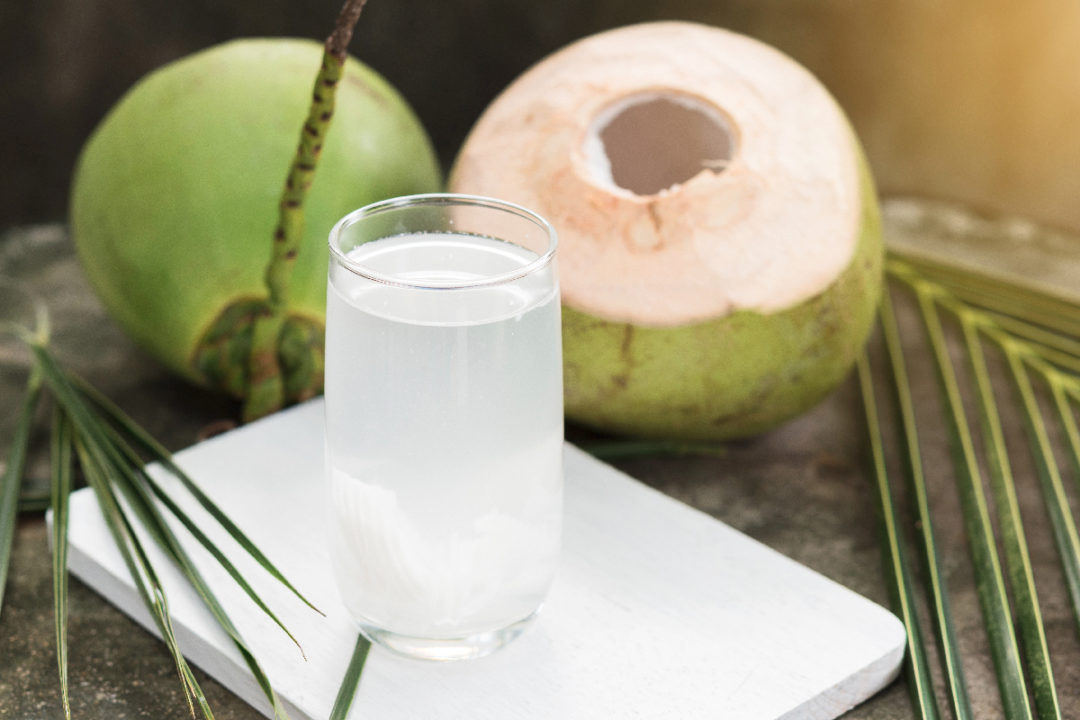
    Coconut. You either like it or you don’t. While coconut itself has a laundry list of traits that might cause polarization over it, I’m particularly interested in what’s inside them– coconut water.


    My First Impressions of Coconut Water

    To start off with a little anecdote, I recently tried coconut water for the first time ever. I’m personally not a huge fan of coconut to begin with, (the texture of desiccated coconut shavings is especially not my favorite), but my significant other enjoys it so much that I decided I would give it a try to see what all the fuss was about. Long story short, I absolutely hated it and was completely disgusted by the taste immediately after it hit my tongue. I spent the next 20 minutes scrambling to eat or drink anything that would get the taste of it out of my mouth and was baffled at how anyone could stand to drink a whole glass of it. As you can imagine my s/o was quite offended and shocked by my violent reaction and quickly began an interrogation as to why I disliked the coconut water so much. 

    My first impression was that it somehow tasted spoiled. We knew for sure that the coconut water was not expired, but to me, it somehow tasted like how watered-down sour milk might taste. This came as a surprise to my s/o as he interprets the taste as pleasantly sweet and refreshing– the very opposite of what I tasted. Were we really drinking the same beverage? How is it that two people can have such different experiences tasting the same thing? These thoughts lingered in my mind for weeks following my taste test.


    The Truth Behind the Taste

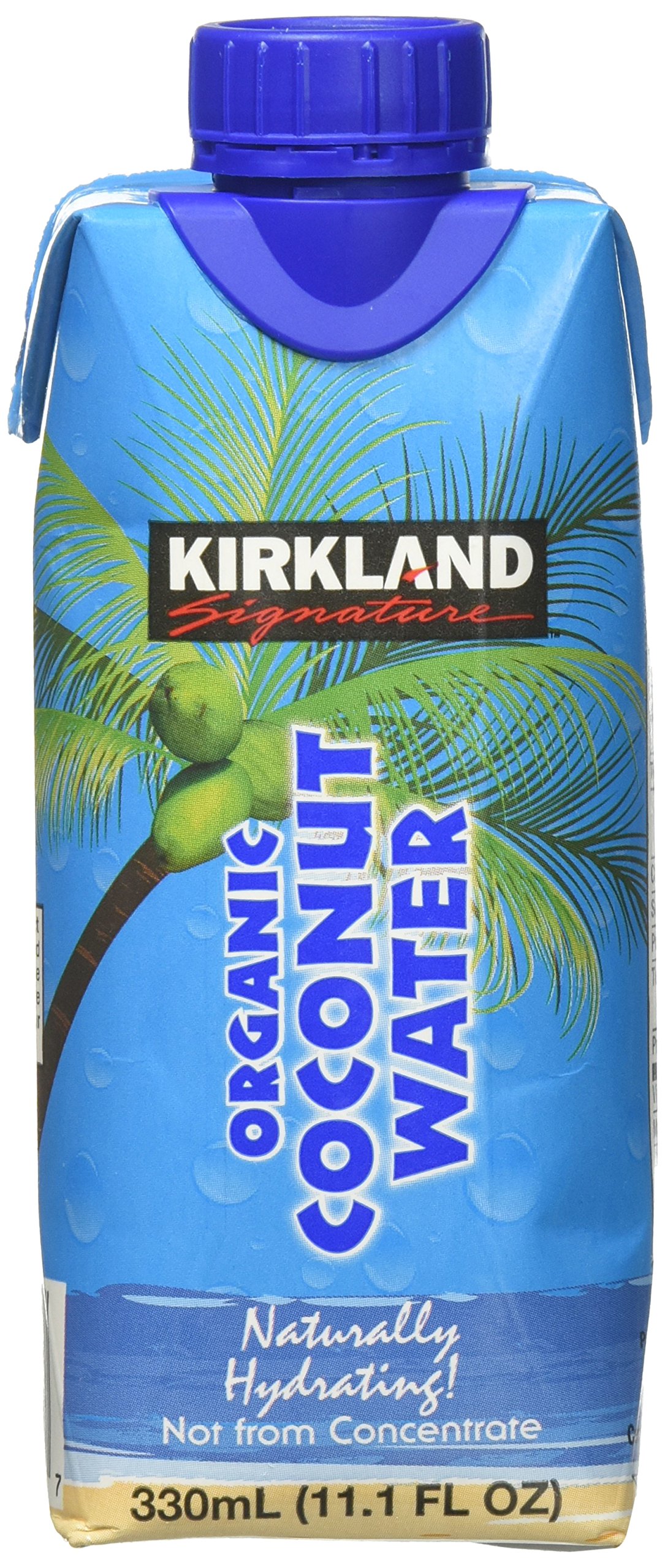
    After some research, I found out that pasteurization may be to blame. Pasteurization is the partial sterilization of a product, typically milk or wine, that makes it safe for consumption and gives it longer shelf life. This is done by heating up the product and subsequently denaturing all enzymes in the product that may cause future spoilage. While this sounds like a great mechanism for sterilizing coconut water, it also greatly alters the flavor. In particular, this type of pasteurization can introduce a burnt-like flavor to the drink, which may explain why it tasted so funny to me. Fresh coconut water apparently tastes very different from packaged and pasteurized coconut water and is widely enjoyed in many South Asian cultures. This difference can also be compared to the contrast in taste between store-bought orange juice and freshly squeezed orange juice. While the ingredients used are practically the same, they taste different due to one being pasteurized with most claiming that the freshly squeezed juice tastes better.

    Why is it that this flavor detraction is so strong in coconut water, but is less noticeable in products like milk? This is likely due to the long history of milk pasteurization that has allowed cultivators to perfect the level of pasteurization that both sterilizes the product to make it safe for consumption and preserves the flavors that we know and love. Coconut water pasteurization is a bit more difficult to strike a balance with, mostly because so much of its flavor profile is because of the enzymes that get removed during the process. It certainly makes sense then for people to swear by fresh coconut water and enjoy its natural properties for the tradeoff of shorter shelf life.


    The Verdict

    After exploring the properties of pasteurized coconut water, it can be easier to see why it’s so divisive among people. While some enjoy the flavor of coconut, others strongly dislike it, and whether that be due to pasteurization or simply an aversion to the flavor profile and aftertaste can vary from person to person. Reflecting on my experience with coconut water has inspired me to try fresh coconut water to see if I might enjoy the raw, unaltered flavor of the tropical fruit, but until then, I think I’ll elect to keep coconut out of my fried shrimp and away from my pastries.