We’ve all been there: your friends pass you the aux cord at a party and you play your favorite songs only to be met with sighs and groans or –even worse– silence. These are some bangin’ tunes that make you smile. Why do others find those same songs to be boring or “not their cup of tea?” When we like a certain song, dopamine is released into the brain and makes us feel happy or euphoric. This causes us to like a song a little more than your friends and makes you want to listen to more songs in that genre. But what causes our brain to release this chemical? Psychology may provide the answer regarding the inner machinations of the human mind.

Our Emotions:
Music affects us in three major ways: it serves as a nice distraction, stimulates internal curiosity, and can affect our emotional state. For example, people might listen to music to destress or have as background noise– meanwhile, other people could use those same songs to hype themselves up for a workout. These differences lead us to choosing different genres and songs.
Music is also interpretive and allows us to choose our own meaning and significance for a certain song. This subjectivity allows different people to determine that in different ways. The same line that means nothing to you may make your friend very emotional. Take your favorite song: is there any reason why you really appreciate the song? Do you associate an emotion with the song? This may be a reason as to why there isn’t a favorite universal genre or song. Since music typically appeals to the emotions, people may associate a certain feeling with a song and grow attached to it. For instance, some of my favorite songs are those that I’ve listened to with my friends and raved about or the ones that my former piano teacher introduced me to.
Identity:
In addition to personal emotions, our perceptions of others and ourselves also influences our taste in music. People have often used music as a way to express themselves and their identity. Because of that, people have associated some songs with certain archetypes of people. According to one study that asked participants to map certain traits to genres, they associate genres like pop and country were more extroverted. On the other hand, jazz and classical were thought of as more reflective.

Culture:
Our preferences for certain songs may also be cultural. If we’re exposed to a lot of a certain type of music, we may lean towards more songs that contain those same elements. There are two forms of chords: consonant and dissonant. Consonant chords contain frequencies that are different enough that they don’t seem to clash. Meanwhile, dissonant chords sound a bit more chaotic for lack of better terms. Western music (like pop) usually contains a lot of consonant chords, and Americans have a strong preference for these sounds. However, some other cultures do not show that same, strong preference.
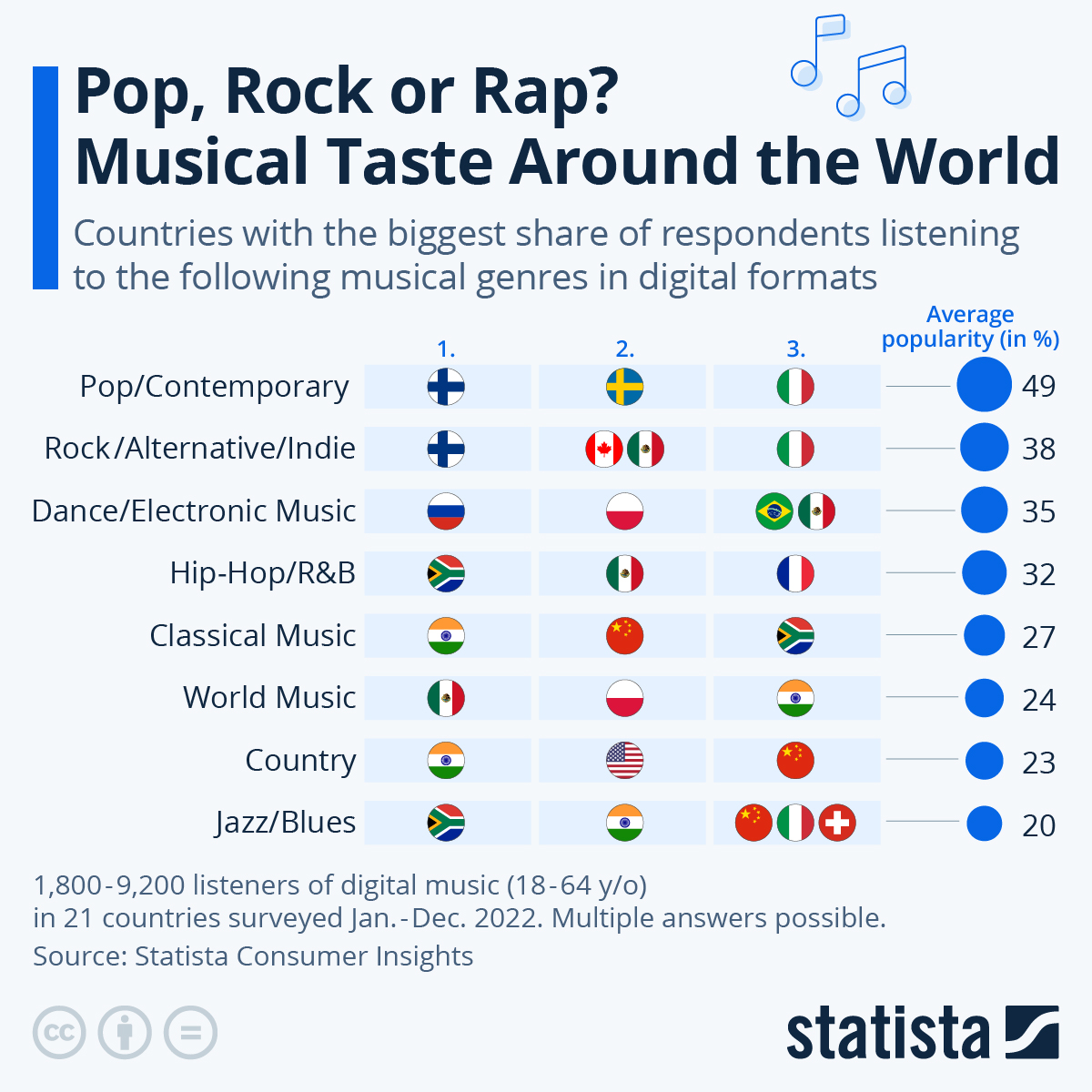
Whether it be because of what we were exposed to growing up or our self-identity, music tends to distinguish us from others. Although not much research has been done to see if it is truly connected to our personalities, we still manage to label people according to the music they listen to. Perhaps the real question is if the songs we vibe to influences if people vibe with us.
Resources:
Anne Trafton, Anne. “Why We like the Music We Do.” MIT News | Massachusetts Institute of Technology, Massachusetts Institute of Technology, 13 July 2016, https://news.mit.edu/2016/music-tastes-cultural-not-hardwired-brain-0713.
Chamorro-Premuzic, TomasPsychology. “The Psychology of Musical Preferences | Psychology Today.” Psychology Today, 14 Jan. 2011, https://www.psychologytoday.com/us/blog/mr-personality/201101/the-psychology-musical-preferences.
Clark, Katelyn, et al. “Why Do We like (or Dislike) Certain Music?” Grok, 30 Jan. 2021, https://grokonline.com.au/2021/01/31/why-do-we-like-or-dislike-certain-music/.