Day: December 13, 2020

  • Three Dog Star Night (Part 1)

    Three Dog Star Night (Part 1)

    I am just old enough to remember a time when most textbooks only spoke of exoplanets (i.e. those outside our solar system) in the hypothetical sense, their existence taken as an assumption rather than demonstrable fact, while the question of whether our 8-planet solar system was typical or an anomaly remained a hotly-debated topic. Despite over a century of attempts and subsequent erroneous claims, it wasn’t until 1992 that the first confirmed exoplanet was discovered, two of them as a matter of fact, orbiting the pulsar PSR B1257+12. As surprising as this was to the scientific community, the high likelihood that the planetary pair had formed as the result of a merger between two white dwarfs rather than a collapsing gas cloud meant the world would have to wait another 3 years for the confirmation of a “true” planet orbiting a main-sequence star like the Sun. The discovery ushered in a new era for astronomy and as of November 1st, 2020 there have been a whopping 4,370 exoplanets confirmed in 3,230 star systems. This menagerie of other worlds, ranging from “hot Jupiters” and lava worlds to gas and ice giants and seemingly everything in between stands in stark contrast to the apparently silent heavens, leaving a profound question unanswered:

    “Where is everybody?”

    Despite what many a crackpot relative or internet crank will tell you, humanity is, to the best of our knowledge, completely and utterly alone in a universe so vast it defies comprehension, a contradiction commonly referred to today as The Fermi Paradox. The concept of aliens and the foundations of the Fermi Paradox have been around for a surprisingly long time, entering the Western conscience with the speculation of Epicurean philosophers like Democritus of ancient Greece, who today is famous for the first conception of atoms. From the viewpoint that the world was merely a chance jostling of these atoms, they argued it was not only reasonable, but exceedingly likely that there exist other inhabited worlds similar to our own. To paraphrase the argument: “who ever heard of a single ear of wheat growing alone in a vast, fertile field?”

    Should you happen to see this mentioned on the next episode of Ancient Aliens, it’s worth noting that Democritus’s ideas about “aliens” (and atoms) are not quite as modern as they sound, instead more akin to our modern idea of beings from “parallel universes”, not habitable planets orbiting other stars since the ancient Greeks had no idea what stars and planets actually are, much less orbits. To them, these other worlds existed but were forever inaccessible to us. What’s important is that the core idea, that it’s improbable that life should arise on Earth and only on Earth begins here. Its dismissal by the Aristotelians, who preferred what can be known to what might be and whose influence on Western culture remains to this day, caused such discussion to take a back seat during the early Middle Ages, but the idea remained nonetheless, never being fully dismissed as “impossible” by theologians who were wary of placing what they saw as limits on the omnipotence of the Christian God. Contrary to the popular misconception that discussion of such matters would get one labeled a heretic and burned at the stake, the idea of aliens inhabiting other worlds within our universe that were, at least in theory, accessible to us in some way first arose in the Western world during the late Middle Ages. In his influential work De Docta Ignorantia (1440), Nicholas of Cusa argues that:

    Life, as it exists on Earth in the form of men, animals and plants, is to be found, let us suppose in a high form in the solar and stellar regions. Rather than think that so many stars and parts of the heavens are uninhabited and that this earth of ours alone is peopled – and that with beings perhaps of an inferior type – we will suppose that in every region there are inhabitants, differing in nature by rank and all owing their origin to God, who is the center and circumference of all stellar regions (II, p. 12).

    His work sparked intense discussion among Christian theologians over whether or not such aliens had been “redeemed” and even whether “original sin” would apply to them. After all it was probably a safe assumption that they were not descended from the mythical Adam and Eve.

    The idea stuck around and was eventually taken up by the scientists of the modern era, including the likes of none other than Harlow Shapley who stated in an interview for The Sydney Morning Herald (1959) that:

    The universe has 10 million, million, million suns similar to our own. One in a million has planets around it. Only one in a million million has the right combination of chemicals, temperature, water, days and nights to support planetary life as we know it. This calculation arrives at the estimated figure of 100 million worlds where life has been forged by evolution (p. 5)

    Five months later, Frank Drake performed the first systematic search for extraterrestrial intelligence by monitoring two nearby sun-like stars, 6 hours per day for four months, searching for radio signals around the emission frequency of neutral hydrogen, the most common element in the universe. The reason for this frequency choice is simple: if somebody out there wants their message to be heard, they’ll put it where everyone is already looking. A year later, while preparing to host a meeting for SETI to discuss the future potential of such search efforts, he penned the equation which would bear his name.
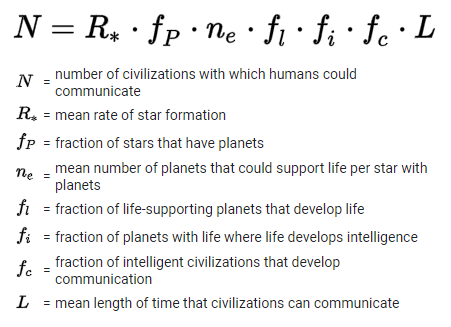
    Though initially conceived as little more than a mathematical conversation piece, The Drake Equation (as it came to be known) at last allowed astronomers to estimate the number of intelligent civilizations within our galaxy, for the first time couching the discussion in numbers rather than idle speculation. The only problem? Nobody had any real idea what any of these numbers actually were. The various numbers proposed at the meeting by Drake and his colleagues as an “educated guess” give a final value somewhere between a minimum of 20 and a maximum of 50,000,000. Such an enormous range perfectly illustrates their aforementioned uncertainty. In the six decades since, the data from countless observations, surveys, and space missions from NASA, ESA, and observatories around the world have finally shed some light on a few of these parameters which, in theory, allow us to narrow down the estimates a bit.

    Mean Rate of Star Formation, R*

    Our first parameter in the Drake Equation is R*, the average rate of star formation. For our purposes here, we are only looking for life within our own galaxy so we will use the rate of star formation in the Milky Way. Calculations from the available data suggest that somewhere between 0.68 and 1.45 solar masses of galactic material goes into making new stars every year. To find the star formation rate, we need to also account for the average mass of new stars using the available empirical data which indicates a value of around two stars per solar mass worth of material. Multiplying these two numbers together gives us a value between 1.5 and 3 new stars per year formed in our galaxy, a value slightly higher than the original 1961 estimate of 1 per year.

    R* = 1.5 – 3

    The Fraction of Stars that have Planets, fp

    As mentioned previously, the exoplanet surveys thus far found 3,230 star systems that contain planets. However this figure only tells us the number of stars that have been found to possess planets, not the fraction of them that do. The total number of stars surveyed is much larger at over half a million. Dividing the two numbers gives a value for fp of less than 1%. At first glance, this looks pretty dismal, but there are some important caveats that we need to account for. The majority of exoplanet discoveries were made using the transit method, which makes continuous observations of a star’s light to look for periodic dimming caused by a planet passing in front of it directly along our line of sight. Our chances of observing such dimming is directly related to the star’s radius (bigger is better) and inversely related to the planet’s orbital distance from its host star (closer is better). Should our line of sight to a given system happen to be anything other than virtually edge-on, the transit method will not detect any planets there, even if there actually are. For those that we are fortunate enough to be observing nearly edge-on, if a planet’s orbit is too wide then it will not pass in front of the star from our perspective, thus there will be no dimming and the planet will go undetected. Finally, if a planet is too small, then the star’s dimming could be too small for our instruments to detect and the planet will go undetected.

    It perhaps seems that we’re out of luck on getting any reasonable estimates, but statistical analysis of the transit data combined with that of surveys using other methods of planet detection such as doppler spectroscopy and gravitational microlensing point towards a conclusion that even the optimists of the 1960’s would consider absolutely astonishing; fp may very well approach 1, far larger than the maximum estimated value of 0.5 made 60 years ago! In other words, it’s possible that nearly every single star in our galaxy has one or more planets!

    fp ≈ 1

    Thus far things are looking better than ever for the potential development of intelligent, detectable civilizations (IDCs) in our galaxy, only deepening the paradox. However from here on our estimates for successive factors in the Drake Equation become increasingly speculative.

    The Fraction of Potential Life-Supporting Planets that Develop Life, fl

    This number is even more difficult to estimate than the previous factor. Our current sample size for life-supporting planets that go on to develop life is 1, with a possibility of 5 more if Mars, Venus, Titan, Europa, and/or Enceladus are eventually found to have or have had life. Some scientists argue that life arises as a rule virtually as soon as conditions are right, so this value should be ‘one’. Others argue it may actually be a freak occurrence even in all the right conditions, so this number should be tiny. In the case of our planet, life appears to have developed as soon as the conditions were right, but any attempt to extrapolate this to other planets contains heavy anthropic bias as our model planet (Earth) was not chosen randomly but rather by the organisms already inhabiting it. There currently is no evidence that abiogenesis occurred more than once on Earth, yet if it were a common phenomenon we might reasonably expect it to have occurred several times. It certainly could have, but all known terrestrial life shares a common origin, meaning if it ever did then those lineages are most likely long gone. If abiogenesis does indeed turn out to be an incredibly rare event, there is still a potential loophole. Remember, we only care about the number of habitable planets that go on to actually develop life, not how that life got there in the first place. It is entirely conceivable that planets, including our own, could have been seeded with microbial life that hitched a ride on a rogue piece of post-collision debris ejected from another already inhabited planet, a hypothesis known as panspermia. A technologically advanced civilization could also choose to do this intentionally in order to spread its genetic family throughout the galaxy. It may sound far-fetched, but humanity already has the capability to do this. Scientists and engineers go to painstaking lengths to sterilize spacecraft in order to avoid unintentionally ‘infecting’ other planets or moons with potentially invasive extremophile Earthlings. The various proposed panspermia hypotheses are a topic that honestly deserve an article all their own, so for now we will wrap things up optimistically and use the original estimate made by Drake and his colleagues back in 1961.

    fl ≈ 1

    You may have noticed we skipped over a factor, the average number of habitable planets per star with planets. Like panspermia, this factor warrants its own discussion and is the subject of part two in this series. Stay tuned!
  • Three Dog Star Night (Part 2)

    Three Dog Star Night (Part 2)

    Welcome back to our discussion on the Drake Equation and the Fermi Paradox! If you haven’t read part 1 already, it goes without saying that you should start there! This time around, we will be discussing what we know about habitable planets… or at least what we think we know. Strap in, friends. This is going to be a long one.

    Before we proceed any further we need to introduce the concept of ‘filters’, i.e. factors that may inhibit the development of life and, ultimately, intelligent, detectable civilizations (IDCs) on a given planet. It is crucial to keep in mind that all proposed filters are not absolutes, rather they are speculative reasons why IDCs may be rare, thus resolving the Fermi Paradox. For convenience we can designate “Lesser” filters as those which eliminate 0% to 50% of all planets, “Minor” filters which eliminate 50% to 90%, “Major” filters which eliminate between 90% and 99.9999%, and finally “Great” filters which eliminate 99.9999% to 100% of planets. With this caveat in mind, we move on to our next parameter in the Drake Equation.

    The Average Number of Habitable Planets per Star with Planets, ne

    In order to determine what types of planets can support life, we first need to know what conditions are actually right for life, a difficult task given our current sample size of one. Of the eight planets in our solar system, only Earth is known to host any life at all. Though the emerging field of astrobiology is beginning to shed new light on the issues of whether or not life could have existed on Mars and Venus in the past or concurrently in the subsurface oceans of moons like Enceladus and Europa, the question remains open. Note that we are only looking for planets with the potential to support any life for this number, be it microbial or otherwise. We certainly do not expect microbes to start sending messages out into space, but the distinction between life and intelligent life is one that will be accounted for by subsequent numbers in our equation. This will allow us to save many of our potential filters for later and simply focus on habitability in all its possible forms. Sadly, those that remain are the ones we are most certain about.

    We can begin to approach the problem by flipping it around, instead asking the reverse, “What conditions preclude life from developing?” If we focus exclusively on planets, our sample size has septupled since there are seven planets in our solar system that are known to not support life. Investigating the factors that prevented life from existing for a significant amount of time provides us with some starting filters which allow us to eliminate entire swaths of planets from the veritable zoo of those discovered.

    Filter 1 – Location, location, location!

    The clichéd real-estate adage provides us with our first filter. Since we are focusing solely on the Milky Way, we don’t need to worry about galaxy type. Our own existence is proof that our galaxy is among those that are right for hosting life, so we need not concern ourselves with filters like active galactic nuclei, galaxy mergers, etc. However many astronomers propose that a star system’s location within a galaxy is an important factor. There may very well be a so-called “habitable zone” on the galactic scale in addition to that found around the individual stars themselves. Close to the crowded galactic center a system is likely to be subjected to nearby supernovae, migrating black holes, asteroid/comet impacts, passing pulsars, and other devastating natural phenomena with the potential to sterilize entire planets. On the other hand, systems at the galaxy’s edge are unlikely to have enough nearby gas and dust to sufficiently drive the formation of stars and planets. The average stellar metallicity (how much of a star is composed of elements heavier than helium) declines as distance from the center increases, so stars near the galaxy’s edge are expected to have fewer rocky, potentially life-sustaining planets. As it turns out, this may not ultimately be the case as some data suggests rocky planets could be more common around lower-metallicity stars, but for now this will be our working assumption.

    This limits the expected life-sustaining region of our galaxy to stars whose orbits lie from at least 1 to at most 10 kiloparsecs from the center. For reference the Milky Way has a radius of only about 15 kiloparsecs, and with a little data and some rough assumptions, one can calculate that only around 10% of all stars in our galaxy lie in this region. This number is still staggeringly large and includes, to first order, around 20-40 billion stars or so. Of those we can reasonably exclude the 10% of stars in our galaxy that are not on the main sequence. Given that the average number of planets per star may be as high as 10 on the extreme optimistic end, this leaves a maximum of about 360 billion planets to work with.

    In addition to the galaxy, the stars themselves each have their own habitable zones, defined as the range of orbital distances within which liquid water could conceivably exist on the surface in large quantities. There are only three planets in our solar system that exist more or less within the sun’s habitable zone: Venus, Earth, and Mars. Of these three, Venus and Mars are each close to the edge of what can be considered the habitable zone, and given the concept’s speculative nature these boundaries could grow or shrink with new information. The most we can do right now is place an upper limit on this value of 6, based on research by Dr. Christa Van Laerhoven and her colleagues, though the actual number is almost certain to be lower. For simplicity, we can estimate the average number of planets in a star’s habitable zone to be 3. The size and location of the habitable zone is determined by the type of star. Large stars (O, B, and A types) account for only about 7% of all stars and tend to burn out too soon for complex life to really gain a foothold. It’s uncertain whether planets around smaller, red dwarf stars might host life. The data indicates the planets orbiting in their habitable zones may be tidally locked to the star just as the moon is to the Earth, with one side facing the star at all times. While this doesn’t preclude life from forming, it certainly makes things more difficult. Red dwarf stars may account for as much as 75% of the stars in our galaxy, so whether they should be included in the search for life is a crucial question that will hopefully be answered as more data becomes available. Nonetheless we have our next filter: of the main sequence stars, at most 93% of them are expected to be habitable.

    There are without a doubt more particulars of planetary arrangement that come into play here, such as having a stable, mostly circular (low eccentricity) orbit, the role gas giants like Jupiter may play as cosmic vacuum cleaners, and more, but the only thing we know for sure regarding the rest of the Location Filter is that we just don’t know.

    Filter 2 – Earth-Sized:

    Planets that are too large tend to be gas or ice giants, with no solid surface and crushingly thick and turbulent atmospheres. Life could form here, but if it does, it’s likely the exception rather than the rule. At the same time, the cores of planets that are too small tend to cool too quickly and lose their magnetic fields and subsequently their atmosphere to stellar winds. Mars is a perfect example of this. Looking at the best current estimates, we can see that only around 1,237 of the 4,370 exoplanets discovered so far are “Earth-sized”, i.e. range from 0.8 to 2 Earth radii. We can be generous here and allow for the fact that exoplanet survey methods are biased towards larger planets by estimating that perhaps 40% of planets are Earth-sized.

    Filter 3 – Atmospheres, Plate Tectonics, and Moons:

    Being Earth-sized helps when holding onto an atmosphere, but this does us no good if it isn’t the right atmosphere, and we need look no further than our own solar system for the perfect illustration of this. Venus is 93% the mass of the Earth, yet its atmosphere is crushing at a choking 100 times the density of Earth’s. Unlike our own atmosphere which is about 70% Nitrogen, Venus’s atmosphere is more than 96% CO2, 30 times the CO2 concentration of our own atmosphere. This runaway greenhouse effect famously makes Venus the hottest planet in the solar system, with surface temperatures hot enough to melt lead. Unfortunately we have no real data for this yet as we lack the ability to reliably observe exoplanet atmospheres, though that is expected to change with the launch of the James Webb Space Telescope set to launch in October of 2021. For now, we will be generous and use our own solar system as the model by assuming that 50% Earth-sized planets do not have the right atmosphere for life.

    Two other factors that make Earth, well, Earth-like are plate tectonics and our Moon. Plate tectonics play a crucial role in cycling numerous elements, including carbon and phosphorus, in and out of the environment. It’s thought that Earth’s water and the theoretical collision with a Mars-sized planet which formed the moon are two of the main factors that got plate tectonics going. Venus, which lacks both, shows no signs of tectonic activity, past or present, even though its core is known to still be molten and active. The Moon is somewhat of an anomaly in its own right. Of all the planetary moons in the solar system, it is by far the largest relative to the size of its host planet. Its existence helps to stabilize Earth’s axial tilt and over billions of years, through a quirk of angular momentum conservation, gradually slowed our planet’s initially brisk rotation to the 24 hour day/night cycle we experience today. It also generates tides and thus tidal pools, which some theories for abiogenesis claim provided the conditions for the origin of life on the early Earth. Again, we will be generous here and presume that 1 in 2 Earth-sized planets in the habitable zone of their star are actually Earth-like.

    Filter 4 – Phosphorus Scarcity:

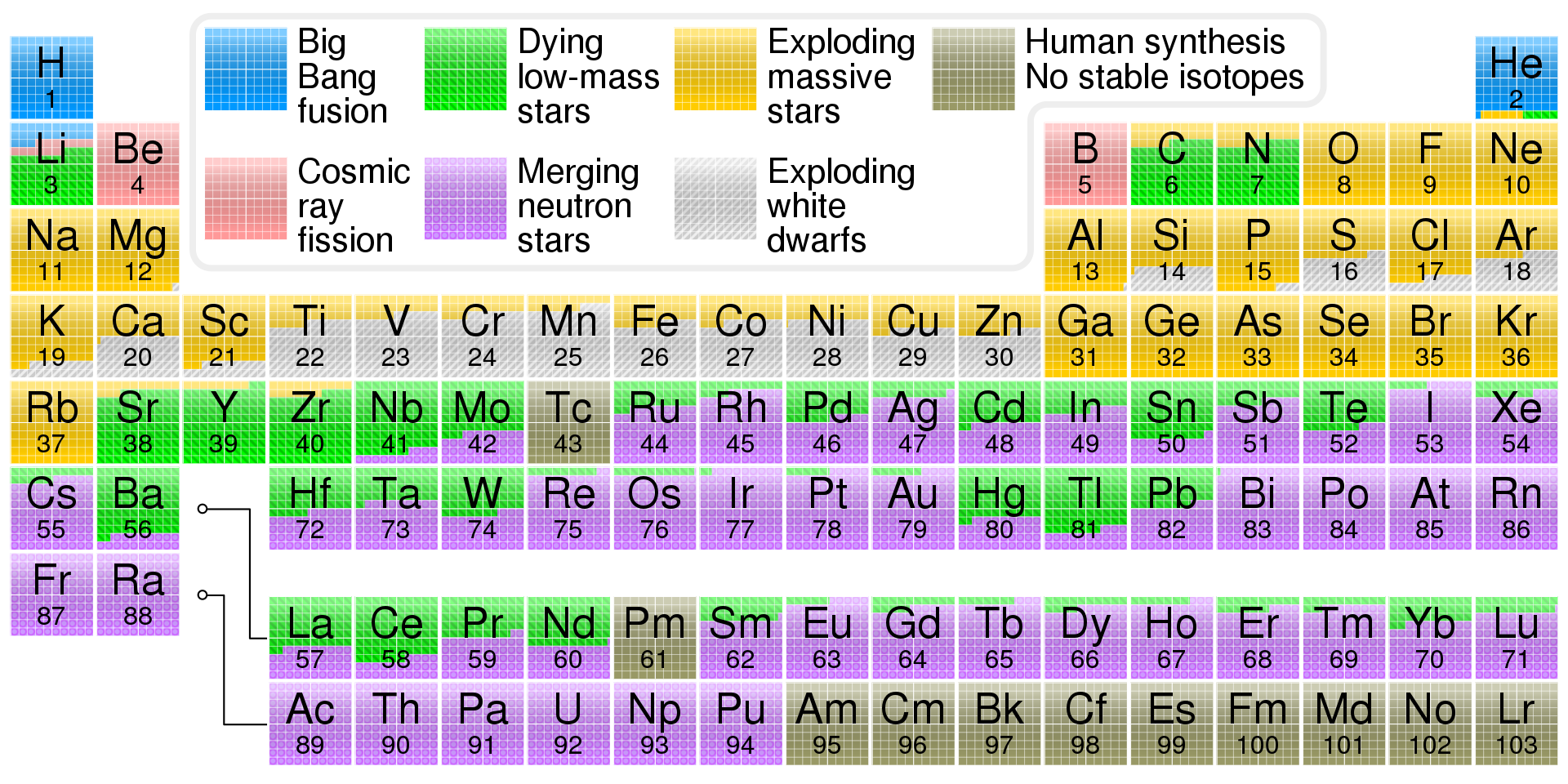
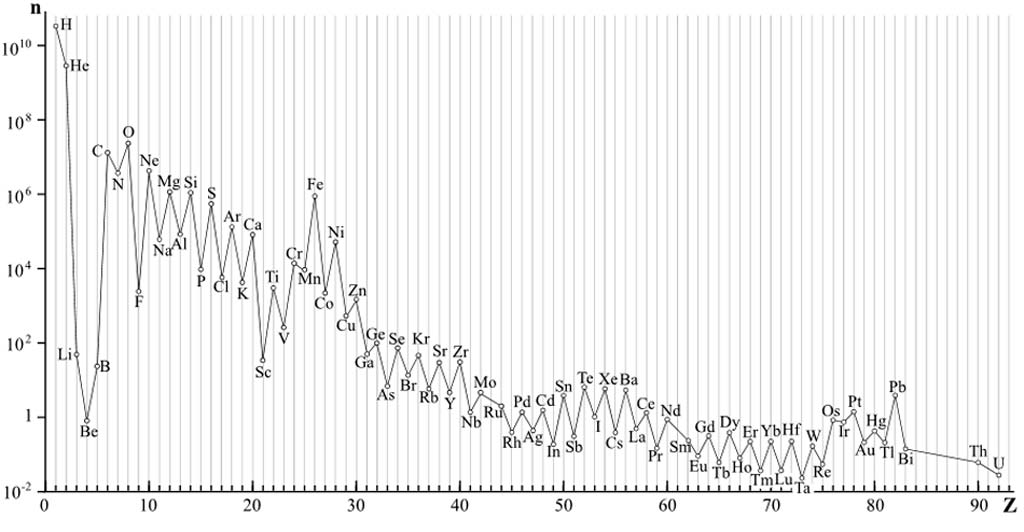
    A recent study of two supernovae remnants, the Crab Nebula and Cassiopeia A, by Dr. Jane Greaves of Cardiff University and her team suggests that phosphorus may be produced in vastly different quantities during supernova nucleosynthesis. It’s somewhat common knowledge, even among the general public, that the Big Bang produced only Hydrogen, Helium, and a possibly a small amount of Lithium, and that all elements higher on the periodic table were produced in the cores of stars as byproducts of nuclear fusion, a process known as hydrostatic burning, but this is only half of the story. Stellar nucleosynthesis can only account for the production of a specific set of elements, most of which have an even number of protons due to their fusion being reliant on Helium and none of which are heavier than Zinc (element 30). All elements with more than 30 protons can only be naturally produced by what happens after stellar nucleosynthesis ends, in the explosive deaths of stars and the violent collisions of their remnants. As the star collapses infalling matter piles up and is “bounced” back out, producing large numbers of neutrons and sending shockwaves through the star’s layers which quickly fuse lighter elements into heavier ones through the process of rapid neutron capture, known as the r-process. In fact the majority of the elements trace their origins to events beyond the cores of main sequence stars as can be seen in the chart below. All of this results in massive discrepancies in universal abundances between elements, shown in the second image. Taking particular note of what the data shows regarding the six elements considered most critical for life: Hydrogen, Carbon, Nitrogen, Oxygen, Phosphorus, and Sulfur. Phosphorus in particular is required for the metabolic processes of all known cells (via ATP) and forms the backbone of both DNA and RNA, yet it is by far the least common of the six.

    (By Cmglee – Own work, CC BY-SA 3.0, https://commons.wikimedia.org/w/index.php?curid=31761437, based on data by Jennifer Johnson at Ohio State University)

    The most likely production process involves a silicon-30 isotope capturing a neutron during the supernova, briefly becoming unstable silicon-31 before one of its neutrons emits an electron and an antineutrino to decay into a proton, transmuting the atom into phosphorus-31, the element’s only stable isotope. The problem is that silicon-30 is not the most abundant Si isotope, accounting for only about 3.1% of all naturally-occurring Silicon, and its cross-section for neutron capture is quite small, meaning a neutron has to hit it just right to get absorbed. Supernovae are not evenly distributed around the galaxy, and thus we already expect that phosphorus isn’t either. Should it be the case that Phosphorus is not a ubiquitous byproduct of supernova nucleosynthesis, the element will only be rarer and more unevenly distributed than previously thought. There could very well be entire swaths of the galaxy with virtually none at all.

    While it might be possible for life to develop that does not rely on phosphorus, the chances of that actually happening are probably slim, and such life would be the exception rather than the rule. We ourselves are composed of approximately 1% phosphorus, the planet’s crust is about 0.1% phosphorus, and the entire solar system is roughly 0.0007% phosphorus by mass. On the scale of the entire universe, phosphorus only accounts for about three of every ten million atoms, or 0.00003%, and would have been even lower than that when our solar system began to form 5 billion years ago. Naturally, older star systems are expected to have less phosphorus on average as fewer phosphorus-producing supernovae would have occurred prior to their formation. Even our apparent relative abundance of phosphorus is so low that it presents a problem for scientists seeking to tease out the origins of life. Phosphorus also tends to bind into molecules that are heavier and thus would have sunk towards the core during the planet’s formation, though the collision which we think formed our Moon may have played a role here in dredging some up from the Earth’s interior. Its common compounds also tend to be insoluble in water which is problematic since life processes are pretty much predicated entirely on water solubility. Unlike the Earth’s carbon cycle which is relatively quick on geological timescales and involves the atmosphere as well as the planet’s interior, the phosphorus cycle is one of the slowest and independent of the atmosphere, so biologically-available Phosphorus is only refreshed by tectonic activity. That life should rely so ubiquitously on phosphorus despite its apparent scarcity tells us either that phosphorus-based life is easier to form than non-phosphorus-based life or that life based on phosphorus has an evolutionary advantage over life that is not. Possibly even both. Water is quite common in the universe, and so it may be that Phosphorus is what makes Earth truly unique among the planetary zoo.

    Until there is conclusive evidence one way or another, we can take this potential filter with a grain of salt and estimate that only 50% of planets have a sufficient amount of Phosphorus present on the surface. We can now combine all our filters into one to calculate a final value for ne and find that several Lesser and Minor Filters have combined to form one Major Filter. With less optimistic estimates, such as excluding red dwarf stars, and a few more assumptions and factors accounted for, this has the potential to reach Great Filter status and serves as the foundation for the Rare Earth Hypothesis.


    ne, Optimistic = 3 x 0.1 x 0.9 x 0.93 x 0.4 x 0.5 x 0.5 x 0.5 = 0.0125

    ne, Rare Earth < 0.000001


    For now, this is where we will leave the second half of our discussion of Drake’s equation. We can take all the factors we’ve discussed so far, multiply them together, and multiply this value by the length of time life has existed on Earth (3.5 billion years) to get a somewhat crude estimate for the number of planets in the galaxy which might contain life in any form.

    NOptimistic = 131,250,000

    NRare Earth < 10500

    When compared against the hundred billion or so planets that are estimated to reside within the Milky Way, even our deliberately generous estimate indicates that only around 0.13% of planets harbor any life at all. If we apply the Rare Earth filter for ne, then only about 0.00001% of planets in the Milky Way are safe havens for life. These numbers will only diminish as we start accounting specifically for intelligent life in subsequent factors of the Drake Equation. After all, the Fermi Paradox is specifically about why we haven’t heard from any other intelligent life, not merely the chances that extraterrestrial life in general exists.

    Next time we’ll be discussing that second half of the Drake Equation and the implications further proposed filters have for our chances of detecting intelligent life within the Milky Way. Unfortunately, the last three factors rely heavily on speculation in the absence of virtually any reliable data, and we will delve deep into some of that speculation in part 3. In part 4 we’ll discuss the final factor of the equation and run some example calculations before finally delving into what the Drake Equation actually is. In the meantime, if you’d like to try your hand at estimating the number of inhabited planets or intelligent civilizations in the universe, you can use this handy link for calculating the Drake Equation.