Day: April 20, 2018

  • Legend of Sumeria – Exploring science in a new way

    Legend of Sumeria – Exploring science in a new way

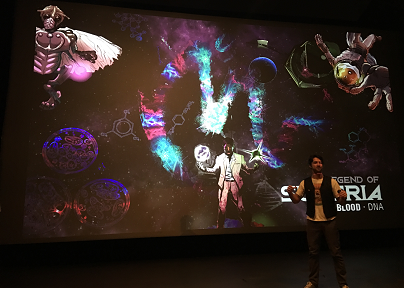
    I had the privilege to interview Biju Parakkeden; one of the co-creators of Legend of Sumeria, a thrilling new sci-fi graphic novel. Biju is a professor of bioengineering, and along with co-creator Jay Webb, and many of their illustrators,  they brought to life their views of modern development in science and how a possible future may play out.
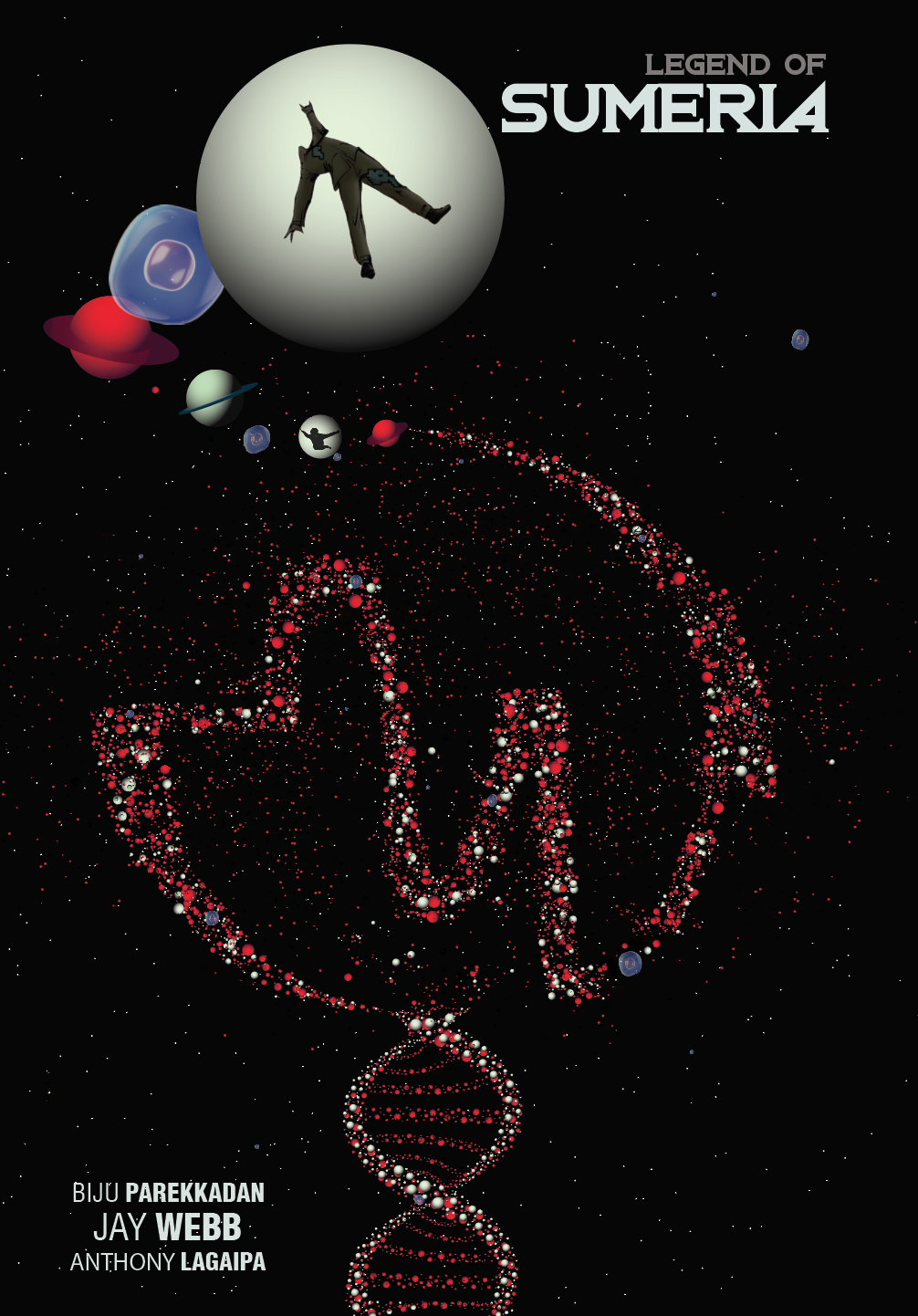
    Add this to your summer reading list!
    Add this to your summer reading list!


    Ok, so a good place to start off would be a summary. For someone unfamiliar with Legend of Sumeria what would you tell them?

    A brief summary: Sumeria asks the question of what happens to society if powerful technology gets into the wrong hands. We use real science to dramatize current events so that readers understand that the innovations of today can potentially be the source of our own demise, without ethical and moral guidance by the public.

    Why did you decide to take on this project? How was the idea created?

    It started as a fun exploration of the question, what would happen to society if there was a cure-all treatment for the one thing that provides evolutionary pressure on the human species: infectious disease. With the help of Jay, who has experience with film production, we broadened the story greatly and made a set of characters with relatable struggles as they navigate through this alternate reality where technologies (especially genetic technologies) have become extremely pervasive. We hope it can spur public discussion about the ethics of these futuristic projects before they really become engrained in society by the might of those who are pushing these limits.

    In that initial phase, did you have a target audience? If so how did that shape your decisions?

    We wanted to target scientists and cerebral readers given the topics. These folks are inherently visual learners and are embracing the story. Moreover, we are finding great enthusiasm from the bioethics and philosophy community and this looks like a great niche for us to be.

    What were some of the challenges in communicating science in this art form?

    We wanted to balance real science with something that was understandable to a non-scientific audience. In many cases there were story arcs that needed a scientific theory to drive it and we couldn’t come up with a viable theory then we moved on. We really wanted to stay true to the science as much as possible and not provide fluff.

    How did your partnership with Jay Webb come about, and how was that collaboration?

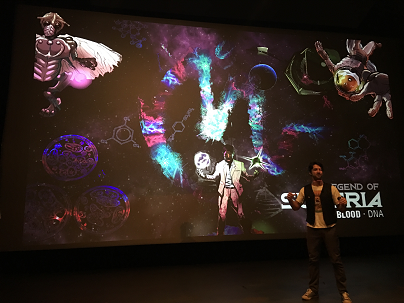
    Jay and I are best friends and have always written creatively though independently. This was our first venture together and his contribution really enriched the story and characters with a unique world view and exciting plot twists that I myself did not have experience in. I balanced his artistic vision with instilling modern, current events on the technology side and we had many great discussions to marry the two in a narrative way.
     

    IMG_4992


    What are your thoughts on educating others in this way? (In regards to communicating science)

    We are highly motivated to work with other professors and scientists to take this concept of making science fiction and embed it within educational programs. I continue to be encouraged by the interest in the bioethics community to use this approach as a tool to introduce a bioethics case for students to then discuss in class. There are clearly a lot of creative scientists out there and we would like to support them with a professional illustration and narration team to have their stories come to life through partnering with Dream Novels LLC, our publishing entity.

    Was there anything you had to exclude, or what was your process in deciding what should/should not be included?

    We excluded areas that were not supported by a viable scientific theory. Furthermore, we tried to not alienate any group and created a diverse set of characters to be inclusive of all. These technologies and diseases in our story are agnostic to race, creed, or religion so we made sure that we showed how many backgrounds reacted to this new society.

    Science fiction of today is like the science of tomorrow? Do you feel like some of the ideas explored in sci-fi and the ideas explored in Legend of Sumeria are possible? And what is the benefit of exploring science fiction in this way?

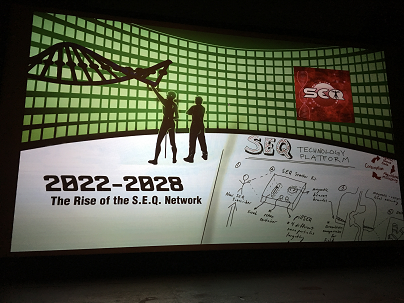
    Absolutely, many are rooted in real technologies of today. I think the benefit of science fiction is that it enables creativity to really broaden what is possible. In many ways, it is the starting point of many the projects in my lab that start with a “sci-fi” idea and then reduce it to practice through a series of experiments.
     

    IMG_5001

    In your opinion, what is the future of using art or other creative media as a way to communicate and educate others about science?

    I strongly believe that artists and scientists should come together more to communicate complex ideas. By their nature, artists are story tellers in ways that spark an emotional response in their audience and I feel the science community can benefit from this fact rather than purely a factual presentation that lacks that human touch.

    Do you have any future plans? (Another graphic novel or a follow up to Legend of Sumeria)

    This first book is one of a trilogy. Once we understand our fan base, we are excited to do the next book hopefully with the support of a large publishing group who recognizes the opportunity here.

    What is the main concept you would want your audience to take away from Legend of Sumeria?

    Before asking “can I do this?”, be mindful and first ask “should we do this?”


    Parakkeden advises individuals in science-based fields to find new and inventive ways to communicate information. Zyndo, a product he developed, displays an augmented digital reality of the book. Parakkeden and Webb’s work shows the potential of science being communicated effectively to the mainstream, and hopefully inspiring people to learn more about the subject.
     

  • Mum’s the Word

    Mum’s the Word

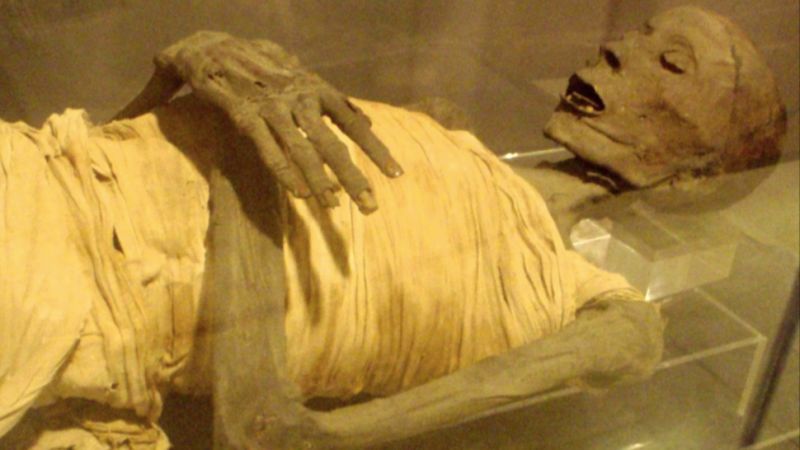
    When most people think of mummies, a strange mixture of ancient curses and toilet paper-wrapped Halloween costumes come to mind. It comes as no surprise that the concept of mummies is linked to the magical and superstitious- after all; it is pretty unbelievable to see intact bodies that are 2,000 years old. How could you not think of zombies or ghosts?

    Like all mysteries, however, mummies actually have a scientific explanation.

    IMG_0779

    Human bodies decay and break down by two major mechanisms: autolysis and putrefaction. Autolysis is essentially a self-destructive process during which enzymes that typically aid in digestion begin to digest the body itself. After this, putrefaction begins when bacteria from the body’s flora or the surrounding environment start to break down the organic matter for their own nutrition, leading to the decomposition of the corpse. The bacteria introduce additional enzymes that continue the liquefaction, and eventually, the body will attract flies and scavengers that can feed on the remains. In order to effectively preserve a body, these processes must be interrupted, or at least slowed significantly. There are several known factors that can do just that:

    • Water content: The bacteria and enzymes need an environment with water; so drying the corpse is essential to its preservation. The drying out of the body is known as desiccation, and can happen naturally in extremely arid environments, like the hot sands of the deserts, or can be chemically induced, like with the Egyptian embalming process, where the bodies were covered natural drying agent named natron.
    • Temperature: In extreme temperatures, especially cold, dry environments, bacteria are unable to survive. In addition, many enzymes denature, or unfold, in extreme environments, and can’t function properly. This slows the decay process down greatly, and can also occur naturally, leading to mummies such as the Iceman found in the Italian Alps. It is actually very similar to the way that your freezer helps you to preserve food!
    • Organ Removal: Removing internal organs that contain a large population of bacteria prevent decay from the inside out. This was an important part of the preparation of Egyptian mummies, where most major organs were removed from the body and placed into sacred canopic jars.
    • Chemical Interactions: Many different chemical interactions can contribute to the preservation of human tissue. Some of the most common include:
      • Exposure to heavy metals ions, including copper and arsenic, can lead to the denaturation of the enzymes involved in autolysis, as the metal ions bind to the polypeptides.
      • Lime, calcium oxide, reacts with water and raises the temperature to form calcium hydroxide. This reaction process dries out the body and raises the pH, which can limit the effectiveness of enzymatic activity.
      • Resins can be also be used in mummification, as an antiseptic and as a barrier against rehydration when spread over the skin.


    I hope you found this interesting, and good luck with those linens!


    References:

    Aufderheide, Arthur C. (university Of Minnesota, Duluth), A. (2011). Scientific Study of Mummies. Cambridge University Press.

    Harris, T. (2018, March 08). How Mummies Work. Retrieved from https://science.howstuffworks.com/mummy.htm

  • Fighting Physics

    Fighting Physics

    Though some may view it as violent, martial arts are an integral part of many cultures around the world. While some were created for warfare, such as Indonesia’s Pencak Silat, others, like China’s Kung Fu, were created to be an extension of one’s morals and principles. After centuries of evolution, some aspects of martial arts have been perfected to take full advantage of all the biological levers and pulleys that our bodies are made up of. With physics and data analysis, one can easily find the mechanics of what makes punches and kicks so deadly.

    The Roundhouse Kick

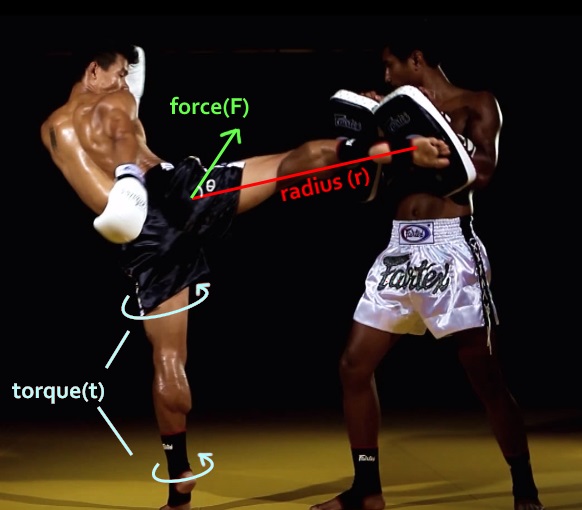
    The roundhouse kick is one of the simplest kicks in martial arts, but it takes full advantage of our built-in body mechanics. The fundamental principles of the roundhouse kick are dependent on the concepts of torque and angular velocity – or rotational force and speed, respectively. Your intuition might tell you that in order to have a stronger kick, you’d either have to put more force into it or make the kick go faster. However, the real question lies in how that’s done.

    The force that is needed to overcome the mass of the leg and cause it to rotate is torque, which is defined as:

                τ = r x F

                            r = length of lever arm

    F = magnitude of force applied


    In the case of a Muay Thai kick (as shown in the video above), the entire leg is swung around in an arc. In a way, the entire leg acts like a baseball bat, rotating around the center of the body. However, torque means nothing in terms of impact strength unless you apply some kind of speed measurement to it. That’s where the equation for power comes in:

                P = τ x ω

                           τ = torque

    ω = angular velocity


    The mechanics involved in a roundhouse kick
    The mechanics involved in a roundhouse kick

    When lifting heavy things, people say that your power comes from your legs. Similarly, when kicking things, your power comes from your hips. Torque is produced by how quickly and how much you rotate your hips and foot, to some extent—you can see this in the feet and hips of the fighter above.

    A study conducted by Colin Gavagan measured the various techniques of experts in Muay Thai, Karate and Taekwondo. He found that the average impact force of a roundhouse kick on a kicking shield from a professional Muay Thai practitioner was 1400 N! The force of this kick is roughly equivalent to a sledgehammer being swung as hard as possible at someone’s body! Through just a simple rotation of the hips and feet, one can deliver kicks strong enough to break bone.


    The Straight Right

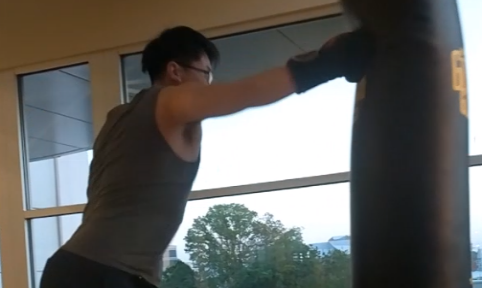
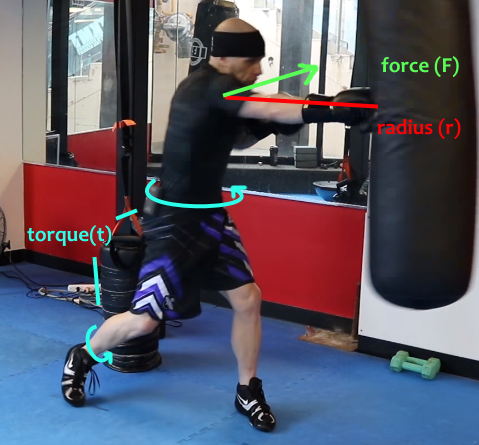
    Similarly to the roundhouse kick, the straight right requires torque in order to generate enough power to do any considerable jab. Something most people may not know, however, is that most of the power from a straight right comes from the legs and hips. Rather than rely solely on the shoulder and arm muscles, a boxer uses his legs and hips to add to the power of his punch.

    The mechanics of a punch are similar to that of a roundhouse kick
    The mechanics of a punch are similar to that of a roundhouse kick

    A punch is at a distinct disadvantage from a roundhouse kick in terms of power, however: a roundhouse kick uses the entire lower leg for contact, while a punch makes contact with only one’s hand. Whereas a leg might weigh 10% of someone’s weight, a fist would reasonably make up only 1%. How does a boxer make up for this difference in weight? The answer lies in the “snap”.

    FΔt = mΔv

    F = magnitude of force applied

    Δt = change in time

    m = mass

    Δv = change in velocity


    Δt stands for the total time it takes for the force to be applied, which in the case of a boxing glove on a punching bag or body, can’t be changed much. However, as the time of impact stays constant, if one increases the speed of their punch one can significantly increase the force of it. By focusing on the extension of the punch in your shoulder and forearm, you can significantly increase the speed your hand. The sheer speed of a punch can make up for it’s lack of mass behind it.

    For such seemingly simple moves, there are so many fundamental processes going on at once that it’s impossible to analyze all the nuances that comprise them! There’s a lot of science that goes into something that, at first glance, seems like a simple punch.


    References:

    Kinoshita, M., Fujii, N. The Analysis of Kinematical Characteristics in Taekwondo Roundhouse Kick. Retrieved from https://ojs.ub.uni-konstanz.de/cpa/article/view/5737

    Estevan, I. Falco, C. 2013 December. Mechanical Analysis of the Roundhouse Kick According to Height and Distance in Taekwondo. Retrieved from https://www.ncbi.nlm.nih.gov/pmc/articles/PMC3944546/

    Gavagan, C., Sayers, M. 2017 August. A biomechanical analysis of the roundhouse kicking technique of expert practitioners: A comparison between the the martial arts disciplines of Muay Thai, Karate, and Taekwondo. Retrieved from http://journals.plos.org/plosone/article?id=10.1371/journal.pone.0182645